





Email: sales3@zhefanjewelry.com
Can I private label Custom 925 Silver Ring for my store?
Practical, industry-grade answers for sellers who want to private label or buy custom 925 silver rings. Learn how to verify 925 hallmarks, plan MOQs and costs, specify hypoallergenic finishes, prepare design files, source ethical stones, and negotiate warranties.
- 1. How can I reliably verify the 925 stamp and silver fineness on a private-label batch before I pay or list it?
- 2. What realistic MOQ, lead time, and cost breakdown should I expect when private labeling a custom 925 silver ring?
- 3. How do I specify and verify hypoallergenic finishes like rhodium plating or nickel-free sterling for customers with metal sensitivities?
- 4. What design files, minimum engraving sizes, and manufacturing tolerances do I need to supply so the factory avoids production errors?
- 5. Can I private label custom 925 silver rings with gemstones while ensuring ethical sourcing and accurate grading?
- 6. What aftercare, warranty, and resizing policies should I negotiate to minimize returns and protect margins when private labeling 925 silver rings?
- Conclusion: Advantages of Private Labeling Custom 925 Silver Rings
Can I Private Label Custom 925 Silver Ring? 6 Deep Questions Beginners Ask
Below are six highly specific, purchase-focused questions beginners and small brands ask when they want to design or private label custom 925 silver rings. Each answer combines manufacturing realities, quality-control checklists, and actionable steps you can use when negotiating with factories and protecting end customers.
1. How can I reliably verify the 925 stamp and silver fineness on a private-label batch before I pay or list it?
Why this matters: fraudulent or substandard metal content erodes brand trust, triggers returns, and can violate local hallmarking rules. 925 indicates sterling silver (92.5% silver + 7.5% other metals). But a visible stamp alone isn't proof of consistent alloy throughout the batch.
Practical verification steps:
- Request documentary proof: a written Certificate of Analysis (CoA) from the supplier that states silver content and includes batch numbers and production dates. For reputable factories this is standard.
- Ask for pre-shipment samples with the stamped hallmarks and close-up photos of the inner shank. Check placement and depth: professionally stamped marks are crisp and consistently positioned.
- Non‑destructive testing: use or require an XRF (X‑ray fluorescence) report for representative samples. XRF testing gives quick elemental composition without damaging the ring and is widely used by buyers and QC firms.
- Random destructive tests: for very large orders, reserve the right in the contract to perform fire assay or wet chemical analysis on a sample piece; these are definitive but destructive.
- Chain-of-custody and traceability: insist the supplier keeps records tying each batch to a CoA and sample photos. For private label SKUs, require a stamped batch code or production lot inside the shank.
Contract clause to include: Supplier will provide CoA and XRF reports for each production batch and allow pre-shipment third‑party testing at Supplier expense for any failed tests. That protects you and signals seriousness.
2. What realistic MOQ, lead time, and cost breakdown should I expect when private labeling a custom 925 silver ring?
Why this matters: planners need accurate cashflow and inventory forecasts. Jewelry MOQs and costs vary by complexity, finishing, stone work, and branding options.
Typical ranges and what drives them:
- MOQ: many factories set MOQs between 50 and 300 pieces per SKU for cast sterling rings if you supply final artwork. Lower MOQs are possible but usually at a higher per-piece price, or by using generic stock rings with custom packaging.
- Lead time: allow 2–6 weeks after sample approval for standard designs (single cast, simple finish). Complex multi-stone settings, hand engraving, or custom plating can extend 4–10+ weeks. Add time for tooling/CAD/sample iteration: 1–3 weeks.
- Cost components to build a unit price:
- Material cost: silver weight (grams) × current spot price per gram. Ask your supplier for average weight per size (e.g., size 7) so you can calculate metal cost.
- Stones and settings: cost per stone plus setting labor.
- Labor and finishing: casting, filing, polishing, plating, QC.
- One-time charges: CAD design, tooling/mold, master sample, engraving dies.
- Packing and private-label extras: inner shank laser logo, branded box, swing tags, barcodes.
- Shipping, duties, and inspection fees.
How to get an accurate quote: provide ring size(s) distribution, finish (polished, brushed, antique), plating (none, rhodium, black), stone type and size, and packaging specifications. Ask for a line-by-line quote showing one-time setup vs unit costs. Negotiate a tiered price by volume (e.g., 50/100/300) so you can scale.
3. How do I specify and verify hypoallergenic finishes like rhodium plating or nickel-free sterling for customers with metal sensitivities?
Why this matters: skin reactions lead to chargebacks and bad reviews. Many buyers search for nickel-free or hypoallergenic claims, and regulatory regimes (e.g., EU nickel release limits) create legal obligations.
What to specify to the factory:
- Require a plating process: ask for rhodium plating for white/silver look or anti-tarnish options. State whether you want standard rhodium or a hard-rhodium finish for better wear-resistance.
- Insist on nickel-free solder and alloys: sterling should be 92.5% silver with no intentional nickel additions. Many suppliers use copper-based alloys rather than nickel.
- Request compliance documentation: for products sold in the EU, request nickel-release test reports (EN 1811 or equivalent). For general safety, ask for material declaration and MSDS for any surface coatings.
Verification methods:
- Ask for sample swatches that you or a third party can test with a nickel spot test (dimethylglyoxime) for quick screening and perform formal EN tests for market compliance.
- Understand plating durability: plating is a barrier layer that will wear over time. Educate customers in your listing on care (avoid perfumes, chlorine, replate options) and consider offering a re‑plating service as part of your aftercare.
Label wording guidance: avoid absolute claims like never causes allergies. Use nickel-free components or rhodium-plated for hypoallergenic wear and link to your testing policy to comply with E-E-A-T transparency standards.
4. What design files, minimum engraving sizes, and manufacturing tolerances do I need to supply so the factory avoids production errors?
Why this matters: poor files or unrealistic tolerances lead to mis-cast rings, illegible engraving, or ill-fitting stone channels that require costly reworks.
Accepted file types (and why):
- 2D artwork: vector formats such as AI, EPS, or PDF for logos and packaging.
- 3D models: STL for wax/CAD output and STEP/IGES for precise engineering models if you want exact control over geometry and stones.
Engraving and inlay rules of thumb:
- Minimum external text height: aim for at least 1.0–1.5 mm character height on exterior shanks; inner shank engraving can be smaller but keep characters ≥0.8 mm high and strokes ≥0.3–0.5 mm to remain legible after casting and polishing.
- Stroke width and relief: avoid hairline strokes in logos. Convert fonts to outlines and simplify complex logos; factories often recommend bold or medium weight fonts for small text.
- Ring width constraints: the available engraving area depends on ring face and shank width. Provide the intended ring size so the manufacturer can adjust for metal flow during casting; smaller sizes use less metal and change proportions.
- Tolerances: for cast parts expect ±0.1–0.3 mm depending on process and finish. For stone settings, ask the factory to confirm seat dimensions for each stone size and request test-fit photos or send a master stone for verification.
Best practice: request a 3D-printed master or metal prototype before full production. Approve finish photos under consistent lighting and document a sign-off process to avoid disputes.
5. Can I private label custom 925 silver rings with gemstones while ensuring ethical sourcing and accurate grading?
Why this matters: modern consumers expect transparency about stone origin, treatments, and ethical sourcing. Claims without substantiation risk reputational damage.
How to manage gemstone sourcing responsibly:
- Define acceptable stone types: natural, treated, or lab-grown. Be explicit in your spec whether you want conflict-free sourcing or independently certified stones.
- Request certifications for diamonds: for diamonds above commonly accepted thresholds (many brands use ≥0.25 ct as a practical limit), ask for a grading report from a recognized lab (IGI, GIA, or equivalent). For lab-grown stones, IGI and GIA provide lab-grown reports.
- Colored stones: insist on origin/treatment disclosure (heat treatment, diffusion, fracture filling). Request any available lab reports and supplier declarations about treatments.
- Supplier audits: for higher-value programs, arrange supplier visits or third-party supplier audits that review sourcing traceability and chain-of-custody documentation.
Setting security and quality checks:
- Specify bezel/flush settings for high-wear rings or prong counts appropriate to stone size to reduce lost stones in transit/customer wear.
- Ask for drop tests and prong-pull tests on sample units and request high-resolution photos of each finished ring showing stone seating from multiple angles.
Labeling and marketing: be honest on product pages — list whether diamonds are lab-grown or natural, disclose any treatments, and provide a copy of the grading report where applicable. This transparency boosts E‑E‑A‑T for your product pages.
6. What aftercare, warranty, and resizing policies should I negotiate to minimize returns and protect margins when private labeling 925 silver rings?
Why this matters: poor aftercare or unclear resizing policies create expensive returns and negative reviews. A clear, fair warranty reduces friction and builds customer trust.
Key policy elements to negotiate with manufacturers:
- Resizing limits: most sterling rings can be resized up or down 1–2 sizes safely depending on design and shank thickness. Complex shanks, heavy stone settings, or plated surfaces may require remaking rather than resizing. Get the factory to state resizing limits per SKU in writing.
- Plating & finish guarantees: offer customers realistic expectations. Many brands provide a 6–12 month warranty for plating and manufacturing defects; beyond that, offer paid repair/replate options.
- Manufacturing defect policy: require the supplier to accept returns for defects found within a specific period (commonly 12 months) and to cover replacement/repair at agreed thresholds when defects exceed a pre-defined failure rate (e.g., >2% within first lot). Include an RMA process for handling defective pieces.
- Pre-shipment QC and defect caps: define acceptable defect rates and require pre-shipment photos or third-party QC inspection for large orders. This limits surprises on arrival and reduces return processing costs.
- Documentation for customers: include a care card with each private-label box explaining cleaning (polishing cloth, avoid harsh chemicals), plating lifespan, and how to request resizing or repairs. Clear instructions cut avoidable returns.
Operational tips: set aside a small reserve of replacement pieces (2–5% of order) or negotiate a factory policy for discounted replacements for early-life defects. That keeps customer service responsive without immediately hitting your margins.
Conclusion: Advantages of Private Labeling Custom 925 Silver Rings
Private labeling custom 925 silver rings gives you product control, higher margins, and the ability to tell a unique brand story (branded hallmarks, custom packaging, and curated gemstone choices). By verifying the sterling 925 content with CoAs or XRF testing, negotiating clear MOQs and lead times, specifying hypoallergenic finishes, supplying correct CAD or vector files, insisting on ethical stone sourcing, and securing robust resizing/warranty terms, you minimize risk and deliver quality that scales. These steps increase customer satisfaction and reduce returns—key for stable growth.
Ready to get a quote or discuss private-label options and tooling details? Contact us for a quote at www.zhefanjewelry.com or email sales3@zhefanjewelry.com.
Zhefan Jewelry — experienced partner for private label sterling silver (925) jewelry, from CAD to replate and branded packaging.
Recommended for you
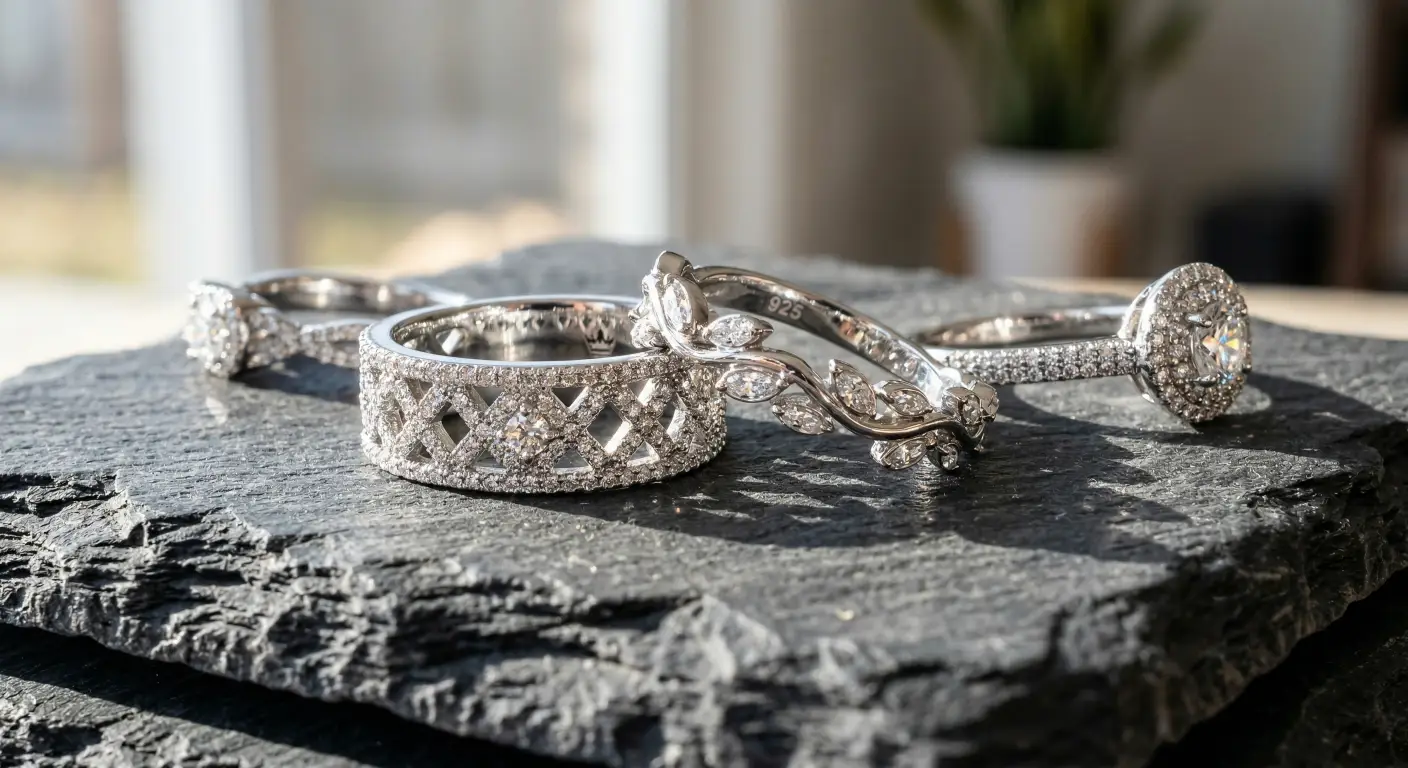
Launch Your Brand: The Ultimate Guide to Manufacturing Custom Sterling Silver Jewelry

Zhefan Jewelry Invites You to Attend the Hong Kong Jewellery Exhibition 2026
Is a Brass Necklace Good? The Honest Truth About Wear, Tarnish, and Quality
Why Custom 925 Sterling Silver Bracelets Are the Ultimate 2026 Jewelry Trend
Is Stainless Steel a Good Type of Jewelry? Pros, Cons, and Why Brands Choose Stainless Steel Jewelry
Boost Your Margins with Top-Selling Custom Wholesale Brass Huggie Earrings
Prdoucts Categories
FAQ
Products
What is the payment method?
Our payment method are Alibaba Trade Assurance(MasterCard, visa, e-Checking, PAYLATER, T/T),T/T, PayPal,Western Union.
What’s the lead time?
We could arrange shipment for you within 48 hours if you order models in stock. For bulk order, it takes 10-25 days for production depending on order quantity and styles.
Can you engrave my logo on the jewelry ?Do you supply OEM/ODM service?
Yes. Custom logo and OEM/ODM are both accepted.Our factory specializes in jewelry manufacturing for 25 years.We can produce jewelry by your sample, design, pictures, even by an idea.Please feel free to contact us for more details. Custom order process: Inquiry-Confirm products details-Pay mold fee -Confirm CAD draft-Quote-Initial payment-Produce mold & sample-Confirm Sample-Mass production-Balance payment-Shipment-Track shipment-delivery.
Do you offer free sample for quality check?
Sample order is welcome, but sample fee need to be paid. It will be deducted when you place an bulk order.
What’s the shipment method? How long does it take for delivery?
Our product distributed to all over the world. Shipped by DHL / Fedex / TNT / UPS takes 3-7 days, Epacket takes 7-15 days, China Post takes 15-30 days.
What services can we provide?
Accepted Delivery Terms: FOB, CIF, EXW, Express Delivery;
Accepted Payment Currency: USD, EUR, JPY, CAD, AUD, HKD, GBP, CNY, CHF;
Accepted Payment Type: T/T, L/C, MoneyGram, Credit Card, PayPal, Western Union, Cash, Escrow;
Language Spoken: English, Chinese, Spanish, Japanese, Portuguese, German, Arabic, French, Russian, Korean, Hindi, Italian.
Discuss Your Ideas with a Professional Custom Jewelry Manufacturer
We provide personalized jewelry customization services for clients worldwide.
Rest assured that your privacy is important to us, and all information provided will be handled with the utmost confidentiality.
By clicking 'Send Inquiry Now' I agree to ZHEFAN JEWELRY processing my personal data.
To see how to withdraw your consent, how to control your personal data and how we process it, please see our Privacy Policy and Terms of use.
From design to production, ZHEFAN JEWELRY offers a one-stop solution to help you enhance your brand value and market competitiveness.
Get A Quote
Contact
Tel: (+86) 188 1927 7817
© 2026 Zhefan Jewelry. All Rights Reserved.
Facebook
Instagram
YouTube
Whatsapp: +8618819277817