






Email: sales3@zhefanjewelry.com
Are brass necklaces suitable for high-end jewelry lines?
Practical, industry-grade answers for buyers and designers: how to spec plating, choose hypoallergenic brass alloys, stone-set, test durability, design for repair, and decide if brass fits high-end jewelry lines.
- How do I specify plating thickness and finish on custom brass necklaces to prevent early tarnish and wear?
- What brass alloys and compositions are safest for hypoallergenic custom necklaces and how can I verify them?
- Can custom brass necklaces be reliably stone-set for fine gemstones without corrosion, solder or finishing problems?
- What quality-control and accelerated-wear tests should I require from manufacturers for brass necklaces intended for high-end retail?
- How should I design brass necklace components (chains, jump rings, clasps) to meet high-end durability and repairability standards?
- Are brass necklaces suitable for high-end jewelry lines?
How do I specify plating thickness and finish on custom brass necklaces to prevent early tarnish and wear?
Beginners often accept vague “gold-plated” specs and then get returns in weeks. For professional results, specify measurable plating and finishing standards instead of marketing terms. For brass base pieces aimed at a High Quality market, require either a robust PVD coating or electroplating with documented thickness. Typical industry guidance: consumer costume plating often ranges 0.05–0.3 µm (very thin), while durable gold electroplating used for upscale pieces is commonly in the 0.5–3 µm range. For truly long-lasting finishes, PVD (physical vapor deposition) or hard rhodium over a nickel-free underlayer provides superior scratch and corrosion resistance.
Actionable purchase specs to include in your contract:
- Plating type: PVD or electroplating (specify metal: 14k/18k/24k gold, rhodium, rose gold color)
- Minimum plating thickness: state a target range (e.g., ≥0.5 µm for High Quality gold plating; 2.5 µm or more approaches vermeil levels but note FTC vermeil rules apply only to sterling silver bases)
- Surface finish: mirror polish, brushed, satin—include Ra or visual samples
- Protective topcoat: clear lacquers (short-term protection) or PVD for long-term wear
- Verification method: XRF thickness spot checks and photographic evidence of test coupons
Require sample runs and wear simulation reports (see below). Also ensure the vendor understands you will reject pieces with plating below the agreed µm values and ask for non-destructive XRF reports for production batches.
What brass alloys and compositions are safest for hypoallergenic custom necklaces and how can I verify them?
“Brass” covers many copper–zinc alloys; some legacy alloys include lead or nickel which cause reactions. For jewelry use, insist on jewelry-grade, low-lead or lead‑free and nickel‑free brass alloys. Commonly used safe bases are high‑copper brass alloys with low impurity levels. Avoid unspecified batches described simply as “brass.”
Verification steps buyers should require:
- Material certificate (mill test report) showing alloy designation and composition.
- XRF spot testing on finished parts to confirm base-metal composition and plating thickness.
- Declaration of no intentional nickel additions, and confirmation of compliance with regional regulations (e.g., REACH nickel limits in EU).
If you are targeting hypoallergenic claims, request a compositional statement and consider additional coatings such as stable PVD or an inert clear coating; both reduce skin contact with the base metal. Also include a clause for third‑party testing if a buyer requests formal hypoallergenic certification.
Can custom brass necklaces be reliably stone-set for fine gemstones without corrosion, solder or finishing problems?
Yes — but you must coordinate production steps. Brass machines, solders and anneals differently to precious metals; it oxidizes (patinas) and plating can affect bezel/carabiner joints. For secure setting of fine gems, follow these guidelines:
- Assembly order: perform metal joining and mechanical setting prior to final plating only when your plating process ensures coverage into joints. Some vendors prefer pre-plating assembly then a final light buff and post-plating clean to ensure even coverage around prongs.
- Soldering: use compatible solders and fluxes and communicate exact alloys to the manufacturer—excessive heat can alter plating adherence later, so plan for rework or final plating after all soldering.
- Stone protection: avoid high-temperature processes after setting heat-sensitive gems. For diamonds and hard gems, standard processes are fine; for opals, pearls or treated stones, schedule setting after final finish or use protective masks during finishing.
- Quality checkpoints: require inspection photographs at each stage—after soldering, after setting, and after plating—and mandate pull/tensile checks on prongs or settings for consistency.
When done correctly, brass can reliably carry semi-precious and precious stones if you specify quality control (Q/C) at each stage and choose plating and finishing that won’t crack or flake at the bezel edges.
What quality-control and accelerated-wear tests should I require from manufacturers for brass necklaces intended for high-end retail?
Vague “wear-tested” claims mean little. Ask for specific, documented test methods and thresholds. The following are industry‑used assessments you can require:
- XRF composition and plating-thickness spot checks on production lots.
- Taber abrasion or equivalent abrasion testing to simulate polishing and contact wear (request cycles and wheel specifics).
- Salt-fog/corrosion testing (e.g., ASTM B117) on plated coupons to indicate corrosion resistance; request hour-based results rather than pass/fail statements.
- Adhesion testing for coatings (cross-cut or pull-off tests depending on finish) to ensure plating/bonding quality.
- Functional tests: clasp life-cycle (open/close cycles), tensile tests for chains and jump rings, and setting retention tests for stones.
Require the factory to provide test certificates for each production run or, if you operate at scale, arrange third‑party testing labs to audit random samples. Requesting controlled test data reduces customer complaints and return rates dramatically.
How should I design brass necklace components (chains, jump rings, clasps) to meet high-end durability and repairability standards?
Design decisions determine longevity. Small details like open vs. soldered jump rings, chain gauge, and clasp construction are common failure points. Best practices:
- Soldered jump rings: insist on fully soldered jump rings for load-bearing joins; cold‑closed rings create early failures.
- Chain specification: for delicate high-end necklaces use thicker link walls or solid links (not hollow). For example, delicate look chains can still be specified with 0.8–1.2 mm solid wire; statement chains should use 1.5–3.0 mm solid links to avoid deformation.
- Clasps: use solid, stamped or cast clasps with robust spring mechanisms; include a minimum cycle life (e.g., thousands of open/close cycles) in your Q/C requirements.
- Repairability: design with soldering and re-plating in mind—use access points or removable end caps to make future repairs and re-plating easier and less destructive.
- Finish transitions: avoid sharp plating edges where two finishes meet; request blended transitions or overlap to prevent flaking.
These detailed component specs increase cost modestly but reduce return rates, increase customer satisfaction, and align brass pieces with expectations in High Quality retail environments.
Are brass necklaces suitable for high-end jewelry lines?
Short answer: conditionally yes. Many luxury and contemporary designers use brass as a base metal when it’s finished to exacting standards. Brass is attractive for custom jewelry because it is malleable, cost-effective, and accepts plating and patinas well. However, for true high‑end positioning you must follow strict production, testing, and marketing rules.
Key factors that make brass appropriate for high-end lines:
- Finish quality: thick, even plating (or durable PVD), professional polishing, and hand-finishing can achieve a High Quality look.
- Transparency: market brass pieces honestly—do not call gold-plated brass “vermeil” (FTC vermeil rules require a sterling silver base). Use correct terminology such as “gold-plated brass” or “PVD-coated brass.”
- Durability assurance: mandate the tests listed above (XRF, abrasion, salt fog, clasp cycle tests) and provide warranties or repair programs to customers.
- Design and branding: luxury customers buy craftsmanship and service as much as materials. Offer custom finishes, signatures, serialized pieces, and repair/maintenance plans to elevate perceived value.
When these conditions are met—High Quality plating/PVD, verified materials, rigorous testing, and High Quality after‑sales service—custom brass necklaces can sit successfully within a high-end collection, particularly in fashion-luxury and designer categories where aesthetics and brand experience matter more than intrinsic metal value.
Concluding summary of advantages: Custom brass necklaces offer excellent malleability for complex designs, cost-efficiency for larger assortments, and strong compatibility with high-quality gold plating, PVD coatings and decorative patinas. With proper alloy selection (nickel/lead controls), verified plating thickness, plated or PVD protective finishes, and strict Q/C (XRF and wear tests), brass can deliver designer-level aesthetics, lower price-to-margin ratios, and straightforward repairability—making it a pragmatic option for well-executed High Quality lines.
For sample specs, test templates, or a tailored quote for custom brass necklaces, contact us at www.zhefanjewelry.com or email sales3@zhefanjewelry.com.
Recommended for you
The Secret Behind Premium Quality: 7 International Standards for 925 Sterling Silver Rings
How to Elevate Your Jewelry Brand with a Signature Custom Tennis Bracelet (2026 Guide)
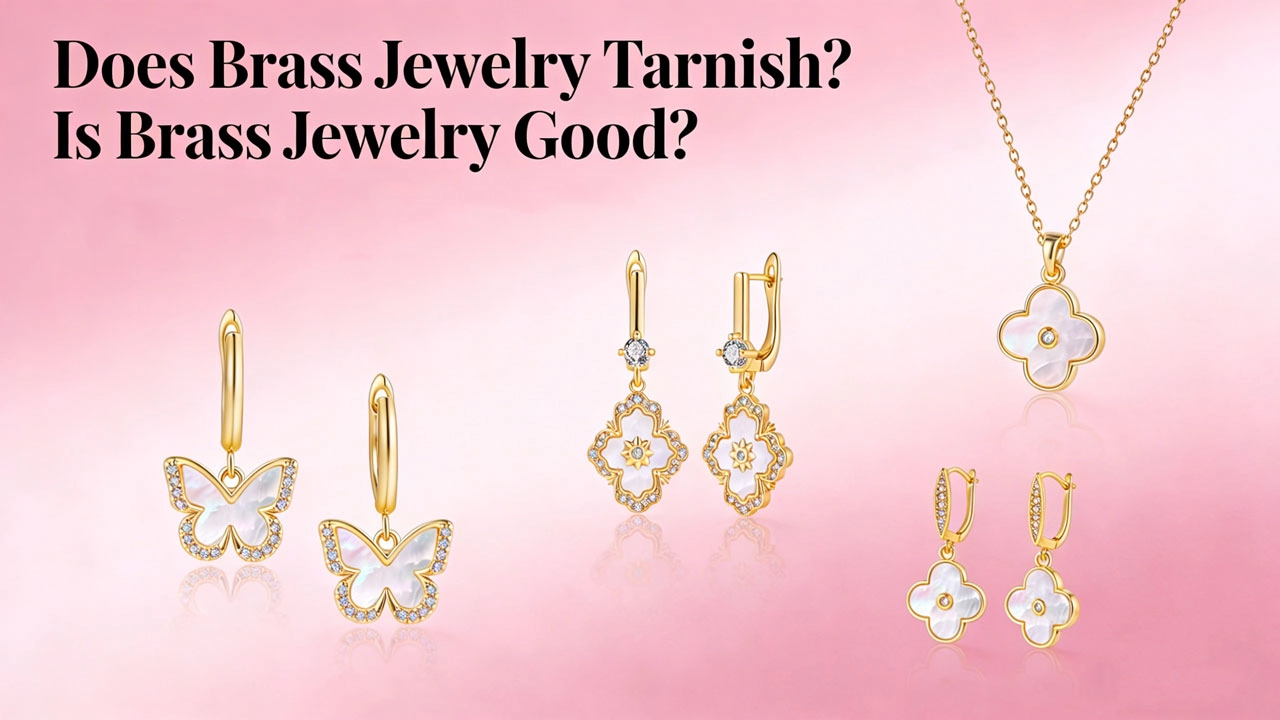
Does Brass Jewelry Tarnish? Is Brass Jewelry Good? Complete Guide from a Professional Jewelry Manufacturer
12 Unique Custom 925 Silver Bracelet Ideas That Go Beyond Basic Engraving (2026 Guide)
Choosing the Right Metal for Jewelry Making - Practical Guide
Launch Your Brand: The Ultimate Guide to Manufacturing Custom Sterling Silver Jewelry
Prdoucts Categories
FAQ
Products
What's the packaging of your jewelry?
Normally we use OPP bag, bubble bag and paper box to pack the goods,custom packaging is acceptable as well.
What can you buy from us?
Rings, Necklace, Earrings, Bracelet, Pendant, Anklet, Brooch, Jewelry.
How long will the plating color last?
Generally 6 month for Water Plated color , 1 - 2 years for vacuum plated color if in proper wearing.
FAQs
Can I get a sample?
Yes,welcome to choose our sample to test and check quality.Please give me your address and number then send you payment list.
Can we visit your factory?
Yes, pls contact seller to arrange meeting, we will pick you up to our factory.
What is the material of the jewelry?
Most of the jewelry is made of 925 sterling silver, brass or 316 stainless steel or custom material,which can cover different procurement demand.
Discuss Your Ideas with a Professional Custom Jewelry Manufacturer
We provide personalized jewelry customization services for clients worldwide.
Rest assured that your privacy is important to us, and all information provided will be handled with the utmost confidentiality.
By clicking 'Send Inquiry Now' I agree to ZHEFAN JEWELRY processing my personal data.
To see how to withdraw your consent, how to control your personal data and how we process it, please see our Privacy Policy and Terms of use.
From design to production, ZHEFAN JEWELRY offers a one-stop solution to help you enhance your brand value and market competitiveness.
Get A Quote
Contact
Tel: (+86) 188 1927 7817
© 2026 Zhefan Jewelry. All Rights Reserved.
Facebook
Instagram
YouTube
Whatsapp: +8618819277817