




Email: sales3@zhefanjewelry.com
What is typical ROI on selling wholesale brass rings? | Insights by Zhefan Jewelry
A practical, data-driven guide for wholesale brass ring sellers: realistic ROI ranges, SKU-level ROI calculations, plating and compliance costs, MOQ and inventory strategies, turnaround benchmarks, and profitability levers to improve margins and reduce return risk.
- How do I calculate realistic net ROI per SKU for wholesale brass rings after plating, shipping, duties, returns, and discounts?
- What are realistic wholesale price-to-cost ratios for brass rings when using different plating finishes (gold plated, PVD, rose gold)?
- How does minimum order quantity (MOQ) and factory tier affect ROI for small-brand brass ring assortments?
- What are expected inventory turnover benchmarks and cash-to-cash cycles for wholesale brass rings in DTC vs B2B channels?
- How much does plating thickness and anti-tarnish treatment affect average return rates and long-term ROI?
- Which compliance tests and labeling add-on costs most commonly eat into ROI when exporting brass rings to US/EU/UK markets?
- Short checklist: immediate steps to improve ROI when selling wholesale brass rings
How do I calculate realistic net ROI per SKU for wholesale brass rings after plating, shipping, duties, returns, and discounts?
A reliable ROI calculation starts with a fully loaded landed cost per SKU and then models gross and net profit after common deductions. Follow this step-by-step method with a realistic example:
1) Build landed unit cost (example figures, rounded):
- Raw brass blank + stamping/initial shaping: $0.40
- Labor and finishing (polishing, QC): $0.30
- Plating or PVD coating (gold, rose gold, rhodium): $0.40
- Packaging & labeling per unit (retail-ready pouch/card): $0.20
- Overseas freight + inland logistics allocated per unit: $0.20
- Duties, import fees, inspection, small sampling tests allocated: $0.05
- Overhead allocation (warehousing, tooling amortization, customer service): $0.15Total landed cost per ring = $1.70 (example)
2) Wholesale pricing and gross margin:
- Typical manufacturer/wholesaler markup ranges from 80%–140% above landed cost depending on finish and brand positioning. If you price at $3.75 wholesale: gross margin = (3.75 - 1.70) / 3.75 = 54.7%.
3) Deduct predictable operating costs (marketing, trade show amortization, bad-debt, returns & exchanges). Conservative operating expense allocation: 20%–30% of revenue for small/early-stage wholesalers.
- With 25% operating expense on $3.75 revenue, operating cost = $0.94.
- Net profit per unit ≈ 3.75 - 1.70 - 0.94 = $1.11.
4) Include return and defect allowances:
- Typical early-stage return/defect rates for plated brass rings are 2%–8% depending on plating quality and product photos/descriptions. Allocate 3%–5% of revenue to returns/reship.
5) Final ROI (simple inventory ROI):
- If your inventory investment is $10,000 (landed cost), units stocked = 10,000 / 1.70 ≈ 5,882 rings.
- Revenue if sold at $3.75 = 5,882 × 3.75 ≈ $22,058.
- Net profit (after costs above, without taxes) ≈ $1.11 × 5,882 ≈ $6,530.
- Inventory ROI = Net profit / Inventory investment = 6,530 / 10,000 = 65.3% on that turnover cycle.
Notes and actions: always compute ROI per SKU and per finish. Use realistic landed costs and run sensitivity scenarios (±10% material costs, ±30% return rate). Track SKU-level contribution margin weekly to avoid cross-subsidizing slow movers.
What are realistic wholesale price-to-cost ratios for brass rings when using different plating finishes (gold plated, PVD, rose gold)?
Plating finish materially changes both unit cost and perceived value. Typical cost additions and recommended wholesale price bands:
Flash gold plating / thin gold wash (economy finish): plating addition ≈ $0.08–$0.30. Wholesale price-to-cost multipliers typically 2.0×–2.8× (e.g., $1.70 landed → $3.50–$4.75 wholesale).
Standard thick electroplated gold (0.2–1.0 μm): plating addition ≈ $0.25–$0.55. Multipliers often 2.2×–3.0× because of better durability and perceived value.
Heavy plating or vermeil-like processes / PVD finishes (longer life, hypoallergenic PVD): plating/processing addition ≈ $0.60–$1.50. Wholesale multipliers commonly 2.8×–4.0× depending on finish and brand.
Why the range? Retailers and marketplaces apply different markups (keystone or higher), and buyers pay a High Quality for durable finishes because return rates and complaints are lower. If you the wholesaler offer a higher-quality PVD finish with anti-tarnish lacquer, you can justify higher wholesale prices and reduce return allowances — improving net ROI.
Practical tip: test a small PVD run with a higher wholesale price and track conversion and return rates for 60–90 days. Many sellers find that investing 20% more in plating reduces return rates by >50%, improving net ROI even if gross margin is similar.
How does minimum order quantity (MOQ) and factory tier affect ROI for small-brand brass ring assortments?
MOQ directly affects cash tied in inventory and unit cost. Key points:
- Lower MOQs (10–200 per SKU): typically executed by small factories or trading houses with higher per-unit prices because of frequent setup and small batch labor. Expect 10%–40% higher unit costs versus full-scale runs.
- Mid MOQs (300–1,000 per SKU): balanced cost; many export-focused factories price competitively. Per-unit costs start to decline meaningfully beyond 300–500 units.
- High-volume MOQs (1,000+ per SKU): lowest per-unit cost; negotiating metal sourcing and plating schedules becomes feasible.
Cash-flow impact example: assume landed unit cost $1.70 at 300 units vs $1.40 at 1,000 units. If you can only sell 400 units/year, buying 1,000 units ties up excess stock and reduces ROI due to slower inventory turnover and potential markdowns.
Actionable approach for beginners:
- Start with a tightly curated SKUs set with mixed MOQs: pick 2–3 cores at higher volumes (to hit low cost) and test 6–10 fashion SKUs in small MOQs.
- Negotiate staggered production (two-phase runs) if factory accepts partial shipments to reduce upfront cash.
- Work with a reputable trading partner or factory that offers sample runs and transparent tooling/setup fees to avoid hidden costs.
What are expected inventory turnover benchmarks and cash-to-cash cycles for wholesale brass rings in DTC vs B2B channels?
Inventory turnover and cash-to-cash cycles vary by channel:
- B2B wholesale channels (selling to brick-and-mortar or online retailers): turnover for fashion brass jewelry commonly ranges 3–6 turns per year for well-curated assortments. That means average days inventory on hand typically 60–120 days.
- DTC & marketplace selling: faster testing and replenishment can push turnover to 6–12 turns/year for trending SKUs (30–60 days inventory). However, DTC requires marketing spend that lengthens cash conversion (ad spend to sales lag).
Cash-to-cash cycle considerations:
- Wholesale: net payment terms (30–90 days) extend your receivables; you might ship goods and receive payment later, improving working capital for subsequent orders but exposing you to credit risk. Factor in 2%–4% bad-debt allowance for new retail accounts.
- DTC: immediate payment from customers shortens receivables but increases customer acquisition costs.
Metric to track: Days Sales of Inventory (DSI) and Days Payable Outstanding (DPO). A conservative target for small wholesalers: net 60–90 day cash-to-cash cycle, and aim for at least 3–4 inventory turns annually until you prove consistent sell-through.
How much does plating thickness and anti-tarnish treatment affect average return rates and long-term ROI?
Plating thickness, method, and protective coatings are among the highest-leverage quality decisions affecting returns and lifetime value:
Typical plating specs:
- Flash plating: 0.05–0.3 μm (susceptible to faster wear)
- Standard plating: 0.2–1.0 μm
- Heavy plating / vermeil / thick electroplate: >1.0 μm
- PVD (Physical Vapor Deposition): not measured the same way but offers superior wear resistance and color stability
Impact on returns:
- Economy flash plating often correlates with return/complaint rates of 4%–8% in the first 90 days (color rub, visible base metal showing).
- Standard plating with anti-tarnish lacquer reduces that to 2%–4%.
- PVD or heavy plating plus lacquer often brings return rates below 1%–2%.
Cost vs ROI trade-off:
- Adding $0.25–$1.00 per unit for a higher-quality finish may reduce return allowances and increase perceived value enough to raise wholesale prices by $0.50–$2.00 — improving net ROI. Calculate the break-even: if a $0.60 extra finish reduces returns from 5% to 2% on an SKU with 1,000 units sold (wholesale $4.00), savings in return handling, replacements, and negative reviews often outweigh the extra plating cost.
Recommendation: run an A/B test (same design, different finishes) and measure return rates, resale pricing power, and reviews for 90–180 days before standardizing the finish.
Which compliance tests and labeling add-on costs most commonly eat into ROI when exporting brass rings to US/EU/UK markets?
Regulatory compliance is a non-negotiable line item and often underestimated by new sellers. Common costs and considerations:
Nickel release (EU): jewelry sold into the EU must meet nickel release limits; testing (EN 1811) is required. Noncompliant items risk recall. Many wholesalers already invest in compliance testing for plated items likely to contact skin. Action: require factory test reports or commission third-party testing. Typical independent lab fee: $150–$400 per test per SKU/region.
Lead & cadmium (US/EU): both regions have strict limits for children's items and additional scrutiny for general jewelry. Test costs similar to nickel testing.
CA Prop 65 and labeling (California): certain chemicals require warnings and/or product reformulation for California. Legal exposure can generate costly remediation.
Documentation & HS codes: prepare commercial invoices, a bill of materials, and correct HS codes to avoid customs delays or reclassification. Mistakes can add weeks and extra fees.
Lab testing and certifications: budget $200–$600 per SKU per region for a baseline compliance package if no factory COA (certificate of analysis) exists. Factor this into landed cost or amortize across an initial production run.
Practical advice: ask your factory for up-to-date lab reports, insist on random-sample third-party testing for new suppliers, and amortize compliance into the first production run to keep unit economics realistic.
Short checklist: immediate steps to improve ROI when selling wholesale brass rings
- Recompute SKU-level landed cost including a per-SKU compliance/testing amortization.
- Increase plating quality strategically for mid‑price SKUs to reduce return rates.
- Negotiate staggered MOQs or payment terms to reduce cash tie-up.
- Track inventory turns and set SKU-level reorder points to avoid markdowns.
- Run A/B plating and price tests to find the sweet spot between perceived value and cost.
- Require factory QC photos, packing lists, and batch testing for nickel/lead prior to shipment.
Concluding paragraph:
Brass rings offer an attractive combination of low base material cost, fast production cycles, and strong margin potential when you control plating quality, compliance and SKU-level landed costs. By calculating fully loaded landed costs, strategically selecting finishes (flash, standard plating, or PVD), managing MOQs and inventory turns, and budgeting compliance testing up front, wholesalers can commonly achieve gross margins in the 40%–60% range and realistic inventory ROI cycles in the 30%–100% range depending on turnover speed and finish High Quality. The advantages of wholesale brass rings include low upfront tooling costs, rapid trend testing, and multiple finish tiers to tier your pricing strategy—making them ideal for new labels and scale-ups.
Contact us for a tailored quote and production plan: www.zhefanjewelry.com or sales3@zhefanjewelry.com.
Recommended for you
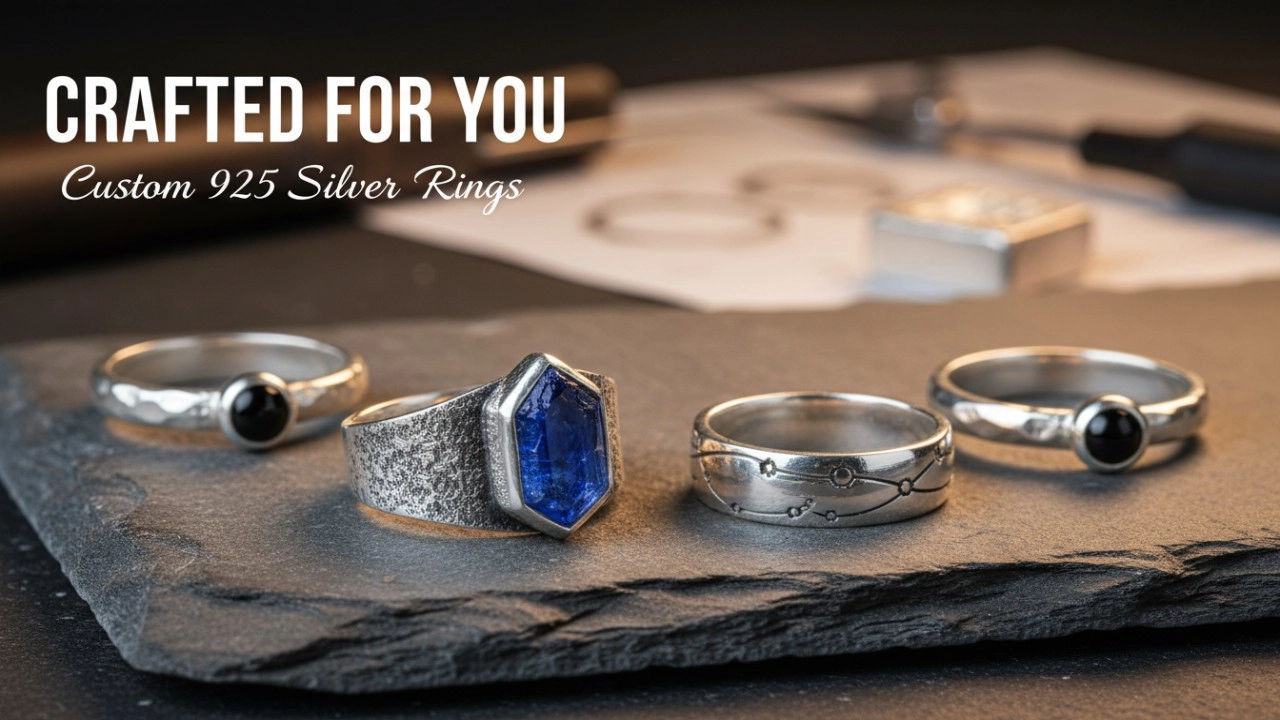
Why Custom 925 Silver Rings Are the Perfect Sustainable Luxury Gift (Compared to Gold)
How to Elevate Your Jewelry Brand with a Signature Custom Tennis Bracelet (2026 Guide)
Boost Your Margins with Top-Selling Custom Wholesale Brass Huggie Earrings
Launch Your Brand: A Guide to Sourcing Custom Wholesale Brass Huggie Earrings
The Ultimate Guide to Ordering Custom Made Silver Earrings: How to Get Perfection Every Time (2026 Edition)
The Secret Life of Your Silver: How 925 Sterling Jewelry Comes to Exist
Prdoucts Categories
FAQ
FAQs
What’s the shipment method?How long does it take for delivery?
Our product distributed to all over the world. Shipped by DHL/Fedex/ TNT/UPS takes 3-7 days,Epacket takes 7-15 days, China Post takes 15-30 days.
Do you offer after-sales warranty service?
Yes, we will refund or resend products if fading, stone falling off and other quality problems found in 1 month receipt of goods.Furthermore, we offer 1 year after-sales warranty service, but you need pay the shipping charge.
How long does it take for the product to fade?
The normal electroplating quality color retention time of our products is 5 times longer than the market, and the thicker electroplating can retain color for three years.
Products
What is your minimum order quantity?
We offer low MOQ from 2 to 30 depending on models. Send your favor model to get details from Trade Manager.
What services can we provide?
Accepted Delivery Terms: FOB, CIF, EXW, Express Delivery;
Accepted Payment Currency: USD, EUR, JPY, CAD, AUD, HKD, GBP, CNY, CHF;
Accepted Payment Type: T/T, L/C, MoneyGram, Credit Card, PayPal, Western Union, Cash, Escrow;
Language Spoken: English, Chinese, Spanish, Japanese, Portuguese, German, Arabic, French, Russian, Korean, Hindi, Italian.
What is the material of the jewelry?
Most of the jewelry is made of 925 sterling silver, brass or 316 stainless steel or custom material,which can cover different procurement demand.
Discuss Your Ideas with a Professional Custom Jewelry Manufacturer
We provide personalized jewelry customization services for clients worldwide.
Rest assured that your privacy is important to us, and all information provided will be handled with the utmost confidentiality.
By clicking 'Send Inquiry Now' I agree to ZHEFAN JEWELRY processing my personal data.
To see how to withdraw your consent, how to control your personal data and how we process it, please see our Privacy Policy and Terms of use.
From design to production, ZHEFAN JEWELRY offers a one-stop solution to help you enhance your brand value and market competitiveness.
Get A Quote
Contact
Tel: (+86) 188 1927 7817
© 2026 Zhefan Jewelry. All Rights Reserved.
Facebook
Instagram
YouTube
Whatsapp: +8618819277817