






Email: sales3@zhefanjewelry.com
How to verify authenticity of 925 silver bracelets for bulk orders? | Insights by Zhefan Jewelry
Practical, step-by-step guidance for buyers verifying 925 sterling silver bracelets in bulk. Covers sampling plans, non-destructive on-site tests (XRF, specific gravity, magnet), hallmark validation, supplier paperwork, price/weight checks, and accredited lab testing.
- 1) How can I set a cost-effective sampling protocol to detect counterfeit or undersized 925 content in a 10,000-piece bulk bracelet order?
- 2) What non-destructive on-site tests reliably differentiate silver-plated brass from true 925 sterling on flat bracelet panels?
- 3) How do I verify 925 hallmarks and maker stamps on bracelets aren't laser-etched fakes from overseas suppliers?
- 4) What paperwork and chain-of-custody documents should I require from a supplier to prove each bulk shipment of 925 silver bracelets is genuine?
- 5) How do I use price, weight and live silver market rates to spot-check for under-silver content in bulk orders without immediate lab tests?
- 6) Which accredited labs and test methods (XRF vs destructive assays) should I use when importing 925 silver bracelets to the EU/US, and what are realistic turnaround times and cost expectations?
- Concluding summary: Advantages of a structured verification program for 925 sterling bracelet bulk purchases
How to Verify Authenticity of 925 Silver Bracelets for Bulk Orders
When sourcing large quantities of 925 sterling silver bracelets, trust must be proven with rigorous, repeatable methods. Below are six specific, pain-point-oriented questions buyers ask — each answered with practical, field-tested procedures, risk controls and references to accepted testing technologies and documentation best practices.
1) How can I set a cost-effective sampling protocol to detect counterfeit or undersized 925 content in a 10,000-piece bulk bracelet order?
Problem: Verifying every piece is cost-prohibitive. You need statistical confidence that the lot meets 92.5% silver content without testing each bracelet.
Recommended approach (statistical detection):- Use the binomial detection formula to size your sample: n = ln(1 - confidence) / ln(1 - prevalence), where “prevalence” is the minimum fraction of bad units you want to detect and “confidence” is your detection probability (e.g., 95%).- Example: To detect at least one counterfeit if 1% of the lot is bad with 95% confidence: n = ln(0.05)/ln(0.99) ≈ 298 samples. To detect 0.5% prevalence at 95% confidence, sample ≈ 597.Why this matters: A small sample (<50) gives very low assurance against low-prevalence fraud. Use the formula to balance cost vs risk.Operational steps:1. Define acceptable prevalence (risk tolerance) — e.g., 1% or 0.5%.2. Choose confidence (typically 90–99%; 95% is common).3. Calculate sample size using the formula above.4. Randomize selection: use a random-number method to pick cartons/serials to avoid supplier bias.5. Split-sample strategy: do a two-stage test — rapid on-site XRF or specific gravity for the full sample; send any failures + a small random subset of passes for third-party confirmation.Practical note: For very large lots (10k+), a two-stage sampling (moderate-size initial sample + confirmatory lab tests for suspicious units) minimizes cost while maintaining high detection probability.
2) What non-destructive on-site tests reliably differentiate silver-plated brass from true 925 sterling on flat bracelet panels?
Problem: Surface plating can hide a base metal core; visual inspection alone often misses it.
Best non-destructive options (in order of reliability):- Handheld XRF (X-ray fluorescence): Fast, non-destructive alloy composition by weight percent. For sterling vs plated base metals it is the most reliable on-site tool. Typical portable XRF resolves Ag% to within a few tenths of a percent for flat, exposed surfaces. Remember: XRF reads the surface layer, so very thin heavy platings (e.g., electroplating with a thick silver layer) can mask the substrate — combine with other tests.- Specific gravity (immersion) test: Silver alloy density ≈ 10.36 g/cm³ (92.5% Ag mixed with copper). Measure mass in air and apparent mass when submerged in water to compute density. If density deviates significantly, the piece may be plated or filled. This test is non-destructive and effective on solid pieces; it fails if the piece has large cavities or attached non-metal parts.- Magnet test and simple conductivity checks: Silver is non-magnetic and highly conductive. If a magnet strongly attracts the item, it's likely ferromagnetic base metal. A conductivity probe (low-cost) can distinguish solid silver from many alloys and plated pieces but is less definitive than XRF.- Visual loupe inspection: Look at edges, clasp interiors and solder joints at 10x–30x magnification for thin plating overlap, color differences, or wear-through spots.Combining methods: Use XRF + specific gravity + loupe for a robust on-site screen. Any discrepancies should be sent for lab verification.Safety/limitations: XRF is surface-sensitive; specific gravity assumes solid construction; none of these fully replace third-party lab assays when legal/contractual proof is required.
3) How do I verify 925 hallmarks and maker stamps on bracelets aren't laser-etched fakes from overseas suppliers?
Problem: A stamped “925” is easily copied; you need a method to determine whether hallmarks are authentic and traceable.
Verification checklist:- Microscopic inspection: Real hallmarks made by traditional punches leave characteristic rim deformation and irregular edges. Laser etching often produces very clean edges and micro-burrless contours; examine at 30x–100x for texture and tool marks.- Cross-check maker’s mark and assay/office marks: For regions with hallmarking systems (UK, Switzerland, etc.), hallmarks include assay office symbols, year letters and maker IDs. Verify the maker mark against national registry databases (e.g., UK Assay Offices list maker marks) when applicable.- Request provenance documentation: Ask the supplier for Certificates of Analysis (COA) or assay certificates tied to batch numbers. Authentic assay office marks typically accompany official paperwork.- Consistency across pieces: Genuine factory-made hallmarks will be consistent in depth, placement and orientation. Randomly placed or inconsistent marks indicate after-market stamping.If you suspect tampering: send representative items to an accredited assay office or lab (SGS, Intertek, Bureau Veritas, or a national Assay Office) for verification.
4) What paperwork and chain-of-custody documents should I require from a supplier to prove each bulk shipment of 925 silver bracelets is genuine?
Problem: Oral assurances and single lab reports are insufficient for audits, customs clearance or dispute resolution.
Minimum documents to require before shipment:- Detailed commercial invoice and packing list with batch numbers, gross/net weights and piece counts.- Certificate of Analysis (COA) for the batch showing Ag% measured by an accredited method (XRF/ICP/AAS) and batch identifier that matches packing lists.- Third-party lab report (SGS, Intertek, Bureau Veritas, or national assay office) for a statistically meaningful sample: include method used, detection limits and analyst signature.- Manufacturer declaration: signed alloy specification (e.g., 925 sterling standard) and production date.- Photographic evidence tied to batch numbers (high-res photos of hallmarks, solder joints and clasp areas).- Chain-of-custody log: who sampled, when, where samples were sealed and sent for testing, and courier tracking. This is crucial for disputes.Contractual clauses to include in purchase agreements:- Right-to-inspect clause and remedial terms if alloy or hallmarking is not as specified.- Accepted testing methods (XRF, ICP-AES) and accredited labs for disputes.- Sampling plan and acceptance criteria (e.g., AQL or prevalence detection thresholds).These documents will help you in customs, brand audits and legal recourse if content or quality is disputed.
5) How do I use price, weight and live silver market rates to spot-check for under-silver content in bulk orders without immediate lab tests?
Problem: You want a quick financial sanity check before paying large deposits.
Method (value-based plausibility check):1. Weigh a representative solid bracelet (grams). Record the accurate weight using a calibrated scale.2. Calculate theoretical silver content value: metal value = weight (g) × 0.925 (purity) × silver spot price per gram. (Convert spot price from troy ounce: 1 troy ounce = 31.1035 g.)3. Add realistic manufacturing + labor + packaging + margin to produce a minimum plausible wholesale price. If the supplier quote is significantly below this floor, it’s a red flag.Example workflow (without fixed numbers):- Get the current silver spot price from a reputable source (LBMA, Kitco, etc.).- Compute per-piece metal cost and compare with supplier unit price.Limitations and caveats:- Designs with hollow cores, fillings, non-metal parts or large stones change metal weight — adjust calculations to net metal weight only.- Some suppliers subsidize labor or have different overheads; a low price alone isn't proof of fraud but combined with suspicious tests or inconsistent paperwork is a strong indicator.Use the price-weight cross-check as a rapid filter, then follow with XRF or lab tests for pieces that fall into the suspicious zone.
6) Which accredited labs and test methods (XRF vs destructive assays) should I use when importing 925 silver bracelets to the EU/US, and what are realistic turnaround times and cost expectations?
Problem: You need legally defensible certifications accepted by customs or brand audits and you don't want surprises in lead times or fees.
Recommended test methods and when to use them:- Handheld/bench XRF (non-destructive): Fast, on-site or lab-based. Use this for initial screening and to quantify Ag% for whole batches. XRF reports are widely accepted for composition verification but remember surface sensitivity caveat.- ICP-OES / ICP-MS or AAS (destructive/lab): Dissolves a small sample for elemental analysis. Use this for definitive composition results when contract-level certification is required. Accuracy is higher and it measures bulk composition.- Cupellation/fire assay: Historically used for silver and gold; modern labs often favor ICP for traceable results. Cupellation is destructive and used where required by legal/assay offices.Accredited providers to consider: SGS, Intertek, Bureau Veritas, national assay offices (e.g., UK Assay Offices), and ISO/IEC 17025-accredited chemical labs. These organizations provide traceable, auditable reports acceptable to customs and brand assurance programs.Turnaround & costs (guidance ranges):- On-site handheld XRF screening: immediate results onsite; lab XRF report turnaround 1–3 business days. Cost: often quoted per hour or per batch inspection; typical inspection fees vary by provider and region.- ICP/AAS (destructive lab assay): turnaround 3–10 business days depending on lab queue and sample prep. Cost per sample typically ranges from modest to High Quality — ask labs for volume discounts and bundle pricing. (Get written quotes; prices vary by region.)Best practice: For imports, require an XRF screening for the agreed sample size before shipment and retain the right to send random sealed samples to an accredited ICP/AAS lab on arrival for final confirmation.
Concluding summary: Advantages of a structured verification program for 925 sterling bracelet bulk purchases
Adopting a structured verification program — statistically sound sampling, combined non-destructive screening (XRF, specific gravity, loupe inspection), hallmark validation, and third-party lab confirmation — reduces financial, regulatory and reputational risks. It allows fast on-site clearance, defensible evidence for customs and audits, and clear contractual remedies with suppliers. The result: predictable quality, fewer disputes and stronger supplier accountability.
For a tailored sampling plan, inspection package or certified lab quotes for your next bulk order of 925 silver bracelets, contact us for a quote at www.zhefanjewelry.com or email sales3@zhefanjewelry.com.
Recommended for you
Launch Your Brand: A Guide to Sourcing Custom Wholesale Brass Huggie Earrings
The Ultimate Guide to Ordering Custom Made Silver Earrings: How to Get Perfection Every Time (2026 Edition)
The Ultimate 2026 Guide to Stainless Steel Ring Jewelry: Why It Outshines Traditional Metals
The Ultimate Guide to Sourcing Wholesale 925 Silver Adjustable Rings in 2026
How to Choose the Right Jewelry for Your Skin Tone
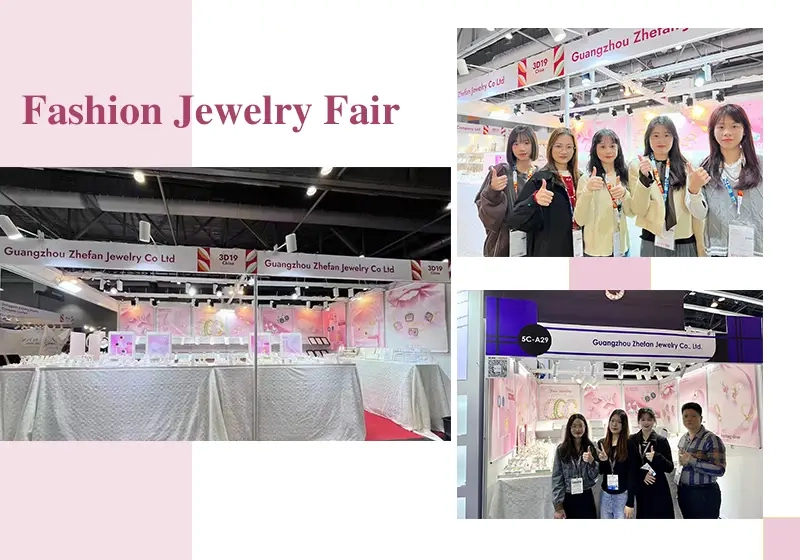
Zhefan Jewelry Will Attend Hong Kong Jewelry Fair
Prdoucts Categories
FAQ
FAQs
Do you do customer design?
Do you do customer design? Yes,we are good at this way.Most of our customer do their customize.And we have cooperate with them when they are new brand, but now they become the top sell on Amazon, more than 32,000 five star comment.
What’s the lead time? .
We could arrange shipment for you within 48 hours if you order models in stock. For bulk order, it
takes 10-25 days for production depending on order quantity and styles.
Can I get a sample?
Yes,welcome to choose our sample to test and check quality.Please give me your address and number then send you payment list.
Products
How long will the plating color last?
Generally 6 month for Water Plated color , 1 - 2 years for vacuum plated color if in proper wearing.
What is your minimum order quantity?
We offer low MOQ from 2 to 30 depending on models. Send your favor model to get details from Trade Manager.
What can you buy from us?
Rings, Necklace, Earrings, Bracelet, Pendant, Anklet, Brooch, Jewelry.
Discuss Your Ideas with a Professional Custom Jewelry Manufacturer
We provide personalized jewelry customization services for clients worldwide.
Rest assured that your privacy is important to us, and all information provided will be handled with the utmost confidentiality.
By clicking 'Send Inquiry Now' I agree to ZHEFAN JEWELRY processing my personal data.
To see how to withdraw your consent, how to control your personal data and how we process it, please see our Privacy Policy and Terms of use.
From design to production, ZHEFAN JEWELRY offers a one-stop solution to help you enhance your brand value and market competitiveness.
Get A Quote
Contact
Tel: (+86) 188 1927 7817
© 2026 Zhefan Jewelry. All Rights Reserved.
Facebook
Instagram
YouTube
Whatsapp: +8618819277817