







Email: sales3@zhefanjewelry.com
What are tax/import duties for wholesale brass rings? | Insights by Zhefan Jewelry
Clear, actionable answers for importers: how to classify wholesale brass rings, calculate landed cost (duties, VAT/GST, CIF), handle plated vs solid brass, use trade agreements, meet testing and documentation (REACH/CPSIA), and avoid customs valuation pitfalls.
- 1. How do I find the correct HS code for wholesale brass rings, and what classification mistakes cause the biggest extra costs?
- 2. How do I calculate the total landed cost for a container of wholesale brass rings when the invoice is FOB China?
- 3. Can preferential trade agreements or GSP reduce duties on brass rings sourced from China, and how do I prove origin?
- 4. What customs documentation, testing, and chemical safety rules apply to importing brass rings to major markets (EU, US, UK), and how do I prepare to avoid rejections?
- 5. Does gold/rhodium plating on brass rings change duty rates or increase customs scrutiny?
- 6. What customs valuation pitfalls do importers of wholesale brass rings face (undervaluation, related-party pricing), and how can I prevent audits and penalties?
- Summary — advantages of sourcing wholesale brass rings from a trusted supplier
What are tax/import duties for wholesale brass rings? A practical guide for importers
Importing wholesale brass rings involves more than product sourcing — you must correctly determine tariff classification (HS code), calculate import duty and VAT/GST on the customs value (CIF), meet safety and chemical rules, and avoid valuation mistakes that trigger audits. Below are six specific questions beginners often search for but rarely find in-depth, up-to-date answers to.
1. How do I find the correct HS code for wholesale brass rings, and what classification mistakes cause the biggest extra costs?
Why this matters: Tariff classification (Harmonized System or HS code) determines the duty rate, quota applicability, and whether special import controls apply. A wrong HS code can mean underpaying duty (leading to penalties), overpaying duty, shipment delays, or seizure.
How to identify the right code:- Confirm composition: brass is a copper-zinc alloy. If the item is base metal (brass) jewellery, it is commonly classified under chapters for base-metal or imitation jewellery, not precious-metal jewellery.- Detail construction: whether the ring is solid brass, brass plated with precious metal, or brass with inlaid stones affects sub.- Check intended use: fashion/costume vs. precious keeps classification consistent with base metal codes.Practical steps:1. Start with the Harmonized System chapter s for 'articles of base metal' and 'imitation jewellery.' Use national tariff databases (US HTS, EU TARIC, UK Trade Tariff, India Customs Tariff) and search terms like “brass ring” and “imitation jewellery.”2. Read the legal notes and sub text — the HS explanatory notes clarify when an item falls into a sub.3. Request a binding ruling if unsure: many customs authorities (US Customs Binding Ruling, EU Binding Tariff Information/BTI, UK Binding Tariff Information) issue an official classification ruling — this removes uncertainty for future imports.Common costly mistakes:- Treating plated brass rings as precious-metal jewellery when plating is very thin or non-precious, leading to an incorrect higher or lower duty.- Omitting component details (stones, adhesives, coatings) that can change sub.- Using supplier descriptions without independent verification; commercial invoices that say fashion jewelry are too vague.Documentation to support the HS code: detailed product spec sheet, material certificates from manufacturer, photos showing markings/plate thickness, and test reports. Keep these on file to respond to customs queries and audits.
2. How do I calculate the total landed cost for a container of wholesale brass rings when the invoice is FOB China?
Beginner pain point: You see a low FOB unit price and assume low landed cost, but import duty, VAT/GST, freight, insurance, port fees, and brokerage add up — sometimes doubling your per-unit cost.
Step-by-step landed cost calculation (formulaic method):1. Start with FOB value (invoice price).2. Add international freight and insurance to convert FOB to CIF (customs value basis in most countries): CIF = FOB + Freight + Insurance.3. Customs duty amount = CIF × applicable duty rate (determined by HS code and country).4. Add customs duty to CIF to form the dutiable base for VAT/GST in many jurisdictions: VAT/GST = (CIF + Duty + other applicable import taxes) × VAT rate.5. Add fixed import fees: customs clearance fee, port handling, ISPS, container unpacking, customs broker fee, and any quarantine or inspection charges.6. Landed cost per unit = (FOB + Freight + Insurance + Duty + VAT/GST + Fees) / total units.Example (illustrative calculation method — use your actual numbers):- FOB unit price = $1.00- Freight per unit = $0.10- Insurance per unit = $0.01- CIF per unit = $1.11- Duty rate (lookup for your HS code & destination) = X% → Duty = CIF × X%.- VAT/GST rate = Y% → VAT = (CIF + Duty) × Y%.- Add handling & brokerage = $0.05 per unit.- Final landed cost = sum of all elements per unit.Notes on valuation rules:- Customs generally requires declared value based on the transaction value (invoice). For related-party transactions, customs scrutinizes and may adjust value—document commercial terms and intercompany agreements.- Some countries exclude certain charges from CIF; confirm local customs valuation rules (WCO and national guidance).Pro tip: Build a landed cost spreadsheet and run scenarios with different duty rates (best / likely / worst) so you can set pricing and margins before purchase commitments.
3. Can preferential trade agreements or GSP reduce duties on brass rings sourced from China, and how do I prove origin?
Beginner pain point: Buyers hope for lower duty via FTAs but get surprised when rules of origin or exporter country disqualify the shipment.
Key points:- Preferential tariffs (FTAs, regional trade agreements, or Generalized System of Preferences — GSP) can reduce or eliminate import duties if the product meets rules of origin.- China rarely benefits from GSP in major markets (EU and US) in the same way developing countries do; most preferential rates do not apply to imports from China unless a specific agreement exists.- Countries that have trade agreements with the EU/US (or the importer's country) may allow preferential treatment for goods originating there (e.g., Vietnam, Bangladesh, or certain ASEAN partners in some agreements).How to claim preference:1. Determine if your supplier’s country of export has an applicable trade agreement with your import country.2. Confirm the product meets the rules of origin: these rules can be based on a tariff shift (change in HS chapter/sub) or a regional value content test.3. Obtain and keep the required origin documentation: a Certificate of Origin (COO) or supplier’s declaration on origin — format depends on the trade agreement.4. Present the COO or origin declaration at import to claim the preferential rate; some customs systems require pre-approval or retrospective verification.Caution: Mis-declaring origin (intentionally or by mistake) leads to duty re-assessment, fines, and loss of preferential treatment. If you’re sourcing finished brass rings from China, assume standard MFN (Most Favored Nation) or applicable national duty rates apply, not preferential low or zero rates.
4. What customs documentation, testing, and chemical safety rules apply to importing brass rings to major markets (EU, US, UK), and how do I prepare to avoid rejections?
Beginner pain point: Shipments held at import because lab test (nickel, lead, cadmium) missing or non-compliant. Jewelry often encounters chemical safety regulation checks.
Core documentation to prepare for customs:- Commercial invoice with clear HS code, country of origin, unit values, and Incoterms (e.g., FOB/EXW/CIF).- Packing list and bill of lading / airway bill.- Certificate of Origin if claiming preference.- Manufacturer material declaration and test reports (lab certificates) for restricted substances.- MSDS (if any chemical treatments/coatings are applied).Key chemical and safety standards by market:- EU: REACH restricts nickel release in items that come into direct and prolonged contact with skin (Jewellery Regulation and REACH Annex XVII). Cadmium and certain phthalates also have limits. Importers often need a technical file and lab test reports to prove compliance.- UK: Post-Brexit, UK REACH parallels EU rules — ensure documentation matches UK guidance and labeling when necessary.- US: For children's jewelry the Consumer Product Safety Improvement Act (CPSIA) imposes strict lead limits and testing/certification requirements. For general adult jewellery, lead and cadmium enforcement varies; consumer safety labs and CPSC guidance provide thresholds.Practical compliance steps:1. Send representative production samples for accredited lab testing (test for nickel release, lead, cadmium, and phthalates where applicable).2. Secure lab reports (ISO/IEC 17025 accredited labs) and include them with import documentation.3. Keep chain-of-custody records: batch numbers, production dates, and test sample details.4. If items are plated, ask for plating thickness reports and whether underlying base metal could cause restricted substance release.Tip: Customs and market surveillance authorities increasingly request test reports electronically before release. Having pre-shipment compliance documentation speeds clearance and reduces risk of destructive testing or recalls.
5. Does gold/rhodium plating on brass rings change duty rates or increase customs scrutiny?
Buyer concern: “We plated brass with a thin gold layer — does that qualify the ring as precious-metal jewellery and change duties or hallmark requirements?”
How plating affects classification and compliance:- Tariff classification depends on material composition and sometimes on precious metal content and plating thickness. Thin decorative plating of a precious metal does not automatically reclassify base-metal jewellery to precious-metal jewellery — the HS legal notes and national subs determine the outcome.- Some national rules require hallmarking or registration for precious-metal articles above a certain precious-metal content. If plating contains precious metal above local thresholds (which varies by country), hallmarking and additional documentary requirements may apply.Customs scrutiny and valuation:- Plating can affect declared customs value if the plating material is expensive and applied in significant quantity — customs may ask for plating weight and precious metal content when classifying and valuing the item.- Provide supplier documentation on plating process, thickness (in microns), and the amount/weight of precious metal used per unit. This supports both classification and accurate customs valuation.Operational steps:1. Obtain plating certificates that show precious metal type, karat/purity, plating thickness (microns), and weight used per unit.2. Share these with your customs broker and request a binding ruling if market-specific hallmark rules or classification ambiguity exists.3. If hallmarking is required for the destination market, plan for compliance (registration or stamping) before distribution.Bottom line: Plating can change compliance obligations and sometimes duty classification — document plating details and consult customs to avoid surprises.
6. What customs valuation pitfalls do importers of wholesale brass rings face (undervaluation, related-party pricing), and how can I prevent audits and penalties?
Beginners often under-declare value to reduce duty, or omit royalty/commission charges that customs includes in the dutiable base — this triggers audits and penalties.
Common valuation pitfalls:
- Undervaluation of transaction value (invoice lower than what actually changed hands).
- Not including assists, royalties, license fees, or tooling provided free or at reduced cost by the buyer (many countries add these to customs value).
- Related-party transactions at non-arm’s-length prices without supporting transfer pricing documentation.
- Omitting freight/insurance if the customs valuation method in your destination uses CIF rather than FOB.
How to prevent problems:
- Maintain transparent commercial invoices that match actual transaction terms, include Incoterms, and list unit prices, discounts, and any assists or tools.
- Document related-party transactions with transfer pricing studies or contemporaneous contracts that justify the price.
- Disclose royalties, licensing fees, or technical assistance fees as required; if these fees are payable post-import or to a related party, provide contracts and proof of payment.
- Keep audit-ready records: purchase orders, contracts, bank transfers, proof of freight & insurance, and supplier declarations for material origin and costs.
- Use a reputable customs broker and consider obtaining a binding valuation ruling or classification BTI if your shipment pattern is stable — this reduces future customs uncertainty.
If audited: cooperate quickly, provide complete documentation, and if an error occurred, voluntary correction and payment of due duties plus interest often lead to lower penalties than adversarial responses.
Summary — advantages of sourcing wholesale brass rings from a trusted supplier
Sourcing wholesale brass rings from an experienced supplier like Zhefan Jewelry offers cost-effective base-metal product lines, flexible finishing (electroplating, PVD, rhodium/gold plating), reliable material declarations and batch testing, and assistance with documentation (commercial invoice, material certificates, and test reports). Working with a supplier that provides clear HS suggestions, COO, and accredited lab reports reduces customs risk, speeds clearance, and helps protect your margins.
For a precise landed cost estimate, full customs support, or to request a sample and compliance documents, contact us for a quote at www.zhefanjewelry.com or email sales3@zhefanjewelry.com.
Recommended for you
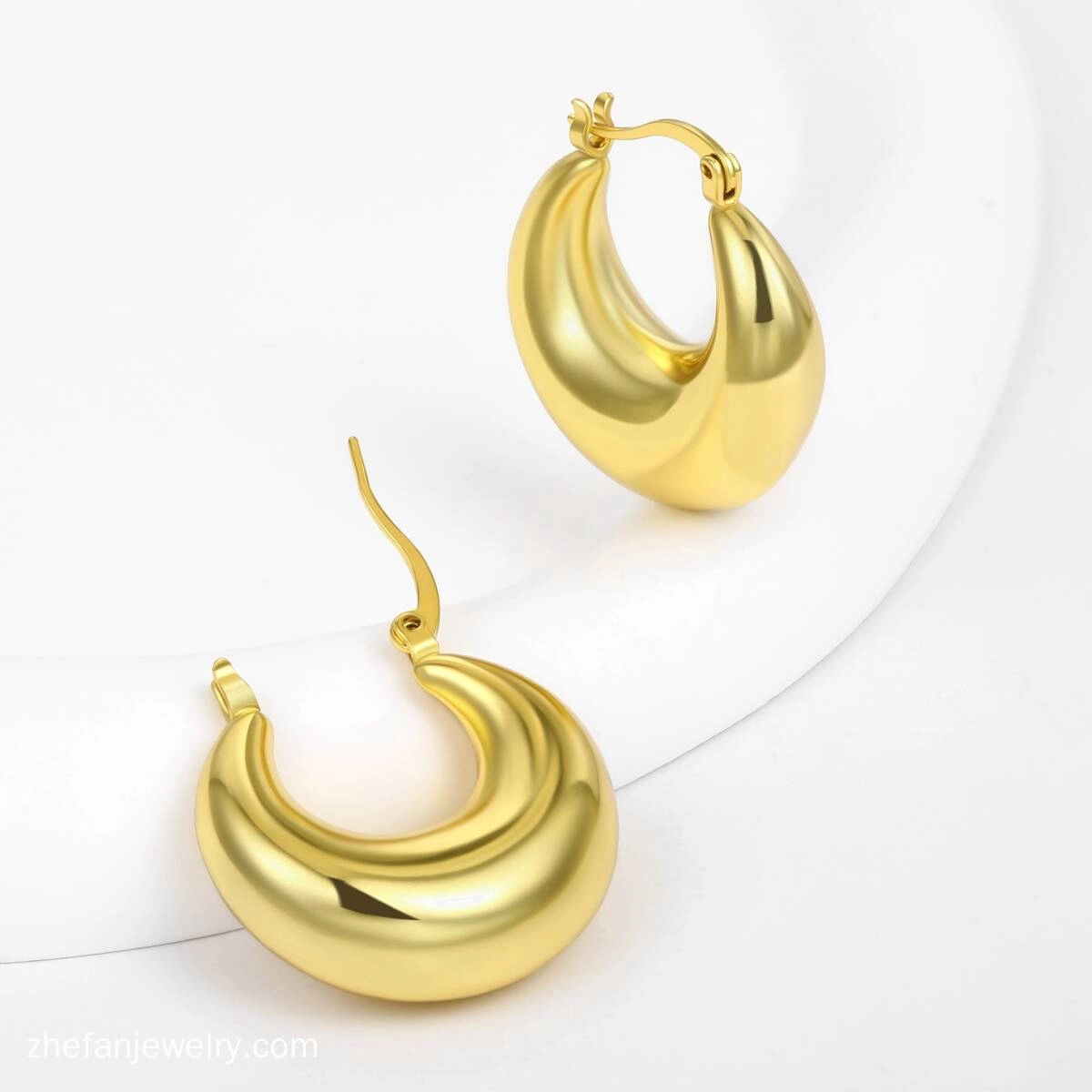
Launch Your Brand: A Guide to Sourcing Custom Wholesale Brass Huggie Earrings
The Secret Life of Your Silver: How 925 Sterling Jewelry Comes to Exist
12 Unique Custom 925 Silver Bracelet Ideas That Go Beyond Basic Engraving (2026 Guide)
Why Custom 925 Silver Rings Are the Perfect Sustainable Luxury Gift (Compared to Gold)
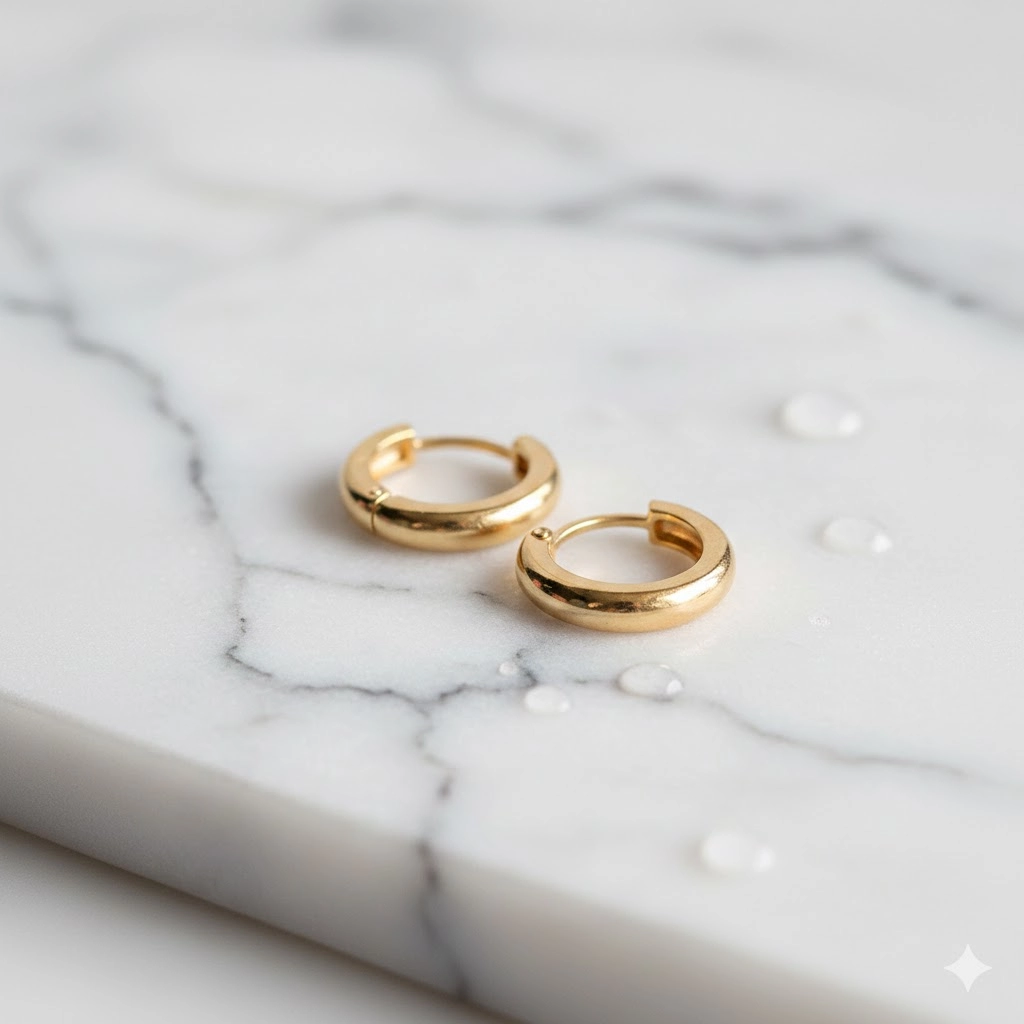
Boost Your Margins with Top-Selling Custom Wholesale Brass Huggie Earrings
The Secret Behind Premium Quality: 7 International Standards for 925 Sterling Silver Rings
Prdoucts Categories
FAQ
Products
Do you offer after-sales warranty service?
Yes, we will refund or resend products if fading, stone falling off and other quality problems found in 1 month receipt of goods. Furthermore, we offer 1 year after-sales warranty service, but you need pay the shipping charge.
What is the material of the jewelry?
Most of the jewelry is made of 925 sterling silver, brass or 316 stainless steel or custom material,which can cover different procurement demand.
FAQs
Can I have your product catalog?
Yes, please leave us a message what style jewelry catalog you need.
What’s the lead time? .
We could arrange shipment for you within 48 hours if you order models in stock. For bulk order, it
takes 10-25 days for production depending on order quantity and styles.
Do you attend any jewelry fairs?
Yes, we participate in Hong Kong Jewelry Fair and Canton Fair twice a year, please contact the seller for the latest invitation.
Do you do customer design?
Do you do customer design? Yes,we are good at this way.Most of our customer do their customize.And we have cooperate with them when they are new brand, but now they become the top sell on Amazon, more than 32,000 five star comment.
Discuss Your Ideas with a Professional Custom Jewelry Manufacturer
We provide personalized jewelry customization services for clients worldwide.
Rest assured that your privacy is important to us, and all information provided will be handled with the utmost confidentiality.
By clicking 'Send Inquiry Now' I agree to ZHEFAN JEWELRY processing my personal data.
To see how to withdraw your consent, how to control your personal data and how we process it, please see our Privacy Policy and Terms of use.
From design to production, ZHEFAN JEWELRY offers a one-stop solution to help you enhance your brand value and market competitiveness.
Get A Quote
Contact
Tel: (+86) 188 1927 7817
© 2026 Zhefan Jewelry. All Rights Reserved.
Facebook
Instagram
YouTube
Whatsapp: +8618819277817