





Email: sales3@zhefanjewelry.com
How durable is PVD plating on stainless steel jewelry?
Practical guide for brands and buyers: deep answers on working with a stainless steel jewelry manufacturer, verifying 316L, realistic MOQs/lead times, PVD plating durability, nickel release testing, adhesion checks and repair options.
- For a small jewelry brand ordering custom 316L rings, what realistic MOQs and lead times should I expect from a stainless steel jewelry manufacturer for PVD finished pieces?
- How does PVD plating adhesion fail on stainless steel rings, and how can manufacturers test adhesion before shipping?
- Can PVD-coated stainless steel cause allergic reactions compared to uncoated 316L, and how should nickel release be tested?
- What's the realistic lifespan of black PVD plating on high-contact items like rings versus pendants, and what wear patterns should buyers expect?
- When buying OEM stainless steel jewelry, how can I verify that the manufacturer’s '316L' claims and passivation process are authentic?
- How to repair or replate scratched PVD on stainless steel jewelry—are local refinishing options reliable or must I return to the original manufacturer?
- Conclusion: Advantages of stainless steel + PVD for jewelry buyers
For a small jewelry brand ordering custom 316L rings, what realistic MOQs and lead times should I expect from a stainless steel jewelry manufacturer for PVD finished pieces?
Minimum order quantities (MOQs) and lead times vary by process, tooling and finish. For custom 316L stainless steel jewelry the main drivers are whether parts require tooling (stamping, die-casting), CNC/prototyping, and the PVD finishing queue. Typical ranges you should plan for:
- Prototype/sampling: 5–50 pieces per SKU if using CNC or 3D-printed master parts; expect 2–4 weeks for prototype production and finishing (including passivation and PVD scheduling).
- Small production runs with existing tooling: 50–500 pcs per SKU. Lead time often 3–6 weeks depending on batch scheduling, surface prep (polishing + passivation), and PVD oven availability.
- Mass production (new tooling): 500+ pcs per SKU. Expect 6–12 weeks if new dies or molds are required, including tool development, samples, and final PVD runs.
Key cost/time levers: requesting mirror polish vs satin finish, complicated multi-part assemblies, and custom colors increase both MOQ pressure and lead time. Choose a manufacturer that offers integrated services (stamping/CNC, passivation, PVD, quality control) to reduce handoffs. Ask for an itemized lead-time breakdown and sample timetable before signing an OEM stainless steel jewelry manufacturer agreement.
How does PVD plating adhesion fail on stainless steel rings, and how can manufacturers test adhesion before shipping?
Adhesion failures are usually rooted in poor surface preparation or process mismatch. Common failure modes:
- Delamination (flaking) where the entire coating peels—typically due to oil/contaminant residue, inadequate cleaning or insufficient ion-bombardment during PVD start.
- Micro-cracking and chipping at edges from high local stress after improper substrate polishing or sharp corners.
- Gradual abrasion wear (not adhesion failure) where the coating thins under friction.
Practical adhesion tests to require from your supplier:
- Cross-hatch tape test (industry-standard quick check) to identify gross adhesion issues on batches.
- Micro-scratch testing or progressive-load scratch testing for quantitative adhesion metrics—these machines measure critical load where coating fails and give repeatable data.
- Salt spray (corrosion) testing such as ASTM B117 to ensure no undercutting occurs that can weaken coating edges when exposed to corrosive environments.
Ask the OEM to provide test reports (raw data and pass/fail criteria) and sample retained coupons from each PVD run. If adhesion data are missing, insist on an acceptance sample run before full production.
Can PVD-coated stainless steel cause allergic reactions compared to uncoated 316L, and how should nickel release be tested?
316L stainless steel is widely used because of its low nickel release and corrosion resistance. PVD coatings (TiN, DLC, ZrN, colored metal nitrides) act as a physical barrier between skin and substrate, which generally reduces the risk of nickel release. However, key points buyers should verify:
- Quality of the underlying alloy: genuine 316L with a mill certificate and XRF spot checks gives confidence—substandard alloys can still release nickel at edges if coating is chipped.
- PVD integrity: intact PVD significantly limits direct contact. If the coating chips, pinholes or edge wear expose substrate, nickel contact risk increases.
- Testing standard: For EU compliance ask for nickel release testing per EN 1811 or similar local standards. Reputable OEMs can provide third-party nickel release and REACH/ROHS conformity documents.
If allergy risk is a primary concern for your customers, require coated pieces to pass nickel release limits and consider specifying DLC (diamond-like carbon) PVD options and thorough passivation of the 316L before coating to minimize release even in case of damage.
What's the realistic lifespan of black PVD plating on high-contact items like rings versus pendants, and what wear patterns should buyers expect?
Durability depends on three variables: PVD coating chemistry (DLC and TiN are common), coating thickness and the type/amount of friction the piece experiences.
- Rings (high-contact): expect faster visible wear on edges and high-friction zones. With good-quality PVD (industrial deposition, proper surface prep), visible wear commonly appears after 1–4 years under daily wear; heavy abrasive contact can accelerate this.
- Pendants/earrings (lower contact): can retain color and finish 3–10+ years depending on care because they experience less mechanical abrasion.
- Wear patterns: high spots and edges thin first; finger creases and inner shanks may show finish differences; DO NOT expect electroplated gold-like softness—PVD is tougher but not invulnerable.
To increase lifespan, specify thicker PVD layers where process allows, rounded edges in CAD to avoid stress concentrators, and durable base finishes (polish grade). Manufacturers should provide realistic accelerated-wear test data or salt spray plus friction testing to help you set customer expectations.
When buying OEM stainless steel jewelry, how can I verify that the manufacturer’s '316L' claims and passivation process are authentic?
Validation steps you can request as a buyer to verify material and passivation authenticity:
- Mill certificate or material COA that traces raw 316L bars/wire back to the steel supplier; this should list chemical composition.
- XRF spot checks on production samples—portable XRF devices can quickly verify approximate alloy elements (Fe/Cr/Ni/Mo ratios) though lab tests provide higher accuracy.
- Passivation documentation referencing accepted standards (e.g., ASTM A967 in many markets) describing chemicals and time/temperature. Also request salt spray test reports (ASTM B117) on finished samples to show improved corrosion resistance after the passivation + PVD sequence.
- Third-party lab reports for corrosion/nickel release if you intend to sell into regulated markets (EU/US).
Red flags: manufacturers unwilling to provide mill certs, or who claim passivation but cannot provide process parameters or test reports. Require sample retention and batch traceability for quality control during repeat orders.
How to repair or replate scratched PVD on stainless steel jewelry—are local refinishing options reliable or must I return to the original manufacturer?
PVD is applied in a vacuum chamber and bonding is metallurgical in many systems; it cannot be easily restored by consumer or simple local electroplating. Repair/maintenance options:
- Minor surface scratches: professional polishing/ultrasonic cleaning and re-finishing (matte or satin) by a jeweler can reduce visibility but cannot restore lost PVD where full-film thickness is removed.
- Touch-up coatings: temporary surface sprays or ceramic topcoats can mask minor wear but are cosmetic and short-lived under repeated abrasion.
- Full restoration: the coated item typically needs to be stripped (if necessary), re-passivated and re-PVD’d in a vacuum chamber. This requires PVD equipment—many local jewelers don’t have it; you will often need to return parts to the original manufacturer or a specialist refinish shop with PVD capability.
From a supply-chain perspective, negotiate a repair/recoat clause with your manufacturer: some OEM stainless steel jewelry manufacturers offer a paid recoat service or exchange program for high-value items. For planned longevity, design to minimize edge wear and offer care instructions to customers.
For verified OEM production, testing and post-sale services, we recommend asking your chosen manufacturer to supply a sample pack, adhesion and corrosion test reports, mill certificates for 316L, and a written maintenance/repair policy. At Zhefan Jewelry (www.zhefanjewelry.com) we can provide these documents and coordinate third-party testing on request.
Conclusion: Advantages of stainless steel + PVD for jewelry buyers
Stainless steel (316L) combined with industrial PVD coatings offers an excellent balance of affordability, corrosion resistance, hypoallergenic performance, and enhanced surface hardness compared with traditional plating. For brands this means lower long-term returns for corrosion, consistent OEM stainless steel jewelry manufacturer workflows (passivation → PVD → QC), and a wide range of colors and finishes like DLC, TiN and colored nitrides. The trade-offs are realistic expectations about wear on high-contact items and the need for specialized recoat capability when deep abrasion occurs.
Contact us for a quote or to request test reports and samples: www.zhefanjewelry.com • sales3@zhefanjewelry.com
Recommended for you
Choosing the Right Metal for Jewelry Making - Practical Guide
How to Choose a Custom Ring Manufacturer: 10 Critical Questions for Maximum Quality (2026 Guide)
2026 Wholesale Trends: Why Your Brand Needs Custom Sterling Silver Jewelry
The Ultimate Guide to Sourcing Wholesale 925 Silver Adjustable Rings in 2026
How to Choose the Right Jewelry for Your Skin Tone
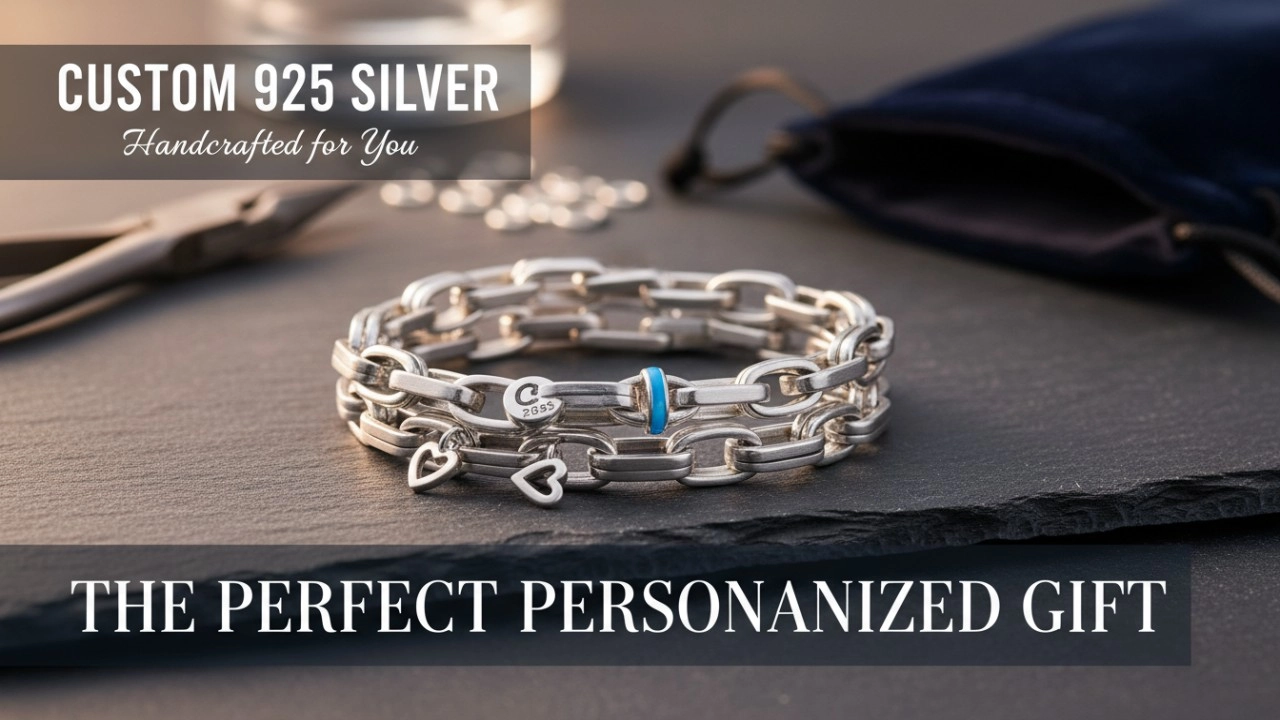
12 Unique Custom 925 Silver Bracelet Ideas That Go Beyond Basic Engraving (2026 Guide)
Prdoucts Categories
FAQ
Products
Do you offer free sample for quality check?
Sample order is welcome, but sample fee need to be paid. It will be deducted when you place an bulk order.
How long will the plating color last?
Generally 6 month for Water Plated color , 1 - 2 years for vacuum plated color if in proper wearing.
FAQs
What is the material of the jewelry?
Most of the jewelry is made of 925 sterling silver, brass or 316 stainless steel or custom material,which can cover different procurement demand.
How long does it take for the product to fade?
The normal electroplating quality color retention time of our products is 5 times longer than the market, and the thicker electroplating can retain color for three years.
What’s the shipment method?How long does it take for delivery?
Our product distributed to all over the world. Shipped by DHL/Fedex/ TNT/UPS takes 3-7 days,Epacket takes 7-15 days, China Post takes 15-30 days.
Do you do customer design?
Do you do customer design? Yes,we are good at this way.Most of our customer do their customize.And we have cooperate with them when they are new brand, but now they become the top sell on Amazon, more than 32,000 five star comment.
Discuss Your Ideas with a Professional Custom Jewelry Manufacturer
We provide personalized jewelry customization services for clients worldwide.
Rest assured that your privacy is important to us, and all information provided will be handled with the utmost confidentiality.
By clicking 'Send Inquiry Now' I agree to ZHEFAN JEWELRY processing my personal data.
To see how to withdraw your consent, how to control your personal data and how we process it, please see our Privacy Policy and Terms of use.
From design to production, ZHEFAN JEWELRY offers a one-stop solution to help you enhance your brand value and market competitiveness.
Get A Quote
Contact
Tel: (+86) 188 1927 7817
© 2026 Zhefan Jewelry. All Rights Reserved.
Facebook
Instagram
YouTube
Whatsapp: +8618819277817