





Email: sales3@zhefanjewelry.com
What finishes and plating options do manufacturers offer?
Practical, procurement-focused answers for buyers working with a stainless steel jewelry manufacturer. Covers 316L verification, realistic MOQs and lead times, PVD vs electroplating durability, QC tolerances (AQL, plating thickness, EN/ASTM tests), engraving workflows and true meaning of "nickel-free." Technical, actionable guidance for OEM/ODM sourcing.
- 1) How can I verify a manufacturer's 316L claim so I don't receive counterfeit alloy jewelry?
- 2) What are realistic MOQs, lead times and cost drivers when ordering custom stainless steel pieces with PVD or rhodium plating?
- 3) How do different finishes and plating options actually compare for wear-life, hypoallergenic safety, and repairability?
- 4) What finishing tolerances and QC steps should I require to avoid high return rates (surface roughness, plating thickness, AQL)?
- 5) For custom logos and engraving on stainless steel, what are minimum sizes, recommended techniques, and how do finishes affect legibility and coating adhesion?
- 6) How do I evaluate nickel-free or hypoallergenic claims — what specific tests or certificates should I require?
Working with a stainless steel jewelry manufacturer requires precise questions — especially about finishes and plating. Below are six long-tail, buyer-focused questions beginners ask but rarely find deep answers to. Each answers real procurement pain points and cites the accepted industry tests and processes buyers should request (MTR/XRF, EN 1811, ASTM B117, ASTM A967, AQL inspection).
1) How can I verify a manufacturer's 316L claim so I don't receive counterfeit alloy jewelry?
Problem: Many vendors label items 316L without traceability. What to request and what to read in the documents:
- Request the Mill Test Report (MTR) or Certificate of Analysis that shows the heat/lot number and chemical composition. Verified 316L composition typically ranges approximately Cr 16–18%, Ni 10–14%, Mo 2–3%, C ≤0.03% — cross-check these numbers on the MTR.
- Ask for batch traceability. A legitimate stainless steel jewelry manufacturer will link the MTR heat number to the production batch and provide stamping/label info or coil/cut-off records.
- Insist on independent verification for first runs: XRF handheld spectrometer readings or a lab certificate from SGS/Intertek that confirm alloy elements. For highest assurance, request an ISO/IEC 17025 lab report.
- Check process documentation: passivation records per ASTM A967 and electropolishing logs. Proper passivation removes free iron and is often missing on low-quality lots.
- If the supplier resists, treat the alloy claim as unverified. For OEM/ODM projects include these verification steps in your contract and initial sample approval (PSA) criteria.
2) What are realistic MOQs, lead times and cost drivers when ordering custom stainless steel pieces with PVD or rhodium plating?
Beginners often get surprised by timeline and pricing. Typical practical expectations:
- MOQs: Many manufacturers require 100–500 pieces per SKU for CNC/machined or stamped designs. For cast or complex tooling the MOQ can rise to 300–2,000 depending on tooling amortization. Ask whether MOQ applies per size, per finish, or per artwork.
- Lead times: Prototype/sample: ~7–14 calendar days (depending on whether tooling or casting is needed). Mass production: commonly 25–45 days after sample approval. Add 5–14 days extra if complex plating (multi-step PVD layers, rhodium blocking) or stone setting is required.
- Cost drivers: material weight (stainless grade 316L is heavier than plated brass, so metal cost matters), finish type (PVD and IP cost more than basic electroplating), plating thickness and number of colors, machining vs casting, stone setting labor, artwork complexity, and required certifications (EN 1811, RoHS, REACH). Tooling/setup fees are one-time but often significant for low-volume runs.
- Negotiation tip: consolidate SKUs with identical base parts and vary only surface finish to reduce MOQ pressure. Clarify whether the quoted MOQ includes multiple finish batches or requires separate production runs.
3) How do different finishes and plating options actually compare for wear-life, hypoallergenic safety, and repairability?
Simple marketing labels hide practical differences. Compare the main finishes:
- PVD (Physical Vapor Deposition / IP / Ion plating): Dense, hard films applied in vacuum. Advantages: superior scratch and abrasion resistance, good corrosion resistance, and no nickel in the coating itself (when specifically formulated nickel-free). Typical commercial PVD layers are thin but dense; they outperform thin electroplating in everyday wear. Repairability: re-coating requires specialized PVD equipment — not an easy field repair.
- Electroplating (gold, silver, black): Electrolytic deposits of metal. Advantages: lower upfront cost and easier to re-plate locally. Downsides: if plating is thin it will wear faster; many electroplated finishes historically use nickel-containing undercoats unless explicitly shown nickel-free. Durability depends dramatically on plating thickness and pre-treatment.
- Rhodium plating: A noble metal finish often used for white-bright look (as on white gold). Pros: bright, tarnish-resistant. Cons: rhodium layers are usually very thin and can wear on high-contact areas — periodic re-plating may be needed.
- Electropolishing and mechanical finishes (mirror polish, brushed, bead blast): Electropolishing removes micro-burrs, improves corrosion resistance, and increases coating adhesion. Mechanical finishes change appearance but can show wear differently — brushed finishes hide minor scratches better than mirror polish.
Practical guidance: For everyday jewelry intended for long-term wear (rings, bracelets) choose 316L base + electropolishing + PVD if budget allows. If consumer wants gold color but lower budget, request a specified electroplate thickness and a post-plate protective lacquer or PVD topcoat to extend life.
4) What finishing tolerances and QC steps should I require to avoid high return rates (surface roughness, plating thickness, AQL)?
Vague specs lead to disputes. State objective, testable acceptance criteria in your purchase order and PPAP/sample approval:
- Dimensional tolerances: for precision jewelry parts, request CAD tolerances (±0.05–0.2 mm depending on feature). Confirm on first article inspections and include Cpk/SPC expectations for mass production if you need consistent sizing.
- Surface roughness: for mirror polish aim for Ra ≤0.4–0.8 µm depending on process. Brushed finishes are measured by grit and direction; specify grit target (e.g., 180–240 grit) and visual acceptance photos.
- Plating thickness: specify target and minimum. Common guidance: PVD target 0.5–3 µm (specify required minimum), electroplated gold often much thinner (0.05–0.5 µm) unless labeled heavy/gold filled. Use microns as the unit and require test reports or spot checks with XRF.
- AQL and inspection: set an AQL level — typical jewelry AQL is 1.5 to 2.5 depending on price point and channel (1.5 for High Quality, 2.5 for mass-market). Require pre-shipment AQL inspection reports with photo evidence for critical defects (plating blisters, uneven finish, visible base metal).
- Performance testing: request nickel release testing per EN 1811 for nickel-free claims, salt spray testing per ASTM B117 for corrosion resistance benchmarks (useful to compare finishes), and adhesion checks (cross-cut or tape tests per ASTM D3359) for plating adhesion verification.
- Third-party lab testing: require ISO/IEC 17025 accredited lab reports when certification is important for your market. Keep a retention sample and specify re-test rights in the contract.
5) For custom logos and engraving on stainless steel, what are minimum sizes, recommended techniques, and how do finishes affect legibility and coating adhesion?
Logo and engraving mistakes spoil production runs. Practical specifications buyers should use:
- Artwork: provide vector files (AI/EPS/SVG) with outlines converted to paths. Avoid raster images for small logos.
- Minimum sizes: for simple text or line-work, request character heights ≥1.5–2.0 mm for consistent legibility on jewelry. Logos with fine detail need larger areas — plan for at least 6–10 mm in diameter for small icons.
- Techniques: fiber laser engraving is preferred for stainless steel — it gives crisp lines, variable depth (commonly 0.02–0.20 mm) and high repeatability. Deep engraving or CNC milling is needed when you must retain engraving visibility through a plated finish.
- Sequence and finish interaction: engraving after plating will remove the surface coating and expose base metal; engraving before plating will be covered by plating (and the engraving may be less visible). For visible dark-on-light contrast, consider laser annealing or pad-filling with lacquer followed by sealing. If you need visible, plated-filled engraving, discuss a two-step process with your manufacturer (engrave → plate → selective touch-up) and account for extra cost.
- Adhesion impact: deep engraving can introduce local stress and edges where plating may thin or pool. Require electropolishing before plating to smooth edges and improve coating adhesion. Ask the manufacturer for test samples with the engraving + finish combination before mass production.
6) How do I evaluate nickel-free or hypoallergenic claims — what specific tests or certificates should I require?
Nickel-free is often used loosely. To avoid allergic complaints require objective tests:
- Request a nickel release test per EN 1811 (or an equivalent ISO standard). EN 1811 measures nickel release under defined conditions and is the accepted route for EU/UK compliance.
- For US markets, ask for REACH and RoHS declarations if relevant to your product. Request MSDS and alloy MTRs to cross-check the base material.
- For plated items, ensure the plated layers and undercoats are nickel-free. Ask for plating bath declarations and test samples. Some manufacturers use nickel-containing undercoats to improve adhesion — ask explicitly for a nickel-free plating flow if customers are sensitive.
- Insist on an accredited lab (ISO/IEC 17025) report for allergy-critical claims. Spot-check production batches with XRF and periodic EN 1811 testing to ensure consistency.
- Operational controls: require the vendor to document cross-contamination controls (separate plating lines or validated cleaning) and include those controls as part of your supplier audit or factory acceptance criteria.
Final procurement checklist (short): MTR + XRF/third-party lab report; defined MOQ & lead-time; specify plating type & thickness in microns and require XRF verification; set AQL level; demand EN 1811 for nickel claims; require photos and pre-shipment inspection reports.
Conclusion — Advantages of working with a qualified stainless steel jewelry manufacturer
Choosing an experienced stainless steel jewelry manufacturer who uses 316L material, follows passivation and electropolishing best practices, and offers advanced coatings (PVD, rhodium, durable electroplates) reduces returns and warranty costs. You will gain: consistent alloy traceability (MTR/XRF), longer-wear finishes (electropolished + PVD), objective QC (AQL + lab tests), and predictable production economics for OEM/ODM projects. Document these specs up front — plating type, target microns, AQL, and required lab tests — and require pre-production approval samples and third-party reports where allergy or compliance risk exists.
To request a quote or discuss OEM/ODM capabilities for stainless steel jewelry finishes and plating, contact us at www.zhefanjewelry.com or email sales3@zhefanjewelry.com.
Recommended for you
Sourcing Guide: How to Maximize Margins with Custom Sterling Silver Jewelry
How to Choose a Custom Ring Manufacturer: 10 Critical Questions for Maximum Quality (2026 Guide)
12 Unique Custom 925 Silver Bracelet Ideas That Go Beyond Basic Engraving (2026 Guide)
What is Zircon Jewelry?-The Ulimate Guide
Launch Your Brand: The Ultimate Guide to Manufacturing Custom Sterling Silver Jewelry
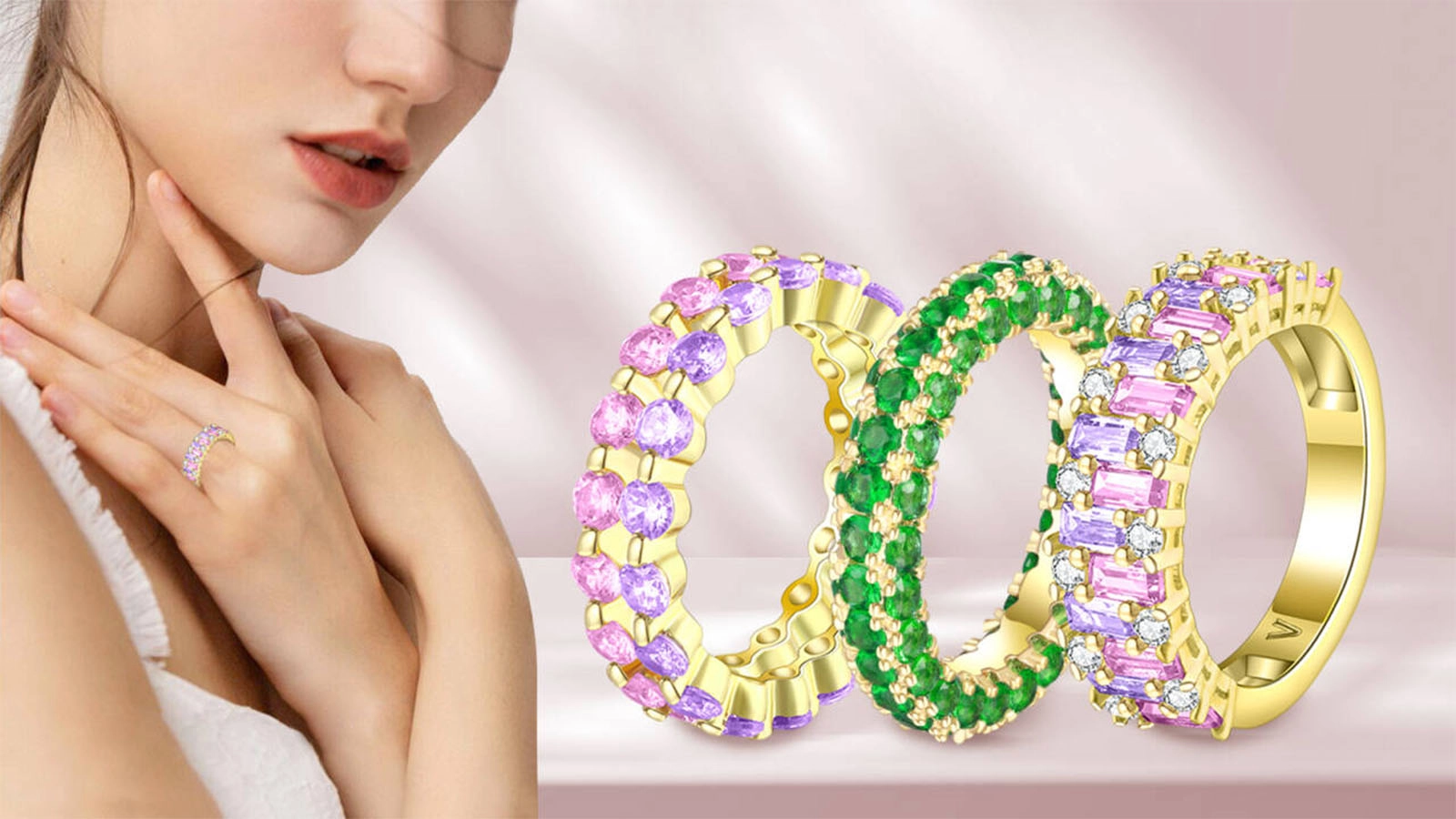
Choosing the Right Metal for Jewelry Making - Practical Guide
Prdoucts Categories
FAQ
Products
What's themonthly production capacity?
600,000 pcs per month.
What can you buy from us?
Rings, Necklace, Earrings, Bracelet, Pendant, Anklet, Brooch, Jewelry.
Do you offer free sample for quality check?
Sample order is welcome, but sample fee need to be paid. It will be deducted when you place an bulk order.
What services can we provide?
Accepted Delivery Terms: FOB, CIF, EXW, Express Delivery;
Accepted Payment Currency: USD, EUR, JPY, CAD, AUD, HKD, GBP, CNY, CHF;
Accepted Payment Type: T/T, L/C, MoneyGram, Credit Card, PayPal, Western Union, Cash, Escrow;
Language Spoken: English, Chinese, Spanish, Japanese, Portuguese, German, Arabic, French, Russian, Korean, Hindi, Italian.
FAQs
Can I have your product catalog?
Yes, please leave us a message what style jewelry catalog you need.
Can I see your product test report?
Of course.Our product throught standar test like SGS.We test in many ways of product.
Discuss Your Ideas with a Professional Custom Jewelry Manufacturer
We provide personalized jewelry customization services for clients worldwide.
Rest assured that your privacy is important to us, and all information provided will be handled with the utmost confidentiality.
By clicking 'Send Inquiry Now' I agree to ZHEFAN JEWELRY processing my personal data.
To see how to withdraw your consent, how to control your personal data and how we process it, please see our Privacy Policy and Terms of use.
From design to production, ZHEFAN JEWELRY offers a one-stop solution to help you enhance your brand value and market competitiveness.
Get A Quote
Contact
Tel: (+86) 188 1927 7817
© 2026 Zhefan Jewelry. All Rights Reserved.
Facebook
Instagram
YouTube
Whatsapp: +8618819277817