







Email: sales3@zhefanjewelry.com
How to set retail price from wholesale brass rings cost? | Insights by Zhefan Jewelry
Practical, step-by-step guide to set retail price from wholesale brass rings cost: calculate landed cost, choose appropriate markup, include plating/packaging/marketplace fees, adjust for VAT/duties and run A/B tests for optimal margins.
- 1. How do I calculate an accurate landed cost per brass ring (including plating, packaging, shipping and duties) so my retail price covers true expenses?
- 2. What markup or margin range should I apply to wholesale brass rings to cover marketplace fees (Etsy, Amazon), ads, and still be competitive?
- 3. How should I price brass rings with gold plating or vermeil differently than unplated brass, so perceived value matches price?
- 4. How do I set tiered retail pricing and bundle discounts for brass rings without eroding margins or training customers to wait for discounts?
- 5. How should I adjust retail prices for brass rings across different countries, accounting for VAT/GST, duties and currency fluctuations?
- 6. How do I run A/B pricing tests and use conversion metrics to validate a retail price for brass rings without damaging brand positioning?
As a jewelry industry expert with hands-on experience in wholesale brass rings, this article answers six specific, practitioner-oriented questions about how to set retail price from wholesale brass rings cost. It embeds important concepts such as landed cost, keystone pricing, cost-plus, profit margin, marketplace fees, plating cost, perceived value and A/B testing so you can price confidently and protect margins.
1. How do I calculate an accurate landed cost per brass ring (including plating, packaging, shipping and duties) so my retail price covers true expenses?
Why this matters: Beginners often price using only the wholesale invoice price. Landed cost captures every incremental expense that affects profit and is essential for setting a retail price that actually covers costs.
Step-by-step landed cost formula you can use:
1) Direct product cost (wholesale unit cost).
2) Add unit-level modifications: plating, coating, stones, or customization per unit.
3) Add packaging and labeling cost per unit.
4) Add inbound shipping per unit (total freight / units in shipment).
5) Add import duties and VAT/GST (calculated on customs value per local rules).
6) Add inspection, testing, or certification per unit if applicable.
7) Add per-unit fulfillment and returns allowance (estimated percentage of retail price or a per-unit reserve).
8) Add overhead allocation per unit (rent, staff, marketing divided across expected monthly units sold).
Concrete example (realistic sample numbers used as an industry illustration; replace with your exact supplier data):
- Wholesale cost per brass ring: $2.50
- Gold electroplating per ring: $0.60
- Packaging (box, polybag, tag): $0.45
- Inland/port freight + handling allocated per unit: $0.30
- Import duty and customs fees (assume 3% of customs value): $0.09
- Payment processing & marketplace fees reserve (allocated here for landed cost planning): $0.25
- Overhead allocation per unit (small atelier): $0.40
Total landed cost per unit = $2.50 + $0.60 + $0.45 + $0.30 + $0.09 + $0.25 + $0.40 = $4.59
Notes and best practices:
- Always obtain freight quotes and allocate them per unit based on realistic breakup of SKUs.
- Check your country customs tariff to determine exact duties by HS code — duties vary widely by material and finish.
- If you use third-party fulfillment, request SKU-level fulfillment costs so you can include pick/pack and returns reserves.
- Recalculate landed cost when you change plating, stone settings or packaging — small changes materially shift margins for low-cost brass rings.
2. What markup or margin range should I apply to wholesale brass rings to cover marketplace fees (Etsy, Amazon), ads, and still be competitive?
Why this matters: Many sellers use keystone (2x) by default, but keystone ignores fees, ad spend and differentiators like plating or branding. For brass rings you need a more granular approach.
Key definitions:
- Markup (%) = (Retail - Cost) / Cost. Example: cost $5, retail $15 -> markup = 200%.
- Gross Margin (%) = (Retail - Cost) / Retail. Example: cost $5, retail $15 -> margin = 66.7%.
Practical ranges for fashion/jewelry brass rings (industry-observed):
- Basic unplated brass rings: wholesale-to-retail multiplier often 2.5x to 3.5x (markup 150%–250%). This handles low perceived value and higher return rates.
- Gold- or vermeil-plated brass rings with better finish: 3x to 4x multiplier (markup 200%–300%) because perceived value rises and you can charge more for finish.
- Designer-branded or artisan brass rings with story and packaging: 3.5x–5x or higher depending on brand positioning.
Fee-aware pricing formula (work backwards from target margin):
Target Net Margin = Desired gross margin after marketplace/referral and payment transaction fees and returns reserve.
Retail Price = Total Landed Cost / (1 - Target Net Margin)
Example using landed cost from previous answer ($4.59) and target net margin 55% (so you can absorb fees and ads):
Retail = 4.59 / (1 - 0.55) = 4.59 / 0.45 = $10.20
If you instead used keystone on $4.59 you'd price at ~$9.18 — too low to comfortably support ad spend and marketplace fees. Industry sellers selling on marketplaces typically build in 5%–20% marketplace/referral plus 2%–4% payment processing and a 5%–10% return/fulfillment buffer into their target margin.
Actionable tip: calculate a 'fee buffer' using conservative upper-bound fee percentages (e.g., 20% marketplace + 3% payment + 7% returns = 30% buffer). Use a target margin that leaves room for that buffer plus profit.
3. How should I price brass rings with gold plating or vermeil differently than unplated brass, so perceived value matches price?
Why this matters: Plating and finish can multiply perceived value, but mispricing either leaves money on the table or breaks trust with buyers expecting luxury quality at higher price points.
Value components to factor into pricing for plated items:
- Actual incremental cost of plating or vermeil and any protective coatings (clear lacquer, anti-tarnish). Include rework or QA rejects.
- Extended perceived value: plating often allows you to move from commodity pricing to ‘fashion jewelry’ bracket; this supports higher multipliers.
- Longevity and returns profile: plated pieces may require reserves for replating programs or returns if plating fails.
Pricing approach:
- Calculate landed cost including the plating step (see landed cost formula), then apply a multiplier consistent with perceived tier. If plating elevates product to a higher tier, use 3x–4x rather than 2.5x.
- Communicate plating quality and care instructions in product description to justify the price and reduce returns.
- Use tiered SKUs: same ring model in unplated and plated SKUs; this makes it easy to A/B test conversion differences between price points.
Example: landed cost unplated = $4.59; plating adds $0.60 making landed cost $5.19. If you target a 60% margin: Retail = 5.19 / (1 - 0.60) = $12.98. If you had priced it with keystone you'd charge $10.38; the higher price better funds marketing and positions plated product as High Quality.
4. How do I set tiered retail pricing and bundle discounts for brass rings without eroding margins or training customers to wait for discounts?
Why this matters: Promotions and bundles can increase average order value if planned correctly. Poorly structured discounts simply shrink margins or reset customer expectations for lower permanently discounted prices.
Principles:
- Set a stable MSRP that yields target margin at regular sell-through (this is your anchor).
- Design bundles so the discount is funded by increased quantity sold or lower packaging/shipping per unit — not by undercutting the base margin on each item.
- Use time-bound promotions and avoid constant discounts. Communicate limited-time offer messaging clearly.
Bundle pricing formula (example):
If single item landed cost = C and retail price = R, and a bundle is X items with a desired bundle margin Mbundle (lower than single-item margin but still positive):
Bundle price = (X * C) / (1 - Mbundle)
Example: C = $5.19 (plated ring), single retail R = $12.99 (margin ~60%). For a 2-for-1.5 (25% off effectively on second): X = 2, desired bundle margin = 45%.
Bundle price = (2 * 5.19) / (1 - 0.45) = 10.38 / 0.55 = $18.87 (effective per unit = $9.44, still above C).
Best practices:
- Offer bundles that increase AOV above the single purchase without dropping per-unit earnings below cost-plus minimums.
- Use bundles to clear slow-moving SKUs by including a slow SKU with a popular SKU while maintaining overall margin.
- Set minimum advertised price (MAP) guidelines if you sell to retailers to avoid channel conflict that collapses MSRP.
5. How should I adjust retail prices for brass rings across different countries, accounting for VAT/GST, duties and currency fluctuations?
Why this matters: Exporting or selling cross-border without adjusting price risks losing money after taxes and duties or creates huge price disparities that cause chargebacks and disputes.
Steps to geo-price correctly:
- Calculate landed cost for each target market including duties and local VAT/GST. Customs duties depend on HS code and destination country; check your country tariff schedule or a customs broker.
- Decide whether you will charge VAT at checkout (recommended) or ship DDP (delivered duty paid) where you pre-pay duties. DDP requires you to include duties in price or charge separately.
- Factor in currency conversion and add a forex buffer (1.5%–3%) for volatility if you invoice in local currency.
- Consider purchasing power parity and competitor pricing in-market; sometimes you need a lower margin in price-sensitive markets and higher in High Quality markets.
Example: If UK VAT is 20% and your landed cost to the UK after duties is $6.00, you can calculate ex-VAT retail: Retail ex-VAT = Cost / (1 - TargetMargin). Then add VAT at checkout. If you want a 50% margin: Retail ex-VAT = 6.00 / 0.5 = $12.00; retail to customer = $12.00 + 20% VAT = $14.40.
Notes:
- For marketplaces, check whether they collect VAT or you are responsible. Amazon and some marketplaces manage VAT on behalf of sellers in some regions.
- Be transparent about duties and taxes at checkout to reduce cart abandonment.
6. How do I run A/B pricing tests and use conversion metrics to validate a retail price for brass rings without damaging brand positioning?
Why this matters: Pricing decisions for jewelry influence brand perception. Cheap testing can undermine perceived value if done poorly.
How to test responsibly:
- Define your hypothesis: e.g., raising price from $12.99 to $14.99 will reduce conversion by less than 10% and increase revenue per visitor by 12%.
- Segment traffic rather than market. Use A/B testing tools or two different product listings if your platform does not support live A/B. Maintain identical imagery and copy except for price and value messaging.
- Run tests long enough to reach statistical significance. For low-traffic product pages, aggregate similar SKUs or run a longer test window (several weeks).
- Track not just conversion rate but revenue per visitor (RPV), add-to-cart rate, and return rate. A higher price that increases RPV may be preferable even with slightly lower conversion.
- Protect brand by testing with limited audiences (newsletter segments, paid ads) before changing site-wide MSRP.
Example KPI calculation:
Current price = $12.99, conversion = 2.5%, RPV = 12.99 * 0.025 = $0.325.
Test price = $14.99, conversion expectation = 2.2% (assume 12% drop), RPV = 14.99 * 0.022 = $0.33. RPV improved slightly; if customer acquisition cost is steady, the higher price is better.
Final notes on testing: always analyze lifetime value (LTV) if you have subscriptions or repeat buyers. Higher price that lowers initial conversion but increases LTV via higher perceived quality can be beneficial.
Contact us for a quote and landed cost breakdown for bulk brass rings: www.zhefanjewelry.com or sales3@zhefanjewelry.com.
Conclusion: Advantages of using a landed-cost, fee-aware pricing approach
By calculating accurate landed cost, selecting markup ranges that reflect finishing and perceived value, building fee buffers for marketplaces, and validating prices with A/B testing, you protect margins and create predictable profitability. This method reduces surprises from duties, shipping and returns, helps you price plated vs unplated SKUs appropriately, and preserves brand positioning while enabling sustainable promotions and bundles. Implementing these steps will help you scale from occasional seller to a profitable jewelry retailer with repeat customers.
For a customized pricing worksheet and SKU-level landed cost calculation tailored to your product mixes, contact www.zhefanjewelry.com or email sales3@zhefanjewelry.com.
Recommended for you
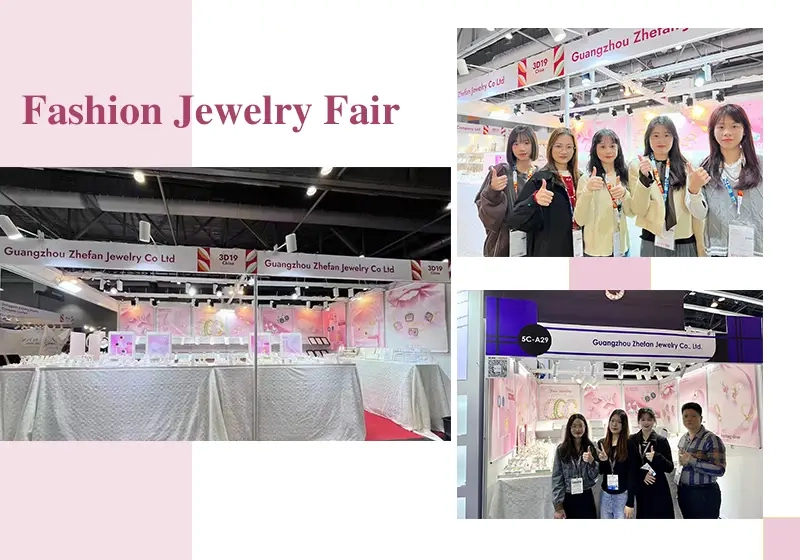
Zhefan Jewelry Will Attend Hong Kong Jewelry Fair
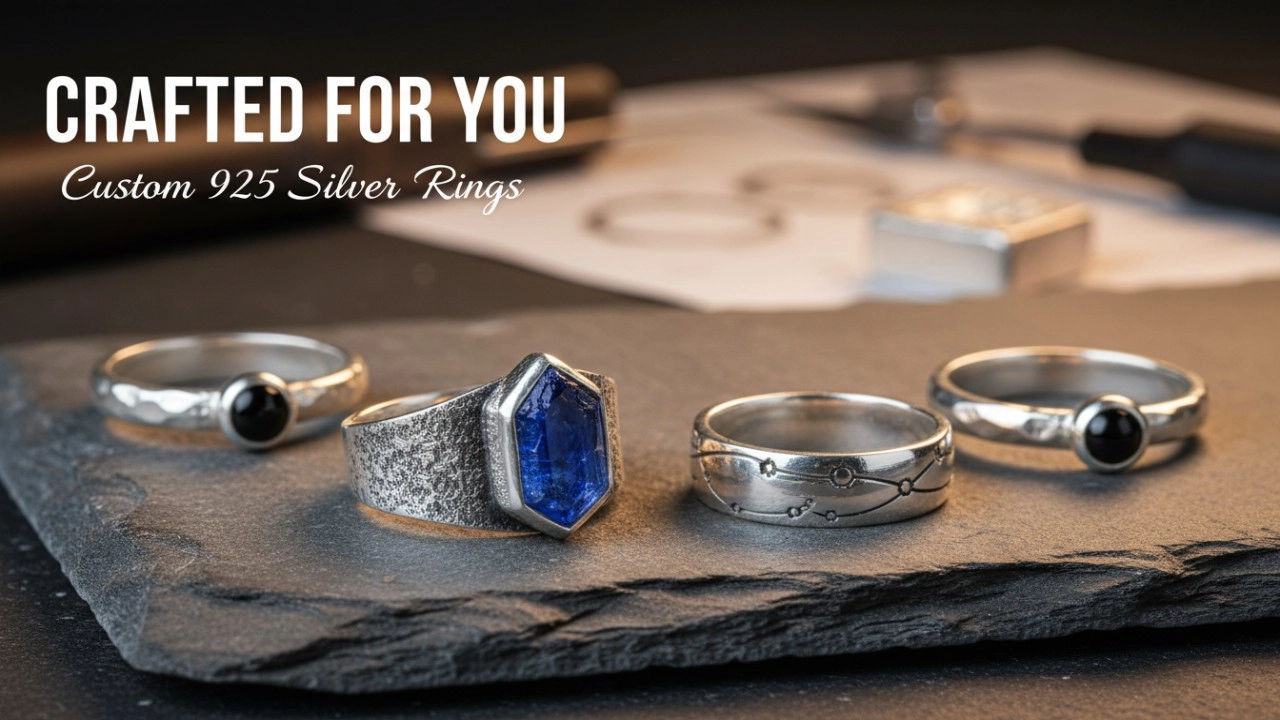
Why Custom 925 Silver Rings Are the Perfect Sustainable Luxury Gift (Compared to Gold)
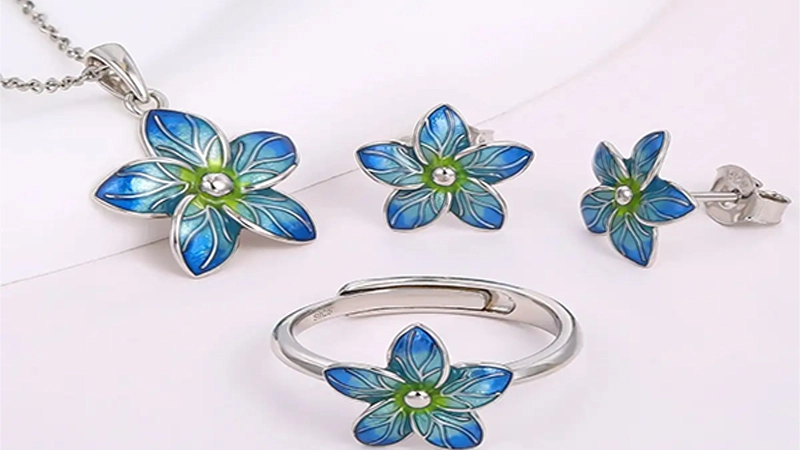
The Secret Life of Your Silver: How 925 Sterling Jewelry Comes to Exist
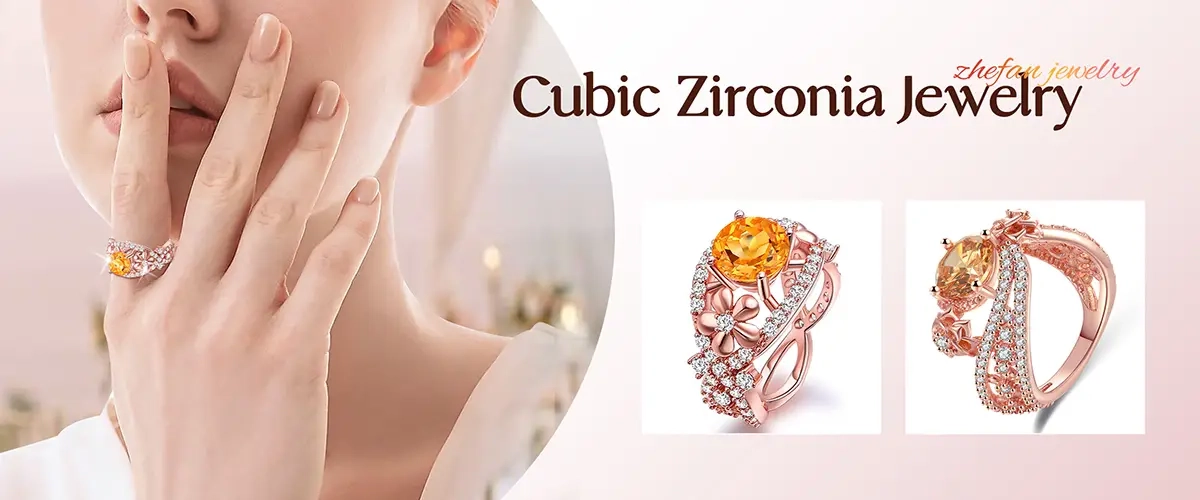
What is Zircon Jewelry?-The Ulimate Guide
How to Choose the Right Jewelry for Your Skin Tone
Choosing the Right Metal for Jewelry Making - Practical Guide
Prdoucts Categories
FAQ
Products
How long will the plating color last?
Generally 6 month for Water Plated color , 1 - 2 years for vacuum plated color if in proper wearing.
What’s the shipment method? How long does it take for delivery?
Our product distributed to all over the world. Shipped by DHL / Fedex / TNT / UPS takes 3-7 days, Epacket takes 7-15 days, China Post takes 15-30 days.
FAQs
Can we visit your factory?
Yes, pls contact seller to arrange meeting, we will pick you up to our factory.
Do you attend any jewelry fairs?
Yes, we participate in Hong Kong Jewelry Fair and Canton Fair twice a year, please contact the seller for the latest invitation.
What’s the shipment method?How long does it take for delivery?
Our product distributed to all over the world. Shipped by DHL/Fedex/ TNT/UPS takes 3-7 days,Epacket takes 7-15 days, China Post takes 15-30 days.
Can I get a sample?
Yes,welcome to choose our sample to test and check quality.Please give me your address and number then send you payment list.
Discuss Your Ideas with a Professional Custom Jewelry Manufacturer
We provide personalized jewelry customization services for clients worldwide.
Rest assured that your privacy is important to us, and all information provided will be handled with the utmost confidentiality.
By clicking 'Send Inquiry Now' I agree to ZHEFAN JEWELRY processing my personal data.
To see how to withdraw your consent, how to control your personal data and how we process it, please see our Privacy Policy and Terms of use.
From design to production, ZHEFAN JEWELRY offers a one-stop solution to help you enhance your brand value and market competitiveness.
Get A Quote
Contact
Tel: (+86) 188 1927 7817
© 2026 Zhefan Jewelry. All Rights Reserved.
Facebook
Instagram
YouTube
Whatsapp: +8618819277817