






Email: sales3@zhefanjewelry.com
Are recycled silver options available for 925 bracelet buyers? | Insights by Zhefan Jewelry
Explore practical guidance for buyers who want recycled sterling silver (recycled 925) bracelets. Learn how to verify recycled claims, certifications, alloy safety, cost and design impacts, hallmarking, supply risks and procurement best practices.
- 1. How can buyers verify that a 925 bracelet labeled recycled silver is genuinely recycled and not greenwashing?
- 2. Does recycled sterling silver (.925) differ in durability or require special care compared with newly mined 925 silver?
- 3. Will choosing recycled 925 raise costs or limit design and finishing options for bracelet buyers?
- 4. Can recycled 925 bracelets be hallmarked or insured differently than conventional silver pieces?
- 5. How can buyers ensure recycled silver used in 925 bracelets is free from harmful alloy contaminants (e.g., nickel) or hazardous residues?
- 6. What supply-chain risks remain for recycled 925 bracelet buyers and how can bulk purchasers mitigate them (lead times, traceability, price volatility)?
- Concluding paragraph
Are Recycled Silver Options Available for 925 Bracelet Buyers?
As sustainable purchasing becomes mainstream, many jewelry buyers ask whether recycled sterling silver options exist for 925 bracelets — and how to buy them reliably. Below are six specific, buyer-focused questions often unanswered or poorly covered online, with detailed, practical answers based on industry standards and traceability practices. This guidance will help jewelers, private-label buyers, and responsible retailers make informed procurement decisions about recycled sterling silver (recycled 925) bracelets.
1. How can buyers verify that a 925 bracelet labeled recycled silver is genuinely recycled and not greenwashing?
Why this matters: Greenwashing is widespread; a .925 stamp only confirms silver content, not origin. Recycled silver cannot be visually distinguished from newly mined silver, so documentary traceability is essential.
How to verify (practical checklist):
- Request chain-of-custody documentation from the supplier. Credible certificates include the Responsible Jewellery Council (RJC) Chain-of-Custody (CoC) certification for refiners and manufacturers. RJC CoC confirms that a facility tracks inputs and outputs of recycled metals under an approved standard.
- Ask for refiner certificates naming the recycled feedstock source (e.g., pre-consumer scrap, post-consumer scrap) and indicating whether a mass-balance approach was used. Mass-balance is permitted by many schemes; it means physical mixing can occur but volumes of recycled metal are accounted for across a system. Buyers should know which approach their supplier uses.
- Obtain batch-level documentation: purchase invoices for the recycled bullion, delivery notes, and an assay report for the batch used to make your bracelet. Reputable refiners (e.g., major London or Swiss refiners) provide assay certificates showing silver purity and often the recycled claim.
- Confirm third-party audits: check that the supplier or refiner has had independent audits within the past 12–24 months. RJC provides an audit schedule; ask for the most recent audit statement.
- Look for transparent policies on the supplier’s website (responsible sourcing statements, supplier lists, and recycling practices). If a supplier refuses documentation or gives vague answers, treat claims with caution.
Bottom line: Because hallmarking (.925) doesn’t prove recycled origin, insist on chain-of-custody certificates, refiner assays, and independent audit reports to avoid greenwashing.
2. Does recycled sterling silver (.925) differ in durability or require special care compared with newly mined 925 silver?
Why this matters: Buyers worry that recycled metal might be contaminated or weaker, affecting wear, plating adherence, or stone settings.
Technical reality and care guidance:
- Chemistry: Recycled sterling silver (recycled 925) is chemically the same as conventionally sourced sterling silver when refined to .925 fineness. Proper refining removes most contaminant metals; a certified refiner’s assay confirms the alloy composition.
- Durability and finish: Mechanical properties (ductility, hardness) depend on alloying and post-production treatments (annealing, work-hardening), not on whether the silver was recycled. Recycled silver can be supplied as granules, sheet, wire or casting grain and will behave identically during fabrication.
- Plating and coatings: Rhodium or other plating adheres the same to recycled 925 as to mined 925, provided the surface was properly cleaned and plated per standard metallurgical practice.
- Care: Tarnishing, polishing, and maintenance follow identical guidelines: store in low-humidity conditions, avoid exposure to sulfurous chemicals, and use appropriate polishing methods. If allergies are a concern, confirm nickel content via composition certificates or XRF testing—this is independent of recycled status.
Conclusion: There is no inherent durability penalty to choosing recycled sterling silver; assurance comes from certified refining and standard jewelry manufacturing controls.
3. Will choosing recycled 925 raise costs or limit design and finishing options for bracelet buyers?
Why this matters: Buyers worry about higher costs, longer lead times, or reduced customization when committing to sustainable metals.
Cost and design considerations:
- Raw-material cost: The spot price of silver drives base cost. Recycled silver can be either slightly cheaper (if sourced from scrap) or slightly more expensive (if suppliers add High Qualitys for certified recycled content and traceability). Certified recycled supply chains can add administrative and audit costs, which may be reflected in price.
- Design and production: Recycled silver granules, sheet, and wire are standard mill formats offered by refiners. There are no inherent design limitations—casting, stamping, forging, and stone-setting are all fully compatible with recycled 925.
- Finish and plating: Any finishing technique (polish, matte, rhodium plating, oxidation) works the same. If a specific patina requires particular alloying elements, negotiate alloy specifications with your supplier (e.g., sterling with added copper percentages for hardness).
- Supply logistics: Certification and batch traceability may require minimum purchase quantities or longer lead times for certified batches—plan procurement timelines accordingly. For private-label buyers, sample runs and small orders are possible but may carry higher per-piece costs.
Practical buyer tips: Get quotes from suppliers comparing certified recycled vs standard 925; request TDS (technical data sheets) and lead-time guarantees; factor in potential High Quality for certification into retail pricing or marketing value.
4. Can recycled 925 bracelets be hallmarked or insured differently than conventional silver pieces?
Why this matters: Buyers want to know if provenance affects legal hallmarking or insurance valuation.
Hallmarking and insurance reality:
- Hallmarking: The .925 hallmark (or national assay marks) attests to silver fineness, not origin. Most assay offices do not currently apply a distinct hallmark denoting recycled content. Some brands use additional private marks or packaging labels to indicate recycled content, but these are voluntary and not standardized globally.
- Voluntary labeling: Brands can apply an additional mark or include a certificate stating contains certified recycled silver. Keep such documentation with the product to support marketing claims and resale provenance.
- Insurance: Insurers primarily base coverage on metal weight, gemstone value, and retail replacement value. Recycled origin does not typically change insurability. However, keeping chain-of-custody and assay certificates can help in claims proving provenance and material quality, and for ESG-sensitive clients it can add resale value.
Advice: Keep all certification and assay documentation with each batch. For markets where consumers expect recycled claims on labels, provide clear certificates and batch numbers along with the .925 hallmark.
5. How can buyers ensure recycled silver used in 925 bracelets is free from harmful alloy contaminants (e.g., nickel) or hazardous residues?
Why this matters: Allergies, regulatory compliance (REACH, RoHS), and product safety are non-negotiable for retailers and manufacturers.
Steps to ensure safety and compliance:
- Request composition certificates and MSDS (Material Safety Data Sheets) from the refiner and manufacturer. These documents should show elemental composition and any residual contaminants.
- Insist on laboratory analysis: X-ray fluorescence (XRF) screening or full wet-chemical assays for critical batches. XRF is common for routine checks and can detect nickel, lead, cadmium above ppm thresholds relevant to regulations like REACH.
- Specify alloy formulation in contracts: demand nickel-free sterling formulations or specify maximum ppm levels for potential allergens or banned substances.
- Use certified refiners who follow responsible recycling practices and filtering/refining processes that remove organics and hazardous residues. Refiners with RJC CoC or equivalent are more likely to have controlled refining processes and remediation steps.
Result: With documented assays and supplier agreements, you can confidently specify recycled 925 bracelets that meet allergy and regulatory requirements.
6. What supply-chain risks remain for recycled 925 bracelet buyers and how can bulk purchasers mitigate them (lead times, traceability, price volatility)?
Why this matters: Buyers of larger volumes need to manage costs, consistency, and reputational risk.
Common risks and mitigation strategies:
- Risk — Mass-balance vs physical separation: If your supplier uses mass-balance for recycled claims, the recycled content is accounted for across a system rather than physically segregated. That can be acceptable, but if you require physically segregated material, stipulate it in contracts and verify via audits.
- Risk — Certification gaps or audit lapses: Supplier certifications can lapse or be inconsistently applied. Mitigation: require current RJC CoC certificates and periodic audit reports; build review clauses into supplier contracts.
- Risk — Price volatility of silver: Silver spot prices fluctuate. Mitigation: hedge large purchases, negotiate fixed-price contracts for defined periods, or use staggered deliveries to smooth costs.
- Risk — Supply capacity constraints: Certified recycled stock in a desired form (sheet, wire, casting grain) may have limited availability. Mitigation: place forecasts, agree minimums early, and consider dual-sourcing (a certified supplier plus an accredited backup).
- Risk — Documentation traceability loss during multi-tier manufacturing: Small component suppliers may not maintain batch traceability. Mitigation: require supplier upstream traceability clauses, batch numbers, and the right to audit key subcontractors.
Operational best practices: Maintain an approved supplier list with documented certifications, conduct periodic supplier audits, require batch-level certificates and assay reports, and integrate recycled-material clauses into purchase orders.
Concluding paragraph
Choosing recycled sterling silver for 925 bracelets is a practical, performance-neutral way to reduce environmental impact while meeting consumer demand for responsible sourcing. Recycled 925 performs identically to newly mined sterling silver when refined and manufactured correctly; the critical difference is documentation and traceability. Buyers should insist on chain-of-custody certificates (e.g., RJC CoC), refiner assay reports, batch-level traceability, and clear contractual terms about mass-balance versus physical segregation. These steps protect against greenwashing, ensure regulatory compliance, and maintain product quality.
Advantages at a glance: lower upstream environmental impact, equivalent mechanical and aesthetic properties, compatibility with all finishing and setting techniques, and enhanced market positioning for eco-conscious customers when backed by verifiable certification.
If you’d like a quote for recycled 925 bracelets or need supplier documentation, contact us for a customized proposal: www.zhefanjewelry.com or sales3@zhefanjewelry.com.
Recommended for you
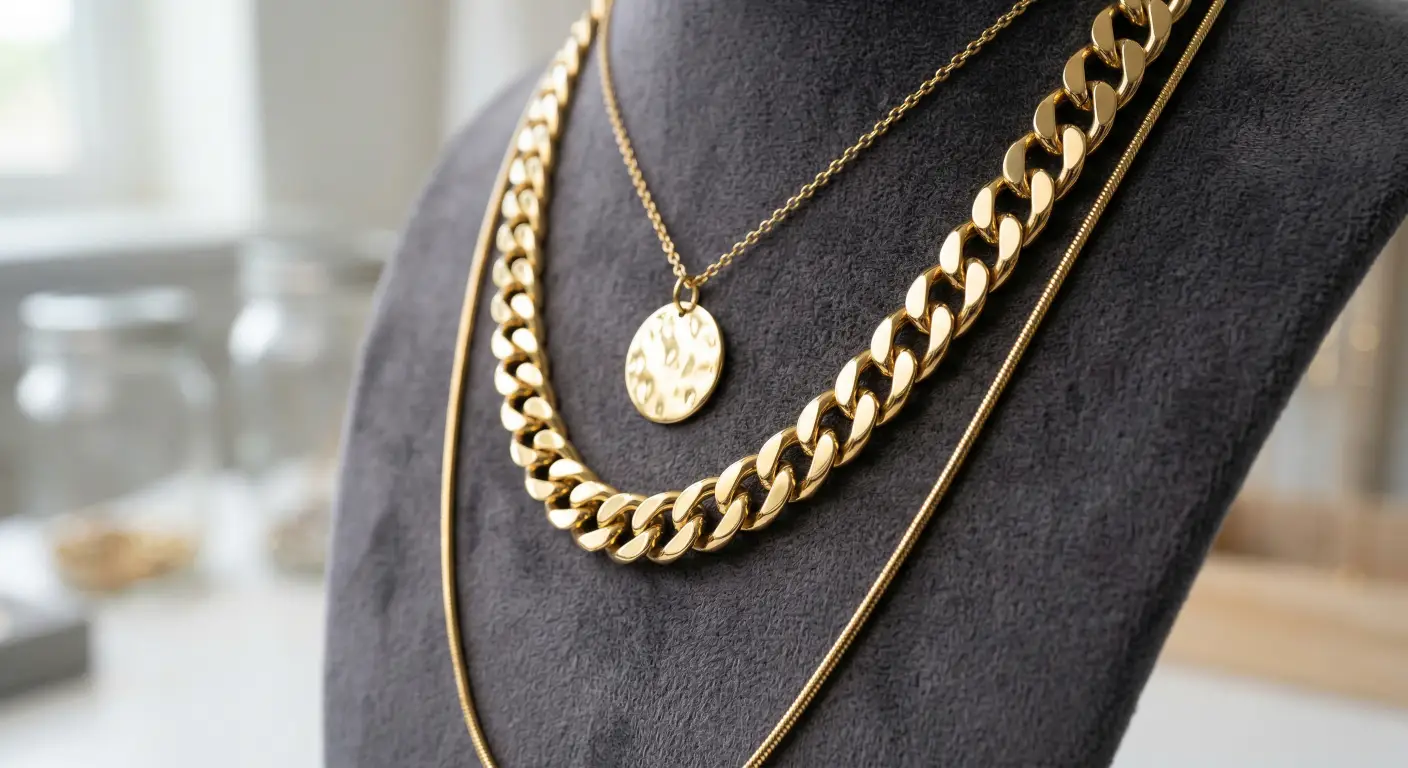
Is a Brass Necklace Good? The Honest Truth About Wear, Tarnish, and Quality
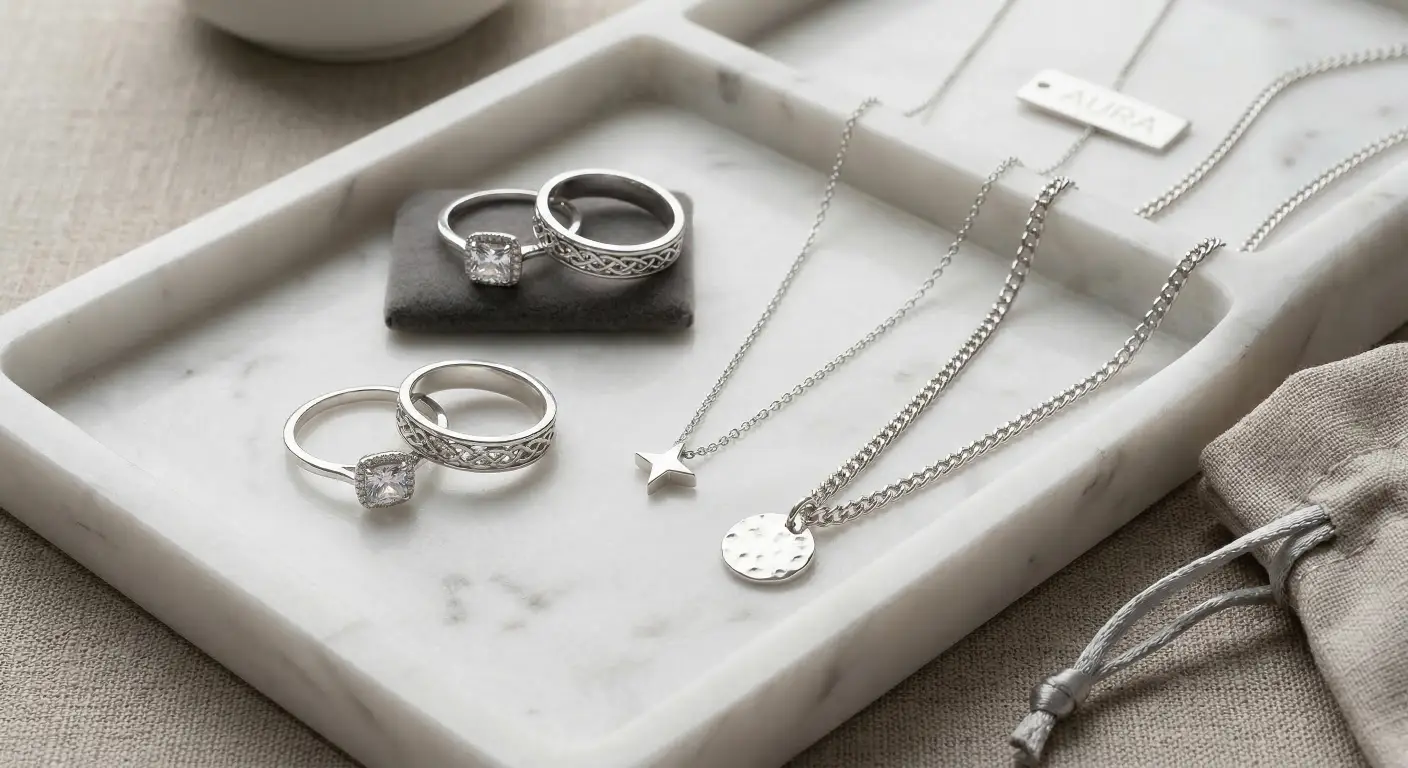
Sourcing Guide: How to Maximize Margins with Custom Sterling Silver Jewelry
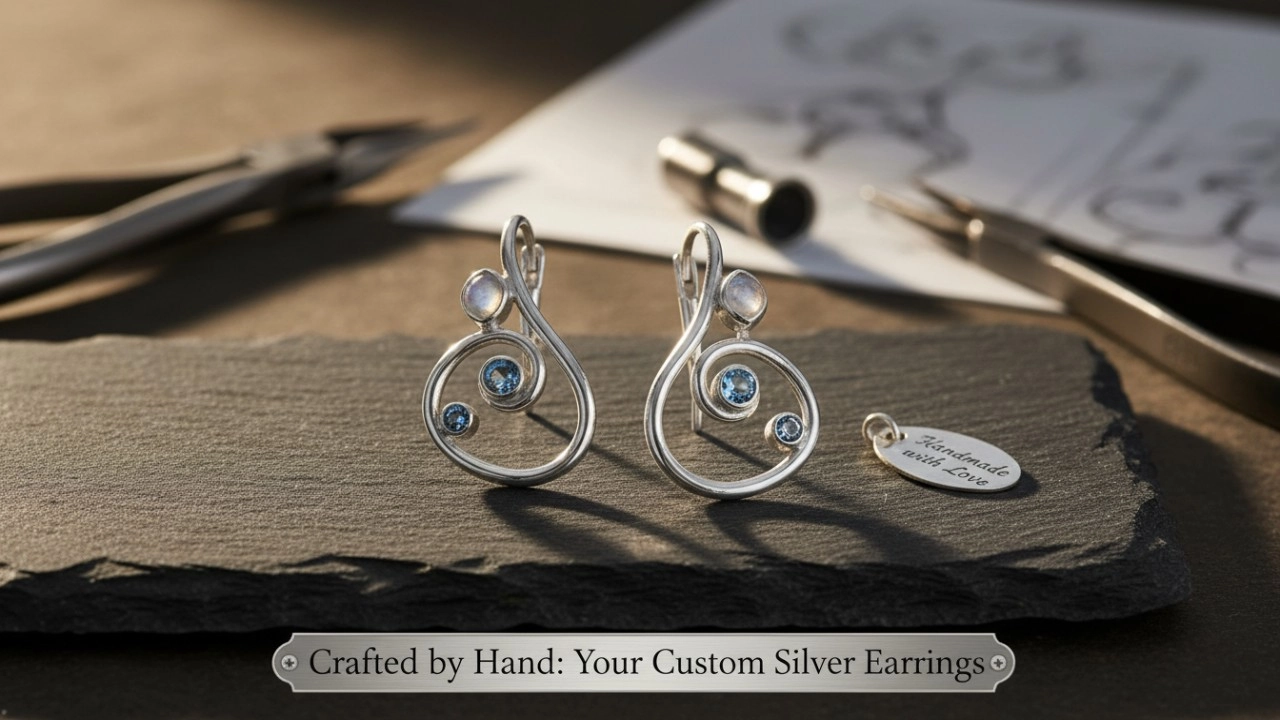
The Ultimate Guide to Ordering Custom Made Silver Earrings: How to Get Perfection Every Time (2026 Edition)
Is Stainless Steel a Good Type of Jewelry? Pros, Cons, and Why Brands Choose Stainless Steel Jewelry
Why Custom 925 Silver Rings Are the Perfect Sustainable Luxury Gift (Compared to Gold)

The Ultimate Buyer's Guide to Custom Wholesale Brass Huggie Earrings in China
Prdoucts Categories
FAQ
Products
How can we guarantee quality?
Always a pre-production sample before mass production;
Always final Inspection before shipment;
What's the packaging of your jewelry?
Normally we use OPP bag, bubble bag and paper box to pack the goods,custom packaging is acceptable as well.
How long will the plating color last?
Generally 6 month for Water Plated color , 1 - 2 years for vacuum plated color if in proper wearing.
Can you engrave my logo on the jewelry ?Do you supply OEM/ODM service?
Yes. Custom logo and OEM/ODM are both accepted.Our factory specializes in jewelry manufacturing for 25 years.We can produce jewelry by your sample, design, pictures, even by an idea.Please feel free to contact us for more details. Custom order process: Inquiry-Confirm products details-Pay mold fee -Confirm CAD draft-Quote-Initial payment-Produce mold & sample-Confirm Sample-Mass production-Balance payment-Shipment-Track shipment-delivery.
FAQs
Can I have your product catalog?
Yes, please leave us a message what style jewelry catalog you need.
Do you attend any jewelry fairs?
Yes, we participate in Hong Kong Jewelry Fair and Canton Fair twice a year, please contact the seller for the latest invitation.
Discuss Your Ideas with a Professional Custom Jewelry Manufacturer
We provide personalized jewelry customization services for clients worldwide.
Rest assured that your privacy is important to us, and all information provided will be handled with the utmost confidentiality.
By clicking 'Send Inquiry Now' I agree to ZHEFAN JEWELRY processing my personal data.
To see how to withdraw your consent, how to control your personal data and how we process it, please see our Privacy Policy and Terms of use.
From design to production, ZHEFAN JEWELRY offers a one-stop solution to help you enhance your brand value and market competitiveness.
Get A Quote
Contact
Tel: (+86) 188 1927 7817
© 2026 Zhefan Jewelry. All Rights Reserved.
Facebook
Instagram
YouTube
Whatsapp: +8618819277817