





Email: sales3@zhefanjewelry.com
How do suppliers price 925 sterling silver bracelets per gram? | Insights by Zhefan Jewelry
A practical guide for buyers and small brands explaining exactly how suppliers calculate 925 sterling silver bracelet price per gram — from silver spot price, purity (92.5%), and metal loss to labor, plating, stones, MOQ and shipping. Includes step-by-step formulas and real example calculations.
- 1) How does a supplier convert the silver spot price into a per-gram cost for a finished 925 bracelet that includes soldered components and expected metal loss?
- 2) Why can two bracelets with identical gram weight have very different per-gram prices (e.g., snake chain vs simple cable chain)? Which manufacturing factors inflate the per-gram figure?
- 3) How do rhodium plating, anti-tarnish coatings and heavy polishing change a per-gram quote? Can suppliers amortize plating as a per-gram cost?
- 4) How is a supplier’s per-gram price affected by MOQ, custom molds, or logo engraving for small-batch brands?
- 5) How do suppliers build currency fluctuation, import duties, and CIF/FOB shipping into a “per gram” price when you buy internationally?
- 6) For hollow or lightweight “solid-look” bracelets vs truly solid bracelets, how do suppliers justify a different per-gram pricing method and warranty expectations?
Introduction:
Understanding how suppliers calculate the 925 sterling silver bracelet price per gram is essential for buyers, private labels and retailers who need transparent quotes, predictable margins and fair negotiations. This article answers six specific, pain-point questions that commonly lack up-to-date, detailed answers online. It embeds essential concepts — silver spot price per gram, purity 92.5%, labor and manufacturing cost, rhodium plating cost, FOB vs CIF modeling, MOQ amortization — and shows example calculations you can use to verify supplier quotes.
1) How does a supplier convert the silver spot price into a per-gram cost for a finished 925 bracelet that includes soldered components and expected metal loss?
Answer:
Suppliers convert a market silver spot price into a usable metal cost through these steps: adjust for purity (92.5%), add manufacturing metal loss (casting, trimming, polishing), include alloying and scrap recovery credits, and then spread any refining or certificate fees.
Step-by-step formula (per piece):
- Measured gross weight (g): the actual finished bracelet weight in grams (e.g., 20 g).
- Pure silver content = gross weight × 0.925 (for 925 sterling). Example: 20 g × 0.925 = 18.5 g of silver metal equivalent.
- Market silver cost = pure silver content × live silver spot price per gram. (Check LBMA/Kitco for live rates.) If spot = $0.95/g → 18.5 × $0.95 = $17.58.
- Metal loss/production allowance: suppliers typically add 3–12% to cover casting/trimming/solder waste (hollow, chain welding). Use a realistic factor (example 7%): metal allowance = 17.58 × 0.07 = $1.23.
- Net raw metal cost = 17.58 + 1.23 = $18.81.
So, for a 20 g finished bracelet and a $0.95/g silver spot, the raw metal input cost the supplier about $18.81. Note: this excludes labor, plating, stones and overhead.
Why purity matters: 925 sterling is 92.5% silver; suppliers rarely price by “silver-only” weight because the alloy (copper usually) is a cost factor and affects mechanical properties. Always confirm that a supplier’s “per gram sterling” quote uses finished weight × 0.925, not raw weight × 1.0.
2) Why can two bracelets with identical gram weight have very different per-gram prices (e.g., snake chain vs simple cable chain)? Which manufacturing factors inflate the per-gram figure?
Answer:
Identical finished weight can hide very different manufacturing complexity. Key drivers that raise per-gram pricing beyond raw metal:
- Manufacturing labor minutes: hand-link chains (box, snake, wheat) require more skilled labor than stamped or cast bangles. A snake chain may need 4–8× more labor time per gram.
- Precision fittings & soldering: multiple solder joints, hinge/box-clasp mechanisms, or hidden end-caps increase labor and QA time.
- Tooling and dies: stamping or custom-cut links require dies and setup fees amortized over MOQ.
- Finishing steps: micro-polishing, laser welding, burnishing, rhodium plating, stone setting and anti-tarnish treatments.
- Rejection/wastage rate: complex chains have higher failure rates (broken links) increasing per-piece effective metal/labor cost.
- Quality control and tensile testing: chains above a weight threshold may be load-tested, adding inspection cost per unit.
Example comparison (approximate, illustrative):
- 20 g simple cable bracelet: raw metal cost $18.81 (using previous calc) + labor $3.00 + plating $1.00 + overhead $1.20 = $24.01 → per gram ≈ $1.20.
- 20 g snake chain bracelet: raw metal cost $18.81 + labor $9.00 + assembly QA $2.50 + plating $1.50 + overhead $2.00 = $33.81 → per gram ≈ $1.69.
Conclusion: Always request a breakdown of raw metal vs labor/processing vs plating vs stones. “Per gram” alone is insufficient for comparing chain styles.
3) How do rhodium plating, anti-tarnish coatings and heavy polishing change a per-gram quote? Can suppliers amortize plating as a per-gram cost?
Answer:
Rhodium plating, anti-tarnish finishes and polishing are priced per piece, not strictly per gram, because they are process- and surface-area-dependent. However, suppliers often approximate them into a per-gram figure for quoting convenience. Considerations:
- Rhodium plating: typical factory charge ranges roughly $0.50–$3.00 per piece depending on size, number of immersion cycles, and plating thickness (measured in microns). It’s not a linear “per gram” cost; a large surface area or multiple re-platings increase cost.
- Polishing/buffing: labor cost depends on complexity — flat wide surfaces polish faster than intricate filigree. Typical labor for polishing may be $0.20–$1.50 per piece on mass-produced items, higher for hand-polished finishes.
- Anti-tarnish coatings: these are often < $0.30 per piece at scale, but specialty coatings (PVD, lacquer) can be $0.50–$2.00.
How suppliers fold this into per-gram pricing:
- For quoting simplicity, suppliers add plating+polish as a fixed per-piece charge and then convert to a per-gram equivalent by dividing by the piece weight. Example: $1.50 plating on 20 g bracelet = $0.075/g added.
- Beware: if a buyer compares per-gram quotes without checking plating inclusions, the cheaper-sounding price may exclude rhodium or use thinner plating that will wear faster.
Recommendation: Always request the plating thickness (in microns) and whether polishing and anti-tarnish finish are included in the quoted per-gram price.
4) How is a supplier’s per-gram price affected by MOQ, custom molds, or logo engraving for small-batch brands?
Answer:
MOQ (minimum order quantity), tooling/setup fees and customization heavily affect per-unit and therefore per-gram pricing:
- Tooling/setup amortization: custom clasps, molds or dies can cost from $50 to several hundred dollars. Suppliers amortize this over the order quantity. A $300 tooling cost spread over 1,000 pcs = $0.30 per piece; over 100 pcs = $3.00 per piece.
- Engraving/laser marking: small-batch laser engraving can be quoted per piece (e.g., $0.30–$2.00) plus a one-time setup. For tiny fonts or inside surfaces, costs increase.
- Minimum order quantity: many suppliers lower unit costs dramatically when MOQ increases because labor and fixed costs are spread out.
Example: 20 g bracelet with a $300 mold and $1.00 engraving
- If MOQ = 100 pcs: mold amortization = $3.00 per piece; engraving $1.00; added $4.00.
- If MOQ = 1,000 pcs: mold amortization = $0.30; engraving still $1.00; added $1.30.
Practical negotiation tips:
- Ask for a price matrix (25/100/500/1,000) that separates variable (metal, labor) and fixed (tooling) costs.
- Offer to pay part of the tooling as a one-time fee to reduce per-unit price or accept a rolling-credit so tooling is partially refundable on repeat orders.
5) How do suppliers build currency fluctuation, import duties, and CIF/FOB shipping into a “per gram” price when you buy internationally?
Answer:
International pricing models must account for exchange rates, freight, insurance, customs duties, and local taxes. Suppliers typically present three pricing forms: EXW (Ex Works), FOB (Free On Board), and CIF (Cost, Insurance, Freight). Each handles transport and risk differently and thus changes the landed per-gram cost.
Key steps to model landed per-gram cost:
- Start with supplier’s EXW wholesale per-piece price (often metal + processing + markup).
- Add export logistics if EXW excludes them: inland freight to port, export customs, packing costs.
- For FOB, add shipping to load onto vessel (export tariff plus port charges). For CIF, add ocean freight, insurance, and destination port charges.
- Calculate import duties & taxes at the destination (e.g., EU IOSS/VAT, US customs duty HS code for silver jewelry might be 2.5–4% depending on jurisdiction). Duty is often a % of the CIF value.
- Add customs clearance and inland delivery to your warehouse.
- Convert to your currency using a realistic forward rate or include a currency buffer (1–3%) to absorb short-term fluctuations.
Illustrative example (simple): supplier EXW per-piece = $28.00. For a 20 g bracelet,
- Add packaging & export handling $0.50 → $28.50
- Ocean freight & insurance per piece (CIF) = $1.20 → $29.70
- Import duty 3% on CIF = $0.89 → $30.59
- Local VAT or GST (recoverable for businesses but affects cashflow) 12% = $3.67
- Landed cost = $34.26 → per gram = $34.26 / 20 g = $1.71/g
Exchange-rate risk: if supplier quotes in their local currency, buy forward cover or request quarterly price adjustments tied to a published rate (e.g., USD/CNY). For long lead times, negotiate a currency clause.
6) For hollow or lightweight “solid-look” bracelets vs truly solid bracelets, how do suppliers justify a different per-gram pricing method and warranty expectations?
Answer:
Hollow bracelets and lightweight “solid-look” pieces are engineered to appear heavy while using less metal. Suppliers price these differently because of structural engineering, different failure modes, and different QA.
Differences in pricing rationale:
- Material vs engineering: hollow pieces use less silver (lower raw metal cost), but require more complex forming, internal welding and reinforcement ribs. That engineering and additional QA increases labor and process cost per gram compared to simple cast solid pieces.
- Risk of damage: hollow items are more prone to denting or seam separation. Suppliers may charge higher per-piece QA or include a limited warranty High Quality.
- Weight-based quotes can be misleading: a hollow 12 g bracelet may have a higher labor/finish cost per gram than a 20 g solid bracelet.
Example:
- Hollow 12 g bracelet: raw metal cost $11.32 + complex forming & welding labor $7.00 + QA $2.00 + plating $1.00 = $21.32 → per gram ≈ $1.78/g
- Solid 20 g bracelet: raw metal cost $18.81 + straightforward forming labor $4.00 + QA $1.20 + plating $1.50 = $25.51 → per gram ≈ $1.28/g
Warranty and claims: clarify what qualifies for free repair or replacement. Hollow designs often have shorter defect coverage for mechanical damage. Always require a written warranty clause for private-label supply.
Conclusion — advantages of understanding per-gram pricing when purchasing 925 sterling silver bracelets:
Buying with a clear per-gram pricing model helps you: verify supplier transparency, separate raw metal cost from processing and plating, budget for MOQ/tooling, compare chain styles fairly, and model landed costs including duties and exchange risk. Armed with the step-by-step formulas above and asking the right questions (metal purity basis, plating thickness, tooling amortization, EXW vs CIF terms), you can validate quotes, negotiate better unit prices and reduce surprises on arrival.
If you want a verified per-piece quote or a price matrix for different MOQs and shipping terms, contact us for a tailored quote.
Contact: www.zhefanjewelry.com | sales3@zhefanjewelry.com
Notes & credibility: 925 sterling means 92.5% silver by weight. Live silver spot prices change daily — verify via LBMA/Kitco when calculating raw metal input costs. The example numeric ranges (labor, plating, tooling) reflect typical factory charges and industry practice as of mid-2024, and will vary by country, factory capability and order volume.
Recommended for you
The Secret Behind Premium Quality: 7 International Standards for 925 Sterling Silver Rings
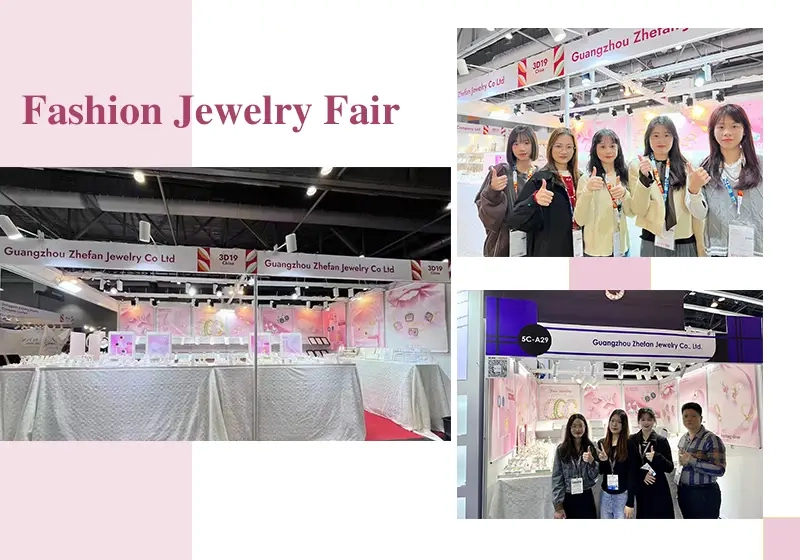
Zhefan Jewelry Will Attend Hong Kong Jewelry Fair
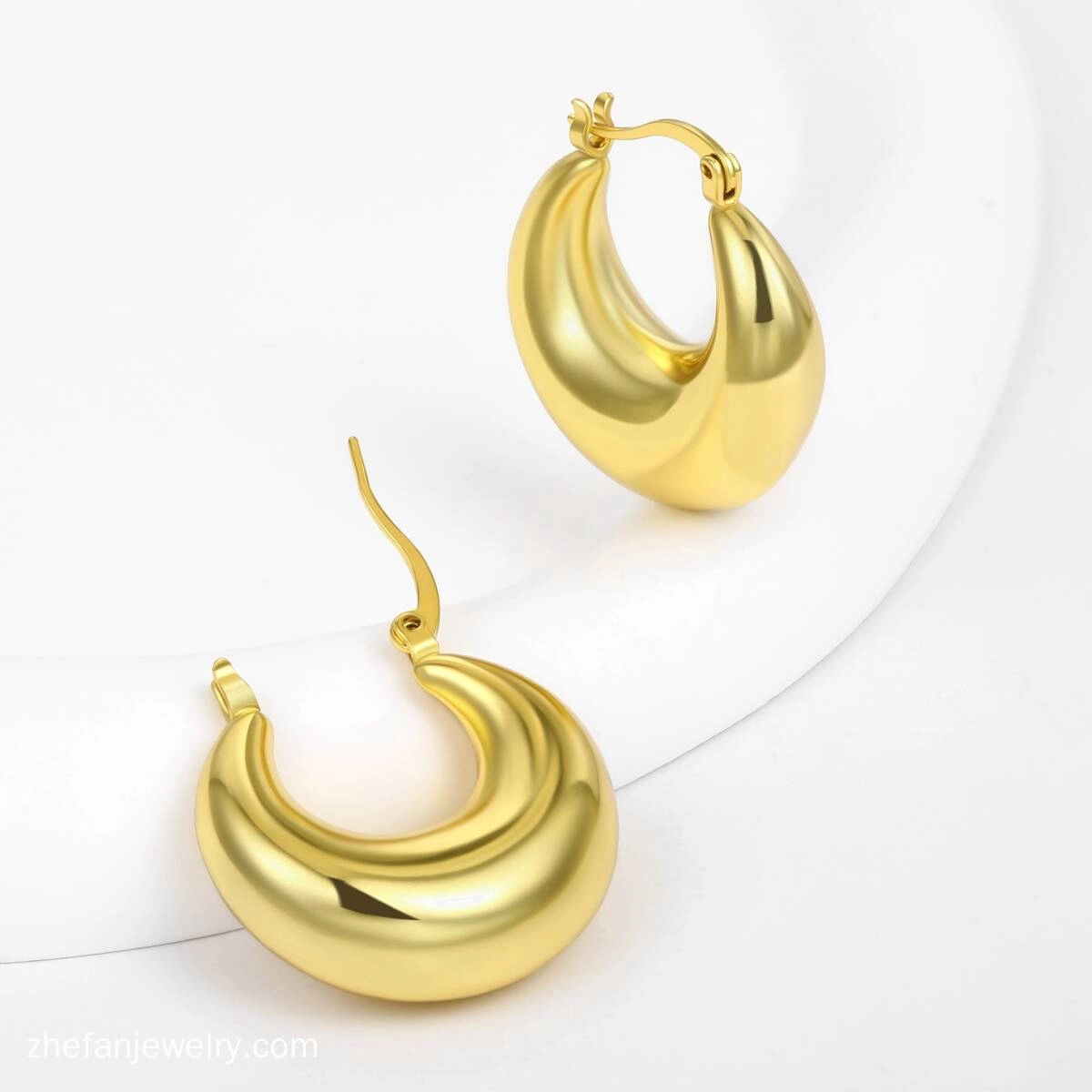
Launch Your Brand: A Guide to Sourcing Custom Wholesale Brass Huggie Earrings
The Ultimate Buyer's Guide to Custom Wholesale Brass Huggie Earrings in China
The Ultimate 2026 Guide to Stainless Steel Ring Jewelry: Why It Outshines Traditional Metals

Zhefan Jewelry Invites You to Attend the Hong Kong Jewellery Exhibition 2026
Prdoucts Categories
FAQ
Products
What is your minimum order quantity?
We offer low MOQ from 2 to 30 depending on models. Send your favor model to get details from Trade Manager.
What’s the lead time?
We could arrange shipment for you within 48 hours if you order models in stock. For bulk order, it takes 10-25 days for production depending on order quantity and styles.
Do you offer after-sales warranty service?
Yes, we will refund or resend products if fading, stone falling off and other quality problems found in 1 month receipt of goods. Furthermore, we offer 1 year after-sales warranty service, but you need pay the shipping charge.
FAQs
What is the material of the jewelry?
Most of the jewelry is made of 925 sterling silver, brass or 316 stainless steel or custom material,which can cover different procurement demand.
Can you engrave my logo on the jewelry ?Do you supply OEM/ODM service?
Yes. Custom logo and OEM/ODM are both accepted. Our factory specializes in jewelry manufacturing for 27 years.We can produce jewelry by your sample, design, pictures, even by an idea.Please feel free to contact us for more details. Custom order process:Inquiry-Confirm products details-Pay mold fee -Confirm CAD draft-Quote-Initial payment-Produce mold&sample-Confirm Sample-Mass production-Balance payment-Shipment-Track shipment-delivery.
What’s the lead time? .
We could arrange shipment for you within 48 hours if you order models in stock. For bulk order, it
takes 10-25 days for production depending on order quantity and styles.
Discuss Your Ideas with a Professional Custom Jewelry Manufacturer
We provide personalized jewelry customization services for clients worldwide.
Rest assured that your privacy is important to us, and all information provided will be handled with the utmost confidentiality.
By clicking 'Send Inquiry Now' I agree to ZHEFAN JEWELRY processing my personal data.
To see how to withdraw your consent, how to control your personal data and how we process it, please see our Privacy Policy and Terms of use.
From design to production, ZHEFAN JEWELRY offers a one-stop solution to help you enhance your brand value and market competitiveness.
Get A Quote
Contact
Tel: (+86) 188 1927 7817
© 2026 Zhefan Jewelry. All Rights Reserved.
Facebook
Instagram
YouTube
Whatsapp: +8618819277817