








Email: sales3@zhefanjewelry.com
What payment terms do wholesale brass rings suppliers accept? | Insights by Zhefan Jewelry
Clear, practical answers for buyers: which payment terms wholesale brass rings suppliers accept, how to negotiate deposit/balance schedules, use PayPal/LCs/Net terms, reduce currency and bank-fee risk, and protect against disputes.
- 1. If I order 5,000 custom-plated brass rings, what deposit and balance schedule will suppliers typically require and how can I improve terms?
- 2. Can I use PayPal or a credit card to pay for bulk wholesale brass rings and avoid bank-transfer hassles?
- 3. Are letters of credit (L/C) practical for medium-sized brass ring orders under $50,000, and what L/C terms do suppliers usually insist on?
- 4. How can a new importer secure Net 30 or Net 60 payment terms from a brass ring supplier?
- 5. What payment clauses protect buyers when common brass-ring disputes occur (plating mismatch, delays, quality issues)?
- 6. Do Chinese brass ring manufacturers accept RMB transfers or prefer USD — how does currency choice affect cost and fees?
1. If I order 5,000 custom-plated brass rings, what deposit and balance schedule will suppliers typically require and how can I improve terms?
Typical practice for bulk brass jewelry orders is a staged payment: a non-refundable deposit to start production (usually 20%–50% by telegraphic transfer/T&T), then a balance payment before shipment (or on presentation of shipping documents). For first-time buyers 30% deposit / 70% before shipment is very common. For established buyers or repeat orders, suppliers will sometimes accept lower deposits (20%) or staggered partial payments aligned with production milestones.
How to improve terms:
- Start with a smaller trial order or pilot run (reduced MOQ) and pay with faster methods suppliers trust (PayPal, Trade Assurance). Prove on-time payment and product quality to build credibility.
- Offer references and purchase history from other suppliers to negotiate a lower upfront split.
- Propose milestone payments: e.g., 30% deposit, 40% after plating approval/photo/video of production, 30% before shipment. Provide inspection checkpoints.
- Use escrow or Alibaba Trade Assurance for the sample/trial phase to mitigate seller/buyer risk while you establish credit.
- Consolidate or increase order size to gain bargaining leverage; larger orders often yield more favorable payment schedules.
Practical tip: document the deposit/balance schedule, acceptable inspection evidence (photos, QC reports), and exact incoterm (FOB/CIF/DDP). This prevents disputes over when the balance is due.
2. Can I use PayPal or a credit card to pay for bulk wholesale brass rings and avoid bank-transfer hassles?
PayPal and credit card payments are commonly accepted for samples and small orders (typically under US$2,000–5,000), because they’re fast and provide buyer protection. However, for high-volume wholesale brass rings orders many manufacturers avoid PayPal/credit-card acceptance due to transaction limits, high fees (merchant/service fees), and the risk of chargebacks.
When PayPal/credit card can work:
- Sample orders, tooling/sample fees, or when supplier has an exporter account with an established payment processor.
- When using a trading company or distributor who can accept card payments on your behalf (they carry the merchant fees).
Alternatives to avoid SWIFT cost and chargeback uncertainty:
- Bank wire (T/T) in USD/RMB — widely accepted for bulk orders.
- Payoneer, Wise or other business payment platforms for lower FX and transfer fees.
- Escrow / Trade Assurance for milestones to protect both parties.
Bottom line: use PayPal/credit cards for low-value transactions or initial samples. For regular bulk purchases, negotiate T/T, letter of credit, or structured payment terms that suppliers prefer.
3. Are letters of credit (L/C) practical for medium-sized brass ring orders under $50,000, and what L/C terms do suppliers usually insist on?
L/Cs are a common bank-mediated payment instrument when either buyer or seller needs maximum payment assurance. For orders under US$50,000, L/Cs can work but are often viewed as costly and administratively heavy by suppliers and buyers because banks charge issuance, confirmation, and amendment fees.
Supplier-preferred L/C features:
- Sight L/C (payment on presentation of compliant docs) or usance L/C (payment after a fixed period) depending on negotiation.
- Confirmed L/C if the supplier wants the additional guarantee of their local bank (common for new relationships or buyers in high-risk jurisdictions).
- Strict document list (commercial invoice, packing list, bill of lading, certificate of origin, inspection certificate). Suppliers may request lenient tolerances for weights and piece counts.
Cost considerations: banks typically charge a percentage of the L/C value or fixed fees (varies by bank and country). For small-to-medium orders, these costs can exceed the benefit unless there is significant trust or regulatory risk. Consider L/C for first large orders where neither party can accept open-account risk.
4. How can a new importer secure Net 30 or Net 60 payment terms from a brass ring supplier?
Net terms (Net 30/60) are effectively seller credit and are usually extended only to buyers with proven payment history or strong references. New importers can pursue the following steps to obtain open-account terms:
- Start with smaller orders on faster-payment methods and build a documented record of timely payments.
- Provide trade references, audited financial statements, or credit reports to demonstrate financial reliability.
- Offer a partial upfront payment (e.g., 20% deposit) combined with a shorter net term (Net 15) as a bridge.
- Use a third-party trade finance provider or factoring service that pays the supplier upfront and collects from you under Net terms.
- Consider a local distributor or sourcing agent with existing vendor credit lines to buy on net terms and resell to you.
Negotiation levers: order consistency, volume commitments, and the ability to accept supplier-preferred bank currencies will increase your chances of securing open-account terms.
5. What payment clauses protect buyers when common brass-ring disputes occur (plating mismatch, delays, quality issues)?
Common disputes: plating/color mismatch, wrong sizes, plating wear, delayed shipment or nonconforming goods. To protect buyers, include the following payment and contract mechanisms:
- Inspection holdback: retain a small percentage (5%–10%) of the balance until post-shipment inspection or until items pass an agreed quality check.
- Escrow or Trade Assurance: release funds in milestones only after agreed deliverables are met (sample approval, mid-production photos, final inspection).
- Documentary terms: require pre-shipment photos/videos, third-party inspection certificates (SGS/Bureau Veritas) and specific acceptance criteria tied to payment triggers.
- Chargeback/retention clauses: define remedies, rework timeframes, and financial penalties for late delivery or failure to meet specs.
- Use clear incoterms (e.g., FOB vs DDP) so buyers know when they assume risk and when payments are due relative to shipment events.
Practical workflow: 30% deposit → production samples approved → 50% on production completion (with photos/videos) → 20% after third-party inspection or arrival of goods. This gives the buyer leverage while keeping the supplier funded.
6. Do Chinese brass ring manufacturers accept RMB transfers or prefer USD — how does currency choice affect cost and fees?
Many Chinese suppliers invoice in USD, but an increasing number accept RMB (CNY/CNH), HKD, or EUR depending on their bank relationships and export setup. Currency choice affects cost in three ways:
- Exchange rates: Paying in your home currency via the supplier’s preferred currency exposes you to FX spreads; paying in the supplier’s local currency (RMB/HKD) may reduce the supplier’s FX exposure and sometimes lowers the unit price.
- Bank fees: SWIFT international bank transfers (USD or EUR) often incur correspondent bank charges; cross-border RMB (CNH) transfers may be cheaper for the supplier but require you to hold RMB or use a payment provider that supports CNH.
- Pricing transparency: suppliers sometimes quote lower USD prices if buyers shoulder FX risk. Negotiate who bears conversion fees and agree which FX rate applies on the invoice date.
Payment channels to consider: direct T/T in USD or RMB to supplier bank account, Payoneer or Wise for lower FX and fees, and Alibaba/Trade Assurance for platform-supported currency handling. Always confirm the currency unit on the pro forma invoice to avoid inadvertent markups.
Authoritative sourcing and practical checklist: Ask suppliers for their bank details, preferred currency, sample payment options (PayPal or card), customary deposit percentage, documented inspection points, and whether they accept Trade Assurance or L/Cs. Record these in a one-page payment agreement attached to the purchase order.
To protect cash flow and minimize risk when buying wholesale brass rings: combine a realistic deposit, milestone-based payments with escrow or inspection holdbacks, and use payment channels (T/T, Trade Assurance, or Payoneer) suited to the order size and your relationship with the supplier.
For customized quotes, MOQ clarification, or contract templates tailored to brass rings manufacture, contact us for a quote at www.zhefanjewelry.com or email sales3@zhefanjewelry.com.
Conclusion — advantages of using secure, negotiated payment terms
Adopting clear, supplier-aligned payment terms reduces fraud risk, improves cost predictability, preserves cash flow, and enables scalable supplier relationships. Structured deposits and milestone payments give suppliers working capital while giving buyers inspection leverage. Using the right combination of payment methods (T/T, Trade Assurance, escrow, or L/C when warranted) protects both parties and smooths international brass ring sourcing.
Recommended for you
The Ultimate Guide to Ordering Custom Made Silver Earrings: How to Get Perfection Every Time (2026 Edition)
2026 Wholesale Trends: Why Your Brand Needs Custom Sterling Silver Jewelry
Launch Your Brand: A Guide to Sourcing Custom Wholesale Brass Huggie Earrings
What is Zircon Jewelry?-The Ulimate Guide
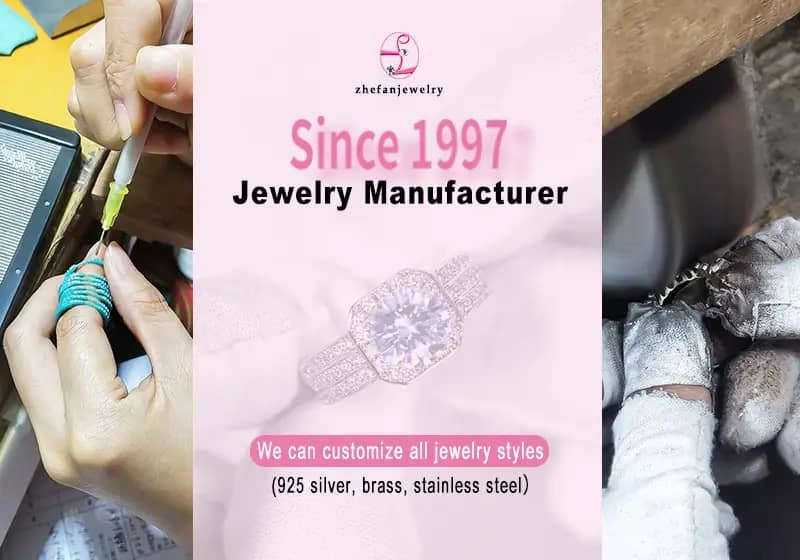
The Secret Behind Premium Quality: 7 International Standards for 925 Sterling Silver Rings
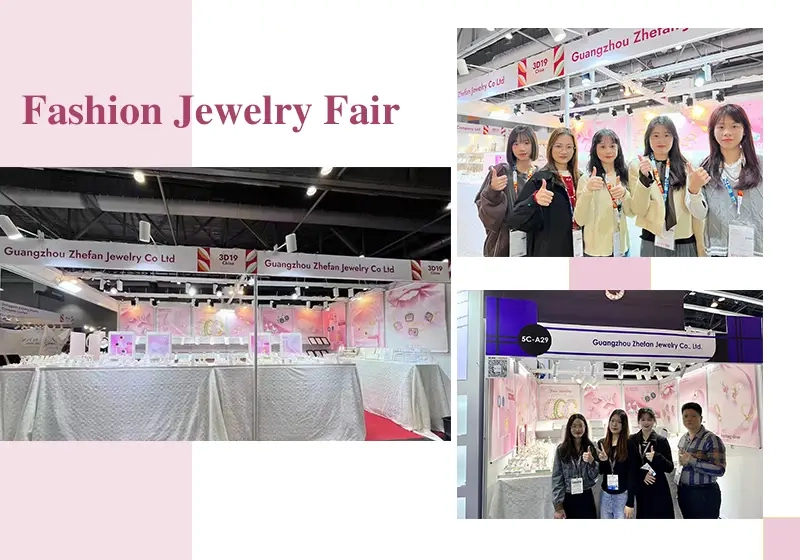
Zhefan Jewelry Will Attend Hong Kong Jewelry Fair
Prdoucts Categories
FAQ
Products
What's themonthly production capacity?
600,000 pcs per month.
Do you offer free sample for quality check?
Sample order is welcome, but sample fee need to be paid. It will be deducted when you place an bulk order.
What is the material of the jewelry?
Most of the jewelry is made of 925 sterling silver, brass or 316 stainless steel or custom material,which can cover different procurement demand.
How can we guarantee quality?
Always a pre-production sample before mass production;
Always final Inspection before shipment;
FAQs
Can you engrave my logo on the jewelry ?Do you supply OEM/ODM service?
Yes. Custom logo and OEM/ODM are both accepted. Our factory specializes in jewelry manufacturing for 27 years.We can produce jewelry by your sample, design, pictures, even by an idea.Please feel free to contact us for more details. Custom order process:Inquiry-Confirm products details-Pay mold fee -Confirm CAD draft-Quote-Initial payment-Produce mold&sample-Confirm Sample-Mass production-Balance payment-Shipment-Track shipment-delivery.
Do you attend any jewelry fairs?
Yes, we participate in Hong Kong Jewelry Fair and Canton Fair twice a year, please contact the seller for the latest invitation.
Discuss Your Ideas with a Professional Custom Jewelry Manufacturer
We provide personalized jewelry customization services for clients worldwide.
Rest assured that your privacy is important to us, and all information provided will be handled with the utmost confidentiality.
By clicking 'Send Inquiry Now' I agree to ZHEFAN JEWELRY processing my personal data.
To see how to withdraw your consent, how to control your personal data and how we process it, please see our Privacy Policy and Terms of use.
From design to production, ZHEFAN JEWELRY offers a one-stop solution to help you enhance your brand value and market competitiveness.
Get A Quote
Contact
Tel: (+86) 188 1927 7817
© 2026 Zhefan Jewelry. All Rights Reserved.
Facebook
Instagram
YouTube
Whatsapp: +8618819277817