







Email: sales3@zhefanjewelry.com
How to order custom gold plated earrings in bulk?
A practical guide for jewelry buyers: learn which gold plating thickness, hypoallergenic tests, MOQ, tooling and lead times, plating methods (electroplating/PVD/vermeil), QC/packaging standards, and landed-cost formula to order custom gold plated earrings in bulk.
- 1. What minimum gold plating thickness (microns) should I specify so custom gold plated earrings don't show wear quickly in retail?
- 2. How can I ensure custom gold plated earrings are truly hypoallergenic for nickel-sensitive customers when ordering bulk from overseas suppliers?
- 3. What realistic MOQ, tooling costs, and lead times should I expect when ordering custom gold plated earrings in bulk, and how can I lower them?
- 4. Which plating method (electroplating vs. PVD vs. vermeil) gives the best balance of price and long-term color retention for custom gold plated earrings?
- 5. How should I specify packaging, QC checkpoints, and acceptable defect rates when ordering custom gold plated earrings in bulk to avoid returns?
- 6. How do I calculate landed cost per pair for custom gold plated earrings in bulk (including plating choices, packaging, QC, duties, and shipping) so I can set wholesale and retail prices?
- Conclusion: Advantages of ordering custom gold plated earrings in bulk
How to Order Custom Gold Plated Earrings in Bulk: 6 Expert Questions Answered
This article addresses six specific, often-misunderstood buyer pain points when sourcing custom gold plated earrings in bulk. It focuses on plating durability, hypoallergenic requirements, realistic minimums and timelines, plating method trade-offs, quality control and packaging, and how to calculate landed unit cost to price your product correctly. Embedded below are practical standards (FTC, ASTM, EN, ISO) and procurement tips to help boutique owners, brand managers, and buyers make informed decisions when working with custom jewelry manufacturers.
1. What minimum gold plating thickness (microns) should I specify so custom gold plated earrings don't show wear quickly in retail?
Why this matters: many buyers order on price alone and receive “flash plated” earrings that show base metal through the gold finish within weeks. Specify an appropriate gold thickness (microns) and plating type up front to meet your desired retail life and returns expectations.
Key factual benchmarks:
- Vermeil (U.S. definition): sterling silver base with at least 2.5 microns of gold plating (FTC standard). If you want High Quality durability on a silver base, ask for vermeil.
- Fashion “flash” plating: commonly 0.03–0.3 μm (30–300 nm). This is inexpensive but will wear faster—often months with daily wear.
- Heavy gold plating: typically 1–3 μm or more, used for long-lasting plated jewelry (longer lifespan but higher cost).
Recommendation by retail durability target:
- Short-term seasonal lines / low-price fashion: 0.05–0.3 μm (flash). Expect limited lifespan; price accordingly.
- Mid-range retail (higher perceived value): 0.5–1.0 μm. Reasonable balance of cost and durability if paired with a good base metal and protective topcoat.
- High Quality plated pieces / vermeil standard: ≥2.5 μm on sterling silver for a much longer useful life and stronger marketing claim (vermeil).
Other factors that change real-world wear:
- Base metal: sterling silver or 316L stainless steel hold plating better than soft brass or base alloys.
- Surface preparation: proper cleaning and barrier layers (copper/nickel-free barriers) extend plating adhesion.
- Topcoats: clear lacquers or PVD/rhodium overplate can increase color retention and scratch resistance.
Actionable spec to give your supplier: Electroplate 1.0 μm gold on 316L stainless steel base with nickel-free underlayer and transparent protective topcoat; produce a pre-production sample and accelerate-wear test (rub test + salt spray where applicable). If you want to market as vermeil, explicitly specify sterling silver base + ≥2.5 μm gold plating (FTC requirement).
2. How can I ensure custom gold plated earrings are truly hypoallergenic for nickel-sensitive customers when ordering bulk from overseas suppliers?
Why this matters: allergic reactions (nickel most common) create returns, negative reviews, and potential regulatory issues. Many suppliers still use nickel-containing alloys or plating baths unless explicitly prevented.
Specific steps and documentation to require:
- Base metal selection: request 316L surgical stainless steel or sterling silver for the base. Both are widely used and accepted for hypoallergenic lines.
- Nickel-free plating: explicitly state nickel-free gold plating in the purchase order and require a barrier layer (e.g., copper-free or nickel-free base layer) if required by the buyer.
- Third-party tests: require objective test reports—EN 1811 (nickel release test) or equivalent. EN 1811 is a European standard widely used to validate low nickel release.
- RoHS / REACH: request material compliance documentation where relevant for lead, cadmium and other restricted substances (RoHS and REACH declarations or test reports).
- Batch testing: for large volumes, require random-sample EVP (electrochemical) or wet chemistry nickel-release testing on each production batch, or at minimum pre-production and pre-shipment samples.
Contract language example: All items must be plated with nickel-free gold. Supplier will provide EN 1811 nickel-release test reports for production batch and submit material declarations proving compliance with RoHS/REACH. That contract clause gives you leverage to enforce hypoallergenic claims and protects end customers.
3. What realistic MOQ, tooling costs, and lead times should I expect when ordering custom gold plated earrings in bulk, and how can I lower them?
Why this matters: founders and small brands often overpay for tooling or tie up cash with unrealistic expectations about minimums and lead times.
Practical ranges (industry typical):
- MOQ: for custom designs you will commonly see MOQs ranging from 50–500 pairs per SKU for stamped or existing-mold designs. For die-cast or complex 3D designs, MOQs often start at 200–500 pairs.
- Tooling/setup costs: simple stamping dies or form tooling can start around a few dozen to a few hundred dollars; multi-cavity or die-casting molds are more expensive—several hundred to a few thousand dollars depending on complexity. Choose stamping over casting to reduce upfront tooling.
- Sample and lead times: sample (prototype) 7–21 days; production lead time 2–6 weeks depending on order size, plating capacity, and peak-season factory load. Complex plated finishes or multiple SKUs increase turnaround.
How to reduce cost and MOQ:
- Use standardized findings and backs: avoid custom posts or backs if you can use off-the-shelf components.
- Consolidate SKUs: order one plating finish at a time to hit higher quantities per SKU and benefit from economies of scale.
- Start with a pre-production run: a small paid sample run (50–100 pairs) can validate design and plating specs before committing to full MOQ or tooling.
- Negotiate tooling amortization: ask the supplier to amortize tooling costs across several shipments or have them reduce tooling if you agree to reorder targets (12 months).
- Use existing molds: request the supplier show existing molds or similar shapes they already make to avoid new-tool costs.
Procurement tip: always get a written timeline with milestones (design approval, pre-production sample, start date, QA, ship date) and include penalties or remedies in contracts for missed delivery if timing is critical to your launch.
4. Which plating method (electroplating vs. PVD vs. vermeil) gives the best balance of price and long-term color retention for custom gold plated earrings?
Why this matters: buyers often get quoted different technologies and assume they are interchangeable; each process has distinct cost, appearance, and longevity characteristics.
Method comparison:
- Electroplating (electrodeposition): the most common and cost-effective method for gold plating. Electroplated gold can vary widely in thickness (flash to heavy). Advantages: lower cost, proven finish. Disadvantages: thinner coatings can wear faster; adhesion depends on surface prep.
- PVD (Physical Vapor Deposition): a vacuum-based process that bonds a thin metal coating with excellent hardness and color stability. PVD gold (often called gold-tone PVD or TiN coatings) resists tarnish and is more scratch-resistant than thin electroplated finishes. Advantages: long-lasting color retention, nickel-free options. Disadvantages: higher capital cost, slightly higher unit price, color options depend on process.
- Vermeil: sterling silver base with at least 2.5 μm of gold plating. This is a High Quality electroplated finish by standard (FTC). Advantage: legitimate High Quality claim and very good durability for gold-plated jewelry. Disadvantage: only applies to sterling silver base; higher cost due to silver base and thicker gold layer.
- Gold-filled: mechanically bonded thick gold layer (often 5% or more by weight) is not plating per se but results in a durable gold layer similar to low-karat solid gold. More expensive than plating; often used for higher-end lines.
Recommendation: If you need a durable, cost-effective retail product and want to avoid frequent complaints, choose one of the following depending on positioning:
- Mid-market durability + cost control: electroplate to 0.5–1 μm on a stainless or silver base and add a clear topcoat or rhodium overplate for extra protection.
- High Quality plated product: vermeil (≥2.5 μm on sterling silver) for long-lasting finish and stronger marketing position.
- High-durability, modern look: PVD for superior scratch and color retention where budget allows.
5. How should I specify packaging, QC checkpoints, and acceptable defect rates when ordering custom gold plated earrings in bulk to avoid returns?
Why this matters: poor packaging and weak QC are frequent causes of transit damage, tarnishing, and customer dissatisfaction. Vague orders produce inconsistent outcomes.
Packaging and QC best practices:
- Packaging specs: anti-tarnish paper or bags, individual earring cards, protective foam or bubble wrap inside mailing boxes, and sealed polybags for humidity control. For High Quality SKUs, include jewelry boxes and care cards that list plating thickness and hypoallergenic claims.
- Quality checkpoints: incoming raw-material check (metal verification), in-process checks (plating thickness tests / XRF for gold thickness or sample destructive testing), final inspection (visual, functional—e.g., post security, clasp function), and pre-shipment inspection with photos and random sample checks.
- Acceptable defect rates: reference ISO 2859-1 (AQL sampling plans). For consumer jewelry, many brands use AQL 2.5 for general visual defects and AQL 1.5 for critical defects (e.g., failed plating, broken posts). Aim to contract a maximum defective rate of 1–3% for finished goods depending on product complexity.
- Golden sample: approve a signed golden sample or master sample that the entire production run must match. Use it as the quality reference for color, plating uniformity, weight, and finish.
- Third-party inspections: for large orders use third-party inspection companies to perform AQL checks and shipment acceptance; this avoids disputes at arrival.
Contract language example: Production to match approved golden sample. Pre-shipment inspection to follow ISO 2859-1 AQL 2.5 for major defects and AQL 1.5 for critical defects. Supplier to provide 10 high-resolution photos of each SKU prior to shipment and EN 1811 nickel-release reports where applicable.
6. How do I calculate landed cost per pair for custom gold plated earrings in bulk (including plating choices, packaging, QC, duties, and shipping) so I can set wholesale and retail prices?
Why this matters: many sellers price only by unit manufacturing cost and ignore plating thickness, QC failures, packaging, shipping, duties and other landed costs. A clear landed-cost model prevents margin erosion.
Simple landed-cost formula (per pair):
Unit Purchase Price (factory FOB) + Pro-rated Tooling/Design Amortization + Packaging Cost + QC/Inspection Cost + Plating High Quality (if charged separately) + Freight per Unit + Insurance per Unit + Import Duties/Taxes + Brokerage/Handling Fees + Unexpected Allowance = Landed Cost
How to estimate each component:
- Unit Purchase Price: quoted base unit cost at agreed plating spec (e.g., price per pair for 1.0 μm gold on stainless).
- Tooling Amortization: total tooling cost / expected units over life of tool. Example: $500 tooling / 5,000 units = $0.10 per unit.
- Packaging Cost: include product card, bag/box, bulk cartons. Example ranges: $0.08–$1.50 per unit depending on High Quality packaging choice.
- QC/Inspection Cost: third-party inspection or supplier internal QC. Samples + inspector rates divide across units (often <$0.10–$0.50 per unit for typical orders).
- Plating High Quality: heavy plating or PVD increases unit cost. Request itemized plating cost from supplier or compare base and High Quality quotes to derive delta.
- Freight & Insurance: use FOB terms to calculate ocean/air freight per unit. For ocean FCL shipments, per-unit freight often low; for small LCL shipments, costs per unit higher. Work with your freight forwarder for accurate per-unit freight.
- Duties & Taxes: classify HS code for jewelry to estimate customs duty in your market. Jewelry duty rates vary by country (commonly 0–5% for base-metal plated jewelry in many markets, but check local tariff schedules). Add VAT/GST if applicable.
- Brokerage & Handling: customs broker fees and inland logistics.
- Unexpected Allowance: add 3–10% buffer for rework, rejects, or currency fluctuation.
Worked example (illustrative; replace with your supplier numbers):
- Factory unit price (FOB): $1.20
- Tooling amortization: $0.10
- Packaging: $0.25
- QC/inspection: $0.05
- Plating High Quality for 1.0 μm: $0.40 (vs. flash)
- Freight + insurance: $0.20
- Duties (3%): $0.06
- Brokerage & inland: $0.10
- Buffer 5% on cost: $0.15
- Total landed cost ≈ $2.51 per pair
From landed cost to pricing: typical wholesale keystone depends on channel. As a rule of thumb, many brands set a wholesale price 1.8–2.5x landed cost and retail at 2–3x wholesale depending on margins, promotions, and channel mix. Use your gross margin targets to back-calculate the required markup.
Procurement tip: request itemized quotes that separate base unit cost, plating thickness cost, and packaging. That lets you test trade-offs (e.g., reducing plating thickness from 1.0 μm to 0.5 μm to save X per unit) and see the margin impact.
Conclusion: Advantages of ordering custom gold plated earrings in bulk
Ordering custom gold plated earrings in bulk lets brands control finish quality, achieve consistent branding with custom packaging, and reduce per-unit costs through economies of scale. By specifying plating thickness (e.g., choosing vermeil or heavy plating), enforcing nickel-free standards with EN 1811 tests, negotiating tooling amortization, and using ISO AQL inspection plans, buyers can minimize returns and maximize perceived product value. Choosing the right plating method—electroplate, PVD, or vermeil—aligns product durability with your price positioning. Finally, calculating landed cost with a clear breakdown prevents margin surprises and supports sound wholesale and retail pricing.
For a tailored quote, pre-production sample plan, or to request certificates (EN 1811, plating specs, ISO/ASTM references), contact us for a quote: www.zhefanjewelry.com or email sales3@zhefanjewelry.com.
Recommended for you
The Secret Life of Your Silver: How 925 Sterling Jewelry Comes to Exist

The Ultimate Buyer's Guide to Custom Wholesale Brass Huggie Earrings in China
What is Zircon Jewelry?-The Ulimate Guide
How to Choose a Custom Ring Manufacturer: 10 Critical Questions for Maximum Quality (2026 Guide)
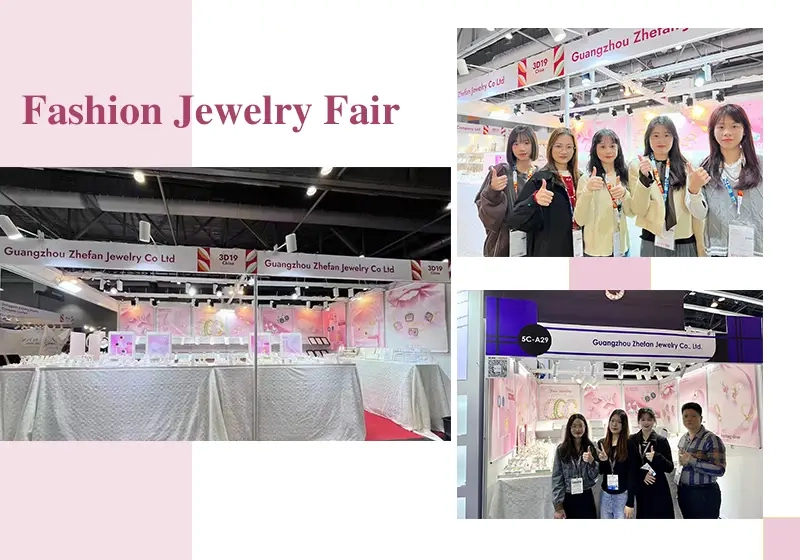
Zhefan Jewelry Will Attend Hong Kong Jewelry Fair
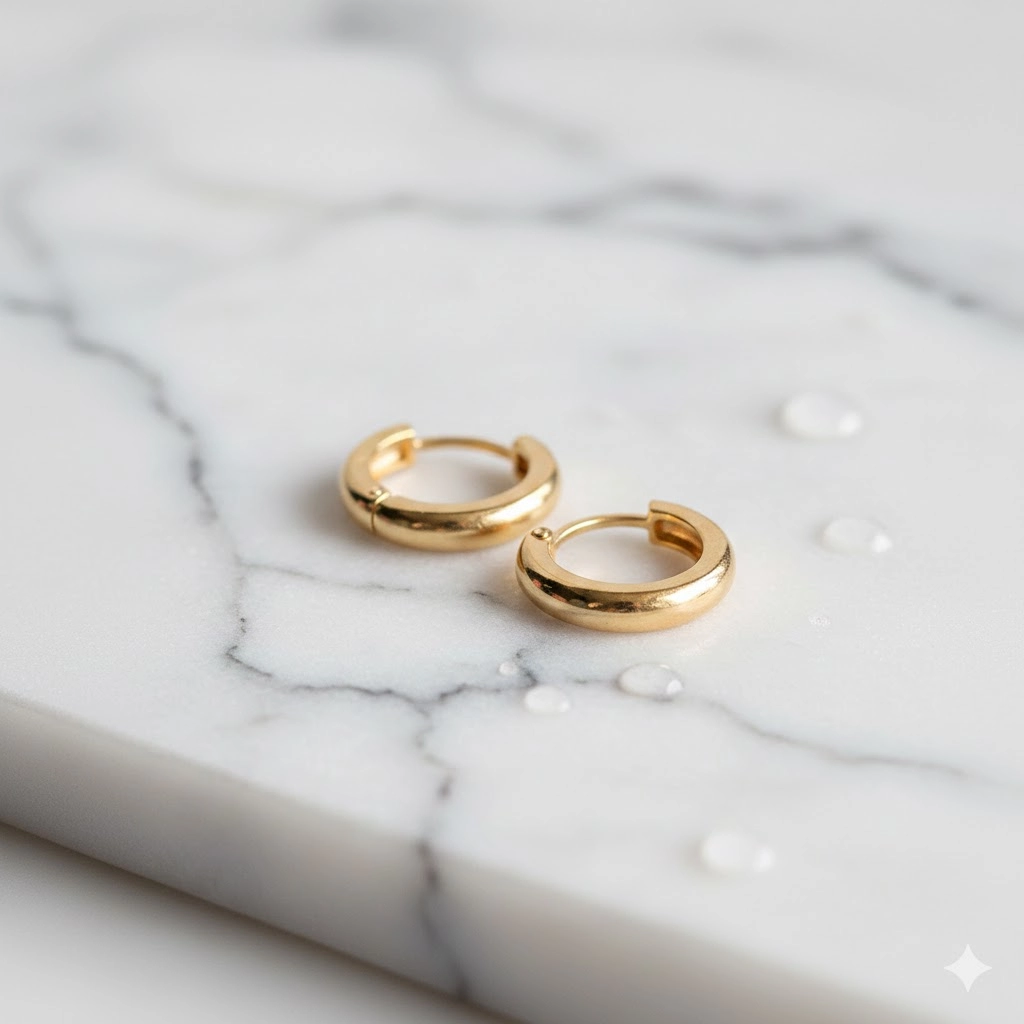
Boost Your Margins with Top-Selling Custom Wholesale Brass Huggie Earrings
Prdoucts Categories
FAQ
Products
What’s the shipment method? How long does it take for delivery?
Our product distributed to all over the world. Shipped by DHL / Fedex / TNT / UPS takes 3-7 days, Epacket takes 7-15 days, China Post takes 15-30 days.
Can you engrave my logo on the jewelry ?Do you supply OEM/ODM service?
Yes. Custom logo and OEM/ODM are both accepted.Our factory specializes in jewelry manufacturing for 25 years.We can produce jewelry by your sample, design, pictures, even by an idea.Please feel free to contact us for more details. Custom order process: Inquiry-Confirm products details-Pay mold fee -Confirm CAD draft-Quote-Initial payment-Produce mold & sample-Confirm Sample-Mass production-Balance payment-Shipment-Track shipment-delivery.
What’s the lead time?
We could arrange shipment for you within 48 hours if you order models in stock. For bulk order, it takes 10-25 days for production depending on order quantity and styles.
What is your minimum order quantity?
We offer low MOQ from 2 to 30 depending on models. Send your favor model to get details from Trade Manager.
What is the payment method?
Our payment method are Alibaba Trade Assurance(MasterCard, visa, e-Checking, PAYLATER, T/T),T/T, PayPal,Western Union.
FAQs
Do you attend any jewelry fairs?
Yes, we participate in Hong Kong Jewelry Fair and Canton Fair twice a year, please contact the seller for the latest invitation.
Discuss Your Ideas with a Professional Custom Jewelry Manufacturer
We provide personalized jewelry customization services for clients worldwide.
Rest assured that your privacy is important to us, and all information provided will be handled with the utmost confidentiality.
By clicking 'Send Inquiry Now' I agree to ZHEFAN JEWELRY processing my personal data.
To see how to withdraw your consent, how to control your personal data and how we process it, please see our Privacy Policy and Terms of use.
From design to production, ZHEFAN JEWELRY offers a one-stop solution to help you enhance your brand value and market competitiveness.
Get A Quote
Contact
Tel: (+86) 188 1927 7817
© 2026 Zhefan Jewelry. All Rights Reserved.
Facebook
Instagram
YouTube
Whatsapp: +8618819277817