




Email: sales3@zhefanjewelry.com
What are common manufacturing methods for 925 silver bracelets? | Insights by Zhefan Jewelry
Practical, industry-level guidance on common manufacturing methods for 925 silver bracelets — casting, die-striking, hand-fabrication, chain-making, CAD/CAM and finishing. Answers focus on production pain points: shrinkage, warping, finishing, plating, MOQs, QA and how to choose the right method for design and cost.
- 1) Which manufacturing method best preserves ultra-fine filigree details and micro-pavé stones in 925 silver bracelets?
- 2) How can I prevent warping and visible seams when soldering wide 925 sterling silver cuffs at scale?
- 3) What manufacturing tolerances and shrinkage rates should I specify for lost-wax casting of 925 silver bracelets to ensure accurate fit and clasp alignment?
- 4) How should I choose between rhodium plating, anti-tarnish coatings, or leaving 925 silver natural for long-term retail value and customer satisfaction?
- 5) How can I reliably identify whether a finished 925 silver bracelet was die-struck, cast, or hand-fabricated before buying wholesale?
- 6) What minimum order quantities and realistic lead times should I expect for different 925 silver bracelet manufacturing methods when sourcing from production hubs?
- Concluding summary: Advantages of understanding and choosing the right manufacturing methods for 925 silver bracelets
What are common manufacturing methods for 925 silver bracelets?
When buying or producing sterling (925) silver bracelets, understanding the manufacturing methods — lost-wax casting, die-striking, hand fabrication, chain-making, CAD/CAM + 3D printing, and electro/laser finishing — is essential to control cost, quality and delivery. Below are six focused, beginner-to-intermediate questions that rarely get fully answered online, with practical, data-driven solutions and manufacturing recommendations.
1) Which manufacturing method best preserves ultra-fine filigree details and micro-pavé stones in 925 silver bracelets?
Pain point: customers buy designs with sub-millimeter filigree or rows of micro-pavé stones and then get poor detail, misaligned stone seats or porosity. The best approaches combine high-resolution wax masters with controlled casting and careful post-cast finishing.
Recommended workflow:
- Prototype with high-resolution resin 3D printing (SLA/DLP, 25–50 micron layer height) to produce the wax/resin master. Direct metal 3D printing for fine silver alloys is still limited for production because silver's reflectivity complicates some metal AM processes; the reliable route is high-res wax/resin + lost-wax casting.
- Use investment casting (lost-wax) with tight process control: invest quality, burnout profile and vacuum/centrifugal casting reduce porosity and capture fine detail. Expect typical linear shrinkage allowances of about 1–2% for sterling silver; scale the CAD/wax accordingly and place sprues to avoid turbulence near filigree.
- Stone seats: for micro-pavé, cast slightly under-size seats and finish-seat with small burs under magnification, or design cast-in burrs for setting. Many setters prefer slightly oversized cast prongs/sockets and then finish by hand to secure stones properly.
- Post-cast finishing: careful deflashing, ultrasonic cleaning, and gentle tumbling (plastic or fine ceramic media) followed by targeted hand polishing preserves detail. Heavy tumbling will round fine filigree — use selective polish pads or micro-motor tools instead.
- Alternative: for extremely delicate filigree, hand-fabrication (wire-wrapping and soldering) by an experienced silversmith yields superior airy detail but at higher labor cost and slower throughput.
Bottom line: For production runs that must keep micro detail and set small stones, use high-res 3D-printed masters + lost-wax casting, plan for 1–2% shrinkage, and allocate time for precision post-cast stone seat finishing and hand-setting.
2) How can I prevent warping and visible seams when soldering wide 925 sterling silver cuffs at scale?
Pain point: wide cuffs warp during soldering or show uneven seams after pickling and polishing, producing rejects and costly rework.
Key controls and best practices:
- Alloy and temper: start with a consistent sterling alloy (92.5% Ag + 7.5% Cu or low-copper variants). Anneal pieces before forming to reduce springback and localized stress. Argentium sterling behaves differently (better tarnish resistance, less fire-scale) so adjust heat profiles if you use it.
- Fixture and support: use custom jigs/fixtures to support cuff edges during soldering and cooling. Clamp the cuff on a flat, heat-resistant bench block to prevent distortion.
- Sequential soldering: tack-solder at low heat positions first, then fully solder in short, even applications moving around the cuff to distribute heat. Use high-silver-content solders where possible to match flow characteristics and minimize differential melting stress.
- Laser welding vs. torch soldering: laser welding produces very localized heat, reducing warping and minimizing post-weld finishing. For high-volume units where warping is a problem, consider laser welders for critical joins (they have higher capital or per-piece costs but reduce rework).
- Quench and stress relief: after soldering and pickling, consider a controlled anneal/hammering sequence to relieve residual stress. For broad areas, gentle planishing/hammers on stakes help flatten distortions without over-thinning the metal.
- Quality checks: measure flatness with simple go/no-go gauges and use magnified inspection for seam uniformity before final polishing.
By combining fixtures, staged soldering or laser welding, and stress-relief finishing, you can reliably produce wide cuffs with minimal warping and invisible seams at scale.
3) What manufacturing tolerances and shrinkage rates should I specify for lost-wax casting of 925 silver bracelets to ensure accurate fit and clasp alignment?
Pain point: designers send CAD files but receive cast bracelets with misaligned clasps, incorrect internal diameters or poor clasp fit due to shrinkage and finishing allowances not being applied.
Practical tolerance guidelines:
- Shrinkage: sterling silver castings generally require a linear scaling allowance of approximately 1.0–2.0% in CAD prior to making the wax master. The precise number depends on the investment composition and casting method (centrifugal vs vacuum). Do a small sample run and measure to set the shop-specific factor.
- Clasp and hinge fit: for box clasps or multi-part closures, cast the components slightly oversized for post-cast milling and fitting. Typical allowance: +0.2–0.5 mm on male/female interlocks to permit filing and final assembly.
- Thickness and wall tolerance: for hollow or cuff bracelets, specify minimum wall thickness of at least 1.0–1.2 mm for structural strength; finished tolerance ±0.1–0.3 mm depending on finishing method. Thinner sections (<1 mm) increase risk of porosity and finishing defects.
- Dimension control: critical dimensions (e.g., internal diameter for bangles) should be specified as finished after forming/finishing and include the material removed during polishing (typically 0.05–0.2 mm depending on polish aggressiveness).
- Fit test: include a master sample or torque/fit gauge in the purchase order. Add a small sample run (5–10 pieces) with measurement report (digital caliper measurements and photos) before full production.
Require your supplier to confirm the shop-specific shrinkage and tolerances in writing, and plan for a sample sign-off. This avoids surprises with clasp alignment and overall fit.
4) How should I choose between rhodium plating, anti-tarnish coatings, or leaving 925 silver natural for long-term retail value and customer satisfaction?
Pain point: retail buyers complain about tarnish and loss of finish; some plating options alter color or increase rework when resizing.
Comparison and selection criteria:
- Rhodium plating: a thin rhodium coat (micron-range) gives a bright white finish, reduces immediate tarnish and improves scratch resistance. It changes the look of sterling (more like white gold). Note: rhodium will wear off over time on high-contact areas and needs re-plating; it is not a permanent barrier.
- Anti-tarnish lacquers/coatings: clear polymer coatings (micro-thin) help preserve the natural silver color and reduce immediate contact tarnish. They can wear and yellow over time and may interfere with stone settings or future repair work.
- Natural silver: leaving the piece unplated is classic, preferred by silver purists and collectors. It will patina and tarnish over time; recommend anti-tarnish care (storage in anti-tarnish bags, polishing cloth) and offer optional rhodium plating as an add-on for retail customers.
- Argentium/low-copper alloys: these alloys reduce tarnishing intrinsically and are a good alternative to coatings for customers who want a natural silver color with lower maintenance.
- Operational considerations: plating adds production steps, chemical handling, and may increase MOQ or lead time for batch processing. Also factor in rework: plated pieces require stripping before resizing/repairs.
Recommendation: for retail lines where immediate bright-white finish and less daily maintenance are sales points, rhodium-plate high-contact SKU variants and clearly communicate re-plating as maintenance. For artisanal or high-value collectible silver, use natural finish or argentium and educate buyers on care. Always disclose plating in product descriptions to conform with material claims and E-E-A-T transparency.
5) How can I reliably identify whether a finished 925 silver bracelet was die-struck, cast, or hand-fabricated before buying wholesale?
Pain point: buyers pay High Qualitys for a perceived production method (handmade, die-struck) but receive cast or mass-made items with lower value.
Visual and tactile inspection cues:
- Die-struck (stamped) pieces: look for very sharp, crisp edges, uniform thickness, and mirror-like relief with no parting lines or sprue marks. Die-struck parts often have faint directional grain from the metal flow; edges may be slightly rounded from trimming and tumble polishing. Tooling part lines are usually absent.
- Lost-wax casting: you may find parting lines, tiny pinholes or slightly less crisp detail on very fine features. Sprue marks or evidence of where sprues were removed (file marks) are common. Surface texture before polishing can be slightly granular; after finishing, cast pieces can look similar to struck parts but microscopic inspection still reveals small porosity or grain differences.
- Hand-fabrication: look for small solder joins, hammer or planishing marks, and asymmetry. Hand-fabricated pieces often show slight differences between matched items (variability that indicates artisan work). Solder seams near joints and tiny file marks or hammer textures are typical.
- Chain identification: machine-made chains have extremely uniform link shapes and solder joints, while hand-formed chains have slight irregularities and visible solder insets.
- Use instruments: where doubt exists, XRF (X-ray fluorescence) testing can confirm alloy composition (925 vs plating or silver-filled). Laser-etch hallmarking, assay office stamps or maker’s marks should be present for traceability in reputable supply chains.
Request close-up photos (macro) or higher magnification images from suppliers, ask for a sample, and specify inspection criteria in the contract. For high-value lines, require batch XRF checks and place an independent QA clause in your purchase agreement.
6) What minimum order quantities and realistic lead times should I expect for different 925 silver bracelet manufacturing methods when sourcing from production hubs?
Pain point: buyers underestimate MOQs and lead times for tooling or finishing, causing late launches and higher per-piece costs.
Typical MOQs and lead-time guidance (approximate ranges; verify with supplier):
- Die-struck / stamping: high tooling cost but low per-piece cost. Tooling (press dies) can demand MOQs typically 500–5,000 pieces depending on complexity and finish. Lead times: tooling 4–8 weeks; production 2–6 weeks after tooling sign-off.
- Lost-wax casting (small to medium runs): lower tooling cost (wax or resin master + rubber mold) allows smaller MOQs of 50–500 pieces. Lead times: prototyping 1–3 weeks, sample casting 1–2 weeks, production 3–8 weeks depending on batch size and plating/finishing.
- Hand-fabrication / artisanal: MOQs can be very low (1–50 pieces) but labor cost is higher; lead times depend on artisan capacity (typically 2–6+ weeks per batch).
- CAD/CAM + 3D printed masters: ideal for rapid prototyping and low-volume runs; MOQs as low as 10–100 pieces. Lead time for prototypes: 3–10 days for 3D print + casting/sample. Production depends on how many masters you can produce in parallel.
- Finishing & plating batch impact: plating, polishing and rhodium baths are done in batches; suppliers often require minimum batch sizes. Add 1–3 weeks for batch finishing and quality control.
Always request a supplier’s MOQs and a sample schedule with explicit milestones (CAD approval, wax/resin master, sample photos, sample shipment, pre-production run, bulk shipment). For launch schedules, build in buffer weeks for sample revisions and rework.
Concluding summary: Advantages of understanding and choosing the right manufacturing methods for 925 silver bracelets
Choosing the right manufacturing method delivers better cost control, production predictability and product-quality alignment with your retail positioning. Lost-wax casting with high-resolution masters is best for intricate detail and micro-pavé settings; die-striking offers crisp relief and low unit cost at higher MOQ; hand-fabrication gives artisanal uniqueness; CAD/CAM + 3D printing speeds prototyping; laser welding and precision finishing reduce rework; plating vs natural finishes affects maintenance and customer expectations. By specifying tolerances, planning for shrinkage (about 1–2%), including finishing allowances, and selecting the correct alloy (sterling vs argentium), buyers can reduce defects, lower returns and increase customer satisfaction.
If you need a custom quote, prototype support, or batch production for 925 silver bracelets using casting, die-striking or CAD/CAM tooling, contact us for a quote: www.zhefanjewelry.com or email sales3@zhefanjewelry.com.
Recommended for you
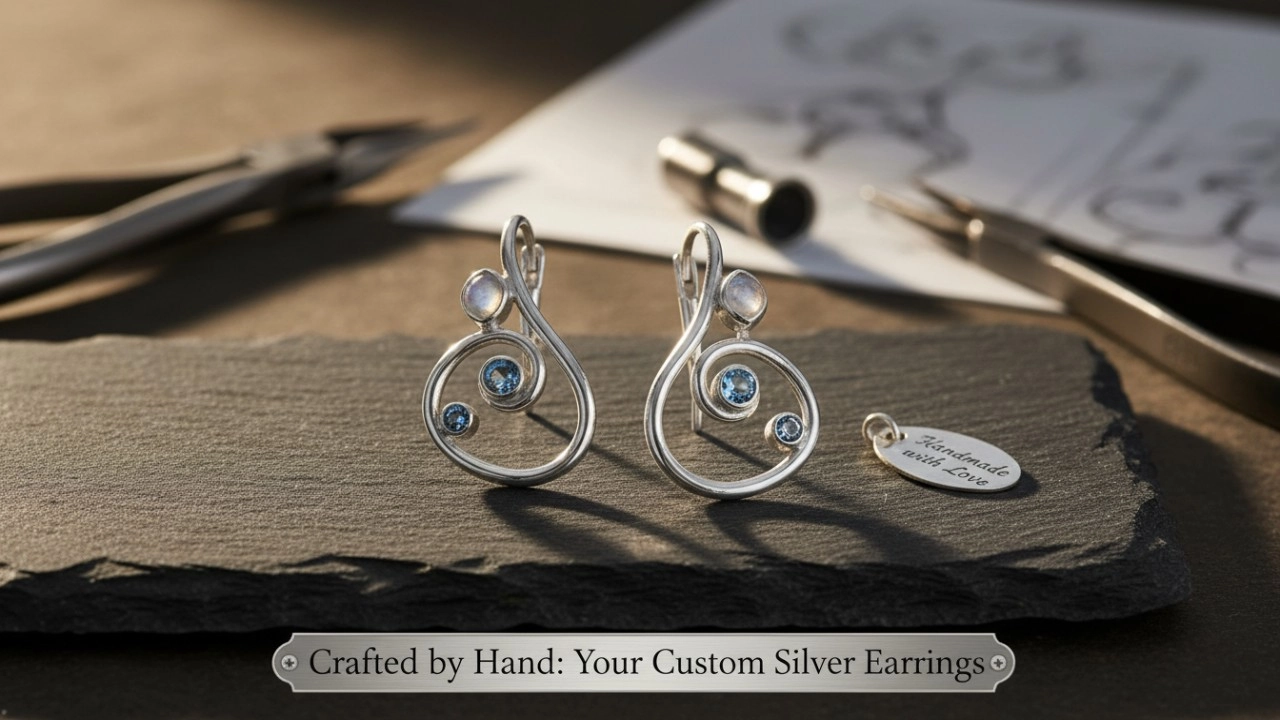
The Ultimate Guide to Ordering Custom Made Silver Earrings: How to Get Perfection Every Time (2026 Edition)
How to Elevate Your Jewelry Brand with a Signature Custom Tennis Bracelet (2026 Guide)
Sourcing Guide: How to Maximize Margins with Custom Sterling Silver Jewelry
Is Brass Jewelry Good? Does Brass Jewelry Tarnish? The Complete Guide to Brass Jewelry Quality, Care, Longevity & Why It’s Trending
The Secret Life of Your Silver: How 925 Sterling Jewelry Comes to Exist
The Ultimate Guide to Sourcing Wholesale 925 Silver Adjustable Rings in 2026
Prdoucts Categories
FAQ
Products
What’s the shipment method? How long does it take for delivery?
Our product distributed to all over the world. Shipped by DHL / Fedex / TNT / UPS takes 3-7 days, Epacket takes 7-15 days, China Post takes 15-30 days.
How long will the plating color last?
Generally 6 month for Water Plated color , 1 - 2 years for vacuum plated color if in proper wearing.
What services can we provide?
Accepted Delivery Terms: FOB, CIF, EXW, Express Delivery;
Accepted Payment Currency: USD, EUR, JPY, CAD, AUD, HKD, GBP, CNY, CHF;
Accepted Payment Type: T/T, L/C, MoneyGram, Credit Card, PayPal, Western Union, Cash, Escrow;
Language Spoken: English, Chinese, Spanish, Japanese, Portuguese, German, Arabic, French, Russian, Korean, Hindi, Italian.
What is your minimum order quantity?
We offer low MOQ from 2 to 30 depending on models. Send your favor model to get details from Trade Manager.
FAQs
Do you do customer design?
Do you do customer design? Yes,we are good at this way.Most of our customer do their customize.And we have cooperate with them when they are new brand, but now they become the top sell on Amazon, more than 32,000 five star comment.
How long does it take for the product to fade?
The normal electroplating quality color retention time of our products is 5 times longer than the market, and the thicker electroplating can retain color for three years.
Discuss Your Ideas with a Professional Custom Jewelry Manufacturer
We provide personalized jewelry customization services for clients worldwide.
Rest assured that your privacy is important to us, and all information provided will be handled with the utmost confidentiality.
By clicking 'Send Inquiry Now' I agree to ZHEFAN JEWELRY processing my personal data.
To see how to withdraw your consent, how to control your personal data and how we process it, please see our Privacy Policy and Terms of use.
From design to production, ZHEFAN JEWELRY offers a one-stop solution to help you enhance your brand value and market competitiveness.
Get A Quote
Contact
Tel: (+86) 188 1927 7817
© 2026 Zhefan Jewelry. All Rights Reserved.
Facebook
Instagram
YouTube
Whatsapp: +8618819277817