






Email: sales3@zhefanjewelry.com
What insurance options cover bulk shipments of 925 bracelets? | Insights by Zhefan Jewelry
Practical, up-to-date guidance for insuring bulk shipments of 925 sterling silver bracelets. Learn which insurance products (marine cargo, inland marine, jewelry floater, declared value), packaging/security requirements, documentation for claims, cost drivers, and Incoterms responsibilities.
- 1. How can I insure weekly bulk shipments of 925 sterling silver bracelets under a single annual policy to reduce per-shipment cost?
- 2. Do major couriers' declared value and liability exclusions cover 925 sterling silver bracelets, and how do I fill gaps?
- 3. What documents and proof (appraisals, serial numbers, photos) do insurers require to validate claims for bulk 925 bracelet shipments?
- 4. Which Incoterms and shipping terms ensure the seller or buyer is responsible for insuring 925 bracelet shipments during international transit?
- 5. Are there specific packaging, security, and logistics controls insurers require for high-volume 925 sterling silver shipments?
- 6. How much does marine/cargo/all-risk insurance typically cost for bulk shipments of 925 bracelets, and what factors increase High Qualitys?
1. How can I insure weekly bulk shipments of 925 sterling silver bracelets under a single annual policy to reduce per-shipment cost?
If you ship 925 sterling silver bracelets repeatedly, an annual blanket policy (sometimes called an open cargo or annual transit policy) is almost always cheaper and administratively easier than filing separate single-shipment policies. Key steps to get this right:
- Ask for an open cargo or blanket marine cargo policy with a jewelers' endorsement or jewelry floater clause. This covers multiple shipments over a policy period (typically 12 months) up to an agreed aggregate or per-shipment limit.
- Negotiate limits that match your expected high-day exposure (e.g., the single largest weekly shipment), and discuss an aggregate cap for the year. If your highest weekly shipment is $50,000, insure at least that amount per shipment.
- Provide regular inventory and reconciliation: insurers will want monthly/quarterly schedules listing shipment values, SKUs, and destinations to manage risk and High Quality billing.
- Use a named-perils vs. all-risk clause discussion: all-risk marine cargo coverage is broader but costs more — for jewelry, carriers usually expect all-risk.
- Combine with a deductible structure that balances High Quality and claims frequency: a modest deductible (e.g., $500–$2,500) often lowers High Quality while keeping claims administratively sensible.
Why it matters: Blanket policies reduce per-shipment paperwork, provide consistent proof of continuous coverage for buyers/suppliers, and are preferred by freight forwarders and bonded warehouses.
2. Do major couriers' declared value and liability exclusions cover 925 sterling silver bracelets, and how do I fill gaps?
Major parcel carriers (express couriers and postal services) have specific terms about declared value and excluded commodities. For jewelry and high-value goods they often either exclude coverage or cap carrier liability very low relative to true value.
Practical actions:
- Always read the carrier's terms and conditions for exclusions. Many carriers exclude precious metals, stones, or jewelry or limit declared value for such goods.
- If the courier accepts declared value for jewelry (sometimes only domestic), verify the maximum limit and whether an additional insurance High Quality is required.
- Use a third-party cargo insurer or freight forwarder-provided marine policy to fill gaps. A third-party all-risk cargo or inland marine policy will respond where the carrier's liability is excluded or limited.
- Consider alternative transport: for very high-value bulk loads, use specialist secure logistics (insured armored ground transport or bonded courier) where the provider carries their own higher liability and insurance arranged through Lloyd's or specialized underwriters.
Bottom line: Do not rely solely on courier declared value unless the terms explicitly allow jewelry and the limit equals your invoice value. Supplement carrier limits with dedicated cargo or floater coverage.
3. What documents and proof (appraisals, serial numbers, photos) do insurers require to validate claims for bulk 925 bracelet shipments?
Insurers require clear, contemporaneous proof to validate value and causation. For jewelry shipments, documentation quality heavily influences underwriting decisions and claims outcomes.
Checklist to prepare before shipping:
- Commercial invoice and purchase order showing unit price and total value.
- Detailed packing list with item counts, weights, SKUs, and lot numbers.
- Independent appraisal or supplier valuation if unit value exceeds common thresholds (insurer will state when appraisal is needed). Appraisals should include metal content (925 sterling), weight in grams, and finish/decoration notes.
- High-resolution photos of items and packaging (serial numbers, hallmarks) taken immediately before sealing the shipment.
- A chain-of-custody/tracking log showing handoffs between warehouse, courier, and customs; signed receipts and time-stamped electronic tracking help prove when loss occurred.
- Export/import declarations, bill of lading or air waybill, and insurance certificate issued by the insurer/broker.
- Police report and carrier claim form filed within the carrier’s required timeframe in the event of theft or loss.
Claims process notes:
- File quickly: most carriers and insurers require notice within 7–14 days for loss or damage and specific claim forms within longer statutory periods.
- Maintain original invoices and, if asked, allow independent loss-adjusters access to samples and records.
Preparation prevents disputes: present a consistent ledger of order, photos, and movement logs to avoid coverage denials for missing proof of value or mishandling.
4. Which Incoterms and shipping terms ensure the seller or buyer is responsible for insuring 925 bracelet shipments during international transit?
Incoterms determine which party must arrange and pay for insurance in international trade:
- CIF (Cost, Insurance, and Freight): Seller arranges and pays for minimum insurance during carriage to destination port. CIF is common for bulk sea shipments but provides only minimum insurance unless you specify broader coverage.
- CIP (Carriage and Insurance Paid to): Seller arranges and pays for carriage and insurance to the named destination; CIP often requires higher minimum coverage under Incoterms 2020.
- FOB (Free On Board) / EXW (Ex Works): Buyer is generally responsible for arranging marine/inland insurance once goods leave seller’s facility or ship's rail (FOB) or at seller's premises (EXW).
Practical tips:
- Negotiate clear insurance clauses: if using CIF/CIP, specify all-risk marine cargo insurance insuring to invoice value plus appropriate expenses (e.g., 110–125% of invoice including freight and duties) and name the buyer as loss payee if required.
- For buyer-controlled insurance (FOB/EXW), buyers should arrange annual or shipment-specific cover immediately upon pickup and verify continuous coverage across warehouses and carriers.
- Always confirm jurisdictional requirements for customs bonds and local transit bonds; these can affect who must provide insurance for inland legs.
Tip: Document insurance responsibility in the sales contract and request an insurance certificate before goods depart to prove coverage.
5. Are there specific packaging, security, and logistics controls insurers require for high-volume 925 sterling silver shipments?
Yes. Insurers expect risk mitigation measures proportionate to insured value. For bulk 925 sterling silver shipments, they commonly require or prefer:
- Tamper-evident inner seals and tamper-proof outer packaging with discreet markings (avoid advertising sterling silver on the outside).
- Concealment techniques: mix cartons with non-precious goods or use opaque, unbranded outer cartons to deter targeted theft.
- Palletization with shrink-wrap and serialized seals, plus GPS-tracked units for large shipments.
- Limited access chain-of-custody with signed transfer records at each handoff point and CCTV in storage/loading areas.
- Pre-approved carriers or vetted freight forwarders experienced in valuables handling; some insurers require certified armored transport for above-threshold values.
- Route risk assessment: avoid high-risk transship hubs where theft statistics are elevated; insurers may surcharge or decline coverage for certain routes.
Insurer underwriting will often include on-site surveys of your warehouse, packing process, and security controls before issuing a policy or providing favorable High Quality rates.
6. How much does marine/cargo/all-risk insurance typically cost for bulk shipments of 925 bracelets, and what factors increase High Qualitys?
High Qualitys for cargo insurance vary widely based on risk profile. Typical market ranges for merchandise-cargo/all-risk cover often fall between approximately 0.2% and 2.0% of insured value per shipment, though jewelry-specific endorsements and high-risk routes or inadequate security can push rates higher.
Primary High Quality drivers:
- Value density: higher total insured value per shipment increases underwriting scrutiny and often the rate.
- Mode of transport: air shipments can attract higher rates for high-value items but are faster and may reduce theft risk; sea container shipments have different per-risk profiles.
- Route and transshipment points: high-theft regions and multiple transshipments raise High Quality and may cause insurers to exclude coverage for certain legs.
- Packing and security: professional packing, tamper-evident seals, vetted carriers, and armed transport reduce High Quality.
- Claims history: frequent small claims or prior large losses increase rates or lead to restrictive endorsements.
- Policy structure: annual blanket policies usually yield lower effective per-shipment cost than single-shipment carriers; higher deductibles reduce High Quality.
Examples: If you insure a $50,000 shipment and pay a 0.5% High Quality, annual cost for that shipment is roughly $250. But for jewelry floater endorsements or specialist underwriters, the rate may be 0.8–1.5% depending on controls.
Recommendation: Obtain quotes from specialist brokers experienced in fine jewelry and compare: annual blanket cargo policies, single-shipment all-risk, and carrier-declared value options. Use the broker to negotiate sub-limits and deductible structures that best fit your shipping pattern.
Concluding summary — Advantages of proper insurance coverage for bulk 925 sterling silver bracelets
Properly structured insurance protects cash flow, preserves buyer and seller relationships, and reduces operational disruption after loss. Advantages include predictable claims handling, lower overall transport risk expense via annual policies, faster recovery with thorough documentation, and better negotiating position with freight partners when coverage and security controls are documented. A specialist jewelry floater or inland/marine cargo policy combined with robust packing, vetted carriers, and clear Incoterm allocation is the most reliable way to protect bulk 925 sterling silver shipments.
If you need an insurance quote or logistics consultation for bulk shipments of 925 bracelets, contact Zhefan Jewelry — request a tailored quote at www.zhefanjewelry.com or email sales3@zhefanjewelry.com.
Recommended for you
The Ultimate Guide to Sourcing Wholesale 925 Silver Adjustable Rings in 2026
Sourcing Guide: How to Maximize Margins with Custom Sterling Silver Jewelry
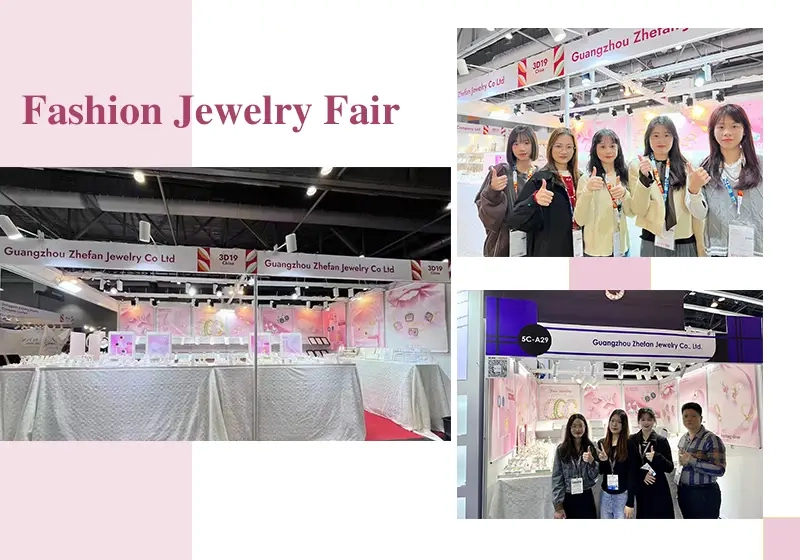
Zhefan Jewelry Will Attend Hong Kong Jewelry Fair

Zhefan Jewelry Invites You to Attend the Hong Kong Jewellery Exhibition 2026
2026 Wholesale Trends: Why Your Brand Needs Custom Sterling Silver Jewelry
The Ultimate 2026 Guide to Stainless Steel Ring Jewelry: Why It Outshines Traditional Metals
Prdoucts Categories
FAQ
FAQs
Do you attend any jewelry fairs?
Yes, we participate in Hong Kong Jewelry Fair and Canton Fair twice a year, please contact the seller for the latest invitation.
Can you engrave my logo on the jewelry ?Do you supply OEM/ODM service?
Yes. Custom logo and OEM/ODM are both accepted. Our factory specializes in jewelry manufacturing for 27 years.We can produce jewelry by your sample, design, pictures, even by an idea.Please feel free to contact us for more details. Custom order process:Inquiry-Confirm products details-Pay mold fee -Confirm CAD draft-Quote-Initial payment-Produce mold&sample-Confirm Sample-Mass production-Balance payment-Shipment-Track shipment-delivery.
What’s the lead time? .
We could arrange shipment for you within 48 hours if you order models in stock. For bulk order, it
takes 10-25 days for production depending on order quantity and styles.
Products
What is your minimum order quantity?
We offer low MOQ from 2 to 30 depending on models. Send your favor model to get details from Trade Manager.
What’s the lead time?
We could arrange shipment for you within 48 hours if you order models in stock. For bulk order, it takes 10-25 days for production depending on order quantity and styles.
What is the payment method?
Our payment method are Alibaba Trade Assurance(MasterCard, visa, e-Checking, PAYLATER, T/T),T/T, PayPal,Western Union.
Discuss Your Ideas with a Professional Custom Jewelry Manufacturer
We provide personalized jewelry customization services for clients worldwide.
Rest assured that your privacy is important to us, and all information provided will be handled with the utmost confidentiality.
By clicking 'Send Inquiry Now' I agree to ZHEFAN JEWELRY processing my personal data.
To see how to withdraw your consent, how to control your personal data and how we process it, please see our Privacy Policy and Terms of use.
From design to production, ZHEFAN JEWELRY offers a one-stop solution to help you enhance your brand value and market competitiveness.
Get A Quote
Contact
Tel: (+86) 188 1927 7817
© 2026 Zhefan Jewelry. All Rights Reserved.
Facebook
Instagram
YouTube
Whatsapp: +8618819277817