







Email: sales3@zhefanjewelry.com
How to handle returns for wholesale brass rings orders? | Insights by Zhefan Jewelry
Practical, industry-ready guidance on handling returns for wholesale brass rings orders—covering batch defects, RMA checklists, international returns, restocking fees for custom rings, transit damage vs misuse, and SKU-level exchanges.
- 1) How should I process batch returns when only a small percentage of wholesale brass rings arrive with plating wear or tarnish?
- 2) How do I create an RMA and inspection checklist that prevents chargebacks for wholesale brass rings with natural brass oxidation?
- 3) How should I manage international returns for wholesale brass rings including customs, duties, and who pays for return shipping?
- 4) What return policy should I use for customized or engraved wholesale brass rings, and how do I enforce restocking fees?
- 5) How do I decide responsibility when rings are damaged in transit versus damaged after arrival (improper retail cleaning or buyer misuse)?
- 6) How do I handle SKU-level returns when brass rings within the same order have different finishes (antique vs polished) and the buyer wants exchanges rather than refunds?
1) How should I process batch returns when only a small percentage of wholesale brass rings arrive with plating wear or tarnish?
Answer:
Start with a documented acceptance sampling and dispute workflow to avoid unnecessary full-order returns. Common industry practice for costume and base-metal jewelry uses statistically based lot sampling and clear defect thresholds (for example: 0.5%–2% acceptable cosmetic variance for non-plated brass; for plated/brushed finishes the supplier and buyer should agree on tolerances). Steps:
- Immediately require high-resolution photos (macro shots) and short-video clips of defects, SKU and lot numbers, and packaging on receipt. This protects both buyer and seller.
- Apply your agreed acceptance criteria. If you don’t have one, adopt a simple checklist: plating lift, bare brass exposure, discoloration beyond normal patina, structural failure (split/shank breaks). Document each failed piece.
- If defects are under an agreed threshold (e.g., <2% of pieces), offer proportional compensation (partial refund), replacement pieces from the same lot, or credit note. If defects exceed the threshold, escalate to a full-lot return or replacement.
- For replacement, pull from quarantine stock (same lot) if available, or offer replacements from a re-run batch and confirm color/finish approval via digital swatches or physical samples.
- Record every return item against the original PO and SKU, and use RMA numbers tied to batch/lot codes. This prevents double-credits and helps trace production issues back to tooling or plating baths.
Why this works: brass rings are prone to finish variance and oxidation. A sampling policy prevents frequent, expensive full-order returns for minor, acceptable cosmetic differences while protecting buyers from true defects.
2) How do I create an RMA and inspection checklist that prevents chargebacks for wholesale brass rings with natural brass oxidation?
Answer:
A good RMA and inspection checklist reduces disputes and chargebacks by setting transparent, objective criteria. Key elements:
- Time-window requirement: require RMA requests within a reasonable inspection window — typically 7–14 days from delivery for visible cosmetic issues; 30 days may apply for structural faults. Note that oxidation can occur after handling; set clear expectations.
- Documentation requirements: buyer must submit order number, SKU, lot number, quantity affected, date received, and high-res photos (with scale) plus short videos showing tactile issues. Include unboxing photos to show packaging condition.
- Inspection checklist items (pass/fail): correct SKU & size, visible plating lift, discoloration beyond normal patina, seams or solder failures, ring sizing/out-of-round greater than agreed tolerance (e.g., ±0.2mm), missing stones (if set), and presence of manufacturing debris.
- Acceptance criteria matrix: define what is repairable (polish/clean), what qualifies for replacement, and what qualifies only for credit. For example: minor surface oxidation that can be removed with brass cleaner = buyer responsibility unless shipment delay exceeded agreed transit times.
- RMA authorization workflow: supplier issues an RMA number within 48 business hours of receiving complete documentation. RMA must include return address, carrier instructions, who pays return shipping (see next), and return condition expected (e.g., sealed in original cartons).
- Retain samples: keep failed-piece samples for at least one production cycle to support root-cause analysis and QC improvements.
This reduces chargebacks because the buyer’s claims must meet the documented criteria and the supplier has recorded responses and evidence throughout the inspection and RMA lifecycle.
3) How should I manage international returns for wholesale brass rings including customs, duties, and who pays for return shipping?
Answer:
International return handling must be spelled out in the sales contract and the returns policy because customs, VAT/GST, and duties complicate refunds. Practical approach:
- Agree Incoterms (e.g., DDP vs EXW) at sale. For DDP (Delivered Duty Paid) suppliers commonly assume import duties on initial delivery; return duties treatment should be predetermined (usually buyer covers return shipping and duties unless the return is supplier’s fault).
- Who pays return shipping: define cases. If return is due to supplier defect, supplier pays or reimburses return shipping and any import duties/refunds. If buyer-initiated (changed mind, wrong order), buyer usually pays return freight and duties. For damage-in-transit, file a carrier claim and the carrier (or insurer) typically covers costs.
- Customs paperwork: use clear HS codes for returned goods and mark shipments as ‘Returned Goods’ with the original commercial invoice referenced. Include RMA number on documents. This helps customs process duty drawback or suspension where applicable.
- Duties and VAT refunds: advise buyers that recovering import VAT or duties depends on local customs processes and frequently takes weeks to months. If the supplier reimburses these, get copies of customs documents and proof of refund where possible, or offer a pre-approved credit while assisting with duty refund paperwork.
- Prefer DDP returns labels for guaranteed landed cost on supplier-paid returns; otherwise, specify that buyer arranges DDU returns at their cost.
- Use insured, trackable carriers and require proof of delivery to avoid disputes.
Document these terms in your commercial invoice, pro forma, and the RMA communication so both parties understand financial responsibilities and timing for refunds.
4) What return policy should I use for customized or engraved wholesale brass rings, and how do I enforce restocking fees?
Answer:
Customized brass rings (engraving, bespoke sizing, plated custom colors) carry higher manufacturing costs and are typically non-returnable or have strict terms. Best practices:
- Non-returnable by default: mark all bespoke/custom items as non-returnable unless there’s a supplier fault (wrong engraving or production error). Make this explicit on quotes and order confirmations.
- Proof of approval: require buyer sign-off on digital proofs (engraving text, font, placement, finish sample) before any production. This is your strongest defense against buyer claims.
- Restocking fees and partial returns: if you permit returns on partially customized stock (e.g., buyer ordered a large mix and wants to return part), set a restocking fee that reflects additional handling and lost resale value — common ranges in wholesale are 10%–30% depending on the level of customization and repackaging costs. For engraved items, restocking fees should be at the high end or items should be non-returnable.
- Enforceable paperwork: include restocking fee terms in the signed purchase order or sales contract, and show how fees are calculated (percentage, minimum fee, or actual cost). Keep records of buyer approvals to reduce disputes.
- Alternate resolutions: offer refurbishment services (re-polish, re-plate) for a fee, or apply a credit note instead of outright cash refunds to preserve the commercial relationship.
Clarity at sale and documented approvals are the best defenses against fraudulent or nuisance returns on custom brass rings.
5) How do I decide responsibility when rings are damaged in transit versus damaged after arrival (improper retail cleaning or buyer misuse)?
Answer:
Establish a clear evidence-based triage that separates carrier/packaging issues from after-delivery misuse. Steps:
- Immediate inspection and photo protocol: buyer must document packaging condition and ring condition upon arrival (inside and outside packaging). If outer box shows damage, require courier damage photos and immediate carrier notice.
- Carrier claims: if damage likely occurred in transit (crushed boxes, water intrusion through outer packaging), file a carrier claim and preserve all packaging and items for carrier inspection per their policy. Suppliers often assist with documentation for claims.
- Misuse determination: signs of buyer-side misuse include abrasive scratches inconsistent with shipment handling, chemical etching from improper cleaners, or polishing marks inconsistent with manufacturing defects. Compare photos to documented pre-shipment QC photos if available.
- For disputed cases, offer a small third-party lab or independent jeweler inspection (paid by losing party or split) if significant value is at stake. For smaller orders, use photo evidence and the documented acceptance checklist to rule.
- Financial responsibility: carrier is responsible for transit damage if claim accepted. If buyer admitted to improper cleaning or misuse, buyer bears cost. If cause is ambiguous, negotiate a shared solution — partial refund, repair fee, or credit note.
- Insurance: recommend sellers insure shipments for the full commercial value (including duties) and sellers maintain internal policies to fast-track refunds when claims are straightforward.
Timely, photo-driven documentation and insurer/carrier engagement are essential to resolving transit vs. post-delivery damage claims without protracted disputes.
6) How do I handle SKU-level returns when brass rings within the same order have different finishes (antique vs polished) and the buyer wants exchanges rather than refunds?
Answer:
When an order contains mixed finishes, the supplier and buyer should agree on finish matching tolerance and exchange logistics before production. Practical steps:
- Pre-approval for finishes: provide finish swatches or sample rings for buyer sign-off. Capture digital color and finish references (Pantone or supplier photos) and include them in the PO.
- Track finishes by SKU and lot number: label each carton with the finish code so returned/exchanged rings are traceable to the exact production run.
- Exchange mechanics: if buyer requests exchanges for different finishes, determine whether the supplier can rework existing pieces (re-plate or buff) or must produce new pieces. Rework feasibility depends on finish type. Polished->antique often requires an extra patination process; antique->polished typically requires re-polishing and re-plating.
- MOQ and lead time impact: exchanges that require production runs may trigger minimum order quantities and new lead times. Communicate these clearly and offer partial immediate credits for stock-available SKUs.
- Inventory restocking and resale condition: returned rings intended for resale must be in original packaging and un-worn. If rings show handling wear, apply refurbishment fees or restocking fees before accepting exchange.
- Operationally, provide a SKU-level return form that lists finish codes, quantities, condition, and preferred resolution (replace, credit, rework). Automate RMA processing with SKU batch mapping to avoid picking errors.
This approach treats finish variance as a controlled attribute, reduces back-and-forth, and ensures exchanges are feasible without causing production bottlenecks.
Conclusion:
A clear, written returns program for wholesale brass rings—covering sampling rules, a robust RMA and inspection checklist, explicit international returns terms, custom-item policies, transit vs misuse triage, and SKU-level exchange rules—reduces disputes, speeds refunds, and protects margins. The advantages are measurable: fewer chargebacks, faster carrier claims resolution, fewer holdbacks on cash flow, and improved supplier-buyer trust. At Zhefan Jewelry, we follow documented QC and RMA workflows and can customize return policies to your commercial terms.
Contact us for a tailored returns policy or a quote to support your wholesale brass ring orders: www.zhefanjewelry.com or sales3@zhefanjewelry.com.
Recommended for you
Is Stainless Steel a Good Type of Jewelry? Pros, Cons, and Why Brands Choose Stainless Steel Jewelry
Boost Your Margins with Top-Selling Custom Wholesale Brass Huggie Earrings
Why Custom 925 Silver Rings Are the Perfect Sustainable Luxury Gift (Compared to Gold)
What is Zircon Jewelry?-The Ulimate Guide
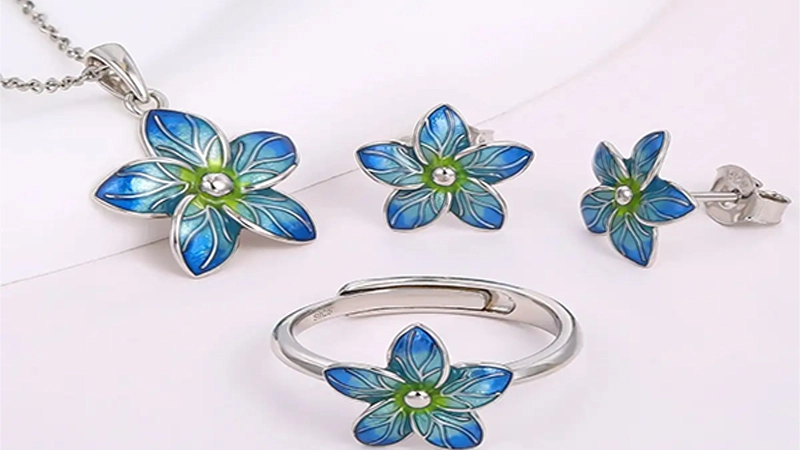
The Secret Life of Your Silver: How 925 Sterling Jewelry Comes to Exist

Zhefan Jewelry Invites You to Attend the Hong Kong Jewellery Exhibition 2026
Prdoucts Categories
FAQ
Products
What is the material of the jewelry?
Most of the jewelry is made of 925 sterling silver, brass or 316 stainless steel or custom material,which can cover different procurement demand.
How can we guarantee quality?
Always a pre-production sample before mass production;
Always final Inspection before shipment;
What is the payment method?
Our payment method are Alibaba Trade Assurance(MasterCard, visa, e-Checking, PAYLATER, T/T),T/T, PayPal,Western Union.
What's the packaging of your jewelry?
Normally we use OPP bag, bubble bag and paper box to pack the goods,custom packaging is acceptable as well.
How long will the plating color last?
Generally 6 month for Water Plated color , 1 - 2 years for vacuum plated color if in proper wearing.
FAQs
Can I get a sample?
Yes,welcome to choose our sample to test and check quality.Please give me your address and number then send you payment list.
Discuss Your Ideas with a Professional Custom Jewelry Manufacturer
We provide personalized jewelry customization services for clients worldwide.
Rest assured that your privacy is important to us, and all information provided will be handled with the utmost confidentiality.
By clicking 'Send Inquiry Now' I agree to ZHEFAN JEWELRY processing my personal data.
To see how to withdraw your consent, how to control your personal data and how we process it, please see our Privacy Policy and Terms of use.
From design to production, ZHEFAN JEWELRY offers a one-stop solution to help you enhance your brand value and market competitiveness.
Get A Quote
Contact
Tel: (+86) 188 1927 7817
© 2026 Zhefan Jewelry. All Rights Reserved.
Facebook
Instagram
YouTube
Whatsapp: +8618819277817