







Email: sales3@zhefanjewelry.com
How to estimate metal loss during production of 925 bracelets? | Insights by Zhefan Jewelry
Practical, measurement-driven guidance to quantify sterling (925) silver metal loss during casting, trimming, polishing and finishing. Includes formulas, sampling plans, tooling recommendations, yield KPIs and action steps to reduce non-recoverable wastage for accurate costing and pricing.
- 1. How do I calculate non-recoverable metal loss per batch for 925 sterling bracelets after casting, trimming and polishing?
- 2. What is the best sampling protocol to measure finishing/polishing metal loss for small-batch 925 bracelets?
- 3. How much metal is typically lost in lost-wax casting for 925 bracelets and how do I account for sprues, investment and dross?
- 4. How should I factor alloy composition (92.5% silver + base metals) and contamination when reclaiming scrap and calculating net silver loss?
- 5. Which measurement tools, weighing protocols and documentation produce legally defensible metal loss figures for wholesale pricing and hallmarking?
- 6. How can I reduce unexpected metal wastage when scaling from prototype runs to mass production of 925 bracelets?
- Concluding advantages of accurate metal-loss estimation
Accurate estimation of metal loss when producing 925 (sterling) bracelets is essential for correct costing, pricing, inventory control and regulatory hallmarking. Below are six specific, practical questions beginners and junior production managers regularly ask — each answered with step-by-step measurement methods, formulas, examples and practical controls. This content uses industry best practice for material yield tracking, scrap recovery and process auditing.
1. How do I calculate non-recoverable metal loss per batch for 925 sterling bracelets after casting, trimming and polishing?
Step-by-step method (practical formula):
- Weigh raw input: record total starting alloy weight for the batch (Wstart).
- Segregate and weigh recovered/ re-meltable scrap: include sprues, runners, heavy filings and cuttings that will be re-melted (Wrecoverable).
- Weigh non-recoverable scrap: abrasive dusts, polishing slurry, lost solids that cannot be reclaimed (Wnonrecoverable) — capture from filters, dust chambers and waste traps if possible.
- Weigh finished pieces (all items fully finished and cleaned): total finished weight (Wfinished).
Non-recoverable metal loss (%) = / Wstart × 100Example: Wstart = 10,000 g (10 kg). After production: Wfinished = 9,200 g, Wrecoverable = 700 g. Then non-recoverable loss = (10,000 − (9,200 + 700))/10,000 × 100 = 1%.
Notes and controls:- Use an analytical balance with 0.01 g or 0.001 g resolution for small batches and prototypes.- Recovered scrap must be inspected: mix of alloys (solder, plate residues) reduces re-melt value—adjust calculations by assay when mixed alloys are present.- Record loss per SKU and per process step (casting, sawing, filing, polishing) to identify hotspots.
2. What is the best sampling protocol to measure finishing/polishing metal loss for small-batch 925 bracelets?
Problem: polishing loss is diffuse (dust, slurry) and varies with operator, wheel type and compound. A repeatable sampling plan is required.
Recommended protocol:
- Select a statistically representative sample: for small-batch runs (n ≤ 50), use 10% sample or minimum 3 units; for larger runs use n = sqrt(total) as a practical estimator to get process insight.
- Weigh each selected piece at three control points: after basic cleaning (post-cast/post-trim), after intermediate filing, and after final polishing. Use the same calibrated scale each time and record environmental conditions.
- Collect polishing media: weigh brushes/pads and collect dust/residue from the vacuum traps and slurry filters for the sample period to quantify lost mass per hour/operator.
- Compute polishing loss per piece = (Weight after filing − Weight after polishing). Calculate mean, standard deviation and 95% confidence interval for the sample.
Example: sample of 5 bracelets yields mean polishing loss = 0.8 g/piece (SD 0.12 g). For a lot of 500, expected polishing loss ≈ 400 g ± (stat uncertainty). Use control charts and operator training to reduce variance.
Practical tips: use water-based polishing compounds where feasible (easier capture), install local exhaust with particulate filters, and periodically assay filter solids to reclaim silver where economically viable.
3. How much metal is typically lost in lost-wax casting for 925 bracelets and how do I account for sprues, investment and dross?
Context: lost-wax casting creates visible (sprues, runners) and invisible (investment residues, surface cleaned away) waste. The absolute amount depends on sprue design, gating strategy, and casting parameters.
How to account for it:
- Design low-waste sprues and tree layouts: minimize sprue cross-section and use central gates to reduce runner length.
- Run a casting yield test: make a test tree of representative bracelets, weigh wax tree (Wwax) and record cast metal weight (Wcast_total) and sprues collected (Wsprues). Compute casting yield = (Wfinished_cast / Wmetal_poured) × 100 where Wmetal_poured is charge weight.
- Measure dross and investment yield loss: collect dross settled in crucible and weigh after cooling.
Industry practice: gross casting scrap per pour (sprues + feeders + dross + investment-entangled flash) can be a significant fraction of the pour weight, but much is recoverable by re-melting. Many bench-level manufacturers report gross scrap per cast tree in the 8–25% range depending on gating and tree density; net non-recoverable loss is typically much lower (~1–5%) when the shop has good reclaim/re-melt procedures. You should measure your own shop’s performance rather than assume generic numbers.
Practical actions: capture and catalog sprue weight per SKU, return clean sprue batches to the melting furnace periodically, and keep a running re-melt recovery log to convert gross scrap to net loss metrics.
4. How should I factor alloy composition (92.5% silver + base metals) and contamination when reclaiming scrap and calculating net silver loss?
925 sterling is an alloy with 92.5% silver and 7.5% copper (or other alloying metals). When reclaiming scrap, the metal’s silver content and contaminants (solder, plating residues, other alloys) change the effective silver recovered.
Steps to convert recovered alloy to net silver:
- Weigh the recovered alloy batch (Wrecovered_alloy).
- Assay or assay-estimate the silver fineness of the recovered batch (Frecovered, expressed as %Ag). Use XRF handheld unit for quick checks or send to an assay lab for precise results.
- Net silver mass = Wrecovered_alloy × Frecovered.
If you simply re-melt clean 925 sprues, Frecovered ≈ 92.5% and you can reuse the alloy with minimal adjustment. If scrap contains solders, non-sterling alloys or plated parts, Frecovered can drop significantly and will require refining or addition of pure silver to restore fineness.Practical tip: segregate scrap by type (sterling-only, mixed-alloy, plating/slurry) to maximize on-site re-melt value and reduce refining fees. Regular assays of each scrap bin give defensible conversion factors for cost accounting.
5. Which measurement tools, weighing protocols and documentation produce legally defensible metal loss figures for wholesale pricing and hallmarking?
Tools and tolerances:
- Balances: use Class II/III analytical balances with minimum readability 0.01 g; for small items or quality labs use 0.001 g resolution. Calibrate daily with certified weights.
- Assay: for fineness and pure metal % use XRF for fast checks and accredited fire assay or ICP-MS at a certified lab for legally defensible results used in invoices and refining credits.
- Documentation: maintain batch sheets, signed scrap reconciliation reports, and chain-of-custody records for scrap sent to third-party refiners. Timestamped weight records and operator initials are critical for audits.
Measurement protocol (example):
- Weigh Wstart on certified balance and log batch ID.
- At each process checkpoint (post-casting, post-filing, post-polish), weigh cumulative finished pieces and recovered scrap and log each separately.
- For any reclaimed alloy sent to a refiner, include labeled weighing and assay certificate from the refiner as proof of metal composition.
This approach provides defensible evidence in pricing negotiations, hallmark audits, insurance claims and customs declarations. If you supply wholesale or export, keep copies for at least the statutory period required in your jurisdiction.
6. How can I reduce unexpected metal wastage when scaling from prototype runs to mass production of 925 bracelets?
Scaling issues often magnify small process inefficiencies. A controlled ramp-up with measurement mitigates surprises.
Recommended scale-up sequence:
- Pilot run: produce a representative pilot lot (100–500 units depending on capacity) and capture detailed loss metrics per step (casting, trimming, polishing, plating if applied).
- Root-cause analysis: for each step with high loss, use Pareto analysis to prioritize fixes (excessive filing, poor sprue design, aggressive polishing, operator variation).
- Process standardization: implement jigs, fixed sprue templates, operator SOPs and wheel/compound schedules to reduce variability.
- Tooling and consumables: invest in optimized tooling (fine saws, low-debris buffing wheels), and replace worn abrasive media before they create excessive dust that cannot be reclaimed.
- Continuous measurement: maintain per-shift KPIs for yield% and scrap%, and show improvement targets (e.g., reduce polishing loss by X% in 90 days.)
Other tips: negotiate reclaim/refining agreements with local refineries for better recovery value; explore alternative finishing (ultrasonic tumbling vs aggressive wheel polishing) to reduce non-recoverable slurry; and pilot production with several operators to identify operator-specific variance and training needs.
Concluding advantages of accurate metal-loss estimation
Accurate metal-loss estimation improves cost forecasting, yields fair customer pricing, reduces margin erosion from scrap and rework, and supports regulatory and hallmarking compliance. Practical benefits include tighter inventory control, lower refining fees through better segregation of scrap, improved sustainability by minimizing non-recoverable waste, and stronger supplier and customer trust backed by documented measurements and assays.
For industry-grade measurement systems, sampling templates, or an on-site audit of your 925 bracelet production yield, contact Zhefan Jewelry for a production quote: www.zhefanjewelry.com or email sales3@zhefanjewelry.com.
Recommended for you
Choosing the Right Metal for Jewelry Making - Practical Guide
The Secret Life of Your Silver: How 925 Sterling Jewelry Comes to Exist
Is a Brass Necklace Good? The Honest Truth About Wear, Tarnish, and Quality
How to Elevate Your Jewelry Brand with a Signature Custom Tennis Bracelet (2026 Guide)

How to Choose the Right Jewelry for Your Skin Tone
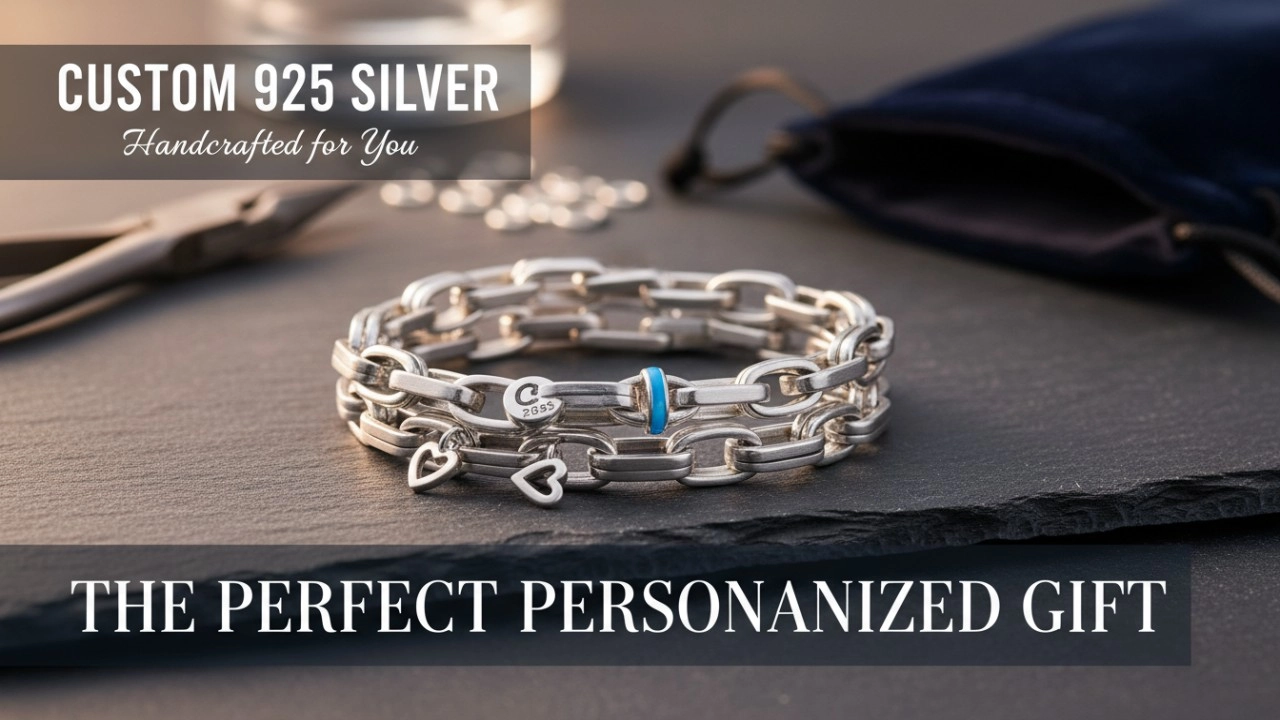
12 Unique Custom 925 Silver Bracelet Ideas That Go Beyond Basic Engraving (2026 Guide)
Prdoucts Categories
FAQ
Products
What's the packaging of your jewelry?
Normally we use OPP bag, bubble bag and paper box to pack the goods,custom packaging is acceptable as well.
Do you offer free sample for quality check?
Sample order is welcome, but sample fee need to be paid. It will be deducted when you place an bulk order.
Can you engrave my logo on the jewelry ?Do you supply OEM/ODM service?
Yes. Custom logo and OEM/ODM are both accepted.Our factory specializes in jewelry manufacturing for 25 years.We can produce jewelry by your sample, design, pictures, even by an idea.Please feel free to contact us for more details. Custom order process: Inquiry-Confirm products details-Pay mold fee -Confirm CAD draft-Quote-Initial payment-Produce mold & sample-Confirm Sample-Mass production-Balance payment-Shipment-Track shipment-delivery.
What is the payment method?
Our payment method are Alibaba Trade Assurance(MasterCard, visa, e-Checking, PAYLATER, T/T),T/T, PayPal,Western Union.
What services can we provide?
Accepted Delivery Terms: FOB, CIF, EXW, Express Delivery;
Accepted Payment Currency: USD, EUR, JPY, CAD, AUD, HKD, GBP, CNY, CHF;
Accepted Payment Type: T/T, L/C, MoneyGram, Credit Card, PayPal, Western Union, Cash, Escrow;
Language Spoken: English, Chinese, Spanish, Japanese, Portuguese, German, Arabic, French, Russian, Korean, Hindi, Italian.
FAQs
Do you attend any jewelry fairs?
Yes, we participate in Hong Kong Jewelry Fair and Canton Fair twice a year, please contact the seller for the latest invitation.
Discuss Your Ideas with a Professional Custom Jewelry Manufacturer
We provide personalized jewelry customization services for clients worldwide.
Rest assured that your privacy is important to us, and all information provided will be handled with the utmost confidentiality.
By clicking 'Send Inquiry Now' I agree to ZHEFAN JEWELRY processing my personal data.
To see how to withdraw your consent, how to control your personal data and how we process it, please see our Privacy Policy and Terms of use.
From design to production, ZHEFAN JEWELRY offers a one-stop solution to help you enhance your brand value and market competitiveness.
Get A Quote
Contact
Tel: (+86) 188 1927 7817
© 2026 Zhefan Jewelry. All Rights Reserved.
Facebook
Instagram
YouTube
Whatsapp: +8618819277817