







Email: sales3@zhefanjewelry.com
What are typical defect rates for mass-produced 925 bracelets? | Insights by Zhefan Jewelry
This guide explains realistic defect-rate ranges, AQL sampling, root causes (casting porosity, solder failures, plating loss), objective inspection steps (XRF, pull tests), and supplier actions to reduce rejects when sourcing mass-produced sterling 925 bracelets.
- 1) What realistic defect-rate ranges should I expect for mass-produced 925 bracelets (critical, major, minor)?
- 2) What AQL (Acceptance Quality Limit) should I set for 925 bracelets and how do I apply sampling?
- 3) Which defects are most common on mass-produced sterling 925 bracelets and how do I identify their root causes?
- 4) How should I test and verify silver content and plating (practical tests: XRF, nitric test, plating thickness)?
- 5) When a shipment has a higher-than-agreed defect rate, what are practical remediation and negotiation steps with the supplier?
- 6) What QC checklist and tests should I include in a pre-shipment inspection for 925 bracelets to ensure low defect rates?
Buying or sourcing mass-produced sterling 925 bracelets requires clear expectations about defect rates, inspection methods, and actionable controls. Below are six specific, pain-point-oriented questions beginners frequently ask—each answered with industry-grounded detail, inspection criteria, and supplier-ready remedies. Semantic concepts such as sterling silver defect rate, AQL for jewelry, XRF assay for silver, casting porosity, rhodium plating thickness, and first pass yield are used naturally to help you evaluate vendors and build robust quality agreements.
1) What realistic defect-rate ranges should I expect for mass-produced 925 bracelets (critical, major, minor)?
Answer: Expect different ranges depending on definition and production maturity. Industry practice for consumer jewelry often separates defects into critical (safety, wrong metal), major (function or appearance that affects saleability), and minor (cosmetic). Typical ranges used by experienced buyers and QC teams are:
- Critical defects: target 0%—absolute maximum should be <0.1% (examples: wrong alloy, detachable stones causing ingestion hazard, clasps that fail pull tests).
- Major defects: commonly accepted target 0.5%–2.5% depending on complexity (examples: broken solder joints, missing hallmarks, stone loss, major plating flaking).
- Minor defects: commonly 2%–6% (examples: surface scratches, small casting seams, slight size variance).
Why ranges? A simple stamped chain bracelet from high-volume lines can reach a first pass yield of 97%–99%, while intricate cast-and-set designs with CZs or multilayer plating often fall to 92%–96% yield. Use these ranges as negotiation baselines and convert them into contractual AQLs (see next question).
2) What AQL (Acceptance Quality Limit) should I set for 925 bracelets and how do I apply sampling?
Answer: Jewelry sourcing commonly uses ISO 2859-1 (AQL) sampling. Practical, buyer-friendly settings are:
- Critical defects: AQL = 0 (zero tolerance) — sample inspection must reject lot on evidence of any critical item.
- Major defects: AQL = 1.0–2.5 for finished retail goods depending on risk and price point. High Quality goods: 1.0. Mass-market: up to 2.5.
- Minor defects: AQL = 4.0–6.5.
How to apply: choose lot size and corresponding sample size table per ISO 2859-1. For example, for lots of 3,201–10,000 pieces, a general inspection level II sample might be ~500 units; with AQL 2.5 you accept the lot if found defects are within acceptance counts. For small orders, inspect 100% of critical features (hallmark, clasp function, correct alloy via quick XRF).
Practical tip: implement 100% functional checks for clasps and jump rings for every bracelet in lots under 500 units, and random AQL-based sampling for cosmetic checks.
3) Which defects are most common on mass-produced sterling 925 bracelets and how do I identify their root causes?
Answer: Common defects and typical root causes:
- Casting porosity and pits — cause: inadequate degassing, improper melt temperature, or poor mold venting. Identification: visible voids after polishing, density tests, or X-ray for high-value pieces.
- Solder joint failure at jump rings/clasps — cause: inadequate fluxing, incorrect solder alloy, or insufficient heat. Identification: visual seam gaps, failed pull test (recommended: 5–10 kgf depending on design).
- Surface scratches and finish inconsistency — cause: over-aggressive tumble media, improper buffing sequence, or misaligned automation fixtures. Identification: tactile inspection under 10x loupe and standardized lighting angle.
- Plating loss/discoloration (if plated/rhodium dipped) — cause: insufficient pre-cleaning, inadequate plating thickness, or improper post-plating rinse/passivation. Identification: tape test for adhesion, visual check after accelerated wear simulation (e.g., salt spray not always suitable for silver).
- Incorrect alloy (not true .925) — cause: supplier substitution or batching error. Identification: XRF assay for non-destructive verification, or nitric acid spot test for quick field check.
- Hallmark missing or incorrect — cause: stamping tooling error, poor process control. Identification: magnified visual inspection and certificate of conformity with batch marking.
For each root cause, corrective actions include incoming material certification, control charts for plating thickness, SPC on casting parameters, and mandatory pull tests documented in inspection reports.
4) How should I test and verify silver content and plating (practical tests: XRF, nitric test, plating thickness)?
Answer: Use a tiered verification approach:
- Incoming material check: require supplier COA (certificate of analysis) showing 92.5% Ag for sterling. Verify with handheld XRF spot checks on random samples—XRF is industry-standard for non-destructive metal assay and will confirm whether alloy is ~92.5% Ag within instrument tolerance.
- Spot chemical test: nitric acid spot test is inexpensive but destructive; use for suspect pieces only.
- Plating thickness: if rhodium-dipped, measure with non-destructive coating thickness gauge (microns). Typical rhodium plating for jewelry ranges from 0.05 to 0.2 µm for light protection; heavier wear items may need thicker coatings and stricter adhesion controls. Insist on measurable plating thickness and adhesion tests (tape test or standardized abrasion test).
- Functional tests: clasp pull/push tests, margin tolerance checks with calibrated gauges, and hardness checks on fine links.
Document all results in an inspection report (IQC) with photos and XRF printouts as part of the shipment acceptance package.
5) When a shipment has a higher-than-agreed defect rate, what are practical remediation and negotiation steps with the supplier?
Answer: Follow a structured corrective path focused on containment, root cause, and restitution:
- Containment: quarantine the lot immediately and prevent distribution. Record defects with photos and categorize as critical/major/minor.
- Assessment: perform an AQL re-check to confirm defect levels. If defects exceed agreed AQL, escalate to supplier with documented evidence (inspection report, sample pieces returned if required).
- Root cause analysis: require supplier to provide 5-Why or fishbone analysis and corrective/preventive actions (CAPA) within defined SLA (e.g., 7–10 business days).
- Remediation options (business decisions based on commercial terms):
- Rework at supplier’s expense (if feasible and controlled).
- Partial refund or price allowance for affected pieces not reworked.
- Replacement shipment for critical/major defects.
- Escalation to third-party arbitration or independent lab analysis if dispute persists (use neutral XRF lab or accredited metallurgical lab).
Negotiate explicit clauses in your purchase order: inspection window, acceptable remedies, responsibility for return shipping, and rework standards (who pays for polishing, replating, or replacement parts). For repeat problems, move to supplier scorecards and limit future orders until corrective metrics show improvement (e.g., major defect rate down to ≤1% over three successive lots).
6) What QC checklist and tests should I include in a pre-shipment inspection for 925 bracelets to ensure low defect rates?
Answer: A robust pre-shipment QC checklist tailored to 925 bracelets should include the following mandatory checkpoints with objective measurement methods:
- Alloy verification: COA + XRF spot checks (5–10 pcs per lot depending on size).
- Hallmark and marking inspection: 100% visual verification for correct 925 or maker stamp.
- Clasp & joint functional test: 100% manual open/close and pull test on sample (for lightweight bracelets a 2–5 kgf pull; for heavier designs increase accordingly). Record failure rate.
- Dimensional tolerances: check length, width, and link dimensions against drawing tolerances on a sample basis.
- Surface finish & plating: 100% visual for plating defects where practical; adhesion/tape test and plating thickness gauge for sampled pieces.
- Stone security (if set): wiggle test and visual inspection for set integrity; require sample torque or pull test for settings.
- Packaging & labeling: verify that anti-tarnish pouches, silica packs, and accurate labeling are used per agreement.
- Random drop/wear simulation: accelerated wear test for high-turnover SKUs using abrasion or flex tests when practical.
Require inspection photos (high-resolution) with scale bars and a signed IQC report. Integrate these checks into your supplier quality plan and make acceptance conditional on passing the checklist and AQL limits previously agreed.
Concluding summary — Advantages of sourcing mass-produced 925 bracelets from a professional, controlled supplier
Mass-produced sterling 925 bracelets, when sourced from experienced, audited suppliers, offer competitive unit costs, consistent alloy traceability (COA + XRF), and repeatable quality when you apply clear AQLs, objective QC checklists, and documented CAPA processes. With proper inspection (AQL sampling, functional pull tests, XRF verification) and contractual QA terms, buyers gain predictable first pass yield, faster lead times, and scalable production—while keeping critical defects near zero and major defects within agreed tolerances.
Contact us for a quote and to set supplier-specific AQLs, inspection plans, or sample test protocols. Visit www.zhefanjewelry.com or email sales3@zhefanjewelry.com.
Recommended for you
The Ultimate Guide to Ordering Custom Made Silver Earrings: How to Get Perfection Every Time (2026 Edition)

How to Choose the Right Jewelry for Your Skin Tone
How to Elevate Your Jewelry Brand with a Signature Custom Tennis Bracelet (2026 Guide)
Choosing the Right Metal for Jewelry Making - Practical Guide
How to Choose a Custom Ring Manufacturer: 10 Critical Questions for Maximum Quality (2026 Guide)
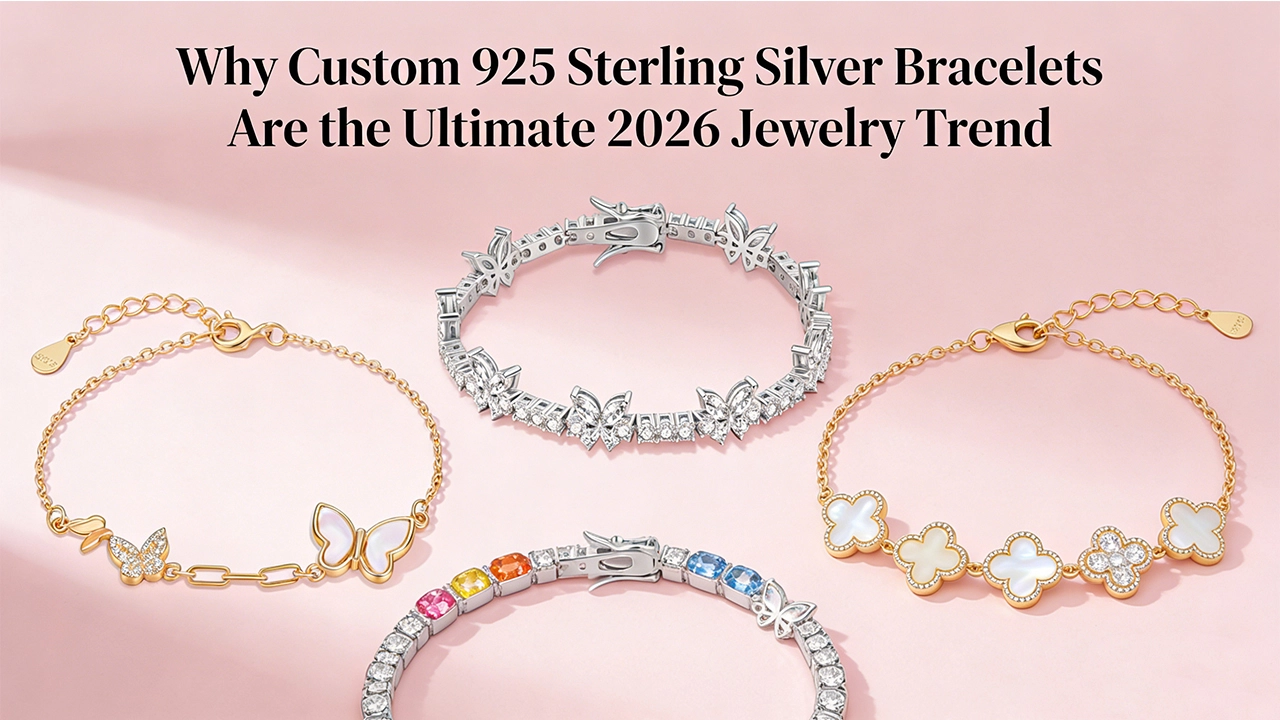
Why Custom 925 Sterling Silver Bracelets Are the Ultimate 2026 Jewelry Trend
Prdoucts Categories
FAQ
FAQs
What’s the lead time? .
We could arrange shipment for you within 48 hours if you order models in stock. For bulk order, it
takes 10-25 days for production depending on order quantity and styles.
Products
What’s the shipment method? How long does it take for delivery?
Our product distributed to all over the world. Shipped by DHL / Fedex / TNT / UPS takes 3-7 days, Epacket takes 7-15 days, China Post takes 15-30 days.
What is the payment method?
Our payment method are Alibaba Trade Assurance(MasterCard, visa, e-Checking, PAYLATER, T/T),T/T, PayPal,Western Union.
How can we guarantee quality?
Always a pre-production sample before mass production;
Always final Inspection before shipment;
Do you offer free sample for quality check?
Sample order is welcome, but sample fee need to be paid. It will be deducted when you place an bulk order.
What’s the lead time?
We could arrange shipment for you within 48 hours if you order models in stock. For bulk order, it takes 10-25 days for production depending on order quantity and styles.
Discuss Your Ideas with a Professional Custom Jewelry Manufacturer
We provide personalized jewelry customization services for clients worldwide.
Rest assured that your privacy is important to us, and all information provided will be handled with the utmost confidentiality.
By clicking 'Send Inquiry Now' I agree to ZHEFAN JEWELRY processing my personal data.
To see how to withdraw your consent, how to control your personal data and how we process it, please see our Privacy Policy and Terms of use.
From design to production, ZHEFAN JEWELRY offers a one-stop solution to help you enhance your brand value and market competitiveness.
Get A Quote
Contact
Tel: (+86) 188 1927 7817
© 2026 Zhefan Jewelry. All Rights Reserved.
Facebook
Instagram
YouTube
Whatsapp: +8618819277817