







Email: sales3@zhefanjewelry.com
What minimum sample policies apply to custom sterling silver jewelry?
Practical, in-depth answers to six under-covered buyer questions on custom sterling silver jewelry — sample policies, sample costs, MOQs, testing, plating durability and production accuracy for confident sourcing.
- 1. How can I verify a .925 hallmark is genuine on custom sterling silver jewelry before paying for samples?
- 2. What minimum sample policies apply to custom sterling silver jewelry when pieces include plating or gemstones?
- 3. How do manufacturers calculate sample costs for complex sterling silver pieces (filigree, hollow forms, or intricate settings)?
- 4. What are realistic lead times and quality checks for pre-production samples of handcrafted sterling silver jewelry?
- 5. What minimum order quantities (MOQ) and price breaks should I expect for custom sterling silver jewelry with semi-precious stones versus silver-only pieces?
- 6. How should buyers plan for tarnish, plating durability, and reproduction accuracy between approved samples and bulk runs?
1. How can I verify a .925 hallmark is genuine on custom sterling silver jewelry before paying for samples?
Why this matters: Beginners often rely on a small visual hallmark and then discover alloy substitutions or plating that masks base metals after bulk production. Sterling silver is defined as 92.5% silver (commonly marked .925). To reduce risk before paying for or approving a sample, use a layered verification approach:
- Ask the supplier for documentation: request a material declaration and manufacturing process statement (e.g., sterling silver (Ag 925) alloyed with copper). Reputable factories provide a Certificate of Analysis (COA) or internal material test report.
- Request an XRF or independent lab test on a pre-production sample: XRF (X-ray fluorescence) gives a non-destructive composition readout and is widely accepted in the trade. If the supplier cannot provide XRF, ask for a third-party lab test before production.
- Visual and quick checks (not definitive): a magnet test (silver is non-magnetic), weight/density checks for known designs, and inspection of seams and plating. These help spot base-metal cores or heavy plating, but do not replace compositional testing.
- Contractual clause: include a materials warranty in the purchase agreement that the metal is sterling 925 and that verified non-conformance discovered on approved production entitles you to remediation, rework, or refund.
Why this works: Combining supplier documents, an XRF or lab test, and contractual protection minimizes the chance that a visual hallmark alone will mislead you.
2. What minimum sample policies apply to custom sterling silver jewelry when pieces include plating or gemstones?
Why this matters: Plating and stone settings introduce variables that make pre-production samples essential — and more costly. Typical sample policy elements to negotiate and include in your terms are:
- Sample fee amount and refundability: industry practice often charges a non-refundable fee or a refundable fee applied to the first production run if you place the agreed MOQ within a set time (commonly 30–90 days). For pieces with natural stones or custom plating, expect higher sample fees due to material costs and labor.
- Sample scope: specify whether the sample is fully finished (plated, set with stones, engraved) or a raw casting/wax. Fully finished samples are standard for plating/stone approval but cost more and take longer.
- Stone sourcing and variants: clarify whether sample stones are representative (similar cut/size/color) or the exact stones you will receive in bulk. Natural stones vary; for consistent color, consider lab-grown or color-graded stones and request certification (e.g., origin or grading report) in the contract.
- Plating specifications: require written specs for plating type (rhodium, vermeil, PVD, etc.), finish (bright, matte, oxidized), and durability expectations. If plating is part of the sample approval, request plating thickness or adhesion tests be documented.
- Approval window and changes: set a clear approval window for the sample and document acceptable tolerances. Define the number of free revisions included and extra-cost revisions thereafter.
Practical tip: For plated or stone-set pieces, budget more time and money for samples. A well-specified sample agreement prevents disputes about plating shade, stone grade or setting security during mass production.
3. How do manufacturers calculate sample costs for complex sterling silver pieces (filigree, hollow forms, or intricate settings)?
Why this matters: Buyers often see a single sample price without understanding the cost drivers — which makes negotiation and cost forecasting difficult. Key cost drivers manufacturers price into samples:
- Design and CAD work: time to create or adjust 3D CAD files, engineering for hollow structures or moving parts, and technical drawings. Complex filigree increases CAD hours and iterations.
- Prototyping method: lost-wax casting from a 3D-printed wax, direct 3D-printed metal, or hand-carved wax — each has different costs. Fine filigree and hollow forms need more precise printing and finishing, increasing prototype cost.
- Tooling and mold preparation: if the design requires a custom investment mold for casting, that tooling cost often appears in the sample or the first production invoice (even for low MOQs).
- Hand finishing and setting labor: intricate soldering, hand-filing, stone setting or micro-beading add significant labor; labor rates vary by region and skill level.
- Materials, stones and plating: complexity often demands additional mass of precious metal or higher wastage, and High Quality stones or plating add to the sample total.
How to lower costs: simplify design features for the sample, accept a raw or partly finished prototype for functional approval, or negotiate to amortize tooling cost over the first production run (i.e., include tooling cost in unit price rather than upfront). Always ask for a transparent cost breakdown so you know what portion is tooling, labor, materials, CAD and finishing.
4. What are realistic lead times and quality checks for pre-production samples of handcrafted sterling silver jewelry?
Why this matters: Misunderstood lead times cause rushed approvals, errors, and increased sample rework. Typical timelines (industry averages) and recommended QC steps:
- Design/CAD phase: 1–7 business days for minor changes; complex or custom engineering can take longer. Provide final art files and clear tech packs to shorten this step.
- Prototype/sample production: 7–21 days for most sterling silver samples depending on whether the piece is cast, hand-fabricated, or 3D-printed and whether stones and plating are included.
- Rhodium/plating and finishing: add 2–7 days for plating and patina work; plating shops often batch processes which can add transit time.
- Quality checks before shipping samples: dimensional inspection, weight check, visual finish inspection, stone security test, hallmark verification (.925), and documentation (photos, measurements, plating spec). Request XRF or lab reports if composition confirmation is required.
Inspection checklist to request for samples:
- Measurements and tolerances (mm) compared to approved CAD drawings.
- Weight per piece (grams) to verify material consistency.
- Photographs of all sides and close-ups of critical features (prongs, solder joints, hallmarks).
- Plating/patina sample with description of process and recommended care instructions.
- Stone reports or invoices confirming stone origin/grade for natural/semi-precious gems.
Practical tip: Build buffer time into your schedule for one or two iterations. Faster turnaround often increases cost; clear tech packs and pre-approved CAD reduce rounds.
5. What minimum order quantities (MOQ) and price breaks should I expect for custom sterling silver jewelry with semi-precious stones versus silver-only pieces?
Why this matters: Stone-set and plated pieces have different economics than plain cast silver jewelry. Typical patterns to expect:
- Silver-only cast pieces: for simple cast-and-finish items, suppliers can sometimes accept low MOQs (10–50 pieces) because tooling and finishing are straightforward. Price per unit is driven mainly by silver weight and labor.
- Stone-set or plated pieces: MOQs are often higher (commonly 50–200 units) because stone sourcing, setting labor and specialized finishing increase complexity. Natural stones especially push suppliers towards larger runs to amortize sourcing effort and reduce per-piece cost.
- Price breaks: unit price typically drops at defined breakpoints — e.g., 50, 100, 250 pieces — with labor and material discounts. For stone-set pieces, savings at scale often come from negotiated stone pricing, batch plating, and more efficient setting workflows.
- Negotiate mixed strategies: request a small initial order with a higher unit price for market testing, and plan follow-on larger orders to reach standard price breaks. Alternatively, offer to pay a portion of tooling or stone sourcing upfront to secure lower MOQs or better unit pricing.
Practical tip: Ask suppliers for an MOQ matrix showing per-piece price at 5–6 quantity tiers and a clear explanation of which costs (tooling, stones, plating) are amortized across tiers.
6. How should buyers plan for tarnish, plating durability, and reproduction accuracy between approved samples and bulk runs?
Why this matters: A beautifully plated sample can wear differently in bulk due to process variability. To protect quality and avoid returns, implement these controls:
- Specify plating and finish metrics in the contract: define finish type, color reference photos, and an objective test for adhesion/wear (e.g., standardized rub or abrasion test). Ask for a documented plating process and whether they use rhodium, vermeil, or another finish.
- Require plating thickness and measurement method: while precise micron values vary by finish, require the supplier to measure and document thickness using approved equipment or third-party testing (XRF or thickness gauges). Make this part of your acceptance criteria.
- Agree on inspection sampling for bulk production: use an AQL or similar sampling plan and define rework/remediation steps for non-conforming lots. For jewelry, many buyers adopt an AQL plan and random metallurgical checks to ensure consistent plating and silver alloy content.
- Reproduction accuracy and process control: include a short-run pilot (first article inspection) and require photographic evidence and dimensional reports for the initial production lot. For plated or oxidized finishes, require a small production sub-run to confirm even application before full-scale plating.
- After-sales and replating policy: plating wears with time. Clarify warranties, replating rates, and whether buy-back or replate services are offered for consumer warranty claims.
Practical tip: Require the supplier to keep a sample of the approved lot (a retain sample) and to provide process parameters (bath chemistry, current density, time, and rinse procedures) confidentially so you can replicate or audit plating performance if problems arise.
Concluding summary — Advantages of working with an experienced custom sterling silver jewelry manufacturer
Choosing a factory experienced in custom sterling silver jewelry brings measurable advantages: accurate alloy verification (.925), transparent sample policies (refundable sample fees tied to MOQs), predictable lead times and staged approvals, expertise in cost drivers for filigree or hollow work, and robust QC practices for plating durability and stone setting. These practices reduce risk, improve product consistency and protect Zhefan Jewelry reputation.
For a detailed quote, sample policy template, or to request an XRF-backed sample, contact us for a personalized proposal. Visit www.zhefanjewelry.com or email sales3@zhefanjewelry.com to get started.
Recommended for you

Zhefan Jewelry Invites You to Attend the Hong Kong Jewellery Exhibition 2026
What is Zircon Jewelry?-The Ulimate Guide
Why Custom 925 Silver Rings Are the Perfect Sustainable Luxury Gift (Compared to Gold)

The Ultimate Buyer's Guide to Custom Wholesale Brass Huggie Earrings in China
Boost Your Margins with Top-Selling Custom Wholesale Brass Huggie Earrings
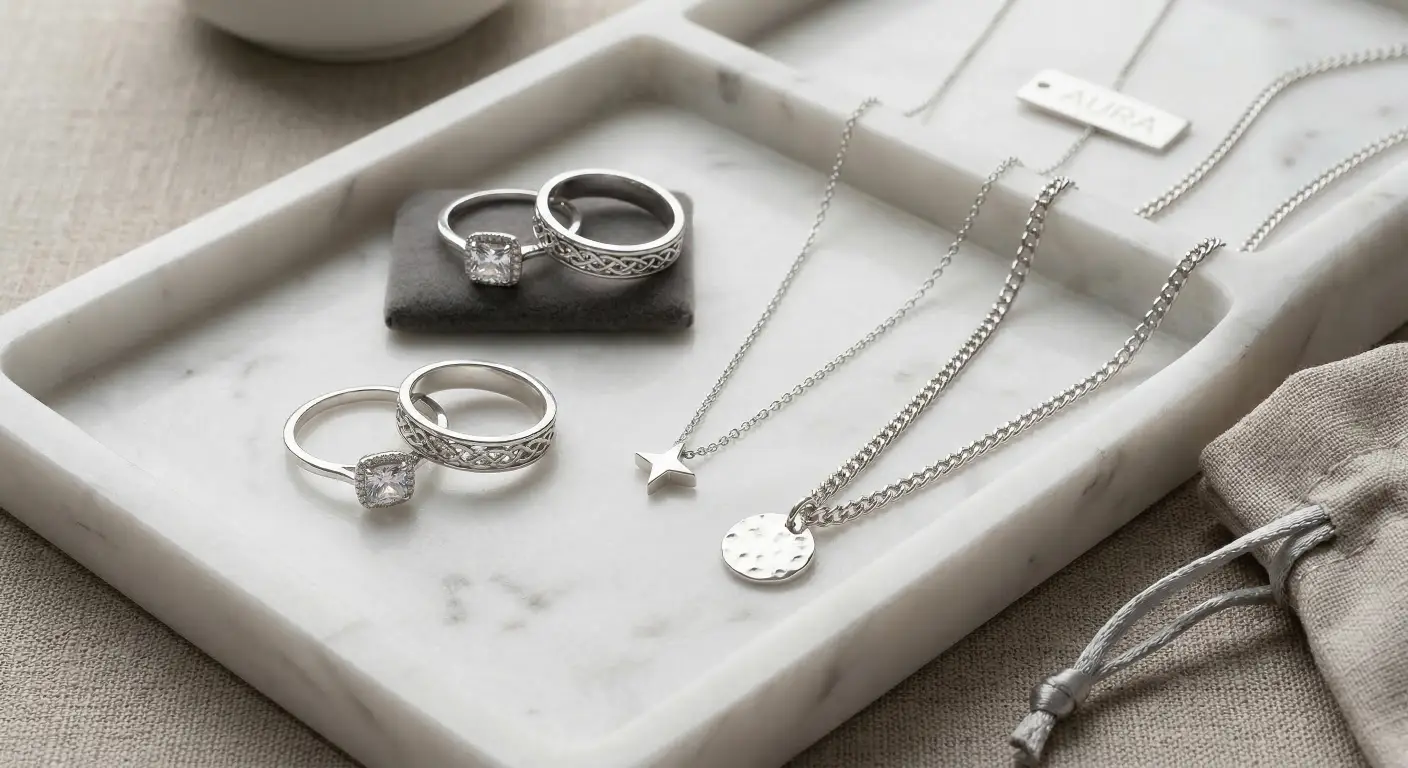
Sourcing Guide: How to Maximize Margins with Custom Sterling Silver Jewelry
Prdoucts Categories
FAQ
FAQs
How long does it take for the product to fade?
The normal electroplating quality color retention time of our products is 5 times longer than the market, and the thicker electroplating can retain color for three years.
Can I have your product catalog?
Yes, please leave us a message what style jewelry catalog you need.
Can we visit your factory?
Yes, pls contact seller to arrange meeting, we will pick you up to our factory.
Products
What’s the lead time?
We could arrange shipment for you within 48 hours if you order models in stock. For bulk order, it takes 10-25 days for production depending on order quantity and styles.
How can we guarantee quality?
Always a pre-production sample before mass production;
Always final Inspection before shipment;
Do you offer free sample for quality check?
Sample order is welcome, but sample fee need to be paid. It will be deducted when you place an bulk order.
Discuss Your Ideas with a Professional Custom Jewelry Manufacturer
We provide personalized jewelry customization services for clients worldwide.
Rest assured that your privacy is important to us, and all information provided will be handled with the utmost confidentiality.
By clicking 'Send Inquiry Now' I agree to ZHEFAN JEWELRY processing my personal data.
To see how to withdraw your consent, how to control your personal data and how we process it, please see our Privacy Policy and Terms of use.
From design to production, ZHEFAN JEWELRY offers a one-stop solution to help you enhance your brand value and market competitiveness.
Get A Quote
Contact
Tel: (+86) 188 1927 7817
© 2026 Zhefan Jewelry. All Rights Reserved.
Facebook
Instagram
YouTube
Whatsapp: +8618819277817