






Email: sales3@zhefanjewelry.com
How to request CAD or 3D proofs for custom sterling silver jewelry?
Practical, step-by-step guidance for buyers of custom sterling silver jewelry on requesting CAD and 3D proofs. Learn which files, tolerances, physical proofs, and acceptance checks protect you from casting, setting, and finishing mistakes.
- 1. How do I request CAD or 3D proofs that verify ring size and shank thickness will stay accurate after casting?
- 2. How do I request CAD proofs that guarantee accurate stone seats and setting tolerances for specific gemstones?
- 3. How can I request CAD or 3D proofs that show expected casting shrinkage and final dimensions so I won't be surprised by size changes?
- 4. How do I request CAD proofs that demonstrate surface finish, engraving depth, and polishing allowance so fine details survive finishing?
- 5. How can I request CAD or 3D proofs that ensure hollow or shell construction meets minimum wall thickness and avoids porosity or collapse?
- 6. How do I request CAD or 3D proofs that include accurate weight estimates and hallmark placement to comply with sterling 925 regulations?
- Practical checklist and email template to request CAD/3D proofs (copy-paste)
- Closing: Advantages of requesting CAD and 3D proofs for custom sterling silver jewelry
As an experienced jewelry manufacturer and consultant at Zhefanjewelry, this guide answers six highly specific, often-missed questions beginners ask when ordering custom sterling silver jewelry and requesting CAD or 3D proofs. It embeds industry best practices—file formats, measurement checks, resin model verification, setting tolerances, and hallmark placement—so you can avoid common production errors and unexpected costs.
1. How do I request CAD or 3D proofs that verify ring size and shank thickness will stay accurate after casting?
Problem: Buyers receive a CAD that looks correct on-screen but the final sterling 925 ring is too tight, too thin, or feels different after casting and polishing.
What to request:
- Unit declaration: Require all CAD files and dimension callouts in millimeters (mm). Never assume units.
- Dimension callouts: Ask the vendor to annotate inner circumference (or inner diameter), shank width, and shank thickness (profile). Each dimension should have a tolerance (example: ±0.10 mm) shown on the drawing.
- Compensated model: Confirm whether the CAD is pre-compensated for casting shrinkage. For lost-wax casting of sterling silver, manufacturers commonly apply a compensated scaling of ~1–2% depending on process; ask them to state the percentage used.
- Physical proof: Require a resin castable 3D print (castable resin) of the wax model with sprues in place OR a direct metal-printed (DMLS) test if available. Photos with a caliper next to inner diameter and shank thickness are essential.
Accept/reject checklist:
- Inner diameter measured on the resin print matches CAD dimensions within stated tolerance.
- Shank thickness meets your minimum comfort spec (industry-safe minimums: ~0.7–1.0 mm; for durability start at 1.0 mm for everyday rings).
- Vendor documents the shrinkage compensation factor; if unknown, request a second resin proof after compensation is applied.
Template request line: “Please provide CAD (STEP/IGES) with dimension callouts in mm (inner diameter, shank width/thickness) ±0.10 mm, STL for printing, and one castable resin print. State shrinkage compensation percentage used.”
2. How do I request CAD proofs that guarantee accurate stone seats and setting tolerances for specific gemstones?
Problem: Stones don’t seat properly — loose bezels, mis-sized seats, or crushed fragile stones — after casting.
What to request:
- Stone specification sheet: Provide exact stone measurements (diameter, crown height, pavilion depth) and tolerance (example: 6.02–6.08 mm). Ask the CAD to include the stone name, measurements, and orientation.
- Seat geometry: Request a cross-section view through the mounting showing bezel/seat depth, shoulder relief, and lip thickness. For prongs, request prong base width and thickness; typical prong bases are 0.8–1.2 mm depending on stone size.
- Fit clearance: Define the desired fit: “press-fit” (tight) typically 0–0.10 mm clearance, “setting-fit” usually 0.10–0.25 mm clearance. State which you want for each stone.
- Physical check: Ask for a printed resin model with the stone temporarily seated to confirm fit before casting, or at minimum a rendered cross-section with measurement callouts.
Practical tip: For fragile or calibrated stones, require the vendor to leave slightly larger seat dimensions in the cast and finalize seat size after casting during stone setting. Add “final seat finishing to be done by setter after casting” to avoid excessive pressure in brittle gems.
3. How can I request CAD or 3D proofs that show expected casting shrinkage and final dimensions so I won't be surprised by size changes?
Problem: CAD looks correct, but post-casting dimensions differ because shrinkage compensation wasn't applied or was inconsistent.
What to request:
- Compensation statement: Ask the manufacturer to confirm whether their CAD is “pre-compensated” (CAD scaled up before printing) or “as-designed” (no scaling). They must document the compensation factor applied (e.g., +1.5%).
- Process note: Request information on the production method (SLA resin print + lost-wax casting vs. direct metal printing) because shrinkage and tolerances differ by method.
- Final tolerance table: Require a short table showing expected dimensional tolerance after casting (for example: ±0.05–0.20 mm for typical lost-wax sterling silver pieces). Good suppliers will state realistic tolerances rather than blanket promises.
- Verification print: Ask for a castable resin print AND measurements of that print vs. the CAD. If the supply chain uses a master model, request a photograph of the master against a printed ruler or a caliper measurement image.
Buyer action: If exact final size is critical (e.g., eternity bands, mechanical mates), require a small pilot run of 1–3 pieces and approve the first cast piece before full production.
4. How do I request CAD proofs that demonstrate surface finish, engraving depth, and polishing allowance so fine details survive finishing?
Problem: Intricate engraving or textured finishes get lost or smeared during polishing and plating.
What to request:
- Finish callouts: Request explicit surface finish notes in the CAD (mirror polish, satin, matte, patina) and expected removal allowance from polishing (e.g., 0.05–0.15 mm material removed in high-polish zones).
- Engraving depth: Ask for engraving depths of at least 0.3–0.5 mm for text or patterns that must survive polishing, with the designer confirming minimum feature width. For very fine detail, consider enameling or laser engraving post-polish.
- Stereolithographic renders: Request high-res rendered images and an exploded cross-section that show how deep reliefs and inset stones will appear after the specified finish.
- Sample polish: If possible, request a photo of a resin print that has been surface-finished to simulate polishing (or a quick pilot cast piece) so you can judge whether engravings and textures remain legible.
Warning signs: If the vendor cannot supply a polishing allowance or refuses to show before/after examples of similar finishes, ask for a pilot piece first.
5. How can I request CAD or 3D proofs that ensure hollow or shell construction meets minimum wall thickness and avoids porosity or collapse?
Problem: Hollow pendants or rings with cavities become fragile, dent, or show porosity after casting.
What to request:
- Annotated sections: Require cross-section drawings that show wall thickness at the thinnest point, internal supports/ribs, and escape channels for casting gases where appropriate.
- Minimum thickness: For sterling silver hollow shells, request minimum wall thickness values; practical ranges are often 0.7–1.0 mm minimum depending on piece size and use-case; recommend 1.0 mm for wearables expected to have daily wear.
- Pressure and finishing notes: Ask how the piece will be welded/seamed and finished internally—cold joint vs. laser welding—and whether the supplier plans to anneal or pressure-test to check for leaks/porosity.
- Physical verification: Require a resin print and an X-ray or dye-penetrant check on a pilot cast if porosity is a concern for a functional piece (e.g., watch case, container, locket).
Red flags: A supplier who accepts hollow shells without a plan for internal support or who cannot explain their casting gas escape strategy risks porosity and weak joints.
6. How do I request CAD or 3D proofs that include accurate weight estimates and hallmark placement to comply with sterling 925 regulations?
Problem: Buyers receive a heavier or lighter piece than expected or miss required hallmarks (925) in the final product.
What to request:
- Calculated metal weight: Ask the vendor to provide an estimated finished metal weight in grams for the design. Good CAD systems can estimate volume and convert to grams (using sterling silver density ~10.36 g/cm³). Request the calculation method and expected variance (typically ±5% for casting).
- Hallmark location: Specify the exact placement for the 925 hallmark on the CAD and ask for a close-up render or dimensioned callout. Small items may require hallmarking on the clasp, inside shank, or a designated flat area.
- Plating and finish effects: If rhodium plating or antiquing will be applied, request that the CAD or render show the finish, and ask for the added thickness of plating (commonly 0.1–0.3 µm for rhodium) so you understand any dimensional changes.
- Invoice and certification: For larger orders, request a batch certificate that lists total silver used, individual weights, and that each piece bears the 925 mark. This helps with resale and compliance.
Note on density: When vendors provide metal weight, they typically use silver’s density to convert CAD volume to grams. Request the raw CAD volume value if you want to verify their calculation independently.
Practical checklist and email template to request CAD/3D proofs (copy-paste)
Checklist to include in your request:
- Files requested: STEP/IGES (manufacturing), STL (3D print), high-res PNG renders, and interactive 3D viewer (GLB/3MF) if available.
- Units: All dimensions in mm.
- Dimension callouts & tolerances: Inner diameters, shank thickness, seat geometry ±0.10 mm (or specify).
- Compensation: State whether CAD should be pre-compensated for shrinkage; have vendor declare the percentage used.
- Physical proof: One castable resin print with sprues and caliper photos or one pilot cast piece before mass production.
- Stone checks: Stone specs and desired clearance for each seat.
- Finish & engraving allowances: Specify depth and polishing removal allowances.
- Hallmark location and metal weight estimate with calculation method.
Email template (short):
Subject: CAD & Resin Proof Request for Order Hello ,Please provide the following for my custom sterling silver (925) design:1) STEP/IGES (manufacturing) and STL (print) files in mm; include dimension callouts (inner diameter, shank width/thickness, stone seats) with ±0.10 mm tolerance.2) State shrinkage compensation percentage applied to CAD.3) High-res renders (PNG 300 dpi) and an interactive 3D view (GLB/3MF) if available.4) One castable resin print with sprues; provide caliper photos measuring inner diameter and shank thickness.5) Estimated final metal weight in grams (show volume calculation) and exact 925 hallmark placement.6) Notes on finish, polishing allowance, and stone seat clearances (we want = ).Please confirm lead time and cost for the resin proof. I will approve the pilot proof before full production.Thanks,
Closing: Advantages of requesting CAD and 3D proofs for custom sterling silver jewelry
Requesting detailed CAD and physical 3D proofs dramatically reduces risk: it confirms fit and comfort (ring sizes, shank thickness), prevents stone-mounting errors (correct seat geometry and tolerances), protects fine details during finishing (engraving depth and polishing allowance), and avoids structural failures in hollow pieces. You gain predictable metal weight and proper hallmark placement for sterling 925 compliance. Physical resin proofs and pilot casts offer the final validation that virtual files cannot fully replicate, lowering rework, saving cost, and ensuring satisfaction.
To get a precise quote and custom CAD proofs for your next bespoke silver piece, contact us at www.zhefanjewelry.com or email sales3@zhefanjewelry.com.
Recommended for you
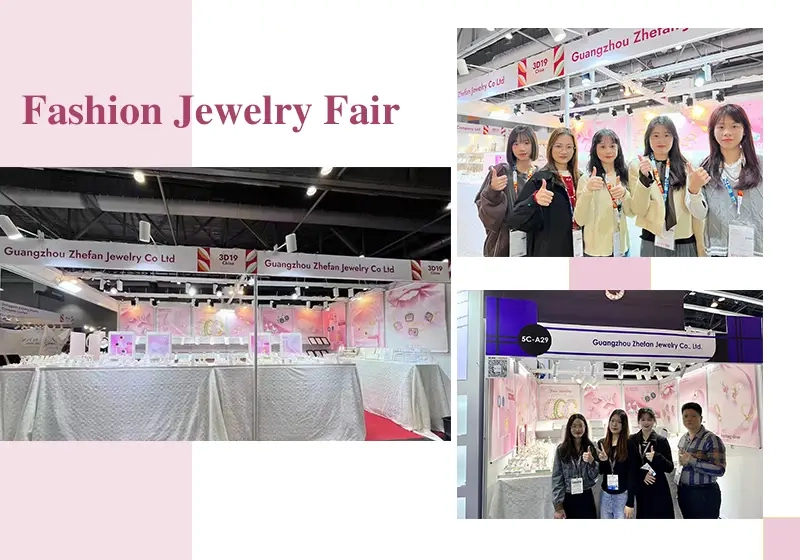
Zhefan Jewelry Will Attend Hong Kong Jewelry Fair
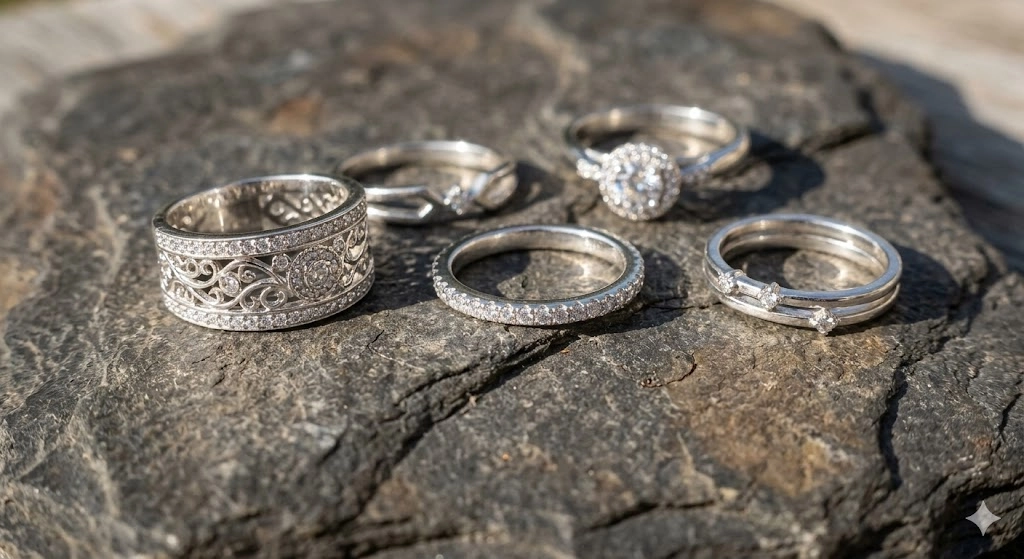
2026 Wholesale Trends: Why Your Brand Needs Custom Sterling Silver Jewelry
12 Unique Custom 925 Silver Bracelet Ideas That Go Beyond Basic Engraving (2026 Guide)
Boost Your Margins with Top-Selling Custom Wholesale Brass Huggie Earrings
Is Stainless Steel a Good Type of Jewelry? Pros, Cons, and Why Brands Choose Stainless Steel Jewelry

How to Choose the Right Jewelry for Your Skin Tone
Prdoucts Categories
FAQ
FAQs
Do you do customer design?
Do you do customer design? Yes,we are good at this way.Most of our customer do their customize.And we have cooperate with them when they are new brand, but now they become the top sell on Amazon, more than 32,000 five star comment.
Do you attend any jewelry fairs?
Yes, we participate in Hong Kong Jewelry Fair and Canton Fair twice a year, please contact the seller for the latest invitation.
What’s the shipment method?How long does it take for delivery?
Our product distributed to all over the world. Shipped by DHL/Fedex/ TNT/UPS takes 3-7 days,Epacket takes 7-15 days, China Post takes 15-30 days.
Can I have your product catalog?
Yes, please leave us a message what style jewelry catalog you need.
How long does it take for the product to fade?
The normal electroplating quality color retention time of our products is 5 times longer than the market, and the thicker electroplating can retain color for three years.
Products
How long will the plating color last?
Generally 6 month for Water Plated color , 1 - 2 years for vacuum plated color if in proper wearing.
Discuss Your Ideas with a Professional Custom Jewelry Manufacturer
We provide personalized jewelry customization services for clients worldwide.
Rest assured that your privacy is important to us, and all information provided will be handled with the utmost confidentiality.
By clicking 'Send Inquiry Now' I agree to ZHEFAN JEWELRY processing my personal data.
To see how to withdraw your consent, how to control your personal data and how we process it, please see our Privacy Policy and Terms of use.
From design to production, ZHEFAN JEWELRY offers a one-stop solution to help you enhance your brand value and market competitiveness.
Get A Quote
Contact
Tel: (+86) 188 1927 7817
© 2026 Zhefan Jewelry. All Rights Reserved.
Facebook
Instagram
YouTube
Whatsapp: +8618819277817