





Email: sales3@zhefanjewelry.com
How do I order custom sterling silver jewelry in bulk?
Practical, expert answers for buying custom sterling silver jewelry in bulk: calculate per-piece cost, set MOQs and lead times, verify 925 authenticity, choose finishes, set AQL inspections, and manage import compliance for US/EU markets.
- 1. How do I calculate a reliable per-piece cost for custom sterling silver rings with stones when ordering 500 units?
- 2. What realistic MOQ, lead times and tooling fees should I expect for custom sterling silver necklaces when ordering from China vs local suppliers?
- 3. How do I verify 925 sterling silver authenticity and avoid alloy fraud when receiving bulk shipments?
- 4. Which finish or plating minimizes tarnish and maintenance for sterling silver wedding bands sold to repeat retail customers, and how long does each finish typically last?
- 5. What inspection criteria and AQL sampling levels should I set for custom sterling silver jewelry to reduce returns and maintain brand quality?
- 6. How do import duties, HS codes and labeling requirements affect landed price and compliance when importing custom sterling silver jewelry to the US and EU?
How to Order Custom Sterling Silver Jewelry in Bulk: 6 Expert Answers
Buying custom sterling silver jewelry in volume raises technical, legal and logistical questions that beginners and small brands often find poorly or inconsistently answered online. The following six long-tail, pain-point-focused questions — with in-depth, actionable answers — are written for buyers, private labels and boutique retailers preparing to place bulk orders (rings, necklaces, bracelets, earrings) with overseas manufacturers or local silversmiths. Semantic terms such as sterling silver bulk order, 925 stamp, rhodium-plated sterling, CAD jewelry design, lost-wax casting, MOQ for silver jewelry, AQL inspection and HS code 7113 are used naturally throughout.
1. How do I calculate a reliable per-piece cost for custom sterling silver rings with stones when ordering 500 units?
Begin with a cost-buildup model that separates material, manufacturing, finishing, tooling, stones, overhead and logistics. For accuracy, gather these itemized inputs from your supplier or factory:
- Net silver weight per piece (grams). For rings this is commonly 3–12 g depending on style.
- Current supplier silver metal surcharge or price per gram (ask the factory for their used silver price or use spot as reference and agree a buffer).
- Stone cost per piece (natural or lab-grown, pre-set vs loose).
- Labor and process cost per piece (casting/stamping, filing, stone setting, polishing).
- Finishing/plating cost (rhodium plating, anti-tarnish lacquer, oxidized finish).
- Tooling or mold amortization per piece (one-time mold/die/CAD fees divided by order quantity).
- Packing per piece and any custom packaging or tags.
- Inspection, labeling, and certificate costs (e.g., 925 hallmarking if applicable).
- Freight, insurance, duties, and handling per piece (use estimated landed cost).
Formula (unit cost):
Unit Cost = (silver grams × silver price/g) + stone cost + labor/process + finishing + (tooling ÷ order qty) + packaging + QA/inspection + (landed cost per piece)
Example (illustrative only — replace with supplier data): if a ring uses 6 g silver, stone cost $2, labor $3, plating $0.8, tooling $400 (amortized over 500 = $0.80), packaging $0.6 and landed cost $1.5, then Unit Cost = (6 × silverPrice/g) + 2 + 3 + 0.8 + 0.8 + 0.6 + 1.5. Agree the exact silver price/g with the factory before quoting.
Practical tips:
- Ask for an itemized pro forma invoice (PFI) from the supplier showing each above line-item.
- Negotiate a fixed metal surcharge for the order window or use weekly adjustments tied to a public silver spot price to avoid surprise increases.
- Lock tooling and CAD revisions up front: each design change often triggers extra tooling or sample fees.
2. What realistic MOQ, lead times and tooling fees should I expect for custom sterling silver necklaces when ordering from China vs local suppliers?
MOQs, tooling fees and lead times vary by supplier type (large factory, specialized silversmith, or regional caster). Typical ranges you can expect:
- MOQ: 50–300 pcs per SKU for mid-size factories; 10–50 pcs with local or boutique silversmiths (at higher unit cost).
- Tooling/mold/CAD: basic CAD file and 3D-printed wax sample often $30–$200; silicone mold or production die can be $100–$1,000 depending on complexity. Die-struck tooling for mass-high-volume pieces may be $1,000+.
- Sample time: 7–21 days for a production sample (including CAD revision and sample casting). Rapid prototypes can be faster but cost more.
- Production lead-time: 2–6 weeks after sample approval for typical orders; high-volume or complex multi-component designs can take 6–12 weeks.
China manufacturers often offer lower per-unit pricing and established supply chains, but you should factor in longer freight time and potential communication gaps. Local suppliers give tighter quality control and smaller MOQs but at higher prices and possibly longer tooling lead times due to smaller capacity.
How to choose:
- If you need low MOQ to test designs, use a local silversmith for initial sampling then scale to an overseas factory when sales validate demand.
- For consistent wholesale replenishment, negotiate lower MOQ by consolidating SKUs or accepting longer lead times.
- Ask suppliers to amortize tooling fees across multiple purchase orders or guarantee pricing for a set period.
3. How do I verify 925 sterling silver authenticity and avoid alloy fraud when receiving bulk shipments?
Counterfeit or lower-silver alloys are real risks. Use layered verification — visual, marking, and lab testing — to protect Zhefan Jewelry and customers.
- Marking: legitimate sterling silver should carry a 925 mark or equivalent (sterling, .925). However, a mark alone is not proof; it can be forged.
- Documentation: request a Certificate of Analysis (COA) or material declaration from the supplier specifying silver content and any alloy metals used (copper, nickel, etc.).
- Rapid on-site tests: acid test kits (nitric acid test) can screen items but are less accurate and damage the piece slightly — use on sacrificial sections or sample pieces only.
- Non-destructive testing: X-Ray Fluorescence (XRF) spectrometers give fast elemental readings and are ideal for random checks in QA. Many inspection companies and ports offer XRF services.
- Destructive precision: fire assay and laboratory ICP-MS provide definitive metal percentages but are destructive and more expensive — use for dispute resolution or high-value lots.
- Third-party lab testing: use ISO/IEC 17025 accredited labs for certificates recognized by customs and buyers.
Operational controls:
- Specify 925 sterling silver with written tolerances in contracts (e.g., silver content 92.5% ±0.3%) and require COA for each shipment.
- Include random XRF checks at AQL sampling points (see Question 5) and hold shipment payments until verification completes for the first order.
- Maintain chain-of-custody documentation from supplier to factory to shipping to reduce liability.
4. Which finish or plating minimizes tarnish and maintenance for sterling silver wedding bands sold to repeat retail customers, and how long does each finish typically last?
Sterling silver naturally tarnishes from sulfur and environmental exposure. Choosing the right finish balances aesthetics, durability and cost.
- Polished sterling (no plating): warm, classic look. Tarnishes over weeks–months depending on environment; cleaning with polishing cloths or dips necessary. Lowest cost.
- Rhodium-plated sterling: thin rhodium layer (commonly used on silver to give a white, durable surface). Great anti-tarnish and hypoallergenic properties; plating thickness and wear determine longevity — typical consumer wear lasts 6–24 months before light wear shows, depending on thickness and use. More expensive but preferred for wedding jewelry sold as 'low-maintenance'.
- Anti-tarnish lacquer/coating: transparent coatings extend tarnish resistance for months to years but can alter the tactile feel; coatings eventually wear and may need reapplication.
- Oxidized/antiqued finishes: intentionally darkened recesses hide tarnish; these finishes are aesthetic choices rather than protective measures and can change with wear.
Recommendations:
- For wedding bands aimed at low maintenance and hypoallergenic buyers, request rhodium-plated sterling with a specified minimum plating thickness (ask manufacturer for micrograms or microns; a thicker plating resists wear longer).
- Specify plating process and salt-spray or accelerated wear test results if you need objective durability claims.
- Document care instructions for customers (anti-tarnish storage, avoid chemicals, periodic professional re-plating) and consider offering re-plating services as part of a loyalty program.
5. What inspection criteria and AQL sampling levels should I set for custom sterling silver jewelry to reduce returns and maintain brand quality?
Adopt a clear quality checklist and AQL sampling plan to catch functional and cosmetic defects before shipment. Jewelry QA covers dimensions, finish, stones, markings and mechanical strength.
Core inspection checkpoints:
- Material verification: 925 marking and random XRF checks to confirm alloy.
- Dimensions and tolerances: weight, thickness, ring sizing, chain length tolerance (+/− values).
- Finish and plating: even polish, no bubbles in lacquer, plating coverage in high wear zones (bezels, ears of rings).
- Stone setting: security of prongs/bezel, consistent alignment, no loose stones.
- Surface quality: scratches, pits, casting porosity, polish streaks.
- Functional tests: clasp strength, soldered joint integrity, jump ring closures.
- Markings and packaging: correct 925 stamp, branding, SKU labels and packaging integrity.
AQL guidance:
- Common AQL levels for jewelry: 1.5 (tight), 2.5 (general retail), 4.0 (looser). Higher-value or brand-critical SKUs often require 1.5 or even 0.65 for critical defects.
- Define defect categories in the contract: critical (e.g., wrong metal, missing stones), major (e.g., visible scratches, poor plating), minor (e.g., small finish inconsistency). Set allowable rates per category.
- Use third-party inspection companies (SGS, Bureau Veritas or local equivalents) to perform AQL checks at the factory prior to shipment. Inspections typically charge a flat fee plus per-sample costs but save downstream return costs.
Practical contract clause examples:
- “Pre-shipment inspection to be performed by at factory with AQL 2.5 (major), 4.0 (minor). Critical defects = 0 tolerance.”
- “Supplier to replace or rework defective items at supplier cost if AQL thresholds exceeded.”
6. How do import duties, HS codes and labeling requirements affect landed price and compliance when importing custom sterling silver jewelry to the US and EU?
Customs, duty and labeling can materially affect landed cost and compliance risk. Key points for the US and EU:
- HS Code: jewelry often falls under HS Chapter 71. A frequently used for costume and precious metal jewelry is HS 7113 (articles of jewelry and parts). Use the precise sub- that matches composition and whether stones are set. Confirm with customs broker — misclassification can cause penalties.
- Customs duties and VAT: duty rates differ by product classification and origin and can range from 0% to higher single-digit percentages depending on trade agreements and materials. EU imports also carry VAT (value added tax) payable on importation and recoverable subject to local rules. Work with a customs broker to model landed cost accurately.
- Marking and hallmarking: the EU has national hallmarking regimes and accepted markings (925 is standard). Some EU countries require formal hallmarking for precious metal items above threshold weights; verify national rules in your destination market. The US Federal Trade Commission (FTC) provides guidance: when selling in the US, don’t misrepresent metal content — labeling as 925 or sterling should reflect actual content.
- Restricted substances: EU REACH and national regulations limit harmful substances (e.g., nickel release limits under EN 1811 for items in prolonged contact). Jewelry sold to the EU must comply; many retailers require REACH compliance and tests for SVHCs and nickel release.
- Customs documentation: commercial invoice, packing list, certificate of origin (if claiming a preferential tariff), and metal/material declarations help smooth clearance and support tariff classification arguments.
Practical steps to control landed cost and compliance:
- Engage a customs broker early to build a landed cost model that includes duties, VAT, brokerage fees and handling.
- Include compliance clauses in supplier contracts requiring supplier documentation, declarations of origin, and test reports (nickel release, REACH where needed).
- Plan for potential delays at customs for shipments missing required hallmarking or COAs — these can be expensive and time-consuming.
Final operational checklist before placing a bulk order:
- Obtain and approve a production sample (PPS) and a final pre-production sample (PD sample) with exact 925 stamp, plating, finish and packaging.
- Agree on tooling fees, amortization, and revision caps in writing.
- Specify inspection plan, AQL levels, and independent inspector name in the purchase contract.
- Agree payment terms tied to milestones (deposit → sample approval → production → shipment) and hold a final balance until pre-shipment inspection passes.
Contact us for a quote at www.zhefanjewelry.com or sales3@zhefanjewelry.com.
Concluding summary — advantages of ordering custom sterling silver jewelry in bulk: ordering sterling silver jewelry in bulk reduces per-piece material and labor costs, allows consistent branding (custom tags, 925 hallmark placement, packaging), enables better control over finishing and plating (rhodium-plated sterling for low maintenance), improves inventory management and retail margins, and gives leverage to negotiate tooling amortization and faster replenishment. With the right QA (AQL inspections, XRF checks), clear contractual specifications (metal content, plating thickness, tolerances) and a reliable supply chain partner, bulk custom orders become a scalable way to build a durable jewelry brand.
Recommended for you
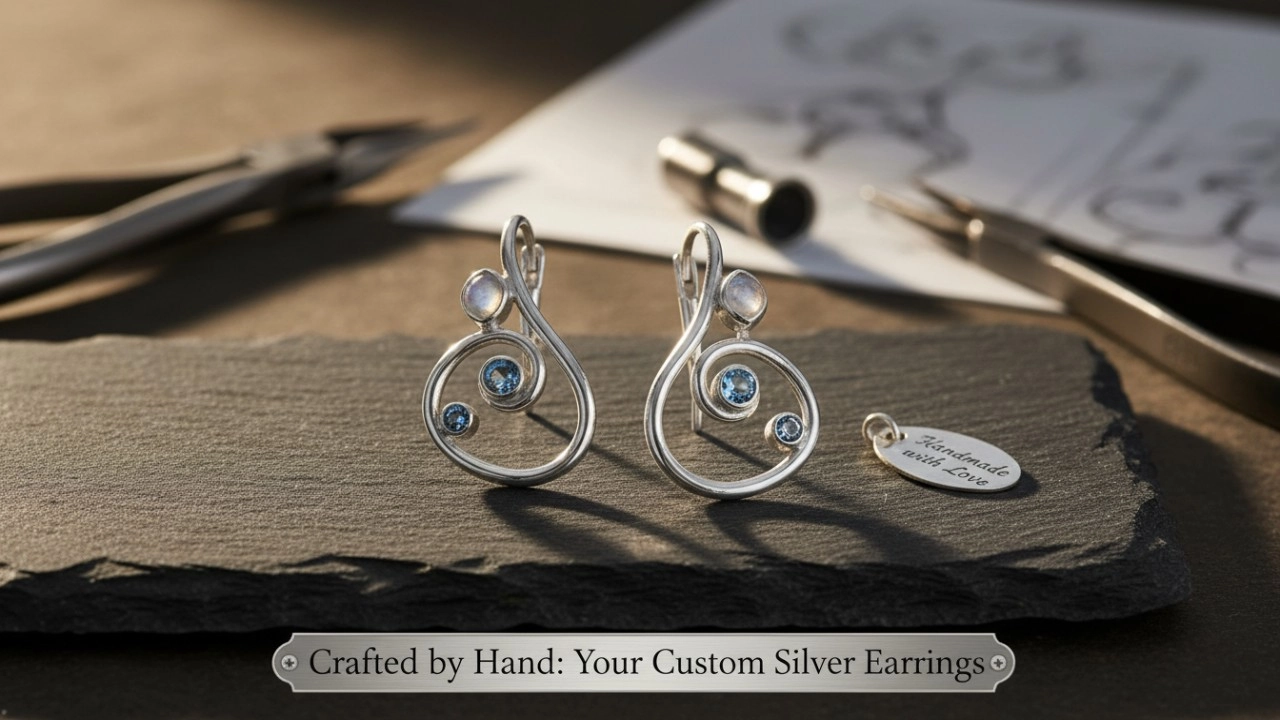
The Ultimate Guide to Ordering Custom Made Silver Earrings: How to Get Perfection Every Time (2026 Edition)
How to Elevate Your Jewelry Brand with a Signature Custom Tennis Bracelet (2026 Guide)
The Secret Life of Your Silver: How 925 Sterling Jewelry Comes to Exist
Sourcing Guide: How to Maximize Margins with Custom Sterling Silver Jewelry
Why Custom 925 Sterling Silver Bracelets Are the Ultimate 2026 Jewelry Trend
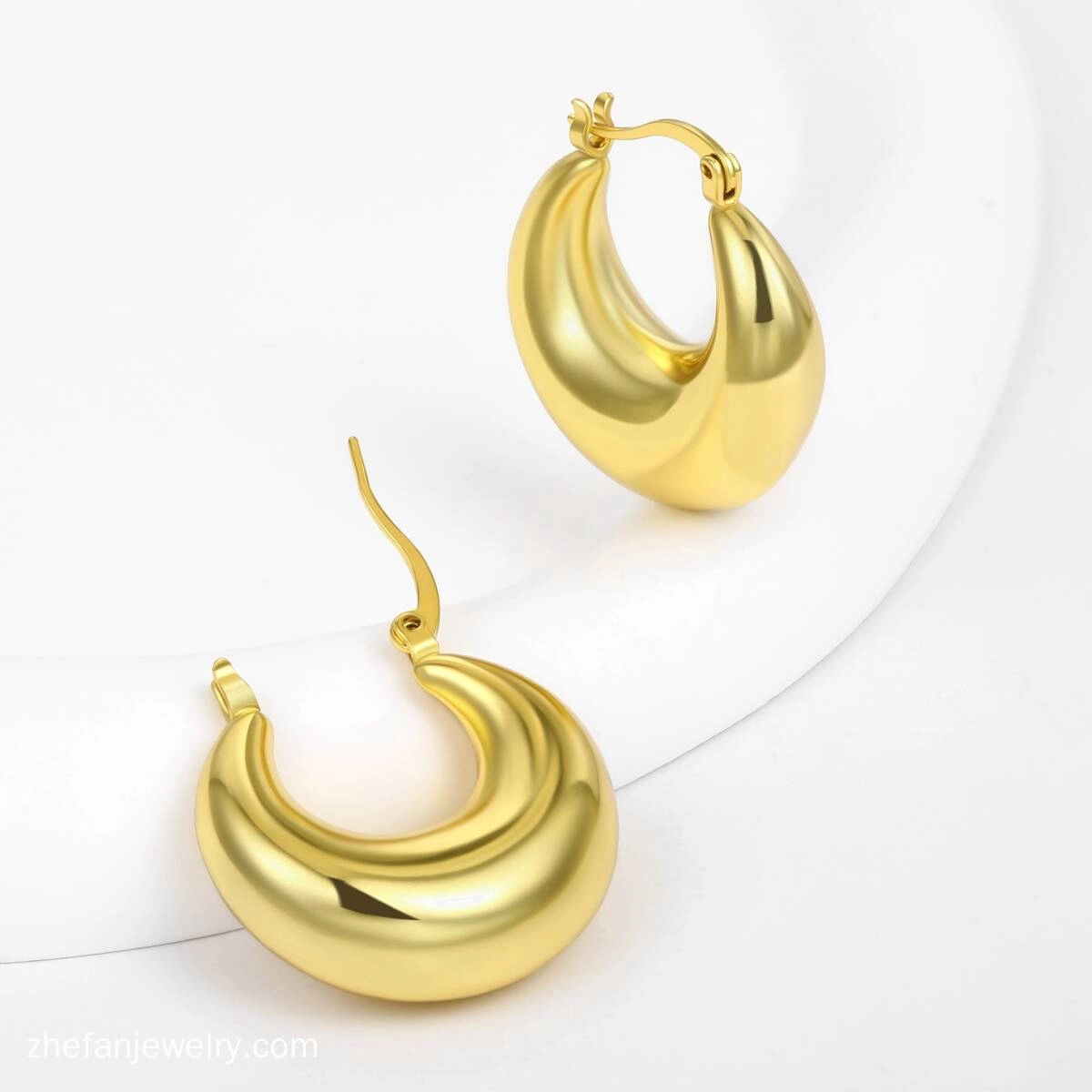
Launch Your Brand: A Guide to Sourcing Custom Wholesale Brass Huggie Earrings
Prdoucts Categories
FAQ
FAQs
Do you offer after-sales warranty service?
Yes, we will refund or resend products if fading, stone falling off and other quality problems found in 1 month receipt of goods.Furthermore, we offer 1 year after-sales warranty service, but you need pay the shipping charge.
What’s the shipment method?How long does it take for delivery?
Our product distributed to all over the world. Shipped by DHL/Fedex/ TNT/UPS takes 3-7 days,Epacket takes 7-15 days, China Post takes 15-30 days.
What is the material of the jewelry?
Most of the jewelry is made of 925 sterling silver, brass or 316 stainless steel or custom material,which can cover different procurement demand.
Can I have your product catalog?
Yes, please leave us a message what style jewelry catalog you need.
Products
What’s the lead time?
We could arrange shipment for you within 48 hours if you order models in stock. For bulk order, it takes 10-25 days for production depending on order quantity and styles.
What is the material of the jewelry?
Most of the jewelry is made of 925 sterling silver, brass or 316 stainless steel or custom material,which can cover different procurement demand.
Discuss Your Ideas with a Professional Custom Jewelry Manufacturer
We provide personalized jewelry customization services for clients worldwide.
Rest assured that your privacy is important to us, and all information provided will be handled with the utmost confidentiality.
By clicking 'Send Inquiry Now' I agree to ZHEFAN JEWELRY processing my personal data.
To see how to withdraw your consent, how to control your personal data and how we process it, please see our Privacy Policy and Terms of use.
From design to production, ZHEFAN JEWELRY offers a one-stop solution to help you enhance your brand value and market competitiveness.
Get A Quote
Contact
Tel: (+86) 188 1927 7817
© 2026 Zhefan Jewelry. All Rights Reserved.
Facebook
Instagram
YouTube
Whatsapp: +8618819277817