








Email: sales3@zhefanjewelry.com
How to calculate landed cost for importing gold plated earrings?
Practical, step-by-step answers for importing custom gold plated earrings: how to calculate landed cost per pair, choose HS codes, estimate plating durability and warranty costs, meet EU/US compliance, set MOQ and margins, and legally reduce import fees.
- 1. How do I calculate landed cost per pair when importing custom gold plated earrings from a supplier (step-by-step formula)?
- 2. Which HS code should I declare for custom gold plated earrings with a base-metal core to ensure correct duties and avoid reclassification?
- 3. How do I estimate plating durability (microns, plating method) and translate that into expected return/warranty costs for retail pricing?
- 4. What tests and documentation must I budget for selling gold plated earrings in the EU and US (nickel release, lead, REACH, CPSIA), and what are typical costs?
- 5. How should I set MOQ and per-unit pricing for custom gold plated earrings so I reach a target margin after landed cost, marketplace fees, returns and marketing?
- 6. What practical levers can I legally use to reduce landed cost for small-batch custom gold plated earrings (packaging, Incoterms, bonded warehousing, classification strategies)?
- Concluding summary: Advantages of choosing well-specified custom gold plated earrings
As manufacturers and exporters working with retailers and designers, Zhefan Jewelry (www.zhefanjewelry.com) compiles these focused, practical answers to six advanced beginner questions we see repeatedly. Each answer explains the calculations, documentation, and commercial choices that directly affect profit margins and product quality when importing custom gold plated earrings. For a tailored quote, contact sales3@zhefanjewelry.com.
1. How do I calculate landed cost per pair when importing custom gold plated earrings from a supplier (step-by-step formula)?
Why this matters: Beginners often underprice or lose money because they omit one or more landed-cost components (duties, VAT, brokerage, inspection, currency conversion). A clear formula prevents surprises and enables reliable retail pricing.
Step-by-step formula (canonical):
- Step 1 — EXW / FOB Price: unit price from supplier (in supplier currency).
- Step 2 — Add domestic packing & extra customizations (engraving, plating thickness upgrades) per unit.
- Step 3 — Add international freight & insurance (CIF basis) apportioned per unit: Freight per shipment / units + Insurance (often 0.3–1.0% of CIF value; check insurer).
- Step 4 — Customs value = Supplier invoice + freight + insurance (if CIF used for valuation in importing country).
- Step 5 — Compute import duties = Customs value × applicable tariff rate (use correct HS code).
- Step 6 — Compute VAT/GST = (Customs value + duties + other taxable fees) × local VAT/GST rate.
- Step 7 — Add customs brokerage, port handling, inspection fees, release fees, and inland transporting from port to warehouse, apportioned per unit.
- Step 8 — Apply currency conversion to your functional currency and any bank transfer or payment fees.
- Final landed cost per pair = Steps 1–8 total divided by number of units.
Example (clear, hypothetical illustration): Suppose supplier price USD 2.50 per pair FOB; packaging & customization USD 0.20; shipping to port USD 200 for 2,000 pairs = USD 0.10 per pair; insurance 0.5% of CIF (negligible here); customs tariff 4%; VAT 20%; brokerage & handling USD 150 = USD 0.075 per pair. Calculation:
- Supplier price + packaging = 2.50 + 0.20 = 2.70
- Add apportioned freight 0.10 = 2.80 (CIF approximation)
- Import duties = 2.80 × 4% = 0.112
- Taxable base for VAT = 2.80 + 0.112 = 2.912; VAT = 2.912 × 20% = 0.5824
- Brokerage & handling = 0.075
- Landed cost per pair ≈ 2.80 + 0.112 + 0.5824 + 0.075 = 3.5694 ≈ USD 3.57
Notes and best practices:
- Always verify whether your importing country values goods on FOB or CIF basis for duty calculations; this changes the customs value.
- Break down costs per-batch and per-unit to compare MOQs or mixed-SKU shipments.
- Use a customs broker and request a pro forma landed-cost spreadsheet before committing to an order to avoid FX and unexpected fees.
- Factor in returns, warranty claims and expected re-plating or replacement cost per pair when calculating net margin.
2. Which HS code should I declare for custom gold plated earrings with a base-metal core to ensure correct duties and avoid reclassification?
Why this matters: Misclassification can lead to higher duties, delays, seizures, or retroactive penalties. Gold plated items can be treated as precious-metal jewelry or imitation jewelry depending on base metal and plating weight.
How to determine correct HS :
- Identify the core material (e.g., brass, copper, stainless steel) and the plating type (gold electroplated, gold vermeil, PVD) and thickness in microns.
- Check national tariff schedules using the Harmonized System (HS) s. Generally:
- If the primary metal content is precious metal (gold/silver content by weight exceeds national threshold), the product may fall under s for precious metal jewelry (e.g., 7113 series in many schedules).
- If the core is base metal and only plated with gold, many countries classify as 'imitation jewellery' (commonly HS 7117 in many jurisdictions) or base-metal articles.
- Confirm with your customs authority or request a binding tariff information (BTI) or advance ruling — this legally fixes classification for future shipments.
Practical tips:
- Document plating thickness (microns) and gold weight per piece. Even thick gold vermeil plating can still be classified as base metal in many countries if the core is not precious metal.
- Provide full technical specifications and lab reports with your customs entry to avoid delays.
- When in doubt, ask the supplier for previous customs declarations and certificates of origin for similar shipments to your market.
3. How do I estimate plating durability (microns, plating method) and translate that into expected return/warranty costs for retail pricing?
Why this matters: The thickness and method of plating directly affect wear life, returns, and brand reputation. Beginners often accept a low price without understanding how plating method (electroplating vs. gold vermeil vs. PVD) changes product lifetime and warranty exposure.
Important variables to collect from supplier:
- Plating method: electroplating, gold vermeil (thick gold on sterling), PVD, or flash plating.
- Gold thickness: measured in microns (µm) or in microinches; typical ranges: flash plating <0.1µm, standard electroplating 0.2–1µm, vermeil often >=2.5µm (depending on jurisdiction), PVD can provide durable thin coatings but is a different process.
- Base metal and surface prep (nickel barrier, undercoats like copper or rhodium).
Translating to expected warranty costs (simple model):
- Estimate expected failure rate per year based on plating: flash plating may have 10–20% visible wear in 12 months at normal retail; standard electroplating might see 5–10%; vermeil or quality PVD often <2–5% (these ranges are directional; test data is needed).
- Warranty cost per unit = Replacement cost per unit × expected failure rate + return processing cost per unit × expected failure rate.
- Include non-monetary costs (brand damage, negative reviews) by factoring a margin buffer (1–3% of revenue) where applicable.
Example model (hypothetical): If landed cost is USD 3.57, retail price USD 25, expected failure rate 6%, replacement cost including shipping USD 5 per unit, return processing USD 1:
- Warranty cost per sale = (5 + 1) × 6% = USD 0.36
- To protect margin, add this to your cost base or build into a warranty reserve.
Verification and quality control:
- Request salt spray (corrosion), rub tests, and accelerated wear tests from your supplier or a third-party lab to convert vague claims into data points.
- Specify plating thickness tolerances and acceptance criteria in your purchase contract and final inspection report (AQL), and include photographic evidence and batch testing on arrival.
4. What tests and documentation must I budget for selling gold plated earrings in the EU and US (nickel release, lead, REACH, CPSIA), and what are typical costs?
Why this matters: Non-compliance leads to recalls, fines, and blocked shipments. Beginners underestimate lab testing timelines and costs.
Key compliance items by market:
- European Union (EU): REACH (restricted substances), Nickel Directive (EN 1811 for nickel release), and general product safety. Jewelry often needs test certificates for nickel release and documentation that lead, cadmium and other chemicals meet REACH limits.
- United States (US): CPSIA and state laws (e.g., California Proposition 65) may apply. Consumer Product Safety Commission (CPSC) requirements, lead content limits, and rules regarding kids' jewelry; for adult jewelry, lead limits are lower but still important. Some marketplaces require lab test reports.
Typical tests and approximate market costs (ballpark ranges; obtain quotes):
- Nickel release test (EN 1811): USD 80–300 per sample depending on lab and turnaround.
- Heavy metals screening (lead, cadmium, mercury) — ICP-MS analysis: USD 100–400 per sample.
- REACH SVHC screening: USD 150–500 depending on panel complexity.
- Children’s safety testing (if applicable): much higher, often USD 1,000+ because of multiple panels.
How to budget and implement:
- Test early: sample the first production run and keep a representative retained sample per lot.
- Request supplier material declarations and processing details, then verify with third-party tests.
- Include testing and compliance costs in landed cost per unit (apportioned across the batch) and require supplier warranties about material composition in the contract.
5. How should I set MOQ and per-unit pricing for custom gold plated earrings so I reach a target margin after landed cost, marketplace fees, returns and marketing?
Why this matters: Getting MOQ and pricing wrong ties up cash or destroys margin. Many sellers price by competitor retail prices, not by backwards-calculating required costs.
Reverse-margin model to set MOQ/pricing:
- Set target net margin (e.g., 35% net margin after all costs).
- Estimate all per-unit costs: landed cost (from section 1), marketplace fees (e.g., 15–30% depending on channel), customer acquisition cost (CAC) per unit, returns/warranty reserve, and overhead allocation.
- Target retail price = (Total cost per unit) / (1 - combined margin and commission rates).
- If target retail price is not viable against market, adjust MOQ, negotiate supplier price, or change product spec (plating thickness, packaging) to lower cost or justify High Quality (better plating, custom packaging, branding).
Example quick calculation (hypothetical): If total cost per unit including landed cost, marketing and warranty is USD 6, marketplace fees 20%, desired net margin 35%:
- Let R = retail price. After marketplace fee R × (1-0.20) = 0.80R
- We want 0.80R - total cost (6) = 0.35R → 0.45R = 6 → R = 13.33
- So retail price needs to be ≈ USD 13.50. If that’s above or below your market positioning, adjust MOQ or unit spec.
Setting MOQ strategies:
- Start with small production MOQ but higher per-unit cost to validate market; after validation scale up to reduce unit cost.
- Negotiate staggered pricing tiers (tiered MOQs) and pilot runs with higher per-unit pricing to manage cashflow and test plating variants (thickness, PVD vs. electroplating).
- Include tooling and CAD costs amortized across the first X units in the per-unit landed cost calculation.
6. What practical levers can I legally use to reduce landed cost for small-batch custom gold plated earrings (packaging, Incoterms, bonded warehousing, classification strategies)?
Why this matters: For small brands, landed cost can be the difference between a sustainable SKU and a loss-making one. There are legal strategies to reduce per-unit landed cost without sacrificing compliance.
Cost reduction levers:
- Freight optimization: Consolidate SKUs, negotiate LCL vs. air for small shipments, or use economy sea freight when lead time allows. Use net-net freight bids from multiple forwarders.
- Incoterms choice: FOB or EXW vs. DDP — DDP moves customs duties and VAT to seller (often more predictable); DDP pricing sometimes offers bundled efficiencies but compare net costs.
- Packaging strategies: Use lightweight, compact packaging to reduce volumetric freight and avoid expensive multi-layer packaging that increases weight/volume without adding perceived value.
- Bonded warehousing / inward processing relief: In some jurisdictions you can postpone duties/VAT until goods leave bonded warehouse, or process and re-export goods with relief. This helps cashflow and may reduce payable duty for re-exported items.
- Use free trade agreements (FTA): If components or final products meet origin rules, preferential tariffs apply. Keep robust certificates of origin and supplier declarations.
- Classification review: Correct HS code may yield lower duty. Get a binding ruling where possible to lock in classification.
- Local assembly or light finishing: Sometimes doing final plating or packaging in the destination country reduces duty because parts imported as components can have different treatment; ensure this is legal and documented.
Operational best practices:
- Use a reliable customs broker to explore drawbacks and duty drawback programs, bonded facilities, and post-entry corrections.
- Batch shipments thoughtfully — multiple small shipments increase handling and fixed fees; one larger consolidated shipment often reduces per-unit landed cost if inventory carrying cost is acceptable.
Example small-batch tactic: If air freight doubles transport cost per unit, delay launch and consolidate orders onto a sea freight shipment sized to spread the shipping cost across more units, or negotiate a courier account with better volumetric pricing based on projected growth.
Concluding summary: Advantages of choosing well-specified custom gold plated earrings
Well-specified custom gold plated earrings—where plating thickness, base metal, finishing method, and compliance documentation are defined up front—deliver predictable landed costs, lower return rates, and stronger retail margins. Investing in accurate landed cost calculations, correct HS classification, third-party testing, and negotiated MOQs helps you price confidently, protect brand reputation, and scale sustainably. Additionally, decisions like choosing vermeil or PVD finishing and specifying nickel barriers reduce warranty exposure and increase perceived value, enabling higher retail pricing and repeat customers.
For a precise landed-cost sheet, HS-code review, or a custom production quote tailored to your design, MOQ and market, contact us at sales3@zhefanjewelry.com or visit www.zhefanjewelry.com for details.
Recommended for you
Sourcing Guide: How to Maximize Margins with Custom Sterling Silver Jewelry
Why Custom 925 Sterling Silver Bracelets Are the Ultimate 2026 Jewelry Trend
Zhefan Jewelry Will Attend Hong Kong Jewelry Fair
How to Choose a Custom Ring Manufacturer: 10 Critical Questions for Maximum Quality (2026 Guide)

Zhefan Jewelry Invites You to Attend the Hong Kong Jewellery Exhibition 2026
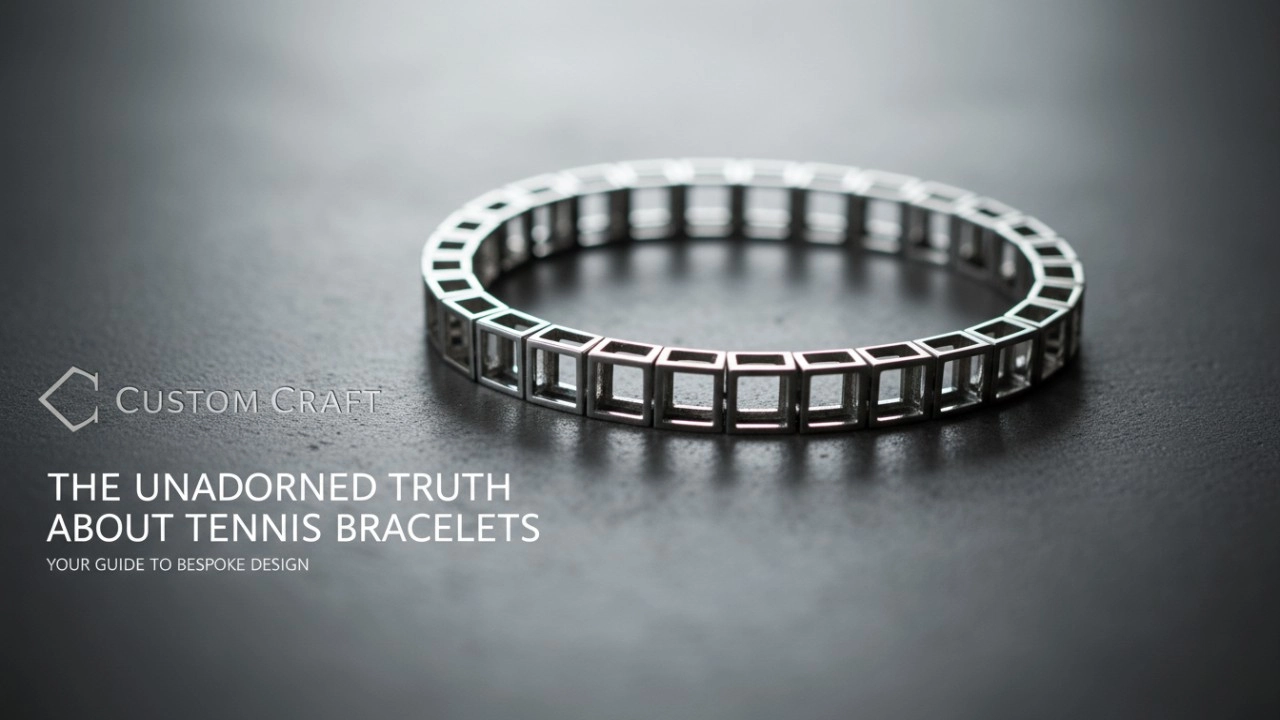
How to Elevate Your Jewelry Brand with a Signature Custom Tennis Bracelet (2026 Guide)
Prdoucts Categories
FAQ
Products
What’s the lead time?
We could arrange shipment for you within 48 hours if you order models in stock. For bulk order, it takes 10-25 days for production depending on order quantity and styles.
Do you offer free sample for quality check?
Sample order is welcome, but sample fee need to be paid. It will be deducted when you place an bulk order.
FAQs
Can I get a sample?
Yes,welcome to choose our sample to test and check quality.Please give me your address and number then send you payment list.
Can I see your product test report?
Of course.Our product throught standar test like SGS.We test in many ways of product.
Can I have your product catalog?
Yes, please leave us a message what style jewelry catalog you need.
Do you do customer design?
Do you do customer design? Yes,we are good at this way.Most of our customer do their customize.And we have cooperate with them when they are new brand, but now they become the top sell on Amazon, more than 32,000 five star comment.
Discuss Your Ideas with a Professional Custom Jewelry Manufacturer
We provide personalized jewelry customization services for clients worldwide.
Rest assured that your privacy is important to us, and all information provided will be handled with the utmost confidentiality.
By clicking 'Send Inquiry Now' I agree to ZHEFAN JEWELRY processing my personal data.
To see how to withdraw your consent, how to control your personal data and how we process it, please see our Privacy Policy and Terms of use.
From design to production, ZHEFAN JEWELRY offers a one-stop solution to help you enhance your brand value and market competitiveness.
Get A Quote
Contact
Tel: (+86) 188 1927 7817
© 2026 Zhefan Jewelry. All Rights Reserved.
Facebook
Instagram
YouTube
Whatsapp: +8618819277817