







Email: sales3@zhefanjewelry.com
What certifications should suppliers of gold plated earrings have?
Practical guide for buyers of custom gold plated earrings: plating thickness, best methods (PVD vs electroplating vs vermeil), required supplier certifications (REACH, EN/ASTM tests, ISO), interpreting lab reports, QC steps, and care for durability.
- 1) For custom gold plated earrings, what minimum gold thickness (microns) should I require for 12–24 months of daily wear?
- 2) Which plating method should I specify for hypoallergenic custom gold plated earrings: electroplating, PVD, or gold vermeil?
- 3) What certifications and test reports should suppliers of gold plated earrings have (to prove safety, quality, and traceability)?
- 4) I received SGS/Intertek lab reports—how do I read them to confirm a supplier’s claim of ‘nickel-free’ and ‘2.5 µm gold’?
- 5) What contract terms, sampling protocol and QC checkpoints should I use to reduce risk when ordering custom gold plated earrings (MOQs, AQL, pre-production samples)?
- 6) What are realistic durability expectations for custom gold plated earrings, and what care/warranty policies should I communicate to customers?
Custom Gold Plated Earrings: 6 Practical Buyer Questions & Supplier Certification Checklist
As an industry expert with experience in jewelry sourcing and quality control, I address six specific, often-misunderstood buyer questions about custom gold plated earrings—covering plating thickness, plating methods, supplier certifications, how to read lab reports (SGS/Intertek), purchasing contracts and QC checkpoints, and realistic durability and care. Semantic terms like gold vermeil, PVD coating, nickel-free, plating thickness (microns), XRF reports, REACH compliance and ASTM B117 salt spray are used naturally below to give a practical, procurement-ready playbook.
1) For custom gold plated earrings, what minimum gold thickness (microns) should I require for 12–24 months of daily wear?
Why this matters: Buyers routinely receive vague answers such as “we plate thick” or “it lasts months.” Real durability depends on gold thickness (measured in microns or µm), base metal, plating process, and wear habits.
Recommended practical thresholds (industry-backed):
- Gold vermeil (sterling silver base): require ≥2.5 µm of gold to meet the commonly accepted vermeil standard used in the US and many retail guidelines. This is the most reliable way to offer 12–24 months of careful daily wear.
- High-quality gold plated (base brass or copper): aim for 0.5–1.5 µm for regular daily wear. Below ~0.3–0.4 µm, expect visible wear within weeks to a few months under regular use.
- PVD-coated gold finishes: although represented in nanometers (tens to a few hundred nm), PVD films are much denser and more adherent than conventional electroplating. Request comparative wear tests (rub/abrasion and salt spray) rather than only thickness numbers.
How to verify on order:
- Ask for XRF (X-ray fluorescence) reports or lab certificates showing average coating thickness and distribution across typical parts (posts, backs, surface areas).
- Request a small production pre-run and subject it to rub-abrasion testing plus ASTM B117 salt spray in an ISO/IEC 17025 lab. Correlate test outcomes to your expected usage profile (daily wear vs occasional).
2) Which plating method should I specify for hypoallergenic custom gold plated earrings: electroplating, PVD, or gold vermeil?
Buyer pain point: “Hypoallergenic” is often used loosely. The right method depends on base metal, expected allergies, budget, and desired durability.
Method comparison:
- Gold vermeil: sterling silver base + thick gold (≥2.5 µm). Best for hypoallergenic performance because the noble silver base is less likely to release nickel allergens. Ideal when you want a High Quality look with good longevity.
- Electroplating over brass/copper: economical and flexible, but adhesion can be weaker. To reduce allergy risk, require a nickel-free brass alloy and a nickel-free underplating (or a protective copper/nickel barrier certified as nickel-free). Always request nickel release test reports (EN 1811 for EU buyers).
- PVD (Physical Vapor Deposition): produces extremely adherent, hard thin films and often shows better abrasion and corrosion resistance vs conventional thin electroplating. PVD can be applied over stainless steel or brass and is a good option when you want a thin, durable gold-colored finish with superior scratch resistance—suitable for sensitive skin when paired with nickel-free base materials.
Practical procurement rule: for hypoallergenic jewelry, specify both a nickel-free base metal (or sterling silver for vermeil) and a third-party nickel release test (EN 1811) or equivalent lab report. If you require PVD, also request salt spray and rub tests to validate the coating’s performance.
3) What certifications and test reports should suppliers of gold plated earrings have (to prove safety, quality, and traceability)?
This is the most frequent buyer question and one where vague or outdated answers abound. The correct approach is to require a mix of factory-level certifications, product safety test reports, and traceability documentation:
Factory & system certifications (supplier-level):
- ISO 9001:2015 — quality management system. Useful baseline for consistent production processes.
- ISO 14001:2015 — environmental management, if sustainability or chemical handling is a concern.
- Social audits when relevant (BSCI, Sedex/SMETA) — for ethical sourcing commitments.
Product safety and material test reports (product-level):
- EN 1811 or equivalent nickel release test report (for EU/UK sales): demonstrates nickel release under the limit for prolonged skin contact.
- REACH compliance declaration and, where applicable, specific SVHC screening reports: confirms restricted substances are under control for EU markets.
- RoHS declarations for restricted heavy metals (if selling to markets that require it or for plated parts used with electronics).
- Third-party lab reports (SGS, Intertek, Bureau Veritas or equivalent ISO/IEC 17025 labs) for XRF thickness, salt spray (ASTM B117) and rub/abrasion tests. These are the most practical proofs of plating performance.
- CPSIA/ASTM F2923 or country-specific children’s jewelry safety reports, when applicable to children’s products.
Traceability & batch documentation:
- Material certificates for base metals (mill test reports) and certificates of analysis for plating solutions when requested.
- Batch XRF/plate-thickness reports and retained sample photos for each lot shipped.
How to require them contractually: include acceptance criteria (minimum µm, salt spray targets, AQL levels), a requirement for third-party test reports from accredited labs, and a right to inspect factory documentation during audits.
4) I received SGS/Intertek lab reports—how do I read them to confirm a supplier’s claim of ‘nickel-free’ and ‘2.5 µm gold’?
Many buyers get reports but don’t know which figures matter. Here’s a short reading checklist:
For thickness & composition (XRF):
- Check the sampling locations listed and ensure they include high‑wear points (posts, edges, clasps). Single-point reports are insufficient for complex part geometry.
- XRF gives elemental composition and coating thickness—confirm the unit (µm or nm) and whether the reported figure is an average, maximum or minimum. For vermeil, the lab should state ≥2.5 µm gold over sterling silver.
For nickel / allergen tests (EN 1811 or equivalent):
- Confirm the standard used (EN 1811 is standard for nickel release in the EU); the lab will report nickel release as µg/cm²/week. Make sure the tested specimen is representative (piercing posts vs surface only).
- Look for test method, detection limit, date, and lab accreditation (ISO/IEC 17025). If the lab isn’t accredited, request verification or repeat testing at an accredited lab.
For corrosion & durability tests (ASTM B117 salt spray, rub tests):
- Salt spray tests report exposure hours and failure criteria (e.g., first corrosion or visible base metal exposure). Compare these to your acceptance criteria (e.g., no visible base metal after X hours).
- Rub/abrasion tests should include the number of cycles, applied force, and whether the test used damp cloths or simulants (cosmetics, sweat analogues). These contextual details determine real-world relevance.
Red flags:
- Reports with no sample photos, incomplete sample descriptions, or unclear test standards.
- Non-accredited labs without follow-up evidence (chain of custody, date, signature).
5) What contract terms, sampling protocol and QC checkpoints should I use to reduce risk when ordering custom gold plated earrings (MOQs, AQL, pre-production samples)?
Buyers often accept verbal assurances. Protect yourself with precise, testable contract terms and an acceptance process:
Sampling & approval workflow:
- Pre-production sample: require a fully finished sample (including plating, polishing, packaging) for approval before tooling or bulk production.
- Pre-production small pilot run (e.g., 2–5% of order or a fixed small batch) that will undergo the agreed tests (XRF, rub/scratch test, salt spray, nickel release).
- Final bulk approval based on the pilot-run results; tie payment milestones to QC acceptance.
Quality metrics & contract clauses:
- Define minimum plating thickness (µm), acceptable appearance standards (no visible base metal, color acceptance), and functional tests (post retention, hinge movement) in the spec sheet.
- Specify AQL (e.g., 2.5 or 4.0) for visual defects and more stringent AQL for functional parts (posts, clasps).
- Require third-party inspection (pre-shipment inspection) if tolerance is low, and retain rights to reject shipments failing defined tests.
- Include a warranty/repair clause or replate clause for a defined period if plating fails under normal use within the warranty window.
MOQs & leadtime guidance:
- Negotiate realistic MOQs for plated finishes—lower MOQs increase unit cost due to setup and finishing. For custom finishes, expect MOQs starting at a few hundred pairs depending on complexity.
- Plan lead times that include plating queues and potential rework (4–12 weeks typical from final sample sign-off depending on order size and finish complexity).
6) What are realistic durability expectations for custom gold plated earrings, and what care/warranty policies should I communicate to customers?
Buyers and brands want realistic marketing claims. Use data-driven claims and provide maintenance guidance to reduce returns.
Durability expectations (examples):
- Gold vermeil (≥2.5 µm on sterling): with normal wear (remove for shower/sports/sleep) you can expect many months to 1–2 years of good appearance; higher longevity with cautious use.
- High-quality electroplated pieces (≥0.5 µm on brass, good underplating): expect several months to a year depending on wear and cosmetics exposure.
- PVD coatings: often outperform thin electroplating for scratch and corrosion resistance, and can last comparable time or longer despite thinner nominal thickness; validate with rub/salt spray tests.
Care & consumer guidance to reduce returns:
- Advise customers to avoid perfumes, cosmetics and chlorinated or salty water during first 48 hours after purchase and routinely.
- Recommend storing pieces in dry, anti-tarnish pouches and occasionally wiping with a soft microfibre cloth. Avoid ultrasonic cleaners and aggressive polishing compounds on plated finishes.
Warranty policy suggestions for brands:
- Offer a limited warranty window (e.g., 6–12 months) for plating adhesion under normal use linked to proof of purchase and normal care. For higher-end vermeil lines, consider extended warranties or paid re-plating options.
- Document warranty terms clearly and require returns to be inspected by a qualified lab if multiple claims arise—this reduces frivolous claims and identifies production issues.
Repair & re-plating: plan for after-sales service; many brands budget a % of sales for re-plating or repair, which increases customer lifetime value.
Contact us for a quote: For sample specs, third-party testing, or a customized QC checklist for your next order, contact Zhefan Jewelry at www.zhefanjewelry.com or sales3@zhefanjewelry.com.
Concluding summary
Choosing certified suppliers and specifying measurable acceptance criteria (minimum µm, representative XRF and nickel-release tests, ASTM B117/salt spray and abrasion tests, ISO/IEC 17025 lab reports, and factory ISO 9001 and social audits) gives you predictable quality for custom gold plated earrings. Using gold vermeil for High Quality hypoallergenic lines, PVD for high abrasion resistance, and requiring batch-level test reports and a clear sample/approval workflow dramatically reduces risk and returns—while improving customer satisfaction and brand trust.
Recommended for you

Does Brass Jewelry Tarnish? Is Brass Jewelry Good? Complete Guide from a Professional Jewelry Manufacturer
Why Custom 925 Silver Rings Are the Perfect Sustainable Luxury Gift (Compared to Gold)
The Ultimate Guide to Ordering Custom Made Silver Earrings: How to Get Perfection Every Time (2026 Edition)
How to Elevate Your Jewelry Brand with a Signature Custom Tennis Bracelet (2026 Guide)
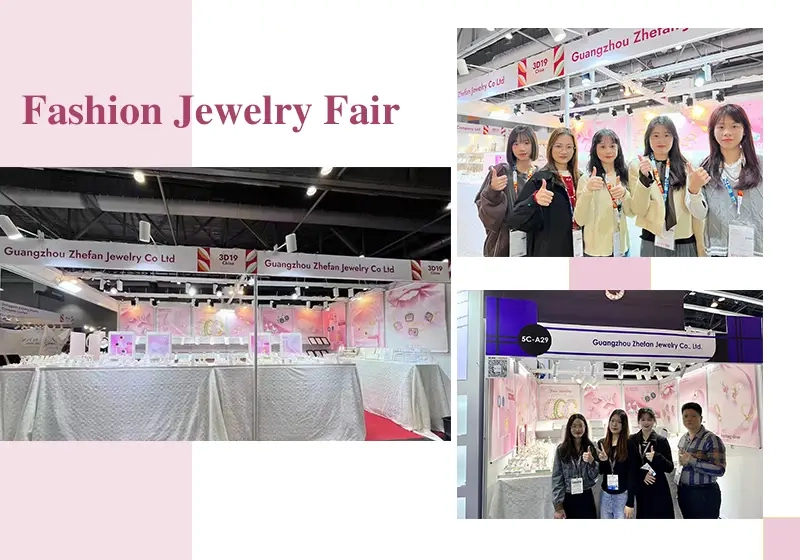
Zhefan Jewelry Will Attend Hong Kong Jewelry Fair
What is Zircon Jewelry?-The Ulimate Guide
Prdoucts Categories
FAQ
FAQs
Can I see your product test report?
Of course.Our product throught standar test like SGS.We test in many ways of product.
How long does it take for the product to fade?
The normal electroplating quality color retention time of our products is 5 times longer than the market, and the thicker electroplating can retain color for three years.
What’s the shipment method?How long does it take for delivery?
Our product distributed to all over the world. Shipped by DHL/Fedex/ TNT/UPS takes 3-7 days,Epacket takes 7-15 days, China Post takes 15-30 days.
Products
How long will the plating color last?
Generally 6 month for Water Plated color , 1 - 2 years for vacuum plated color if in proper wearing.
What's themonthly production capacity?
600,000 pcs per month.
What’s the shipment method? How long does it take for delivery?
Our product distributed to all over the world. Shipped by DHL / Fedex / TNT / UPS takes 3-7 days, Epacket takes 7-15 days, China Post takes 15-30 days.
Discuss Your Ideas with a Professional Custom Jewelry Manufacturer
We provide personalized jewelry customization services for clients worldwide.
Rest assured that your privacy is important to us, and all information provided will be handled with the utmost confidentiality.
By clicking 'Send Inquiry Now' I agree to ZHEFAN JEWELRY processing my personal data.
To see how to withdraw your consent, how to control your personal data and how we process it, please see our Privacy Policy and Terms of use.
From design to production, ZHEFAN JEWELRY offers a one-stop solution to help you enhance your brand value and market competitiveness.
Get A Quote
Contact
Tel: (+86) 188 1927 7817
© 2026 Zhefan Jewelry. All Rights Reserved.
Facebook
Instagram
YouTube
Whatsapp: +8618819277817