








Email: sales3@zhefanjewelry.com
How to ensure quality control for brass necklace production?
Practical, standards-based answers to six hard questions buyers and beginners ask about custom brass necklaces — from alloy verification and plating recipes to clasp testing, batch traceability, scaling production, and compliance (EN 1811, RoHS). Actionable QC checklist included.
- 1) How to ensure quality control for brass necklace production?
- 2) How can I non-destructively verify the brass alloy grade for custom brass necklaces before ordering?
- 3) What plating recipe and thickness prevent gold-plated brass necklaces from fading within 6–12 months?
- 4) How to test and set acceptance criteria for clasp strength and solder joints in necklaces?
- 5) What inspection and testing protocol prevents color mismatch and patina between production batches?
- 6) How to scale from prototype to volume production while maintaining AQL, first article inspection, and batch traceability?
- Practical QC checklist summary (one-page for POs)
- Conclusion: Advantages of a robust quality control process for custom brass necklaces
Quality Control Answers for Custom Brass Necklaces: 6 Critical Buyer Questions
As a professional buyer or small brand ordering custom brass necklaces, you need practical, measurable QC steps you can use with factories. Below are six long-tail questions beginners often search for — followed by in-depth, standards-based answers, test methods, and acceptance guidance you can apply today. This article directly addresses “How to ensure quality control for brass necklace production?” and related purchase decisions for brass jewelry, gold-plated brass finishes, and nickel-free requirements.
1) How to ensure quality control for brass necklace production?
Actionable 6-step QC framework to use with any supplier:
- Define the control plan up front: List critical-to-quality (CTQ) items — alloy grade, plating system and thickness, clasp strength, chain length tolerance, surface finish, heavy-metal/nickel limits, and batch traceability. Put this into a one-page control plan attached to the PO.
- Incoming materials inspection: Require mill certificates/CoA for brass coil/wire (e.g., C260 or C360 commonly used for jewelry) and check using handheld XRF for non-destructive screening upon arrival. Reserve lab ICP-MS/ICP-OES for confirmation on initial shipments or when XRF flags anomalies.
- Pre-production validation (PPV): Approve a pre-production sample run (5–20 pcs depending on SKU complexity). Perform first article inspection (FAI) covering dimensions, plating thickness (XRF), adhesion (tape test/cross hatch), and appearance under a 10–20x loupe.
- In-process controls: Insert three control points: raw parts, post-plating, and final assembly. Use quick checks (visual, dimensional calipers, plating thickness via handheld XRF) and record results on a production checklist. Set alarms for tooling wear and plating bath drift.
- Final inspection & sampling: Use an AQL sampling plan (ISO 2859-1). Typical choices: AQL 2.5 for general defects and AQL 1.0 for critical defects (plating flaking, nickel release, broken clasps). Record photos and measurement data on an inspection report.
- Testing & compliance: Perform periodic lab tests for nickel release (EN 1811), heavy metals (ICP-MS for Pb/Cd/Cr/As), and accelerated wear (Taber abrasion, salt spray ASTM B117 when required). Maintain certificates and lot traceability for each batch.
Deliverables to require from suppliers: control plan, FAI report, XRF/CoA documentation, lot numbers, and final inspection checklist with photos. That checklist plus periodic lab confirmations ensures reproducible quality for custom brass necklaces.
2) How can I non-destructively verify the brass alloy grade for custom brass necklaces before ordering?
Beginners often worry about receiving low-copper or contaminated brass that affects color and plating adhesion. Non-destructive verification strategy:
- Handheld XRF screening (on-site): XRF gives rapid elemental composition for Cu/Zn and detects heavy-metal contaminants (Pb, Sn, Ni). Use XRF to screen 3–10 random pieces per lot. XRF accuracy is ±0.5–2% for major elements when properly calibrated — use it for pass/fail screening, not absolute lab confirmation.
- Correlate with mill CoA: Request a mill certificate stating alloy spec (e.g., C26000 ~70% Cu/30% Zn or C360 for machining). Compare XRF readings to CoA. If discrepancies exceed tolerance (e.g., >1–2% Cu variance), quarantine the lot.
- Destructive lab test only on samples: For contract assurance, send 1–2 sample pieces to an independent lab for wet chemistry or ICP-OES for definitive composition. Labs also detect trace metals that XRF may miss.
Practical rule: use XRF for 100% incoming screening for finished parts when possible; require lab confirmation on first orders and whenever XRF flags outside tolerance. This prevents unexpected plating problems tied to alloy chemistry.
3) What plating recipe and thickness prevent gold-plated brass necklaces from fading within 6–12 months?
“Will the gold wear off?” is a top concern. The right layering, plating thickness, and protective finishes determine longevity.
- Undercoat/strike layers: Proper plating starts with cleaning, micro-etch, then a thin copper or nickel strike (depending on allergy requirements). A copper strike improves adhesion; a nickel strike improves color stability but is not nickel-free — avoid if targeting nickel-free claims.
- Gold plating thickness: Decorative, short-wear plating (fast fashion) is often 0.05–0.2 μm (flash) and will fade quickly. For acceptable wear life on necklaces, aim for 0.5–2.0 μm of pure gold (0.5–1 μm acceptable for light-wear pendants; 1–2 μm recommended for pieces worn daily).
- Alternative durable finishes: Rhodium plating (0.05–0.5 μm) over nickel-free strike, or PVD coatings (0.5–2 μm) for colored finishes provide excellent wear and tarnish resistance and are usually more durable than thin electroplated gold. Clear lacquer (protective polymer) can be applied for added protection, but it changes the tactile feel and must be specified.
- Testing to verify: Use XRF to measure real plating thickness at multiple spots. Perform Taber abrasion testing and an accelerated wear protocol (e.g., 100–1,000 cycles depending on expected wear) and salt-spray (ASTM B117) for corrosion resistance if jewelry may see moisture/sweat. Tape adhesion and cross-hatch tests (ASTM D3359) check adhesion quality.
Recommendation: For daily-wear gold-plated brass necklaces that must last 6–12 months with minimal fading, specify at least 0.5–1.0 μm gold over a nickel-free strike or use rhodium/PVD finishes with documented abrasion tests.
4) How to test and set acceptance criteria for clasp strength and solder joints in necklaces?
Broken clasps and weak solder joints cause returns. Specify measurable tests and pass/fail criteria with your manufacturer:
- Define functional requirements: Determine expected use (light, everyday, heavy) and set minimum pull forces. As examples, many small fashion necklaces target minimum clasp/pin tensile strength of 50–150 N (≈5–15 kgf) depending on design; delicate fine jewelry may use lower values. Decide the requirement up front with the supplier and record it in the control plan.
- Solder quality & process control: Require documented solder alloy (e.g., silver-bearing or proprietary jewelry solder), flux type, pre-cleaning, and whether soldering is done by torch, furnace, or laser. Laser and furnace soldering yield more consistent joints on volume production.
- Mechanical testing: Perform pull/pull tests on assembled clasps using a bench tensile tester — test a sample size per AQL. Record force at failure and mode (solder failure vs. metal fracture). Also perform 10–100 cyclical open/close tests to check mechanical fatigue.
- Visual & microscopic inspection: Inspect joints under 10–30x magnification for voids, cold solder joints, or flux residue that can accelerate corrosion.
Set acceptance criteria: e.g., 95% of sample pieces must withstand the defined minimum pull force without permanent deformation and show no visible cracks under magnification. For critical SKUs, require supplier to supply test reports for every lot.
5) What inspection and testing protocol prevents color mismatch and patina between production batches?
Color consistency in brass jewelry and plated finishes is a frequent pain point. A practical control plan covers raw alloy color, plating bath chemistry, and final topcoat.
- Standardize raw alloy: Specify alloy grade (C260 or C360) and acceptable Cu/Zn range. Keep a consistent supplier for coil/wire to prevent base-metal color shifts.
- Master sample & color reference: Approve a master production sample (gold look, antique patina, rose-gold tone) and store color specs (photos at standard lighting, spectrophotometer measurements where possible). Require suppliers to match master within an agreed Delta E tolerance when using a spectrophotometer for plated or coated surfaces.
- Plating bath & recipe control: Require plating chemistry records and bath maintenance logs. Plating color drifts when gold alloy content, brighteners, or bath pH change. Ask for plating tank logs and replacement schedules.
- Topcoat & patina process: Antique finishes and patinas require repeatable process parameters: solution concentration, immersion time, temperature, and neutralization. Record and reproduce these exactly. For lacquer or PVD topcoats, specify thickness and cure cycles.
- Batch acceptance testing: Use spectrophotometer readings or visual checks under standardized lighting for each production lot. For patinas, test simulated aging (controlled humidity/temp) to ensure changes remain within tolerance.
Contractual clause suggestion: reject shipments that visually deviate from the master sample beyond provided Delta E or visual standards. Insist on photographic records of lots and sample retention for dispute resolution.
6) How to scale from prototype to volume production while maintaining AQL, first article inspection, and batch traceability?
Scaling exposes process variability and tooling wear. Follow these steps to scale predictably:
- Run a production pilot: Move from single-prototype to a pilot run (e.g., 200–1,000 pcs depending on SKU) to identify tooling, plating, and assembly issues under production timing.
- First Article Inspection (FAI): Approve a full FAI on a pilot lot with dimensional reports, plating thickness mapping (multiple points), adhesion test results, and mechanical tests for clasps. Keep FAI document as baseline for future FAIs when tooling changes or after maintenance.
- Implement an AQL-based sampling plan: For routine production use ISO 2859-1 AQL tables: general AQL 2.5 for cosmetic defects, AQL 1.0 for critical defects. Increase inspection frequency when defects trend upward.
- Establish lot traceability: Assign lot numbers per plating bath cycle or daily production run. Keep records linking raw material batch/coils, plating bath ID, operator, and inspection reports so you can root-cause issues quickly.
- Control tooling and maintenance: Schedule die maintenance, stamping die rebuild thresholds, and plating tank replenishment based on runtime and defect metrics. Tooling wear is a major source of dimensional drift and burrs.
- Continuous improvement loop: Maintain a QC dashboard with defect rates by category (plating, dimension, assembly). When rate exceeds thresholds, require corrective action (CAPA) from the vendor with defined timeline and FAI on corrected parts.
Following this approach ensures your high-quality prototype scales into repeatable production runs for custom brass necklaces without surprises.
Practical QC checklist summary (one-page for POs)
- Alloy grade & CoA + XRF screening protocol
- Plating system, thickness targets (μm), and adhesion test method
- Clasp/solder mechanical requirements and pull test pass/fail
- Color master sample + Delta E tolerance or visual standard
- Sampling plan (AQL 2.5 general; AQL 1.0 critical)
- Lab test schedule: EN 1811 (nickel), ICP-MS (heavy metals), Taber/salt spray when required
- FAI requirements & lot traceability
These items, embedded into your purchase order and control plan, translate quality expectations into measurable checkpoints your supplier must meet for every batch of brass jewelry or gold-plated brass necklaces.
Conclusion: Advantages of a robust quality control process for custom brass necklaces
A documented QC program reduces returns, protects Zhefan Jewelry reputation, and shortens time-to-resolution when issues arise. Benefits include repeatable color and finish across batches, predictable plating durability, measurable clasp reliability, and legal compliance (RoHS, EN 1811 for nickel). Enforcing incoming checks (XRF/CoA), pre-production FAI, AQL-based sampling, and periodic lab confirmation gives you both cost control and the consumer confidence to scale your brass jewelry line.
For a tailored QC plan, sample approvals, or a production quote for custom brass necklaces, contact us for a quote: www.zhefanjewelry.com or sales3@zhefanjewelry.com.
Recommended for you
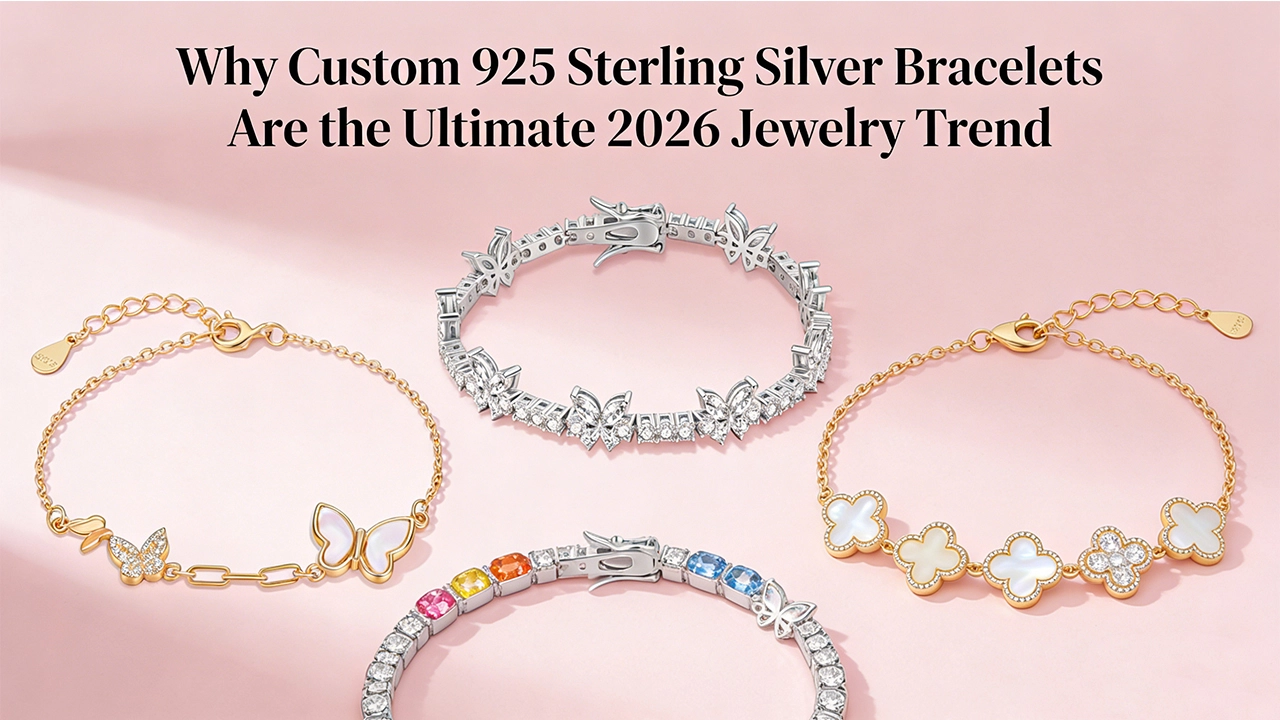
Why Custom 925 Sterling Silver Bracelets Are the Ultimate 2026 Jewelry Trend
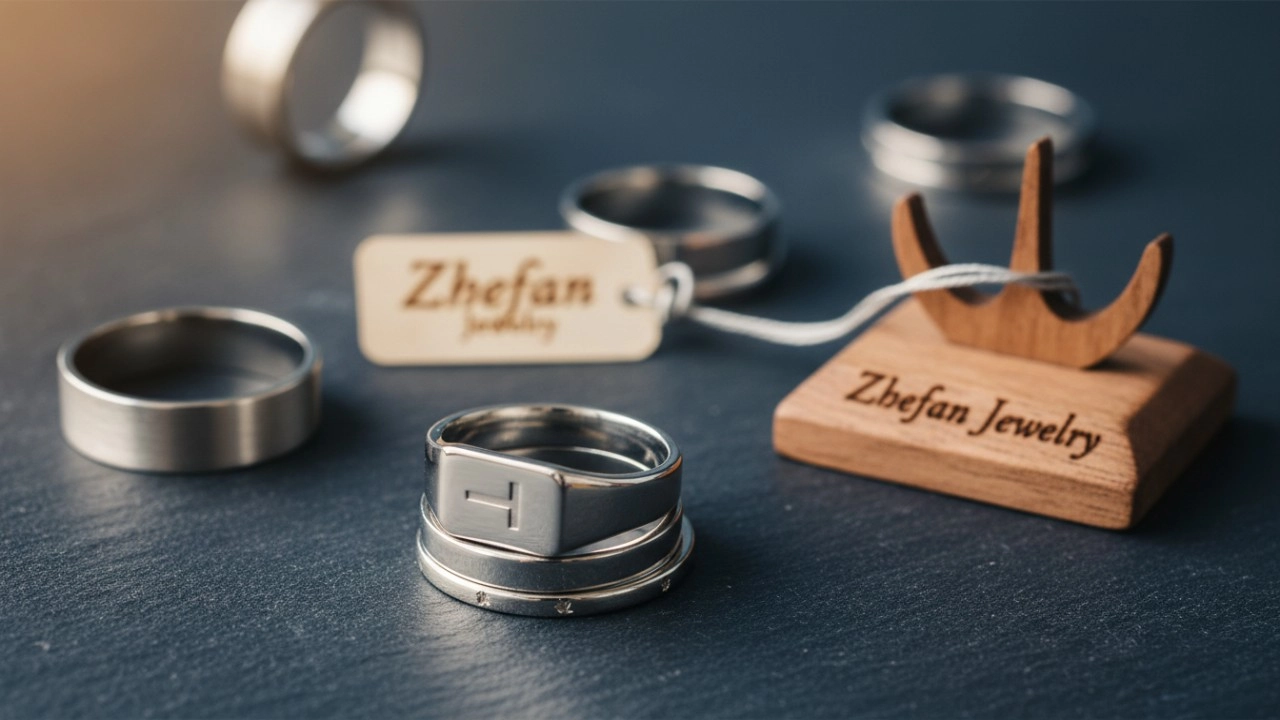
The Ultimate 2026 Guide to Stainless Steel Ring Jewelry: Why It Outshines Traditional Metals
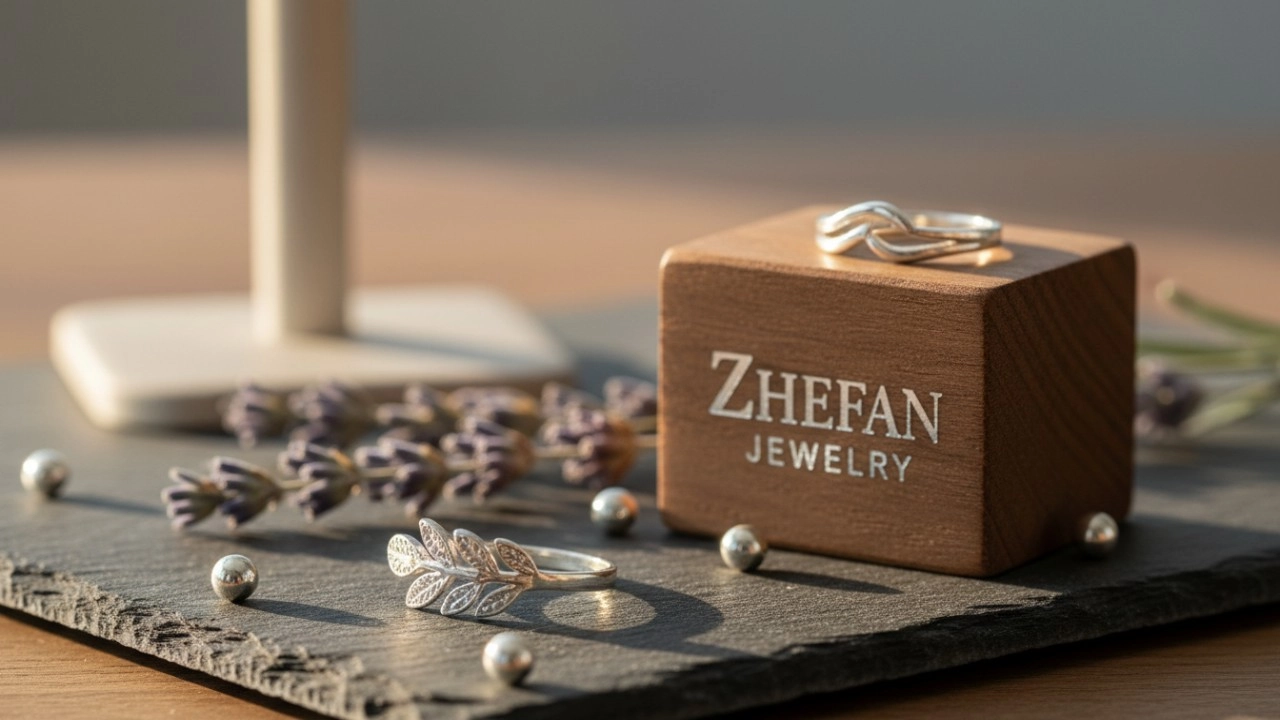
The Ultimate Guide to Sourcing Wholesale 925 Silver Adjustable Rings in 2026
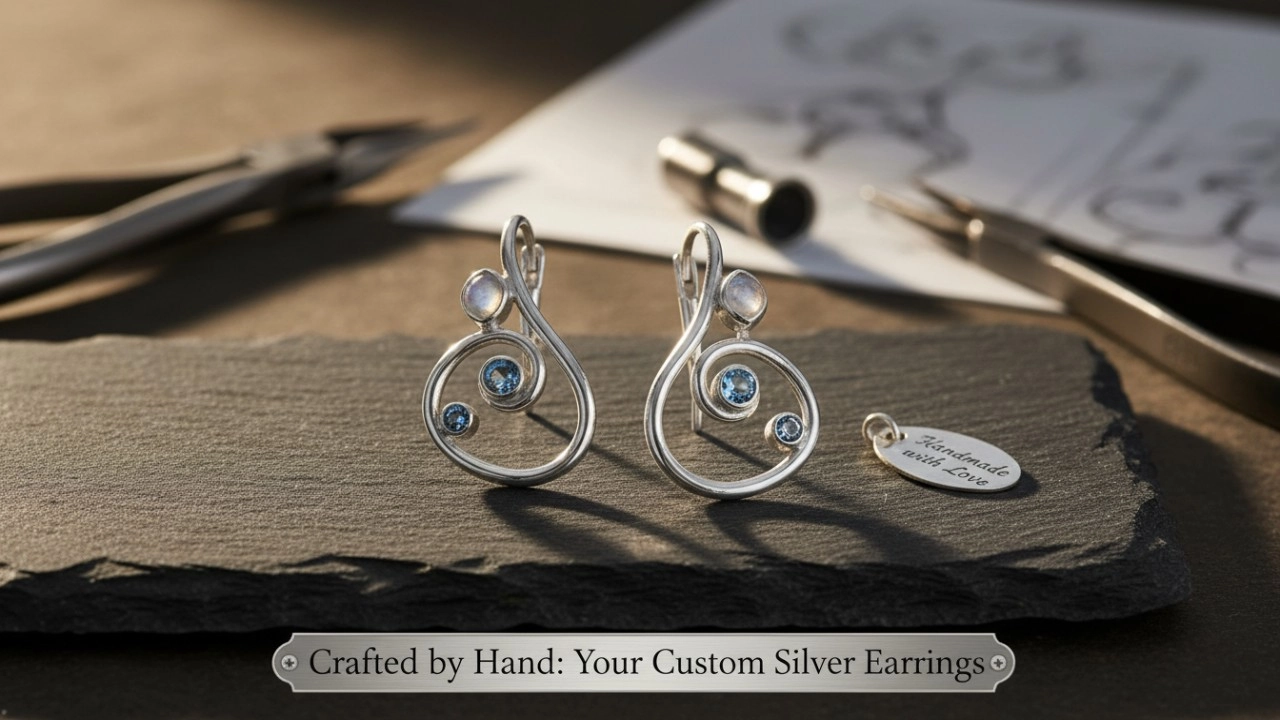
The Ultimate Guide to Ordering Custom Made Silver Earrings: How to Get Perfection Every Time (2026 Edition)
The Secret Life of Your Silver: How 925 Sterling Jewelry Comes to Exist
Is a Brass Necklace Good? The Honest Truth About Wear, Tarnish, and Quality
Prdoucts Categories
FAQ
FAQs
Can you engrave my logo on the jewelry ?Do you supply OEM/ODM service?
Yes. Custom logo and OEM/ODM are both accepted. Our factory specializes in jewelry manufacturing for 27 years.We can produce jewelry by your sample, design, pictures, even by an idea.Please feel free to contact us for more details. Custom order process:Inquiry-Confirm products details-Pay mold fee -Confirm CAD draft-Quote-Initial payment-Produce mold&sample-Confirm Sample-Mass production-Balance payment-Shipment-Track shipment-delivery.
How long does it take for the product to fade?
The normal electroplating quality color retention time of our products is 5 times longer than the market, and the thicker electroplating can retain color for three years.
Products
What is the payment method?
Our payment method are Alibaba Trade Assurance(MasterCard, visa, e-Checking, PAYLATER, T/T),T/T, PayPal,Western Union.
Do you offer free sample for quality check?
Sample order is welcome, but sample fee need to be paid. It will be deducted when you place an bulk order.
What services can we provide?
Accepted Delivery Terms: FOB, CIF, EXW, Express Delivery;
Accepted Payment Currency: USD, EUR, JPY, CAD, AUD, HKD, GBP, CNY, CHF;
Accepted Payment Type: T/T, L/C, MoneyGram, Credit Card, PayPal, Western Union, Cash, Escrow;
Language Spoken: English, Chinese, Spanish, Japanese, Portuguese, German, Arabic, French, Russian, Korean, Hindi, Italian.
What's the packaging of your jewelry?
Normally we use OPP bag, bubble bag and paper box to pack the goods,custom packaging is acceptable as well.
Discuss Your Ideas with a Professional Custom Jewelry Manufacturer
We provide personalized jewelry customization services for clients worldwide.
Rest assured that your privacy is important to us, and all information provided will be handled with the utmost confidentiality.
By clicking 'Send Inquiry Now' I agree to ZHEFAN JEWELRY processing my personal data.
To see how to withdraw your consent, how to control your personal data and how we process it, please see our Privacy Policy and Terms of use.
From design to production, ZHEFAN JEWELRY offers a one-stop solution to help you enhance your brand value and market competitiveness.
Get A Quote
Contact
Tel: (+86) 188 1927 7817
© 2026 Zhefan Jewelry. All Rights Reserved.
Facebook
Instagram
YouTube
Whatsapp: +8618819277817