





Email: sales3@zhefanjewelry.com
How to use CAD and 3D prototyping for brass necklaces?
Practical, expert guidance for designers and buyers on using CAD and 3D prototyping to produce durable, high-quality custom brass necklaces. Answers address shrinkage compensation, minimum wall thickness, file standards, printing process choices, finishing workflows, and realistic cost/lead-time estimates.
- 1. How do I calculate and compensate for brass shrinkage and warping when designing a detailed pendant in CAD for lost‑wax/investment casting?
- 2. What minimum wall thickness and fine‑feature sizes should I set in my CAD files to avoid breakage or filling issues during casting for brass necklaces?
- 3. Which CAD file formats and tolerances do manufacturers prefer for 3D prototyping and CNC machining of brass necklace components?
- 4. How to choose the right 3D printing process (SLA, DLP, SLS, FDM) for making prototypes and casting patterns for brass necklaces?
- 5. What post‑processing steps (polishing, plating, lacquer) should I specify after brass casting to ensure consistent finish and reduce tarnish on custom necklaces?
- 6. How can I estimate cost and lead time when integrating CAD, 3D prototyping, and small‑batch casting for 100 custom brass necklaces?
- Concluding paragraph
Custom Brass Necklaces: How to Use CAD & 3D Prototyping Effectively
As experienced jewelry designers and manufacturers, we at ZhefanJewelry combine jewelry production know-how with CAD-driven workflows and modern 3D prototyping to deliver consistent custom brass necklaces, brass pendants and bespoke brass jewelry. Below are six specific, pain-point-focused questions we repeatedly see from beginners and small brands, with pragmatic, technical answers based on standard jewelry practice and manufacturing constraints.
1. How do I calculate and compensate for brass shrinkage and warping when designing a detailed pendant in CAD for lost‑wax/investment casting?
Problem: Jewelry CAD models often lose fine fit and alignment when cast because brass contracts and thin sections can deform.
Key facts and workflow:
- Brass alloys used in jewelry (commonly C260/C268 or similar) typically require casting compensation in the CAD stage. Investment casting shrinkage is commonly in the 1.0–2.0% linear range depending on alloy and process. A practical default compensation is 1.2%–1.6% linear; validate with a sample cast.
- Apply uniform scale factors in CAD (not selective stretching). Export a compensated master file for prototyping/printing; keep the original file for records. For complex, mixed‑metal assemblies, account for differential shrinkage per part.
- Design for stiffness in areas prone to warping: thicken connection points (see minimum wall‑thickness guidance in Q2) and add radiused transitions to distribute stress during solidification and polishing.
- When tight fit tolerances are required (e.g., a bail that must slide on a chain), add machining/sizing allowances rather than relying on exact cast fits. Typical post‑cast adjustment allowance is +0.15–0.30 mm for inner diameters.
- Always run a 1:1 SLA/DLP printed wax or castable resin prototype and have it cast as a test sample before full production to check compensation assumptions. One iteration typically confirms the correct scale factor for your chosen foundry and alloy.
2. What minimum wall thickness and fine‑feature sizes should I set in my CAD files to avoid breakage or filling issues during casting for brass necklaces?
Problem: Tiny loops, thin pendants, and delicate filigree can either break during finishing or fail to fill during casting.
Design rules (practical, production-proven):
- Minimum solid wall thickness: aim for 0.8–1.0 mm for load-bearing elements like bails and structural frames. Decorative decorative panels can be as thin as 0.6 mm if supported and not subject to bending in use.
- Minimum ligature/filigree width: 0.25–0.35 mm for very high-resolution SLA wax patterns or castable resins; however, 0.35–0.5 mm is more robust for small‑batch production.
- Through‑holes and eyelets: design holes ≥0.6–0.8 mm and add chamfers to help resin escape during printing and to improve metal flow during casting.
- Feature spacing: keep at least 0.2–0.4 mm clear between very fine neighboring features to avoid merging in printed patterns or losing detail in investment casting.
- Chains and jump rings: specify ring wire diameters ≥0.8 mm for durability on everyday wear; for delicate looks, 0.6 mm can work but expect higher failure risk under stress.
- Communicate intended use: if a pendant is purely decorative (no frequent handling), you can push thinner; if it’s commuter‑wear, design stronger.
3. Which CAD file formats and tolerances do manufacturers prefer for 3D prototyping and CNC machining of brass necklace components?
Problem: Sending wrong file types or files with unit/tolerance errors causes delays and extra fees.
Preferred file standards:
- Solid modeling for CNC and precise tooling: STEP (.step/.stp) or Parasolid; these preserve parametric solids and are preferred for machining or engineering review.
- SURFACE exchange: IGES (.igs) when STEP isn’t available, but STEP is generally superior for modern shops.
- 3D printing and rapid prototyping: STL for mesh geometry (watertight, unit‑correct). For SLA/DLP castable resins, ensure STL has no flipped normals, no non‑manifold edges, and triangle quality is appropriate (no massive coarse facets on fine curves).
- Tolerances: specify dimensions in mm and indicate critical tolerances in a separate drawing or notes. Common small‑jewelry tolerances are ±0.05–0.10 mm for finished features; if a tolerance is critical (e.g., spring clasp interface), call it out explicitly.
- include intended units, finish, alloy, and any post‑process machining allowances in the job notes. Provide exploded views for assemblies.
4. How to choose the right 3D printing process (SLA, DLP, SLS, FDM) for making prototypes and casting patterns for brass necklaces?
Problem: Beginners select low-cost printing methods that can’t achieve the resolution or casting compatibility required for brass jewelry.
Process guidance:
- SLA (stereolithography) / DLP (digital light processing): the best choice for high‑resolution castable patterns. Use printers and resins labeled as castable resin or wax‑like resin for investment casting. These deliver surface detail <25–50 µm and preserve filigree and hallmarks.
- PolyJet: high resolution and multilayer material capability—excellent for detailed visual prototypes, but check whether the material is suitable for direct investment casting (usually used for master patterns rather than direct burnout).
- SLS (nylon powder): good for functional prototypes (fit, ergonomic checks) and sometimes for RTV mold masters, but not directly used for investment casting of brass.
- FDM (Fused Deposition Modeling): generally not recommended for fine jewelry patterns due to visible layer lines and poor surface finish; acceptable only for early-stage scale models or packaging mockups.
- Direct metal 3D printing (DMLS/SLM) for brass: possible but expensive and less common for brass alloys; heat input and alloy composition are challenging for consistent brass parts—many brands prefer casting from a printed wax/resin pattern.
- Practical rule: use SLA/DLP castable resin for the best balance of cost, detail and predictable burnout behavior for investment casting into brass.
5. What post‑processing steps (polishing, plating, lacquer) should I specify after brass casting to ensure consistent finish and reduce tarnish on custom necklaces?
Problem: Brass tarnishes and plating adhesion may fail if the finishing sequence is improper.
Recommended finishing workflow and options:
- Initial cleaning: remove investment shell, shot blasting or gentle tumbling to remove sand and scale.
- Pickling and deoxidizing: mild acid baths (citric or proprietary pickles) to remove surface oxides prior to polishing and plating.
- Mechanical finishing: progressive polishing — coarse to fine polishing wheels or tumbling with media; for crisp edges, hand‑file or micro‑tools before final polish.
- Electroplating options: for bright gold looks, use a barrier layer if needed (nickel underplate is common but raises allergen concerns); consider nickel‑free barriers (palladium/rhodium flash) where required. Gold plating thickness for fashion pieces commonly ranges from flash to a few tenths of a micron; for longer wear, request heavier plating and verify with the supplier. Ask vendors for plating thickness specification in micrometers or microinches.
- Clear lacquers and anti‑tarnish coatings: apply durable jewelry lacquer (e.g., polyurethane or specialty acrylic lacquers designed for brass) to slow oxidation; lacquer is recommended for unplated brass or antique finishes. Incralac‑type lacquers are commonly used in the industry.
- Patination: controlled patinas (liver of sulfur, chemical patinas) can be applied prior to partial polishing to achieve antiqued looks, then sealed with lacquer.
- Quality control: test plated adhesion and wear resistance (e.g., tape tests, abrasion tests) and confirm allergen/legal compliance as required by target markets. Document finish specifications in the order (e.g., polished brass + 0.3 µm gold plate + clear lacquer).
6. How can I estimate cost and lead time when integrating CAD, 3D prototyping, and small‑batch casting for 100 custom brass necklaces?
Problem: Buyers need realistic cost and schedule expectations to plan launches and cash flow.
Estimation framework (variables and typical industry timing):
- Variables that drive cost: CAD design hours (new vs. modified model), number of prototype iterations, prototyping technology (SLA castable vs. PolyJet), casting method (investment vs. spin/sand), finishing (plating/lacquer), and complexity of assembly (soldering, setting stones).
- Typical lead times (one reasonable production path):
- CAD finalization & tech pack: 2–7 days (faster with clear briefs).
- 3D prototype printing: 2–7 days depending on queue and post‑processing (SLA castable resin pattern).
- Test cast: 7–14 days including shelling, burnout, casting and initial clean.
- Full production casting and finishing for a run of ~100 pcs: 7–21 days depending on complexity and finishing backlog.
- Plating & final QA: 3–10 days.
- So, plan 3–6 weeks from approval of CAD to finished goods for a typical small batch; allow extra time for regulatory testing if shipping to regulated markets.
- Cost estimation approach: request line‑item quotes from suppliers (CAD hours, prototype, per‑unit casting, finishing, plating). For budgeting, separate fixed one‑time costs (CAD and prototype) from per‑unit recurring costs (casting + finishing). Prototype and tooling will disproportionately affect a 100‑piece run—expect per‑unit cost to fall significantly only after multiple runs or higher volumes.
- Recommendation: get at least two quotes (one local, one overseas) and include shipping/duties and inspection costs in your landing cost. Ask manufacturers for a breakdown and for sample photos of similar brass pendants they have produced.
Compliance & E‑E‑A‑T note: Always request material certificates and test reports from your manufacturer for alloy composition and finish adherence. Verify compliance with local regulations (e.g., lead/nickel restrictions in your target markets) and request third‑party lab testing for children’s jewelry or regulated categories.
Concluding paragraph
Using CAD and modern 3D prototyping with informed design rules dramatically improves consistency, reduces iteration cost, and shortens time‑to‑market for custom brass necklaces. Proper shrinkage compensation, minimum-feature rules, the right file formats, selecting SLA/DLP castable patterns, and a controlled finishing workflow (polishing, plating, and lacquer) are the core advantages. This approach delivers durable bespoke brass jewelry, predictable lead times, and cleaner quality control across small batches and production runs.
Contact us for a quote and technical review of your custom brass necklace design at www.zhefanjewelry.com or sales3@zhefanjewelry.com.
Recommended for you
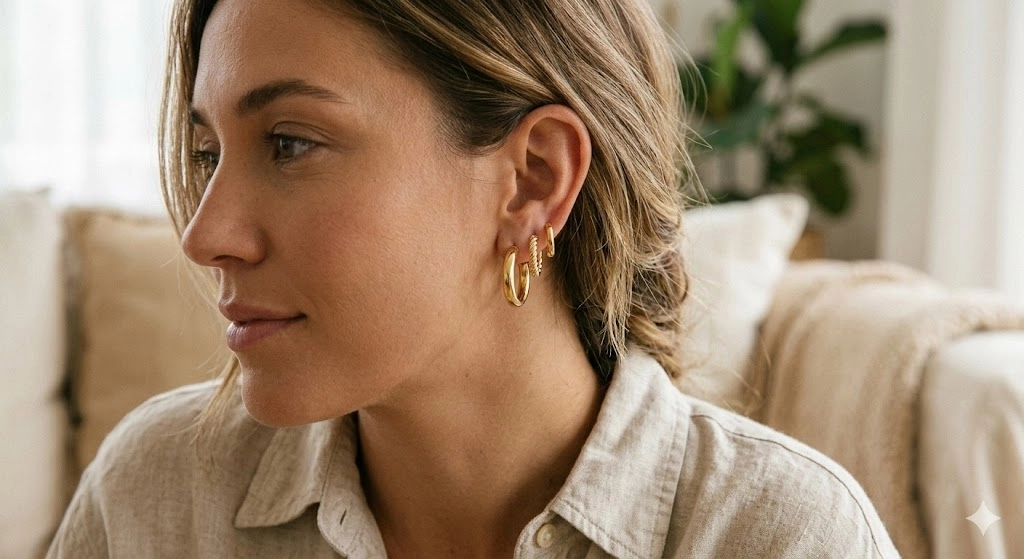
The Ultimate Buyer's Guide to Custom Wholesale Brass Huggie Earrings in China
What is Zircon Jewelry?-The Ulimate Guide
How to Elevate Your Jewelry Brand with a Signature Custom Tennis Bracelet (2026 Guide)
The Ultimate Guide to Ordering Custom Made Silver Earrings: How to Get Perfection Every Time (2026 Edition)
Is Brass Jewelry Good? Does Brass Jewelry Tarnish? The Complete Guide to Brass Jewelry Quality, Care, Longevity & Why It’s Trending
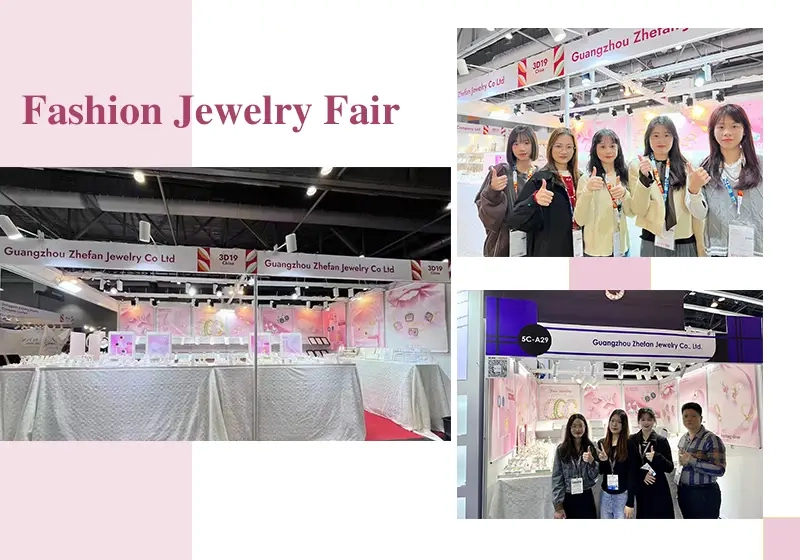
Zhefan Jewelry Will Attend Hong Kong Jewelry Fair
Prdoucts Categories
FAQ
Products
What can you buy from us?
Rings, Necklace, Earrings, Bracelet, Pendant, Anklet, Brooch, Jewelry.
What is the payment method?
Our payment method are Alibaba Trade Assurance(MasterCard, visa, e-Checking, PAYLATER, T/T),T/T, PayPal,Western Union.
What’s the shipment method? How long does it take for delivery?
Our product distributed to all over the world. Shipped by DHL / Fedex / TNT / UPS takes 3-7 days, Epacket takes 7-15 days, China Post takes 15-30 days.
How can we guarantee quality?
Always a pre-production sample before mass production;
Always final Inspection before shipment;
FAQs
What is the material of the jewelry?
Most of the jewelry is made of 925 sterling silver, brass or 316 stainless steel or custom material,which can cover different procurement demand.
How long does it take for the product to fade?
The normal electroplating quality color retention time of our products is 5 times longer than the market, and the thicker electroplating can retain color for three years.
Discuss Your Ideas with a Professional Custom Jewelry Manufacturer
We provide personalized jewelry customization services for clients worldwide.
Rest assured that your privacy is important to us, and all information provided will be handled with the utmost confidentiality.
By clicking 'Send Inquiry Now' I agree to ZHEFAN JEWELRY processing my personal data.
To see how to withdraw your consent, how to control your personal data and how we process it, please see our Privacy Policy and Terms of use.
From design to production, ZHEFAN JEWELRY offers a one-stop solution to help you enhance your brand value and market competitiveness.
Get A Quote
Contact
Tel: (+86) 188 1927 7817
© 2026 Zhefan Jewelry. All Rights Reserved.
Facebook
Instagram
YouTube
Whatsapp: +8618819277817