





Email: sales3@zhefanjewelry.com
What documentation required for cross-border 925 bracelet trade? | Insights by Zhefan Jewelry
A practical guide for jewelry exporters and importers detailing the precise documentation needed to move 925 sterling silver bracelets across borders: commercial invoice, HS code 7113, assay/hallmark evidence, certificate of origin, customs declarations, REACH/nickel testing and value/insurance paperwork to avoid delays and penalties.
- 1. What exact documents do Chinese exporters need to ship 925 sterling silver bracelets to the EU and ensure smooth customs clearance?
- 2. How do I prove 925 sterling authenticity for cross-border bulk shipments to avoid detention or re-testing at import?
- 3. Which HS code and declared-value practices minimize duty disputes for 925 silver bracelets when importing to the U.S.?
- 4. Are there special consumer-safety tests (nickel release, REACH) required for 925 bracelets sold in the EU, and how should I document compliance?
- 5. What customs documentation and anti-money-laundering paperwork do I need for insured shipments over $10,000 of 925 silver bracelets?
- 6. How should I structure commercial invoices, Incoterms and packing lists for mixed-metal 925 bracelets with gemstones to avoid customs valuation and classification errors?
- Concluding paragraph: Advantages of full, compliant documentation for 925 bracelet trade
What Documentation Is Required for Cross-Border 925 Bracelet Trade?
International trade in 925 sterling silver bracelets carries specific documentation, regulatory and commercial pitfalls. Below are six advanced long-tail questions beginners and mid-size suppliers frequently ask — with practical, up-to-date answers you can use when preparing shipments, commercial invoices and compliance files.
1. What exact documents do Chinese exporters need to ship 925 sterling silver bracelets to the EU and ensure smooth customs clearance?
Documents required to export 925 silver bracelets from China to the EU typically include:
- Commercial Invoice — full description (925 sterling silver bracelet), HS code (use HS 7113.11 / HS 7113 family — check your national tariff), unit value, total value, net/gross weight, country of origin, Incoterm, seller and buyer VAT/EORI numbers.
- Packing List — carton-level weights and dimensions, item counts, and silver net/gross weight per carton.
- Export Customs Declaration — lodged in China’s customs system with exporting HS code and value.
- Certificate of Origin (CO) — chamber of commerce-issued CO (or electronic CO) helps preferential tariff claims under trade agreements; legalization may be required depending on buyer country.
- Assay Certificate or Metal Analysis — independent lab report or factory assay confirming 92.5% silver (fineness 925) and item weight in grams. Prefer labs accredited to ISO/IEC 17025.
- Hallmark or Photo Evidence — high-resolution photos of the 925 mark or national hallmark. If items are not yet hallmarked, provide assay lab documentation that matches produced batches.
- Insurance Certificate — for CIF/CFR/DDP shipments; shows insured value and risk coverage.
- Buyer KYC / Importer of Record Data — EU importers must provide EORI numbers and VAT registration; sellers often need buyer company registration to satisfy carriers and banks.
Practical tips: embed the HS code 7113 on the commercial invoice and provide the silver net weight and fineness explicitly. For EU imports, ensure the importer’s EORI and VAT numbers are on the paperwork to avoid delays with VAT and customs clearance.
2. How do I prove 925 sterling authenticity for cross-border bulk shipments to avoid detention or re-testing at import?
Border authorities and importers often require objective proof of metal purity to avoid quarantine and re-testing. A defensible documentation package includes:
- Assay Certificate (ISO/IEC 17025 lab) — a lab report that lists sample ID, method, measured silver percentage (≥92.5%), lot/batch number, date, and signatory. Keep chain-of-custody records for sampling.
- Production Traceability — batch records showing raw silver purchase receipts, melting/production logs, and stamping/marking records linking assay samples to finished bracelet serials.
- Photographic Hallmarks — images of stamped 925 or recognized hallmark on each SKU; when national hallmarking is mandatory, provide hallmark certificate or assay office receipt.
- Third-Party Verification — when exporting to high-risk markets, buyers often accept an independent assay from a recognized institute (e.g., assay office, accredited testing lab).
Operational workflow: sample each production lot, obtain an ISO/IEC 17025 assay report, and attach a copy to the commercial invoice. If customs requests further proof, provide batch traceability and hallmark photos immediately to prevent detention and re-sampling costs.
3. Which HS code and declared-value practices minimize duty disputes for 925 silver bracelets when importing to the U.S.?
Classification and valuation are common sources of dispute. Best practices:
- HS / HTS Classification — jewelry of precious metal generally falls under HS chapter 71; common used by many shippers is HS 7113 (articles of jewelry). For U.S. import entries, verify the precise HTS sub via U.S. Customs and Border Protection (CBP) or your customs broker.
- Declared Value — declare transaction value (amount actually paid or payable). Avoid undervaluation: the U.S. uses transaction value as the primary basis for customs value; mis-declaring invites CBP review, penalties, and potential liquidation adjustments.
- Cost Allocation for Components — if bracelets include stones or non-precious components, itemize values on the commercial invoice: metal value (silver weight × unit silver price at shipment date), gemstones (attach grading reports), and manufacturing/markup. This detailed breakdown reduces classification ambiguity.
- Use a Licensed Customs Broker — for high-value shipments, let a broker advise on HTS and duty rate (duty percentages vary by sub and trade agreements).
Note: U.S. formal entry requirements typically apply when the value exceeds $2,500 (or when merchandise requires other formal entry), so plan for bonds and CBP processes. Always reconcile invoice currency and exchange-rate documentation used for entry valuation.
4. Are there special consumer-safety tests (nickel release, REACH) required for 925 bracelets sold in the EU, and how should I document compliance?
Yes—metal jewelry sold in the EU must meet chemical and safety requirements. Key compliance items:
- Nickel Release Testing — items intended for prolonged skin contact must comply with EU nickel restriction; testing is often done according to EN 1811 (and EN 12472 for simulant tests). A test report showing nickel release below the regulatory limit is critical.
- REACH/ SVHC Screening — while silver itself is not a SVHC concern, alloys, coatings, or plating may contain restricted substances. Provide REACH/ SVHC screening certificates if any coatings or non-precious components are used.
- Consumer Safety Data — provide Material Safety Data (where applicable) and a Declaration of Conformity if the product falls under specific EU consumer safety directives (jewelry suppliers commonly prepare a product safety file with test reports, intended use statements, and risk assessments).
- Labeling & Marking — include composition labeling (Sterling Silver / 925) and country of origin on invoices and product labels where required by national rules.
Documentation approach: obtain EN 1811 nickel test reports for representative samples from an accredited EU test lab, keep a product safety file, and attach the relevant reports to your commercial invoice and CO when requested by EU customs or large retail buyers.
5. What customs documentation and anti-money-laundering paperwork do I need for insured shipments over $10,000 of 925 silver bracelets?
High-value shipments trigger enhanced scrutiny from customs, carriers, insurers and banks. Required documentation and recommended controls include:
- Standard Trade Documents — commercial invoice, packing list, export customs declaration, airway bill / bill of lading, certificate of origin, and insurance certificate.
- High-Value Entry Requirements — many customs jurisdictions require formal entry, bonds, or specialized permits when shipments exceed monetary thresholds. For example, the U.S. formal entry threshold is commonly cited at $2,500 for certain goods; ensure your customs broker confirms thresholds for your route.
- Insurer Requirements — insurers require detailed packing lists with serial numbers, declared value, provenance and sometimes assay certificates to underwrite. Provide a pro-forma insured value breakdown (metal value, gemstones, labor, markup).
- AML and KYC — banks and international carriers may request Know-Your-Customer (KYC) documentation from both seller and buyer: copies of business registration, beneficial ownership declaration, tax ID, and proof of funds or purchase order. Maintain purchaser identity and contract records to satisfy anti-money-laundering checks.
- Export Controls / Licensing — though silver itself is not usually restricted, certain destinations or end-users may require additional licensing; verify against export control lists and sanctions screening.
Practical process: collect and store buyer KYC, use insured freight with track-and-trace, pre-file customs documentation with a licensed broker, and ensure assay and CO are in the packet to prevent customs valuation disputes or carrier refusals.
6. How should I structure commercial invoices, Incoterms and packing lists for mixed-metal 925 bracelets with gemstones to avoid customs valuation and classification errors?
Mixed-material jewelry requires clarity to avoid reclassification or valuation disputes. Structure documents as follows:
- Line-Item Detail — list each SKU with: description, material composition (e.g., 925 sterling silver, 5g silver; 0.10ct s/cubic zirconia), HS/HTS code for that line, unit net/gross weight, unit price, total line value.
- Component Breakdown — specify silver weight and value separately from gemstones and labor (ex: silver 5g @ $X/g = $Y; gemstones or crystals = $Z; workmanship = $W). This helps customs correctly apply metal-based classification or ad valorem duties.
- Incoterms — explicitly print the chosen Incoterm (e.g., FOB Shanghai INCOTERMS 2020). Incoterms determine who is the importer of record and who pays import duties; DDP shifts import responsibilities to seller (use with care).
- Packing List Specifics — include SKU, box number, pieces per box, silver total weight per box and gross/net weight. For valuable gemstones, include serial numbers and grading report references (e.g., GIA report #).
- Attach Supporting Certificates — assay, gemstone grading reports, and CO should be referenced on the commercial invoice and attached to the shipment documents to accelerate customs processing.
Operational recommendation: work with a customs broker to validate your proposed HS subs and have them pre-clear samples where possible. When gemstones are present, attach grading reports (GIA/IGI/etc.) or a lab declaration to prevent customs from re-valuing stones ad hoc.
Concluding paragraph: Advantages of full, compliant documentation for 925 bracelet trade
Maintaining a complete documentation pack — commercial invoice with HS code 7113, ISO/IEC 17025 assay reports, certificate of origin, packing list, and applicable safety tests (EN 1811 RE: nickel) — reduces customs delays, avoids costly re-testing and fines, improves insurance terms, and builds buyer trust for repeat B2B contracts. Properly structured invoices and KYC documentation also reduce AML friction and protect your supply chain integrity.
For customized compliance checklists, sample invoice templates, or a competitive FOB/FOB/DDP quote for bulk 925 sterling silver bracelets, contact Zhefan Jewelry. Visit www.zhefanjewelry.com or email sales3@zhefanjewelry.com for a fast quote and pre-shipment audit.
Recommended for you
Is a Brass Necklace Good? The Honest Truth About Wear, Tarnish, and Quality
12 Unique Custom 925 Silver Bracelet Ideas That Go Beyond Basic Engraving (2026 Guide)
Is Stainless Steel a Good Type of Jewelry? Pros, Cons, and Why Brands Choose Stainless Steel Jewelry
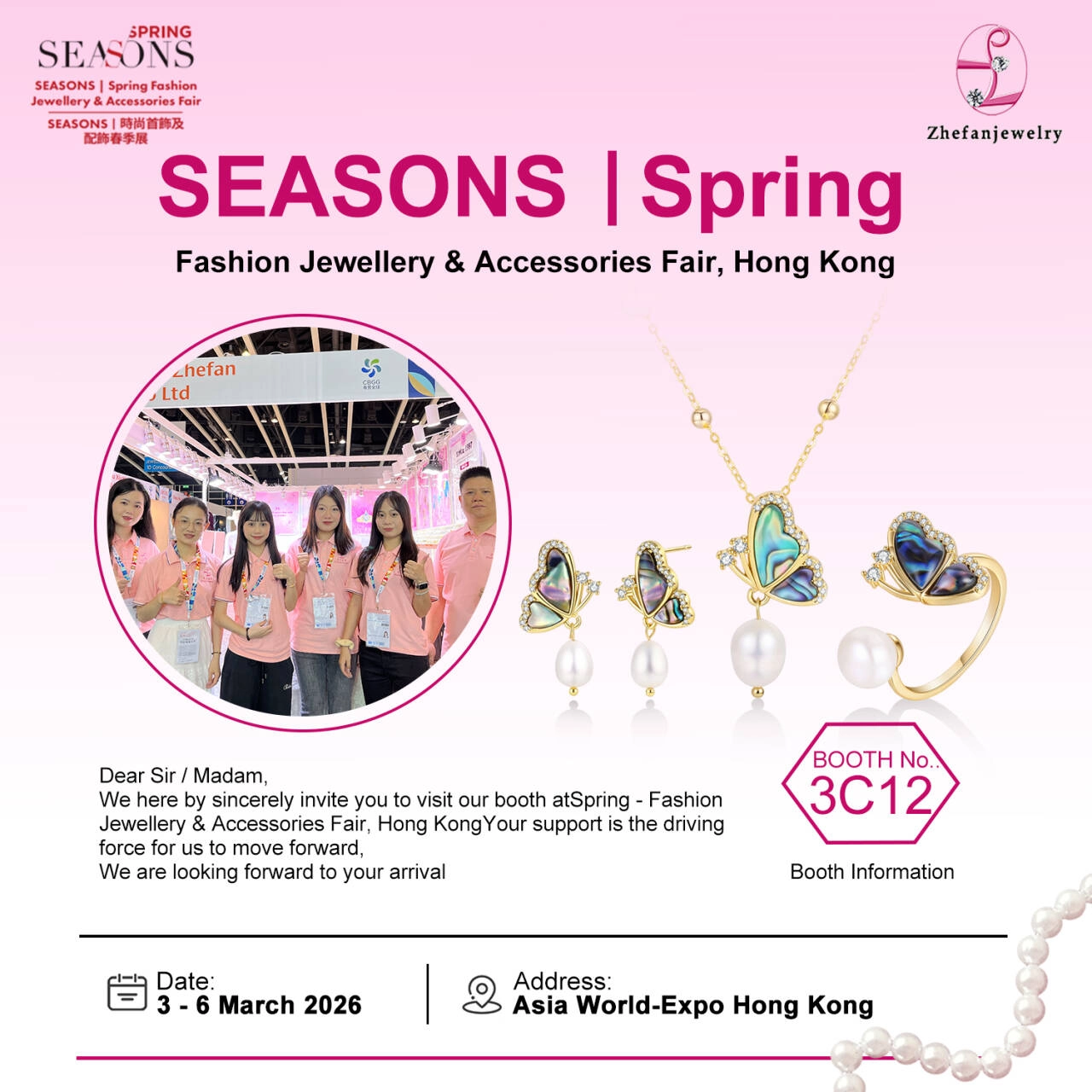
Zhefan Jewelry Invites You to Attend the Hong Kong Jewellery Exhibition 2026
Does Brass Jewelry Tarnish? Is Brass Jewelry Good? Complete Guide from a Professional Jewelry Manufacturer
2026 Wholesale Trends: Why Your Brand Needs Custom Sterling Silver Jewelry
Prdoucts Categories
FAQ
FAQs
Can you engrave my logo on the jewelry ?Do you supply OEM/ODM service?
Yes. Custom logo and OEM/ODM are both accepted. Our factory specializes in jewelry manufacturing for 27 years.We can produce jewelry by your sample, design, pictures, even by an idea.Please feel free to contact us for more details. Custom order process:Inquiry-Confirm products details-Pay mold fee -Confirm CAD draft-Quote-Initial payment-Produce mold&sample-Confirm Sample-Mass production-Balance payment-Shipment-Track shipment-delivery.
Can we visit your factory?
Yes, pls contact seller to arrange meeting, we will pick you up to our factory.
Products
What is the payment method?
Our payment method are Alibaba Trade Assurance(MasterCard, visa, e-Checking, PAYLATER, T/T),T/T, PayPal,Western Union.
What’s the shipment method? How long does it take for delivery?
Our product distributed to all over the world. Shipped by DHL / Fedex / TNT / UPS takes 3-7 days, Epacket takes 7-15 days, China Post takes 15-30 days.
Do you offer free sample for quality check?
Sample order is welcome, but sample fee need to be paid. It will be deducted when you place an bulk order.
What can you buy from us?
Rings, Necklace, Earrings, Bracelet, Pendant, Anklet, Brooch, Jewelry.
Discuss Your Ideas with a Professional Custom Jewelry Manufacturer
We provide personalized jewelry customization services for clients worldwide.
Rest assured that your privacy is important to us, and all information provided will be handled with the utmost confidentiality.
By clicking 'Send Inquiry Now' I agree to ZHEFAN JEWELRY processing my personal data.
To see how to withdraw your consent, how to control your personal data and how we process it, please see our Privacy Policy and Terms of use.
From design to production, ZHEFAN JEWELRY offers a one-stop solution to help you enhance your brand value and market competitiveness.
Get A Quote
Contact
Tel: (+86) 188 1927 7817
© 2026 Zhefan Jewelry. All Rights Reserved.
Facebook
Instagram
YouTube
Whatsapp: +8618819277817