







Email: sales3@zhefanjewelry.com
How to ensure color consistency in wholesale brass rings? | Insights by Zhefan Jewelry
Practical, industry-tested steps to achieve consistent color across wholesale brass rings — from alloy control, surface prep, plating/PVD parameters, to measurable Delta E targets, sampling plans and supplier PO language.
- 1. How can I maintain identical color across multiple production lots when using mixed finishes (electroplating + PVD + lacquer)?
- 2. What measurable tolerances and instruments should I require from my brass ring supplier to guarantee color match for retail sets?
- 3. How do I prevent color shifts caused by environmental variations during shipping and warehousing?
- 4. How do I specify alloy and plating chemistry to avoid greenish or reddish cast differences between brass ring batches?
- 5. What QC protocols (sampling size, AQL, Delta E thresholds, accelerated wear tests) minimize consumer returns for color inconsistency?
- 6. How do I write a purchase order with precise color and finish specifications (reference samples, swatches, PANTONE-equivalents) to enforce supplier accountability?
- Final checklist: Quick actions buyers can implement immediately
How to Ensure Color Consistency in Wholesale Brass Rings: A Practical Guide
Color consistency is a top purchase risk for retailers and a frequent source of returns and brand harm. This guide answers six specific, frequently-asked operational questions—each with step-by-step actions, measurable tolerances, and supplier-level controls you can include in purchase orders for brass rings, finishes, and plated jewelry sets.
1. How can I maintain identical color across multiple production lots when using mixed finishes (electroplating + PVD + lacquer)?
Why this matters: Mixed finishing methods can produce visible shifts because each process has different base interactions with the brass substrate. To manage this, standardize process inputs and use measurable targets.
Step-by-step actions:
- Set a single approved reference sample (golden sample) for each finish. This sample must be a production-run piece, not a prototype, and stored in a humidity- and light-controlled envelope.
- Specify finish stack and chemistry in the PO: brass alloy (e.g., C260/C268 or CZ121), pre-treatment (alkaline degrease, acid dip), electroplating base layer (nickel flash or strike thickness and chemistry), final finish (gold plating thickness in microns or PVD recipe and color temperature), and clear lacquer type (solvent vs. water-based and film thickness).
- Require identical surface pretreatment across methods: identical polish grade (e.g., 400–600 grit satin vs. mirror), consistent ultrasonic cleaning parameters, same activation/etch time. Surface roughness (Ra) should be specified when color appears inconsistent due to light scattering.
- Use measurable color acceptance criteria: instrumentally measure color with a spectrophotometer and set Delta E targets (industry target: Delta E ≤ 2 for consumer jewelry; aim for ≤1 for High Quality collections). Require suppliers to include spectrophotometer readouts from each lot’s first-off samples.
- Control plating/PVD thickness: for electro-gold plating target 0.5–3.0 µm depending on wear expectations; PVD coatings commonly range 0.1–1.0 µm. Thinner coatings can shift apparent hue by exposing base cast color; specify min and max thickness and require X-ray fluorescence (XRF) or cross-section reports on first-off and periodic lots.
Result: Using a single approved sample, instrumented color tolerances, and specified finish stacks reduces visual mismatch between electroplated, PVD and lacquered items.
2. What measurable tolerances and instruments should I require from my brass ring supplier to guarantee color match for retail sets?
Why this matters: Visual inspection alone is subjective. Objective instruments and acceptance criteria protect both buyer and supplier.
Minimum instrument and tolerance requirements to include in POs:
- Spectrophotometer (CIELAB): require L*a*b readings and Delta E calculations versus your approved sample for every lot. Acceptance: Delta E ≤ 2 for general assortments; Delta E ≤ 1 for High Quality/high-value lines.
- Thickness measurement: XRF for plating thickness and composition on at least 5% of pieces in a pre-shipment sample. Provide mean and standard deviation and specify min/max allowed values (e.g., gold layer 0.5–2.0 µm).
- Surface roughness (optional for high-end finishes): Ra specified and measured for satin/matte vs. mirror finishes; include profilometer readouts if necessary.
- Cross-sectional microscopy reports for first production run or when switching alloys/chemistry: shows layer stack and adhesion quality.
- Environmental conditioning test: expose a 10-piece panel to controlled humidity (40–60% RH) and 23°C for 72 hours and re-measure Delta E to check immediate post-production stability.
Insist on digital reports attached to each COA (certificate of analysis) and retain them for warranty claims. This establishes objective proof if color disputes arise.
3. How do I prevent color shifts caused by environmental variations during shipping and warehousing?
Why this matters: Brass and many finishes, especially thin platings or lacquers, can change appearance with humidity, temperature swings, and chemical exposure in transit.
Practical controls:
- Packing: Individually bag each ring in anti-tarnish, acid-free, polypropylene bags with a silica gel packet sized to the carton volume. Use inert separators to avoid abrasion-induced surface change.
- Transport conditions: For long transit or multi-climate routes, specify temperature-controlled or humidity-limited shipping when feasible. At minimum, require sealed inner cartons and desiccants.
- Warehouse specification: Store inventory at 40–60% RH and 15–25°C if possible. Label bulk stock with production date and finish type; implement FIFO for finishes prone to slow color evolution.
- Anti-tarnish measures: For brass with antique or unplated areas, ask suppliers for post-treatment anti-tarnish coatings or lacquers, and specify expected darkening over X months at ambient conditions using a small-sample accelerated humidity test (e.g., 95% RH/38°C for 24–48 hours for comparative evaluation).
- Handling SOP: Train handlers to use lint-free gloves and avoid contact with oils and chemicals (e.g., adhesives, printing inks). Place warning labels on cartons for “do not store near solvents or perfumes.”
These environmental and packing controls reduce post-production color shifts and customer complaints.
4. How do I specify alloy and plating chemistry to avoid greenish or reddish cast differences between brass ring batches?
Why this matters: Brass composition (copper:zinc ratio) and plating chemistry both influence undertone. Slight variation in alloy or inadequate barrier layers make undertones visible through thin finishes.
Specification checklist for POs:
- Alloy: Specify the brass alloy by standard (e.g., C260 high-copper brass, 70% Cu / 30% Zn) or exact composition range. Require certificates of conformity for alloy batches and retain for traceability.
- Base-layer plating: Require a nickel or copper flash layer as a barrier when using yellow or rose gold finishes. For example, specify a copper strike of X nm followed by 0.2–1.0 µm nickel barrier depending on final gold thickness. The barrier reduces color bleed-through and greenish cast from zinc.
- Final finish chemistry: For gold-tones, specify karat-equivalent color (e.g., 14K yellow tone) or PANTONE reference and plating bath type (e.g., sulfite gold vs. cyanide gold—note: cyanide baths are less common due to safety and regulation; require RoHS-compliant chemistries). Ask for plating bath maintenance logs to ensure consistent bath concentration and temperature.
- Anti-reactive layers: For rose and pink gold tones, require passivation layers or special brightening agents to prevent red/copper bloom. Provide acceptable hue ranges in CIELAB coordinates.
Requiring alloy certs and plating stack details prevents unexpected undertone shifts between batches and when switching suppliers.
5. What QC protocols (sampling size, AQL, Delta E thresholds, accelerated wear tests) minimize consumer returns for color inconsistency?
Why this matters: Robust incoming QC and pre-shipment verification reduce the risk of large-scale returns and costly remakes.
Recommended QC protocol for wholesale brass rings:
- Sampling & AQL: Use an AQL plan appropriate for cosmetic defects. AQL 2.5 (general) or 1.5 (tight tolerance/high-value collections) is common in jewelry—apply ANSI/ASQ Z1.4 sampling tables. For small lot sizes (<500 pcs), switch to a fixed percentage sampling (e.g., 5–10%) with full inspection for key SKUs.
- Color acceptance: For each sampled unit record spectrophotometer L*a*b and calculate Delta E vs. approved sample. Set numeric pass/fail (Delta E ≤ 2 typical; ≤1 for High Quality). Reject lots where sample mean Delta E exceeds the limit or where >10% of sampled pieces individually exceed the limit.
- Accelerated wear tests: Perform 1,000–5,000 cycle wear tests (abrasion or simulated finger rub) on sacrificial samples and measure color change. Define acceptable Delta E after test (e.g., ≤3 allowed for budget items, ≤1–2 for High Quality).
- Salt spray & corrosion: For plated items that must resist discoloration, use neutral salt spray (NSS) per ASTM B117 for a defined period and measure color and adhesion changes. Define pass criteria in the PO.
- Documented COA and photos: Each lot should include a digital COA with spectrophotometer readouts, XRF thickness logs, batch numbers for plating baths, and high-resolution photos under controlled lighting (D65/5000K). Keep these records for warranty reconciliation.
Implementing these QC steps reduces the incidence of color-related returns and provides defensible evidence in disputes.
6. How do I write a purchase order with precise color and finish specifications (reference samples, swatches, PANTONE-equivalents) to enforce supplier accountability?
Why this matters: Vague POs lead to interpretation and inconsistent results. A precise PO is your legal and operational control document.
PO template essentials (add as annexures):
- Approved Sample Clause: Attach a single production-approved sample image and label it “Golden Sample” with serial number and storage location. State that all delivered units must match this sample within Delta E ≤ X.
- Color Specification: Provide CIELAB coordinates for the approved sample, and optionally a PANTONE or LRV reference for marketing alignment. State measurement conditions (D65/10° observer, instrument model or equivalent).
- Finish Stack & Thickness: List the exact finish process (e.g., mechanical polish > alkaline degrease > acid activation > copper flash 0.2 µm > nickel barrier 0.8 µm > gold plating 1.0 µm > clear lacquer 0.8 µm). Include allowable thickness ranges and measurement method (XRF or cross-section).
- Sampling & Acceptance: Define AQL level, specify that pre-shipment sample report with spectrophotometer results is required 7–14 days before shipment and that non-conforming batches will be subject to rework or rejection with cost responsibility assigned.
- Traceability & Reporting: Require plating bath logs, alloy batch certificates, and pictures of every lot. Specify retention period for QA records (e.g., 24 months) and rights to third-party inspection.
- Penalties & Remedies: State remediation steps (rework, replacement, discounts) and timelines for supplier corrective actions when color mismatches occur, plus cost allocation for expedited remakes if necessary.
Include an onboarding checklist with the supplier: first-off sample approval, pilot run, QC protocol agreement, and escalation contacts. Clear PO language prevents ambiguity and speeds problem resolution.
Final checklist: Quick actions buyers can implement immediately
- Ask suppliers for a spectrophotometer COA and XRF plating thickness report with every lot.
- Include a golden sample and Delta E acceptance range in every PO.
- Specify alloy standard, plating stack and minimum coating thickness by microns.
- Set AQL (2.5 general, 1.5 for High Quality) and require pre-shipment sample approval.
- Implement anti-tarnish packing and humidity controls in storage and transport.
For branded collections, invest in a short supplier audit focused on bath chemistry control, spectrophotometry competency, and packed-environment controls. These audits typically pay for themselves by cutting returns and protecting brand reputation.
Advantages of following these steps: Consistent color across lots increases sell-through, reduces returns and markdowns, protects brand image, and creates measurable supplier accountability. Objective instrument-based criteria (spectrophotometer Delta E, XRF thickness reports, and documented sampling plans) give you defensible evidence for quality disputes and faster corrective action. Standardized PO language and finished goods packing protect product appearance during shipping and warehousing.
Need a quote or technical sample testing for your brass ring line? Contact us for a tailored production checklist and sample approval process: www.zhefanjewelry.com or sales3@zhefanjewelry.com
Recommended for you
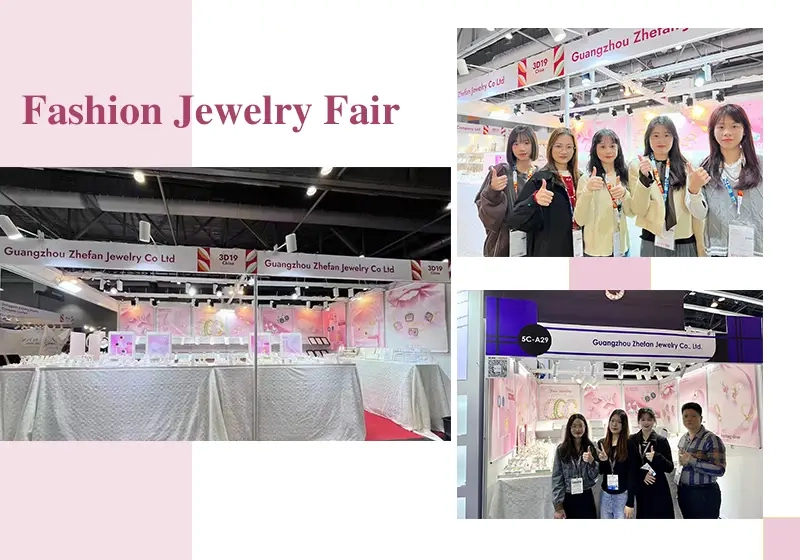
Zhefan Jewelry Will Attend Hong Kong Jewelry Fair

What is Zircon Jewelry?-The Ulimate Guide
Is Stainless Steel a Good Type of Jewelry? Pros, Cons, and Why Brands Choose Stainless Steel Jewelry
Launch Your Brand: A Guide to Sourcing Custom Wholesale Brass Huggie Earrings
Why Custom 925 Silver Rings Are the Perfect Sustainable Luxury Gift (Compared to Gold)
Choosing the Right Metal for Jewelry Making - Practical Guide
Prdoucts Categories
FAQ
Products
What is your minimum order quantity?
We offer low MOQ from 2 to 30 depending on models. Send your favor model to get details from Trade Manager.
What is the payment method?
Our payment method are Alibaba Trade Assurance(MasterCard, visa, e-Checking, PAYLATER, T/T),T/T, PayPal,Western Union.
What can you buy from us?
Rings, Necklace, Earrings, Bracelet, Pendant, Anklet, Brooch, Jewelry.
What’s the shipment method? How long does it take for delivery?
Our product distributed to all over the world. Shipped by DHL / Fedex / TNT / UPS takes 3-7 days, Epacket takes 7-15 days, China Post takes 15-30 days.
How can we guarantee quality?
Always a pre-production sample before mass production;
Always final Inspection before shipment;
FAQs
Do you offer after-sales warranty service?
Yes, we will refund or resend products if fading, stone falling off and other quality problems found in 1 month receipt of goods.Furthermore, we offer 1 year after-sales warranty service, but you need pay the shipping charge.
Discuss Your Ideas with a Professional Custom Jewelry Manufacturer
We provide personalized jewelry customization services for clients worldwide.
Rest assured that your privacy is important to us, and all information provided will be handled with the utmost confidentiality.
By clicking 'Send Inquiry Now' I agree to ZHEFAN JEWELRY processing my personal data.
To see how to withdraw your consent, how to control your personal data and how we process it, please see our Privacy Policy and Terms of use.
From design to production, ZHEFAN JEWELRY offers a one-stop solution to help you enhance your brand value and market competitiveness.
Get A Quote
Contact
Tel: (+86) 188 1927 7817
© 2026 Zhefan Jewelry. All Rights Reserved.
Facebook
Instagram
YouTube
Whatsapp: +8618819277817