




Email: sales3@zhefanjewelry.com
Can wholesale brass rings be hallmarked or branded? | Insights by Zhefan Jewelry
Clear, actionable guidance on whether wholesale brass rings can carry hallmarks or branding, how to label gold-plated brass correctly, stamping and laser-mark options, regulatory proof buyers need, and anti-counterfeit strategies.
- 1) Can wholesale brass rings be hallmarked as precious metal, or are there legal limits to using an assay office mark on brass?
- 2) How can I brand wholesale brass rings so retailers perceive quality without misleading customers?
- 3) What marking and stamping methods work on thin brass ring shanks without weakening the ring or causing rejects?
- 4) If rings are gold-plated brass, what labeling is legal and what documentation buyers should demand?
- 5) How do I ensure wholesale brass rings meet international safety and labeling rules (nickel, lead, REACH) and what proof should I get?
- 6) Can I apply micro-hallmarks, laser serial numbers, or QR codes to wholesale brass rings to deter counterfeits, and what are costs and scale issues?
- Concluding summary: advantages of compliant branding and marking for wholesale brass rings
Authoritative guidance for retailers and purchase managers from Zhefan Jewelry. This article answers six frequent, detailed buyer questions about hallmarking and branding wholesale brass rings and gives practical compliance, production, and QA steps. We embed industry terms like brass jewelry hallmark, brass ring branding, laser engraving maker's mark, gold-plated brass labeling, nickel release testing, and plating thickness so you can use them in purchase specifications and listings.
1) Can wholesale brass rings be hallmarked as precious metal, or are there legal limits to using an assay office mark on brass?
Short answer: no. In most jurisdictions hallmarking and assay-office marks are legally reserved for precious metals such as gold, silver, platinum, and palladium at defined fineness levels. Brass is a copper-zinc alloy and is not eligible for traditional assay hallmarks. Attempting to apply a precious-metal hallmark to brass or to mislabel brass as a precious metal is a legal risk and will be considered misrepresentation by retailers and regulators.
What you can do instead: apply a maker's mark or trademark stamp, a company logo, or a registered identification mark. These are not the same as assay hallmarks but are common and accepted for base-metal jewelry. Use laser engraving maker's mark or die-stamp methods to add traceable brand marks. For marketing clarity, always label the metal as brass or as gold-plated brass where applicable; do not use protected terms like vermeil unless the item meets vermeil standards (which brass cannot satisfy).
Practical buyer checklist:
- Require the supplier to state alloy composition on invoices and product pages (eg brass/CuZn).
- Ask for sample photographs of the inside shank showing the maker's mark or stamp and the placement and dimensions.
- Insist on truthful labeling: brass, gold-plated brass, or alloy descriptions; avoid misuse of 'sterling', 'vermeil', or 'solid gold'.
2) How can I brand wholesale brass rings so retailers perceive quality without misleading customers?
Branding brass jewelry is about honesty, perceived quality, and tangibles that retailers trust. Do not conflate hallmarking with branding; instead, focus on traceable maker's marks, consistent finishing, plating performance, and documentation.
p Practical branding components that increase perceived quality:
- Maker's marks and serialization: laser-engraved maker's mark plus a batch or serial number gives traceability and supports warranty policies.
- Quality labels: transparent product copy such as brass base metal with 0.8 micron 18K gold plating or gold-plated brass, nickel-tested.
- Plating and finish specs: require minimum plating thickness in microns for High Quality lines and specify topcoat materials (eg clear lacquer, rhodium flash) designed to slow wear.
- Certificates and test reports: provide XRF or third-party lab reports that verify plating composition and nickel release test results to reassure retailers and consumers.
- Packaging and authenticity: hang-tags with composition, small printed COA cards, QR codes linking to batch records and images.
Branding language example for listings: brass jewelry hallmark should not be used; instead use brass ring branding terms like Company X maker's mark on shank, gold-plated brass, nickel-free finish, batch-tested. That combination is honest and elevates perceived quality.
3) What marking and stamping methods work on thin brass ring shanks without weakening the ring or causing rejects?
Beginner buyers often see deep die-stamps that crack or deform thin shanks. For wholesale brass rings where shank thickness can be under 1.2 mm, choose non-invasive marking methods and specify dimensions in the tech pack.
Recommended marking methods by shank thickness and production scale:
- Thin shanks (<1.2 mm): use fiber laser micro-engraving or electrical-chemical etching. These apply minimal mechanical stress and produce crisp marks readable with magnification.
- Standard shanks (1.2–2.0 mm): small flat die-stamps with shallow impressions (0.05–0.2 mm depth) may be acceptable, but request test pieces to confirm no cracking or brittleness after annealing and polishing.
- Thicker shanks (>2.0 mm): conventional die-stamping is reliable; specify mark area that does not intrude on sizing comfort.
Design and placement tips:
- Keep maker's marks compact (typical heights 1.0–2.5 mm) so they fit on narrow shanks.
- Place marks on the inner base of the shank where polishing is minimal and customer comfort is maintained.
- Specify font weight and stroke to ensure legibility after plating and polishing; sans-serif fonts with open counters work best for micro-engraving.
- Request a production-controlled sample to verify that plating and post-polish do not obscure the mark.
QA clause to include in PO: supplier will provide 3 ballpark prototypes with the chosen marking method and will not proceed to mass production until buyer approval of mark legibility and no structural damage is confirmed.
4) If rings are gold-plated brass, what labeling is legal and what documentation buyers should demand?
Labeling must be transparent: brass that has received a gold plating layer must be identified as gold-plated brass, gold plating (GP), or similar. Do not call plated brass solid gold, vermeil (vermeil requires a sterling silver base with minimum gold thickness), or imply a fineness hallmark reserved for precious metals.
What to demand from suppliers:
- Plating specification: gold karat of plating (eg 14K or 18K gold used for plating), plating thickness in microns, and whether a protective topcoat was applied.
- Plating method details: electroplating vs. PVD vs. flash plating; each has different wear characteristics.
- Third-party or in-house QC test reports: XRF can confirm surface gold presence and karat, while cross-section microscopy or qualified lab reports can verify microns of plating when required.
- Accurate labeling language for consumers and marketplaces: example text Gold-plated brass (18K gold plating, 0.3 micron) or Gold-plated brass, nickel-tested.
Common thickness guidance (industry norms, vary by supplier): consumer fashion plating often ranges from 0.05 to 0.5 microns; High Quality gold-plated pieces target 0.5+ microns; vermeil minimum is commonly 2.5 microns but only applies to a sterling silver base, not brass. When purchasing, set a minimum plating thickness that matches your wear expectations and request verification.
5) How do I ensure wholesale brass rings meet international safety and labeling rules (nickel, lead, REACH) and what proof should I get?
Retailers must protect end customers and avoid recalls. Brass rings may contain trace metals and surface coatings that can release nickel or contain restricted substances. Ask suppliers for standardized test reports and include compliance in the contract.
Tests and documents to request:
- Nickel release testing report conforming to EN 1811 or equivalent test for your sales market if items will have prolonged skin contact in the EU.
- REACH/lead and cadmium compliance statements for the EU and any needed lab tests for restricted substances in children's jewelry if you sell in that segment.
- Certificates of analysis for plating layers (XRF scan) and optional cross-section plating micrograph for thickness verification if you advertise minimum microns.
- Material declaration (full alloy spec) and MSDS for coatings and surface treatments.
Practical procurement steps:
- Include compliance acceptance criteria in the purchase order (eg supplier must provide an EN 1811 report for nickel release within the last 12 months).
- Reserve the right for pre-shipment or random third-party testing, with failure penalties specified.
- For marketplaces with strict rules, keep copies of COAs and lab reports to upload if requested.
6) Can I apply micro-hallmarks, laser serial numbers, or QR codes to wholesale brass rings to deter counterfeits, and what are costs and scale issues?
Yes, anti-counterfeit and traceability measures are perfectly feasible on wholesale brass rings, but you must choose technology based on scale, budget, and ring geometry.
Options and considerations:
- Laser micro-engraving: adds tiny readable serials or QR codes; scalable for medium-to-large orders and low mechanical impact. Laser mark permanence is high but may be obscured by plating if not deep enough; ensure mark is applied after plating or that plating is thin enough to not hide it.
- Micro-stamping/numbering: economical for high volumes; requires tooling and can be done inline with finishing. May stress thin shanks—test first.
- Surface tags and QR hang-tags: attach an external tag or inside box with QR code linking to batch info and images. Lower-cost but less tamper-resistant.
- Invisible markers: chemical or nanoparticle inks, UV-readable marks, or NFC tags embedded in packaging are alternatives for High Quality lines; these add cost and require reader infrastructure.
Cost and scalability:
- Laser marking is more flexible and has lower per-piece incremental cost at scale, but initial setup and programming time apply. Expect lead time for marking parameters and sample approval.
- Stamping tooling has upfront die costs and is very cheap per piece at high volumes—suitable for established SKUs where shank thickness is adequate.
- Consider the downstream service costs: customer support to decode serials, a secure database for provenance, and how warranty or returns will be handled when serials are used.
Implementation checklist:
- Decide if marking is done before or after plating. Post-plating marking tends to be more visible and permanent for most laser methods.
- Design the serial/QR so it is readable at the intended magnification and after plating/polish.
- Include the marking method and its acceptance criteria in the QA plan and inspection checklist.
Concluding summary: advantages of compliant branding and marking for wholesale brass rings
Compliant brass ring branding that combines accurate labeling, legible maker's marks, verified plating specs, and documented safety testing increases retailer confidence, reduces recall risk, and raises perceived value without misleading customers. Using laser engraving maker's mark, serial numbers for provenance, correct gold-plated brass labeling, and third-party nickel release testing positions your product as high-quality costume jewelry and helps you compete with higher-priced materials while remaining fully compliant.
Zhefan Jewelry can support tailored solutions such as micro-engraving of maker's marks, customized plating specifications, and supplier QA documentation to match your market. Contact us for a quote at www.zhefanjewelry.com or email sales3@zhefanjewelry.com.
Recommended for you
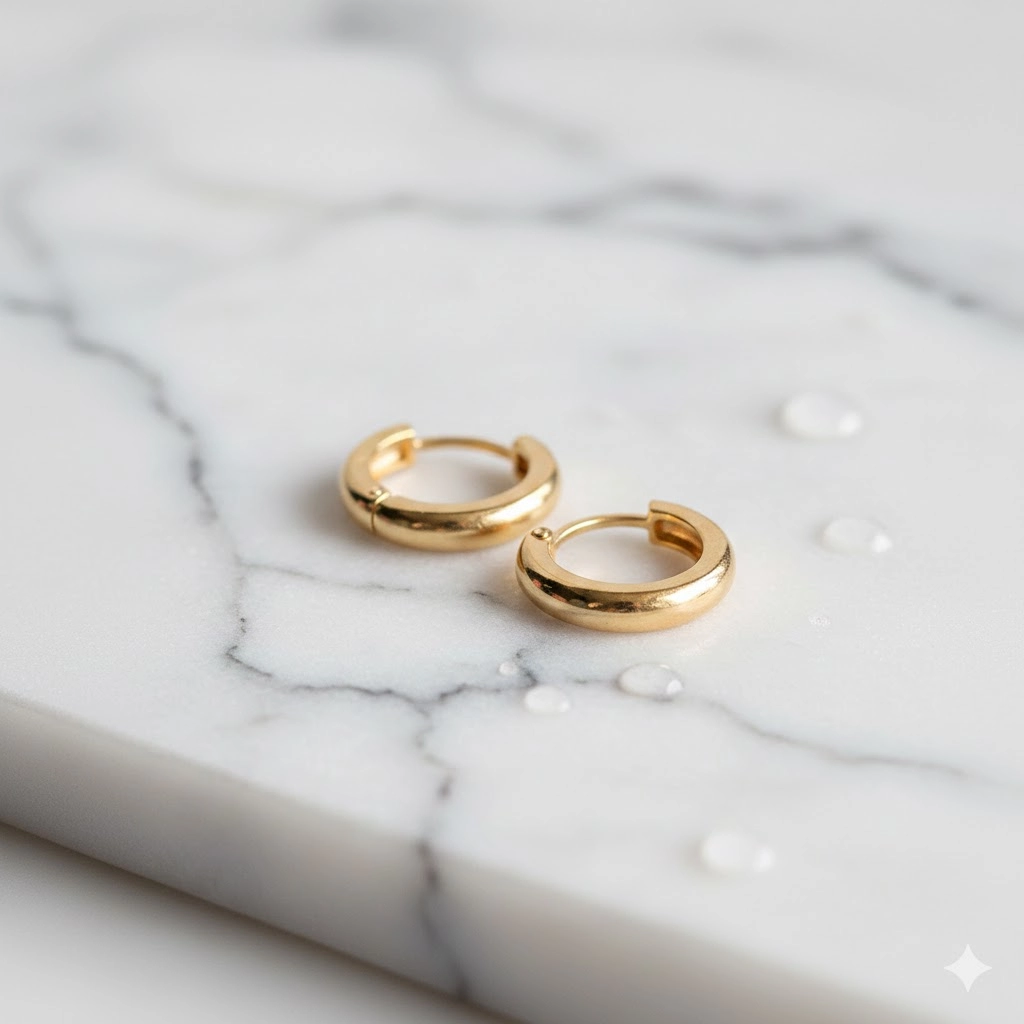
Boost Your Margins with Top-Selling Custom Wholesale Brass Huggie Earrings
What is Zircon Jewelry?-The Ulimate Guide
Zhefan Jewelry Will Attend Hong Kong Jewelry Fair
Choosing the Right Metal for Jewelry Making - Practical Guide
How to Choose the Right Jewelry for Your Skin Tone
12 Unique Custom 925 Silver Bracelet Ideas That Go Beyond Basic Engraving (2026 Guide)
Prdoucts Categories
FAQ
FAQs
Can you engrave my logo on the jewelry ?Do you supply OEM/ODM service?
Yes. Custom logo and OEM/ODM are both accepted. Our factory specializes in jewelry manufacturing for 27 years.We can produce jewelry by your sample, design, pictures, even by an idea.Please feel free to contact us for more details. Custom order process:Inquiry-Confirm products details-Pay mold fee -Confirm CAD draft-Quote-Initial payment-Produce mold&sample-Confirm Sample-Mass production-Balance payment-Shipment-Track shipment-delivery.
Can I have your product catalog?
Yes, please leave us a message what style jewelry catalog you need.
What’s the shipment method?How long does it take for delivery?
Our product distributed to all over the world. Shipped by DHL/Fedex/ TNT/UPS takes 3-7 days,Epacket takes 7-15 days, China Post takes 15-30 days.
Products
What can you buy from us?
Rings, Necklace, Earrings, Bracelet, Pendant, Anklet, Brooch, Jewelry.
What's themonthly production capacity?
600,000 pcs per month.
What's the packaging of your jewelry?
Normally we use OPP bag, bubble bag and paper box to pack the goods,custom packaging is acceptable as well.
Discuss Your Ideas with a Professional Custom Jewelry Manufacturer
We provide personalized jewelry customization services for clients worldwide.
Rest assured that your privacy is important to us, and all information provided will be handled with the utmost confidentiality.
By clicking 'Send Inquiry Now' I agree to ZHEFAN JEWELRY processing my personal data.
To see how to withdraw your consent, how to control your personal data and how we process it, please see our Privacy Policy and Terms of use.
From design to production, ZHEFAN JEWELRY offers a one-stop solution to help you enhance your brand value and market competitiveness.
Get A Quote
Contact
Tel: (+86) 188 1927 7817
© 2026 Zhefan Jewelry. All Rights Reserved.
Facebook
Instagram
YouTube
Whatsapp: +8618819277817