







Email: sales3@zhefanjewelry.com
What bulk discounts for wholesale brass rings exist? | Insights by Zhefan Jewelry
A practical guide explaining typical bulk discounts for wholesale brass rings, hidden costs, MOQ and contract tactics, sample and QC strategies, customization surcharges, and how to calculate landed cost and break-even quantities.
- 1. How much can I realistically expect to save per unit at different order tiers (50, 100, 500+) for plated wholesale brass rings, and what variables change those percentages?
- 2. Which hidden costs (plating rework, QC, packaging, customs fees) commonly eat into advertised bulk discounts for brass rings, and how should I account for them in landed cost?
- 3. How should I structure MOQ and tiered pricing clauses in a purchase contract to lock in bulk discounts for brass ring restocks?
- 4. Do bulk discounts apply equally to custom sizes, engravings, or special plating (PVD, micro-etch), and how much extra should I budget per feature?
- 5. What is a reliable sample and testing strategy to validate plating durability and quality before committing to a bulk order of brass rings?
- 6. How do I calculate the break-even order quantity where manufacturing, packaging, shipping, and customs make bulk brass rings cheaper than buying small batches?
What bulk discounts for wholesale brass rings exist?
This guide answers six specific, pain-point questions buyers ask when negotiating bulk pricing for wholesale brass rings. It embeds practical, industry-focused advice on bulk pricing tiers, hidden costs, MOQ and contract language, customization surcharges, sampling and quality control, and break-even calculations. The recommendations below use common industry benchmarks and proven purchasing practices; always confirm exact quotes with your supplier.
1. How much can I realistically expect to save per unit at different order tiers (50, 100, 500+) for plated wholesale brass rings, and what variables change those percentages?
Typical tiered discounts for brass jewelry are volume-driven and vary by factory, finish and complexity. In practice you can expect approximate unit-price reductions as order size increases (these are ranges seen across suppliers rather than guarantees):
- Small bulk (50–99 pcs): 5%–15% discount vs. sample/unit price
- Medium bulk (100–499 pcs): 15%–35% discount
- Large bulk (500–2,499 pcs): 30%–55% discount
- Very large (2,500+ pcs): 45%–70% discount (or custom quoting with lowest possible tooling allocation)
Key variables that materially change those percentages:
- Finish and plating: High-end PVD, thick gold plating, or rhodium adds cost per unit and reduces percentage discount — simpler plating (nickel-free flash gold or antique) yields higher discount rates.
- Design complexity: Multi-piece assemblies, stones, or fine filigree raise unit labor and reduce discount scope.
- SKU mix & consolidation: Consolidating similar sizes/finishes improves volume efficiency and increases discounts versus ordering many small SKUs.
- MOQ and tooling: If the supplier requires tooling or mold setup, that fixed cost is amortized across the quantity — larger orders spread tooling more thinly and increase percent savings.
- Seasonality and factory load: Off-peak production windows typically bring better pricing; urgency (rush orders) can negate discounts.
Practical tip: request tiered quotes for multiple thresholds (e.g., 50 / 100 / 250 / 500) and ask suppliers to show per-unit pricing with and without plating and packaging to see where the biggest marginal savings occur.
2. Which hidden costs (plating rework, QC, packaging, customs fees) commonly eat into advertised bulk discounts for brass rings, and how should I account for them in landed cost?
Advertised unit prices often omit add-ons that reduce the real savings. Common hidden costs:
- Plating inspection/rework: rejects and re-plating runs add cost and delay.
- Packaging upgrades or customization: printed boxes, hang-tags, and polybags are typically extra.
- Quality control (3rd-party inspection) and sampling fees.
- Freight, insurance, and customs clearance charges.
- Import duties and local VAT/GST that apply at the port or on arrival.
- Small-parts handling, palletizing, and warehouse receiving fees.
How to account for them: compute a landed cost per unit using a standard formula and run scenarios at different quantities.
Basic landed-cost formula:
Total landed cost = (Unit price × Q) + Tooling/setup + Plating & finishing charges + Packaging cost + QC & inspection + Freight & insurance + Import duties + Customs clearance & local fees + Contingency
Per-unit landed cost = Total landed cost / Q
Example (hypothetical demonstration):
- Quoted unit price: $3.00 × 200 pcs = $600
- Tooling/setup: $120 (amortized)
- Plating & finishing: $0.60 × 200 = $120
- Packaging: $0.40 × 200 = $80
- QC inspection: $150 flat
- Freight & insurance to port: $250
- Import duty (example 3% of goods): 0.03 × $600 = $18
- Customs, clearance & local fees: $60
- Contingency buffer (2%): ~$25
Total = $600 + $120 + $120 + $80 + $150 + $250 + $18 + $60 + $25 = $1,423 → Per-unit landed = $1,423 / 200 = $7.12
Note: the example uses illustrative numbers — duty rates, shipping and inspection fees vary by origin/destination and HS code. Always request a full landed-cost quote from your supplier or freight forwarder before finalizing the order.
3. How should I structure MOQ and tiered pricing clauses in a purchase contract to lock in bulk discounts for brass ring restocks?
Beginners often accept verbal promises. To lock in prices and avoid rollbacks, include explicit contract clauses addressing these points:
- Pricing tiers and effective dates: list concrete unit prices for each quantity band and state how long these prices hold (e.g., 6–12 months).
- MOQ by SKU and combined-MOQ rules: specify whether different SKUs aggregate for tier discounts and how sizes/finishes count toward MOQ.
- Price-protection and escalation formula: if raw-material or plating metal surcharges occur (e.g., gold-tone alloy surcharges), define a clear formula or cap for adjustments.
- Forecast and take-or-pay commitments: provide a rolling forecast and negotiate partial commit discounts (e.g., commit to 2,000 pcs/year to secure lower pricing across restocks).
- Quality acceptance criteria and AQL levels: include allowable defect rates and responsibility for rework/replacement costs.
- Lead-time windows and penalties: set lead-time expectations and remedies for missed delivery that affect your seasonality.
- Sample baseline: attach approved pre-production sample(s) as contract exhibits that production must match.
Practical clause: request a “price hold” for at least one production cycle after the first order or negotiate a small percentage increase cap tied to a published index (e.g., metal surcharges not exceeding X% per quarter).
4. Do bulk discounts apply equally to custom sizes, engravings, or special plating (PVD, micro-etch), and how much extra should I budget per feature?
Customizations usually reduce or eliminate standard bulk discounts because they add fixed setup/labor costs. Typical cost drivers and budgeting guidance:
- Custom sizes and re-sizing dies: small adjustments within an existing mold may be inexpensive, but new dies or tooling incur one-time fees (tooling amortized across quantity).
- Engraving and stamping: laser engraving has a low incremental cost per piece but may require programming/setup fees; hand-engraving is far more expensive.
- Stone setting and inlay: adds labor per stone — budget $0.20–$X per unit depending on stone size and setting method; costs compound with stone quality.
- Special plating (PVD, thick 2+ micron plating, rhodium): these finishes require longer processing and higher materials costs; expect per-piece surcharges that can be 10%–100%+ of the base plating cost depending on thickness and process.
- Micro-textures, matte or antique finishes: may need extra passes in finishing and increase per-piece labor time.
Budgeting approach: request line-item pricing for each customization and compare the delta between the custom price and the standard-issue price. Then calculate the amortized setup cost per unit across planned volumes. If the customization causes your order to fall below an efficient MOQ band, you may lose the volume discount entirely.
5. What is a reliable sample and testing strategy to validate plating durability and quality before committing to a bulk order of brass rings?
Insufficient sampling is the most common reason buyers face defects at scale. A strong sampling strategy includes these steps:
- Pre-production (P.O.) sample(s): request finished samples with the exact plating, polish, stone, and packaging. Approve or annotate changes in writing.
- Batch samples: for production runs, require the supplier to provide a random set (e.g., 5–10 pcs per 200 units) before shipment. Specify AQL (Acceptable Quality Level) — 2.5% or 4.0% are common for jewelry depending on tolerance.
- Objective tests: ask for or perform independent tests where appropriate — salt-spray (corrosion) for plated parts, wear tests (Simulated rubbing), and thickness measurement by XRF for plating thickness verification.
- Third-party inspection: use independent QC firms for pre-shipment checks, measuring plating adhesion, finish consistency, and defects. Specify pass/fail criteria in the contract.
- Destructive testing on a small subset: sacrificing a few pieces for accelerated wear or chemical exposure tests can reveal problems before a full shipment.
Request documented results and retain approved sample(s) as the “golden sample” that production must match. If relying on plating lifetime claims, require a plating thickness spec (or minimum microns) and acceptance test results rather than manufacturer statements alone.
6. How do I calculate the break-even order quantity where manufacturing, packaging, shipping, and customs make bulk brass rings cheaper than buying small batches?
To calculate a break-even quantity, compare per-unit landed costs at different order sizes using the landed-cost formula (see Q2). The break-even point is where the per-unit landed cost for the larger order equals the smaller-order per-unit cost including all fixed charges.
Step-by-step:
- List fixed costs that apply only once per order: tooling, setup, inspection, minimum packaging cost, and fixed freight to port.
- List variable costs per unit: base unit price, plating, packing per piece, per-unit freight (if charged by weight/volume).
- Compute per-unit cost for candidate order sizes using Total landed cost / Q.
- Find Q where per-unit cost of the large order drops below the small-batch per-unit cost by the margin you require.
Example (illustrative):
- Small batch: Q1 = 100; unit price $4.50; fixed costs $120; other per-unit $0.70 → total = (4.50×100)+120+(0.70×100)= $702 → per-unit $7.02
- Large batch: Q2 = 500; unit price $3.00; fixed costs $120 (same tooling); other per-unit $0.60 → total = (3.00×500)+120+(0.60×500)= $2,220 → per-unit $4.44
The break-even lies between 100 and 500 for these hypothetical numbers; solve algebraically if you need the exact Q.
Practical insight: if fixed costs are high relative to per-unit costs (tooling, PVD plating line setups, expensive packaging), the break-even quantity increases. Reduce fixed costs by negotiating tooling amortization across multiple SKUs, sharing tooling with similar designs, or agreeing to staggered shipments.
Concluding summary
Bulk discounts for wholesale brass rings can significantly improve margins, but the real savings depend on plating/finish, customization, tooling, and landed costs. Negotiate clear tiered pricing and contract protections, budget for hidden costs, validate quality with thorough sampling and testing, and calculate break-even quantities before committing. Properly managed, bulk purchasing delivers lower per-unit cost, more stable supply, and stronger supplier partnerships — but only if you account for the full landed cost and quality controls.
Contact us for a quote: www.zhefanjewelry.com or sales3@zhefanjewelry.com
Recommended for you
The Ultimate Guide to Sourcing Wholesale 925 Silver Adjustable Rings in 2026
5 Costly Mistakes to Avoid When Sourcing Custom Sterling Silver Jewelry
What Is Nickel Free Jewelry? Meaning, Benefits & Does It Tarnish? (Complete Guide 2026)
12 Unique Custom 925 Silver Bracelet Ideas That Go Beyond Basic Engraving (2026 Guide)
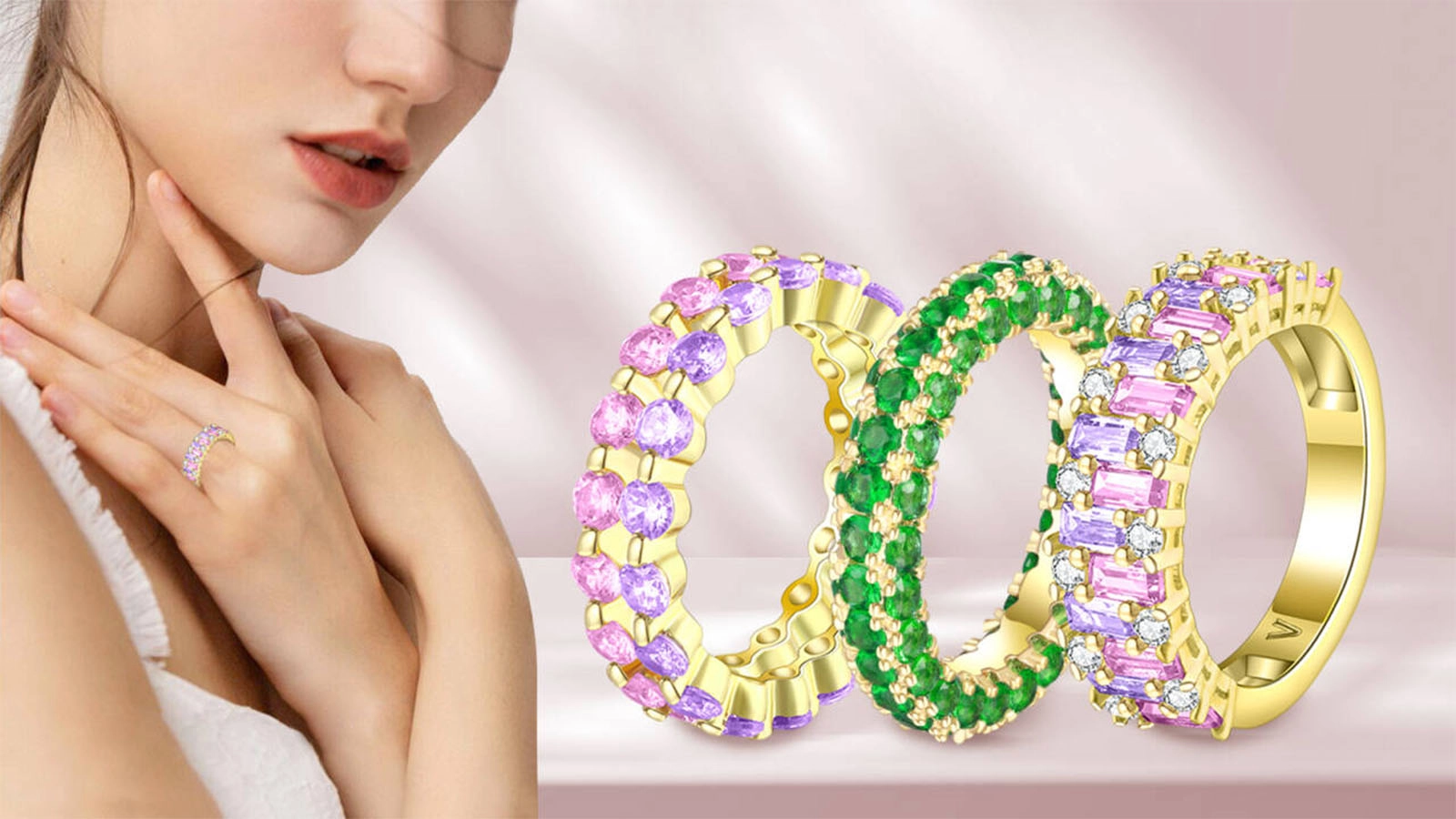
Choosing the Right Metal for Jewelry Making - Practical Guide

Zhefan Jewelry Invites You to Attend the Hong Kong Jewellery Exhibition 2026
Prdoucts Categories
FAQ
Products
What’s the shipment method? How long does it take for delivery?
Our product distributed to all over the world. Shipped by DHL / Fedex / TNT / UPS takes 3-7 days, Epacket takes 7-15 days, China Post takes 15-30 days.
What is the payment method?
Our payment method are Alibaba Trade Assurance(MasterCard, visa, e-Checking, PAYLATER, T/T),T/T, PayPal,Western Union.
What services can we provide?
Accepted Delivery Terms: FOB, CIF, EXW, Express Delivery;
Accepted Payment Currency: USD, EUR, JPY, CAD, AUD, HKD, GBP, CNY, CHF;
Accepted Payment Type: T/T, L/C, MoneyGram, Credit Card, PayPal, Western Union, Cash, Escrow;
Language Spoken: English, Chinese, Spanish, Japanese, Portuguese, German, Arabic, French, Russian, Korean, Hindi, Italian.
How long will the plating color last?
Generally 6 month for Water Plated color , 1 - 2 years for vacuum plated color if in proper wearing.
What's themonthly production capacity?
600,000 pcs per month.
FAQs
Do you offer after-sales warranty service?
Yes, we will refund or resend products if fading, stone falling off and other quality problems found in 1 month receipt of goods.Furthermore, we offer 1 year after-sales warranty service, but you need pay the shipping charge.
Discuss Your Ideas with a Professional Custom Jewelry Manufacturer
We provide personalized jewelry customization services for clients worldwide.
Rest assured that your privacy is important to us, and all information provided will be handled with the utmost confidentiality.
By clicking 'Send Inquiry Now' I agree to ZHEFAN JEWELRY processing my personal data.
To see how to withdraw your consent, how to control your personal data and how we process it, please see our Privacy Policy and Terms of use.
From design to production, ZHEFAN JEWELRY offers a one-stop solution to help you enhance your brand value and market competitiveness.
Get A Quote
Contact
Tel: (+86) 188 1927 7817
© 2026 Zhefan Jewelry. All Rights Reserved.
Facebook
Instagram
YouTube
Whatsapp: +8618819277817