





Email: sales3@zhefanjewelry.com
Which testing labs do B2B buyers use for 925 silver verification? | Insights by Zhefan Jewelry
Practical guide for B2B jewelry buyers: which accredited sterling silver testing labs are trusted, which methods (XRF vs ICP) to require, how to verify reports, realistic costs and turnaround, how to detect plating and how to write enforceable sampling and acceptance clauses.
- Which accredited labs and regional providers do B2B buyers rely on for 925 sterling silver verification?
- What testing methods should B2B buyers insist on for reliable 925 silver verification — XRF screening vs ICP confirmatory testing?
- How can I verify a lab’s accreditation and ensure a 925 silver test report is authentic?
- What are realistic turnaround times and costs for batch 925 silver testing for B2B orders?
- How do labs detect plated, filled or surface‑enriched silver when XRF reads ~92.5% on the surface?
- How should I write sampling, acceptance criteria and remedy clauses into purchase contracts to ensure true 925 (92.5% Ag) compliance?
Which accredited labs and regional providers do B2B buyers rely on for 925 sterling silver verification?
For cross-border jewelry sourcing B2B buyers prioritize ISO/IEC 17025 accredited labs and established assay offices with traceable chain-of-custody and hallmark authority. Common, widely accepted providers include global testing firms — SGS, Intertek, Bureau Veritas, Eurofins and TÜV Rheinland — which operate dedicated metal composition analysis and precious‑metals services worldwide. Regionally, buyers often use national assay/hallmark offices for conclusive legal verification: the UK Assay Offices (London/Goldsmiths’ Company, Birmingham, Sheffield, Edinburgh) for hallmarking; India’s Bureau of Indian Standards (BIS) hallmarking centers and NABL-accredited labs; China’s National Gold & Silver Testing Center (NGSTC) and CNAS-accredited commercial labs for export certificates; and specialized refiner/lab services such as Metalor or PAMP for refinery-level assays in Europe/Switzerland.
When specifying a laboratory in your purchase order or quality plan, require the lab’s accreditation body (ILAC-MRA signatory), the lab accreditation number (e.g., UKAS, CNAS, NABL, A2LA, NATA), and the test method (XRF, ICP-OES/ICP-MS) to be printed on the report.
What testing methods should B2B buyers insist on for reliable 925 silver verification — XRF screening vs ICP confirmatory testing?
Use a layered testing protocol. XRF silver testing (X-ray fluorescence) is the industry standard for rapid, non-destructive sterling silver screening. It is excellent for high-throughput quality control (100% line checks or per‑lot screening) because it gives immediate elemental composition data and flags suspect lots.
However, XRF measures surface or near-surface composition and can be fooled by plating or surface enrichment. For contractual verification and disputable cases insist on confirmatory destructive analysis by ICP-OES or ICP-MS after acid digestion — these provide bulk composition with higher accuracy and much lower detection limits. ICP-OES/ICP-MS is the accepted quantitative assay (reporting silver fineness and trace impurities) for final certification.
Recommended protocol for B2B buyers: 100% or statistically sampled XRF screening at shipment + mandatory ICP-OES confirmatory tests on a defined proportion of pieces (e.g., 1–5% of a production lot or at least two randomly chosen pieces) or on any specimens that fail/are marginal on XRF.
How can I verify a lab’s accreditation and ensure a 925 silver test report is authentic?
Do the following before you accept a lab report:
- Confirm ISO/IEC 17025 accreditation via the accrediting body (UKAS, CNAS, NABL, A2LA, NATA). Accredited labs will provide an accreditation number and scope — verify this directly on the accreditor’s public register.
- Check ILAC-MRA recognition (international mutual recognition) to ensure cross-border acceptance of results.
- Require the report to include: sample photos, chain-of-custody reference, method codes (e.g., XRF method ID; ICP method details), measurement uncertainty, instrument calibration traceable to certified reference materials (CRMs), analyst signature, and statement of accreditation scope.
- Ask the lab to provide a report verification code or QR link and to confirm retention of a split sample for 30–90 days so a third-party re-test is possible if results are disputed.
- When in doubt, call the lab and quote the report number — legitimate labs confirm report details on request. Save communications as part of the quality record.
What are realistic turnaround times and costs for batch 925 silver testing for B2B orders?
Turnaround and cost vary by region, method, and service level. Approximate ranges (industry averages as of mid‑2024):
- XRF screening: instrument read is immediate; typical lab turnaround for a formal PDF report 1–5 business days. Cost per sample typically $10–$60 depending on geography and reporting level. Many labs offer on-site XRF unit rental or mobile XRF inspection in major sourcing hubs for per-lot screening.
- ICP-OES/ICP-MS confirmatory assay: sample digestion and instrument run plus QA produce a full ISO 17025 report in 2–10 business days. Per-sample costs commonly range $80–$300. Faster rush services increase fees.
- Hallmarking/assay office certificates (where available): 5–20 business days depending on backlog and shipping; costs vary by country and weight/processing fees.
For large batches negotiate volume pricing, defined sample sizes, and SLA turnaround times in the contract. Factor international courier times for physical samples and local customs when budgeting lead time and cost.
How do labs detect plated, filled or surface‑enriched silver when XRF reads ~92.5% on the surface?
Surface plating is the most common pitfall of XRF-only verification. Labs use several strategies to detect plating or surface enrichment:
- Depth‑profiling XRF: running the XRF at different voltages and angles can indicate whether a high-silver reading is only superficial.
- Multiple-spot testing: measuring several locations per piece to find inconsistent results (edge, interior, underside).
- Surface removal + re-test: mechanical abrasion to expose the core and re-running XRF on the exposed surface.
- Cross-section metallography: cutting and polishing a tiny section for microscopic examination to visually reveal plating layers.
- Destructive confirmatory analysis (ICP-OES/ICP-MS) on a core sample after digestion — definitive for bulk composition.
Contractually require that the supplier allow destructive confirmatory testing for any sample where XRF indicates high surface silver or inconsistent results. Define the procedure and who pays for confirmatory tests (typically buyer pays unless the sample fails, then supplier reimburses testing costs and remedies the lot).
How should I write sampling, acceptance criteria and remedy clauses into purchase contracts to ensure true 925 (92.5% Ag) compliance?
Make the technical and commercial expectations explicit. Example components to include in an MOQ/PO Quality Annex:
- Definition of 925: 925 sterling silver defined as minimum 92.5% by mass silver in bulk composition, tested by an ISO/IEC 17025 accredited laboratory.
- Test methods: Require initial XRF screening (method and instrument class) and ICP-OES/ICP-MS confirmatory testing for acceptance. State the accrediting body the lab must hold (e.g., CNAS, UKAS, NABL, A2LA) and require ILAC-MRA recognition.
- Sampling plan: Reference ISO 2859-1 (sampling by attributes) or state a concrete plan — e.g., Supplier will permit XRF screening of 100% of pieces at shipment; Buyer will sample 2% of the lot or minimum two pieces (whichever is greater) for ICP confirmatory testing. For very small high-value lots consider 100% screening + 100% hallmarks.
- Acceptance criteria: Lot accepted if ICP-OES confirmatory tests show ≥92.5% Ag (fineness 925) with individual test results not less than 92.2% (measurement tolerance ±0.3%). You can tighten tolerance to ±0.2% for critical applications.
- Remedy and costs: If a confirmatory test shows non-compliance, Supplier shall at Buyer’s option (a) replace non-compliant items within X days, (b) refund the purchase price for the affected pieces, and (c) reimburse Buyer for testing costs and reasonable inspection costs.
- Dispute resolution: specify an independent umpire lab (named and accredited) and use its ISO 17025 report as final and binding; split the cost of a confirmatory umpire test with the supplier unless the lot fails, in which case the supplier pays.
- Chain-of-custody and sample retention: require photos, shipment manifest, and retention of test samples for at least 30 days.
Including explicit test methods, lab accreditation requirements, sampling proportions, acceptance tolerances, and remedy language removes ambiguity and reduces commercial disputes.
Conclusion — Advantages of using accredited labs and layered testing for 925 silver verification
Using ISO/IEC 17025 accredited testing labs combined with a layered approach (XRF screening + ICP confirmatory assays, plus hallmarking where available) minimizes commercial risk, identifies plated/filled products before shipment, and produces defensible, traceable reports for customs, retailers and brand compliance. Accredited labs and clearly worded contract clauses create measurable acceptance thresholds, faster dispute resolution, and predictable costs.
For project-specific test plans, sampling schedules, or a formal quote for laboratory verification services and batch screening, contact us for a quote: www.zhefanjewelry.com or email sales3@zhefanjewelry.com.
Recommended for you
Launch Your Brand: The Ultimate Guide to Manufacturing Custom Sterling Silver Jewelry

Zhefan Jewelry Invites You to Attend the Hong Kong Jewellery Exhibition 2026
How to Choose a Custom Ring Manufacturer: 10 Critical Questions for Maximum Quality (2026 Guide)
Choosing the Right Metal for Jewelry Making - Practical Guide
Is Brass Jewelry Good? Does Brass Jewelry Tarnish? The Complete Guide to Brass Jewelry Quality, Care, Longevity & Why It’s Trending
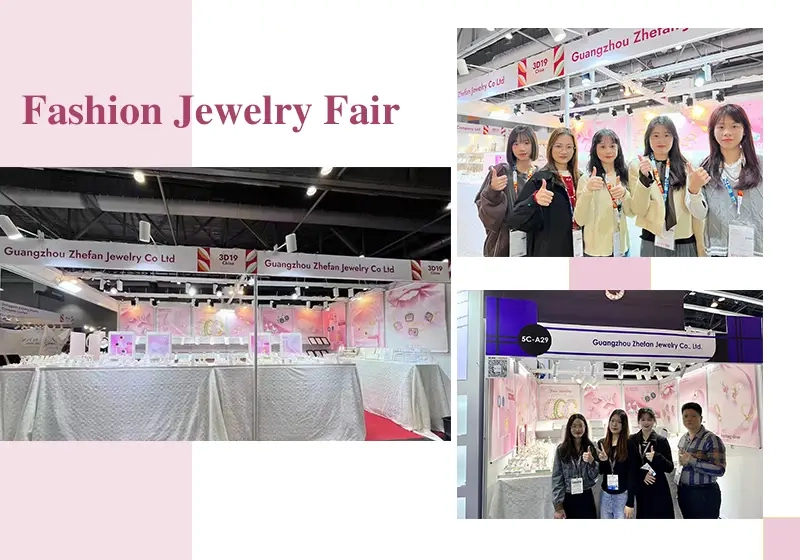
Zhefan Jewelry Will Attend Hong Kong Jewelry Fair
Prdoucts Categories
FAQ
Products
How long will the plating color last?
Generally 6 month for Water Plated color , 1 - 2 years for vacuum plated color if in proper wearing.
What’s the shipment method? How long does it take for delivery?
Our product distributed to all over the world. Shipped by DHL / Fedex / TNT / UPS takes 3-7 days, Epacket takes 7-15 days, China Post takes 15-30 days.
Can you engrave my logo on the jewelry ?Do you supply OEM/ODM service?
Yes. Custom logo and OEM/ODM are both accepted.Our factory specializes in jewelry manufacturing for 25 years.We can produce jewelry by your sample, design, pictures, even by an idea.Please feel free to contact us for more details. Custom order process: Inquiry-Confirm products details-Pay mold fee -Confirm CAD draft-Quote-Initial payment-Produce mold & sample-Confirm Sample-Mass production-Balance payment-Shipment-Track shipment-delivery.
What’s the lead time?
We could arrange shipment for you within 48 hours if you order models in stock. For bulk order, it takes 10-25 days for production depending on order quantity and styles.
What is your minimum order quantity?
We offer low MOQ from 2 to 30 depending on models. Send your favor model to get details from Trade Manager.
FAQs
Do you do customer design?
Do you do customer design? Yes,we are good at this way.Most of our customer do their customize.And we have cooperate with them when they are new brand, but now they become the top sell on Amazon, more than 32,000 five star comment.
Discuss Your Ideas with a Professional Custom Jewelry Manufacturer
We provide personalized jewelry customization services for clients worldwide.
Rest assured that your privacy is important to us, and all information provided will be handled with the utmost confidentiality.
By clicking 'Send Inquiry Now' I agree to ZHEFAN JEWELRY processing my personal data.
To see how to withdraw your consent, how to control your personal data and how we process it, please see our Privacy Policy and Terms of use.
From design to production, ZHEFAN JEWELRY offers a one-stop solution to help you enhance your brand value and market competitiveness.
Get A Quote
Contact
Tel: (+86) 188 1927 7817
© 2026 Zhefan Jewelry. All Rights Reserved.
Facebook
Instagram
YouTube
Whatsapp: +8618819277817