





Email: sales3@zhefanjewelry.com
Sterling Silver Price Per Gram: How to Avoid Getting Ripped Off at Pawn Shops and Jewelers
A comprehensive guide on calculating the true sterling silver price per gram, navigating the pawn shop and jeweler pricing models, and protecting yourself from getting ripped off when selling your 925 silver items.
- What is the Sterling Silver Market Price Per Gram?
- Key Takeaways: Quick Summary for Sellers and Buyers
- Understanding the Math: Spot Price, Melt Value, and Troy Ounces
- Pawn Shop vs. Jeweler: How Their Pricing Models Actually Work
- Red Flags: Common Mistakes and How to Avoid Getting Ripped Off
- Expert Tips: How to Weigh, Test, and Prepare Your Silver
- The Future of Silver Pricing: Market Trends for 2026 and Beyond
- Conclusion
- How much is .925 sterling silver worth per gram today?
- Do pawn shops pay spot price for sterling silver?
- How do I calculate the melt value of my silver jewelry?
- Is sterling silver worth more than pure silver?
- What percentage of the silver market price will a jeweler pay?
- How many grams are in a Troy ounce of silver?
- Does tarnished sterling silver lose its market value?
- Can a pawn shop test my silver without damaging it?
Whether you are clearing out an inherited estate, decluttering your jewelry box, or looking to cash in on high precious metal commodities, selling your silver can be a lucrative endeavor. However, the secondary market is fraught with predatory buyers relying on consumer ignorance. When deciding to sell old jewelry, flatware, or antiques, knowing the exact 925 silver scrap price per gram is your very first line of defense against being underpaid.
Far too often, sellers walk into a pawn shop or local jewelry store with no mathematical baseline for what their items are actually worth. By educating yourself on how precious metals are weighed, tested, and valued on the global market, you shift the power dynamics of the negotiation back in your favor. This comprehensive guide will teach you exactly how to calculate your silver’s true worth, spot predatory appraisal tactics, and confidently secure the highest possible payout.
What is the Sterling Silver Market Price Per Gram?
The sterling silver market price per gram is the current baseline value of .925 purity silver, calculated by taking 92.5% of the live global spot price of pure silver per gram. This establishes the absolute foundational scrap value for jewelry and antiques.
Understanding this metric is critical because it represents the raw, unrefined worth of the metal itself, completely stripped of any artistic or retail markups. The global spot price of pure silver fluctuates continuously during trading hours, driven by supply, demand, and macroeconomic factors. However, because pure silver is too soft for everyday use, it must be hardened with other metals. In fact, as defined by Wikipedia, sterling silver is an alloy composed by weight of 92.5% silver and 7.5% other metals, usually copper.
Because your items are not 100% pure silver, a buyer will never pay the pure silver spot price for them. Instead, they look at the 92.5% baseline, commonly referred to as the "melt value." Knowing this precise mathematical baseline prevents buyers from drastically underpaying you during negotiations. If a buyer knows you are completely unaware of the daily market rate, they are highly likely to offer a fraction of what your item is actually worth. Armed with today’s exact price per gram, you immediately establish yourself as an informed seller who cannot be easily fooled.
Key Takeaways: Quick Summary for Sellers and Buyers
Selling your sterling silver successfully requires knowing its exact metallurgical purity, weighing your items properly at home, and setting realistic payout expectations before negotiating. Buyers operate on profit margins, so understanding the underlying math is your strongest defense against lowball offers.
If you are in a rush to appraise your items, keep these fundamental, non-negotiable rules in mind before you step foot into a store:
- Purity Matters: Sterling silver is exactly 92.5% pure silver and 7.5% alloy (usually copper). It is not pure silver, and it will not command pure silver prices.
- Expect a Discount: Pawn shops and jewelers will never pay 100% of the market spot price; you should realistically expect initial offers to land between 50% and 75% of the total melt value.
- Do Your Own Weighing: Always weigh your silver in grams at home using a digital scale before visiting a buyer to establish an unshakable baseline value.
- Recognize Premium Potential: Understanding the critical difference between raw market value (scrap) and antique or craftsmanship premium is crucial. Some pieces are worth more alive than dead.
Understanding the Math: Spot Price, Melt Value, and Troy Ounces
To accurately determine your silver's worth, you must multiply your item's weight in grams by the live silver spot price per gram, then multiply by 0.925. This formula calculates the exact melt value of your piece before any dealer fees are applied.
The single biggest point of confusion for consumers is weighing sterling silver in grams vs troy ounces. In the global financial markets, precious metals are universally traded in Troy ounces. However, one standard Avoirdupois ounce (the kind used for groceries or mail) is 28.34 grams, while one Troy ounce is exactly 31.103 grams. If a dealer quotes you a price in regular ounces but weighs it in Troy ounces without clarifying, you are actively losing money on the conversion.
Once you have your item weighed correctly in grams, you can plug the numbers into a sterling silver melt value calculator online, or simply do the math yourself. For example, if you have 100 grams of sterling silver, and the current live spot price of pure silver is $1.00 per gram:
- Multiply 100 grams by 0.925 to find the pure silver content (92.5 grams of pure silver).
- Multiply 92.5 grams by the $1.00 spot price.
- Your melt value is exactly $92.50.
This calculation strictly highlights the spot price vs retail price silver dynamic. The retail price you originally paid at a boutique included the designer's labor, the store's rent, marketing, and taxes. The "melt value" strips all of that away, reducing the piece to nothing more than a puddle of raw liquid metal. Buyers base their offers strictly on melt value because, if they cannot resell the piece as-is, they will be forced to send it to a refinery to be melted down.
Pawn Shop vs. Jeweler: How Their Pricing Models Actually Work
Pawn shops and local jewelers price silver based on their distinct business overheads, refinery relationships, and desired profit margins. Because they must eventually turn a profit to keep their doors open, no retail buyer will ever offer you 100% of the live melt value.
When consumers ask, "how much do pawn shops pay for 925 silver?" they are often disappointed by the answer. Pawn shops rely on fast turnover, high overhead, and high margins. They are generalists, not specialized precious metal dealers. Because they take on the risk of the silver spot price dropping while the item sits in their inventory, they typically offer the lowest percentage of the market price per gram—often between 40% and 60% of the actual melt value.
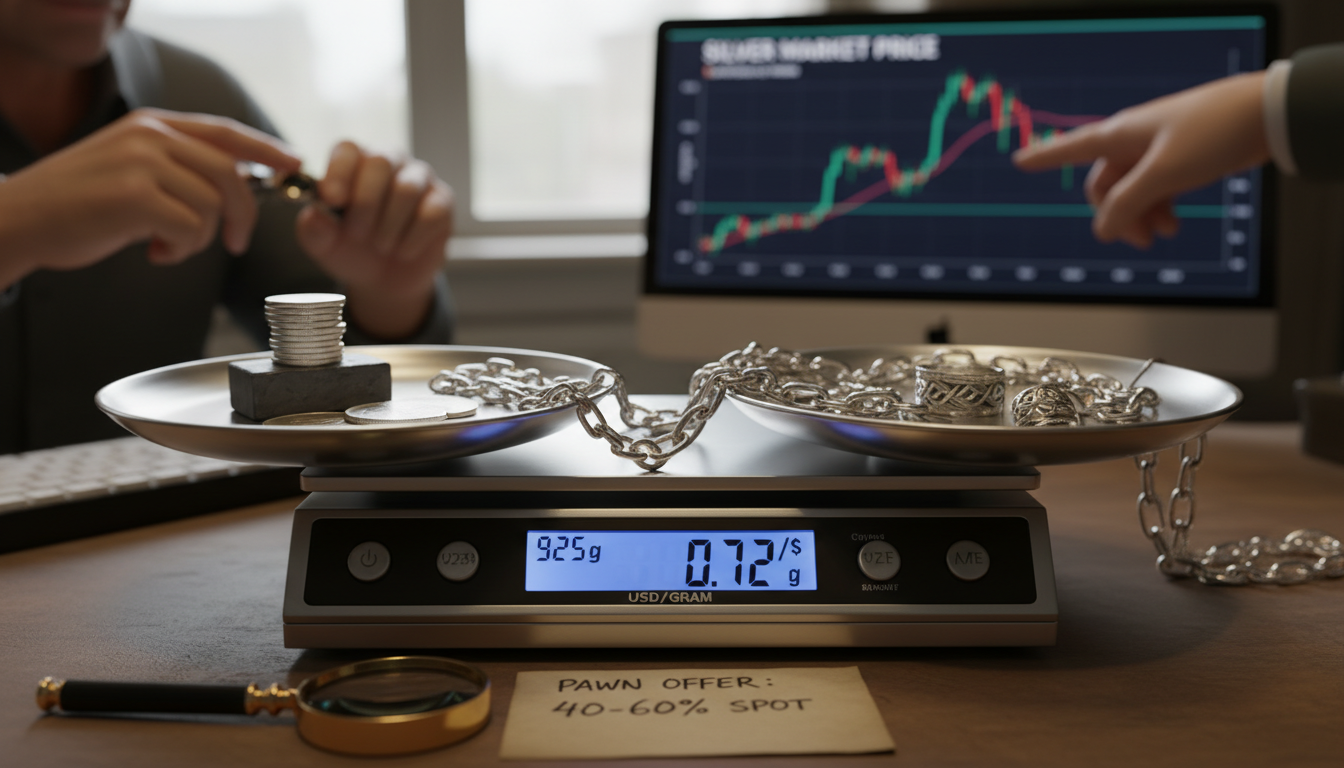
Conversely, dedicated jewelers and specialized coin shops may offer slightly better rates, frequently ranging from 60% to 80%. A jeweler has the advantage of potentially cleaning up a beautiful sterling silver ring or necklace and putting it straight into their estate display case to be sold at a premium. If the piece can be resold intact rather than bagged up and sent to a commercial refinery, the jeweler avoids the refinery's melting fees, allowing them to pass a slightly higher payout on to you. Understanding these overhead costs, refining fees, and profit margins will help you recognize when an offer is genuinely fair versus when it is a blatant rip-off.
Red Flags: Common Mistakes and How to Avoid Getting Ripped Off
Avoiding a bad deal means staying vigilant during the appraisal process and knowing exactly what predatory tactics look like. Red flags include weighing items out of sight, using uncertified scales, confusing weight measurements, or ignoring a piece’s antique premium.
When you sit down at the counter, you must watch the appraiser's hands and listen closely to their terminology. Keep an eye out for these massive red flags:
- Red Flag 1: The buyer weighs your silver out of sight or uses uncalibrated, uncertified scales. A reputable buyer will always weigh your items on a state-certified scale in plain view on the counter, allowing you to clearly read the digital output.
- Red Flag 2: The buyer attempts to confuse pennyweights (dwt), standard ounces, and Troy ounces to lower the payout. A common trick is to weigh in pennyweights (which makes the number look larger) but calculate the payout using a lower gram conversion rate to intentionally confuse the math.
- Red Flag 3: Dismissing the value of designer hallmarks or antique status, treating rare pieces merely as scrap metal. If you bring in a signed Tiffany & Co. sterling silver tray, it possesses a massive retail premium. A shady dealer will pretend it is only worth its melted scrap weight.
- Red Flag 4: Refusing to explain their price-per-gram calculation formula when making an offer. If a buyer just throws out a flat dollar amount (e.g., "I'll give you fifty bucks for the bag") and gets defensive when you ask to see the math, pack up your items and leave immediately.
Expert Tips: How to Weigh, Test, and Prepare Your Silver
Properly preparing your silver involves weighing it at home with a calibrated digital scale, identifying authentic maker’s hallmarks, and performing basic non-destructive authenticity tests like the magnet or ice test before visiting a buyer.
If you want to be treated like a professional, you need to prepare your items like one. Follow these steps to ensure you have the upper hand:
- Acquire the Right Tools: Purchase an inexpensive digital pocket scale online that accurately measures in grams. Weigh your items at home and write the totals down on a notepad before you leave the house.
- Hunt for Hallmarks: Grab a magnifying glass and look for authentic markings. You should see stamps that read ".925", "Sterling", "Ster", or, on older British pieces, specific hallmarks like the Lion Passant.
- Conduct Basic At-Home Testing: Perform the magnet test—real silver is non-magnetic, so if a strong rare-earth magnet sticks to your jewelry, it is merely silver-plated steel. You can also do the ice test; because silver is highly thermally conductive, placing an ice cube on a silver coin or flatware piece will cause the ice to melt incredibly rapidly.
- Preserve the Patina: Do not heavily clean or aggressively polish antique sterling flatware or vintage jewelry. While you might think you are making it look nicer, removing the natural dark patina can actually destroy its premium collector value.
The Future of Silver Pricing: Market Trends for 2026 and Beyond
Silver prices in 2026 are heavily influenced by rising industrial demand in the green energy sector, global supply chain constraints, and persistent macroeconomic inflation. These factors are currently pushing the baseline gram price upward, creating a highly favorable seller's market.
Unlike gold, which is primarily driven by inflation hedging and central bank reserves, silver is a highly functional industrial metal. Analyzing the projected industrial demand heading into 2026 shows massive consumption in green energy, specifically in the manufacturing of photovoltaic (solar) panels, electric vehicle (EV) batteries, and advanced electronics.
Because silver is the most electrically conductive metal on earth, there is currently no viable substitute for it in high-end tech manufacturing. In fact, according to an industry forecast reported by Nasdaq, the global silver market is heading for its sixth consecutive annual structural deficit in 2026. This means that global industrial and investment demand is continually outstripping total global mine supply.
Combined with inflation, fluctuating interest rates, and global supply chain shortages, this persistent deficit is expected to strongly support the baseline gram price. For sellers, this means that holding onto your sterling silver might yield even higher returns if market forecasts predict a sustained bull run, making timing your sale just as important as knowing the math.
Conclusion
To successfully navigate the market, you must arm yourself with the live sterling silver price per gram and your item's exact weight before initiating any transaction. By recognizing the distinct pricing models of pawn shops and jewelers, you can negotiate confidently and walk away from lowball offers.
Selling silver does not have to be an intimidating experience. When you take the time to weigh your items, calculate the melt value, and understand the economic forces driving the 2026 market, you eliminate the information gap that predatory buyers rely on. Treat your silver like the liquid financial asset it is, demand transparency from the people appraising it, and never be afraid to politely decline an offer that doesn't respect the math. Contact us today to optimize your silver selling strategy and secure the highest market payout.
How much is .925 sterling silver worth per gram today?
The exact value changes daily based on the global commodities market. To find today's value, check the live spot price of pure silver per gram and multiply it by 0.925.
Do pawn shops pay spot price for sterling silver?
No, pawn shops never pay the full spot price. They typically pay between 40% and 60% of the silver's melt value to account for their overhead and profit margins.
How do I calculate the melt value of my silver jewelry?
Weigh your jewelry in grams. Multiply the weight by 0.925 to find the pure silver content. Multiply that number by the current live spot price of pure silver per gram.
Is sterling silver worth more than pure silver?
No, pure silver (99.9%) is intrinsically worth more than sterling silver (92.5%) in terms of raw metal value. However, sterling silver jewelry can be worth more at retail due to craftsmanship, brand, or antique status.
What percentage of the silver market price will a jeweler pay?
Jewelers typically pay between 60% and 80% of the melt value for scrap silver. If the piece is in excellent condition and can be resold without melting, they may offer a higher percentage.
How many grams are in a Troy ounce of silver?
There are exactly 31.103 grams in a Troy ounce. It is vital to know this conversion, as silver is globally traded in Troy ounces but locally weighed in grams or pennyweights.
Does tarnished sterling silver lose its market value?
No, tarnish is just a surface reaction and does not reduce the silver content or the melt value of the item. In the case of antiques, a natural patina (tarnish) can actually increase collector appeal.
Can a pawn shop test my silver without damaging it?
Yes, reputable buyers use rare earth magnets, electronic precious metal verifiers, or specialized acid testing on a hidden scratch stone. Avoid buyers who want to aggressively file deep into the center of a visible piece of jewelry without your consent.
Tags
MOQ 925 sterling silver jewelry sets supplier
MOQ 925 sterling silver jewelry sets supplier
brass earrings hoops
brass earrings hoops
engraved urn pendant necklace OEM
engraved urn pendant necklace OEM
wholesale brass chain necklaces
wholesale brass chain necklaces
US market 925 sterling silver sets wholesaler
US market 925 sterling silver sets wholesaler
corporate gift 925 sterling silver sets bulk
corporate gift 925 sterling silver sets bulk
Recommended for you
OEM Manufacturing Options for 925 Silver Necklace Orders
Top custom engraved necklace Manufacturers and Suppliers
Eco-Friendly 925 Silver Rings: Sustainable Sourcing for Retailers
Wholesale stainless steel jewelry set manufacturer and supplier
Prdoucts Categories
Question you may concern
FAQs
Do you attend any jewelry fairs?
Yes, we participate in Hong Kong Jewelry Fair and Canton Fair twice a year, please contact the seller for the latest invitation.
What’s the shipment method?How long does it take for delivery?
Our product distributed to all over the world. Shipped by DHL/Fedex/ TNT/UPS takes 3-7 days,Epacket takes 7-15 days, China Post takes 15-30 days.
Products
Can you engrave my logo on the jewelry ?Do you supply OEM/ODM service?
Yes. Custom logo and OEM/ODM are both accepted.Our factory specializes in jewelry manufacturing for 25 years.We can produce jewelry by your sample, design, pictures, even by an idea.Please feel free to contact us for more details. Custom order process: Inquiry-Confirm products details-Pay mold fee -Confirm CAD draft-Quote-Initial payment-Produce mold & sample-Confirm Sample-Mass production-Balance payment-Shipment-Track shipment-delivery.
How can we guarantee quality?
Always a pre-production sample before mass production;
Always final Inspection before shipment;
Do you offer free sample for quality check?
Sample order is welcome, but sample fee need to be paid. It will be deducted when you place an bulk order.
You may also like
Brass Jewelry
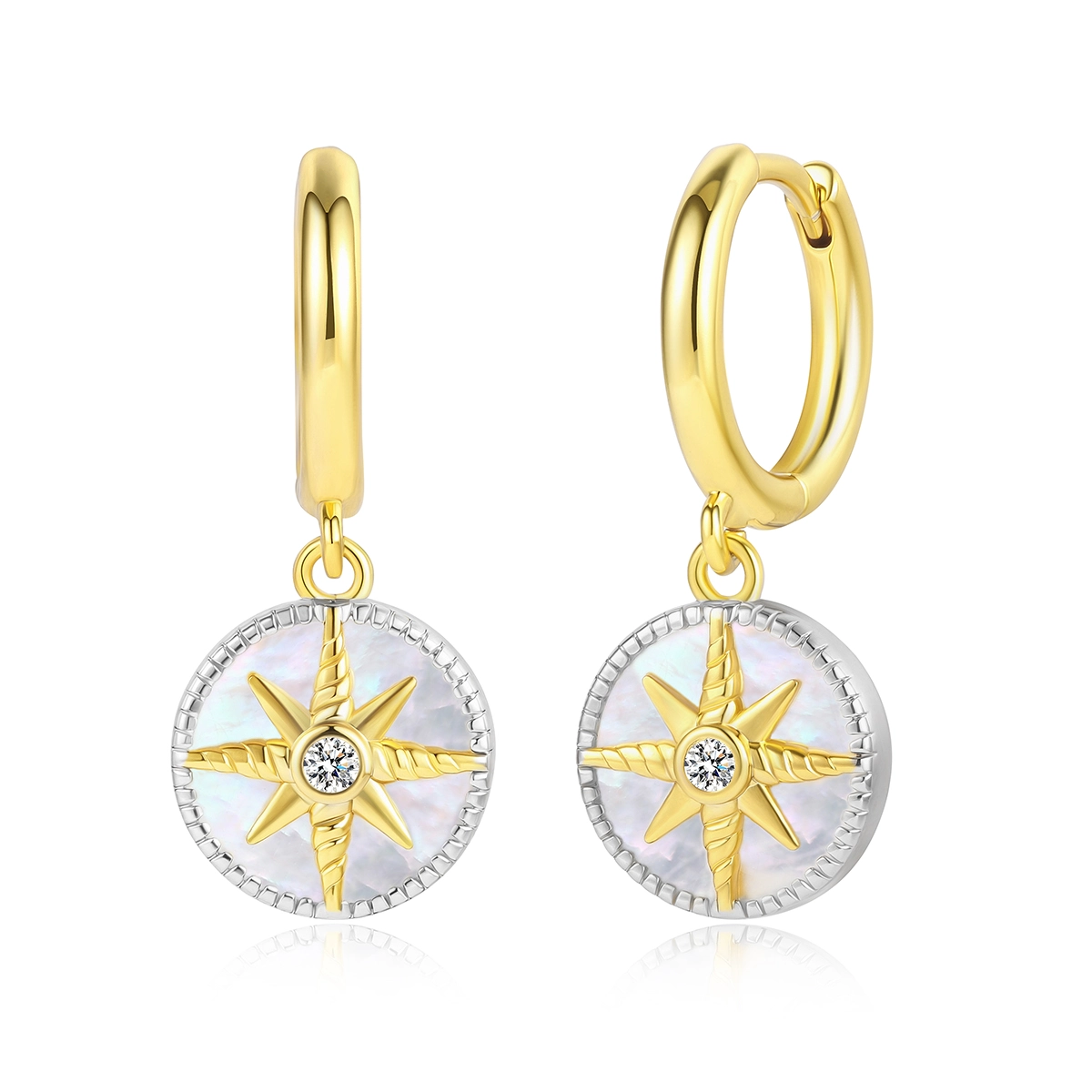
Brass Mother of Pearl Compass Huggie Drop Earrings | 14K 18K Gold Plated Hypoallergenic Jewelry
Read More
925 Silver Jewelry
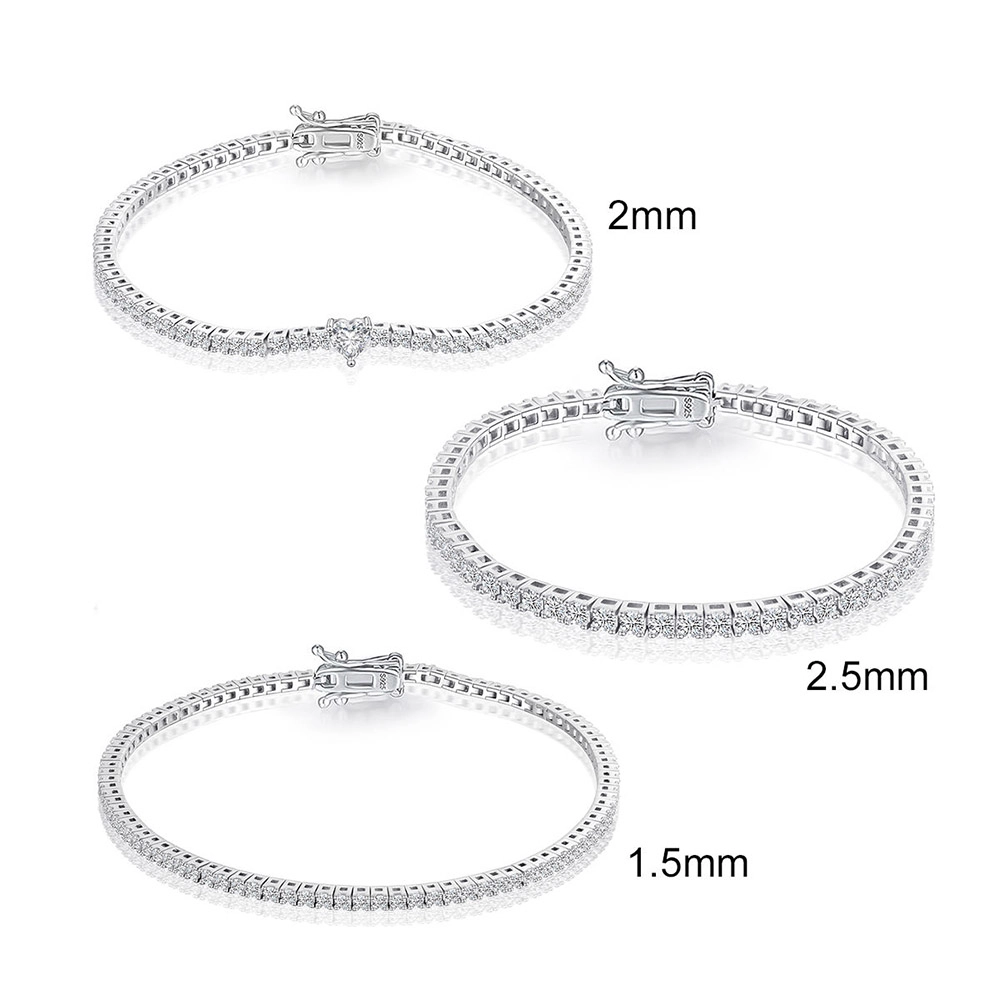
Customizable High-Quality Fashion 925 Sterling Silver AAA Cubic Zirconia Heart-Shaped Open Tennis Bracelet.
Read More
Brass Jewelry
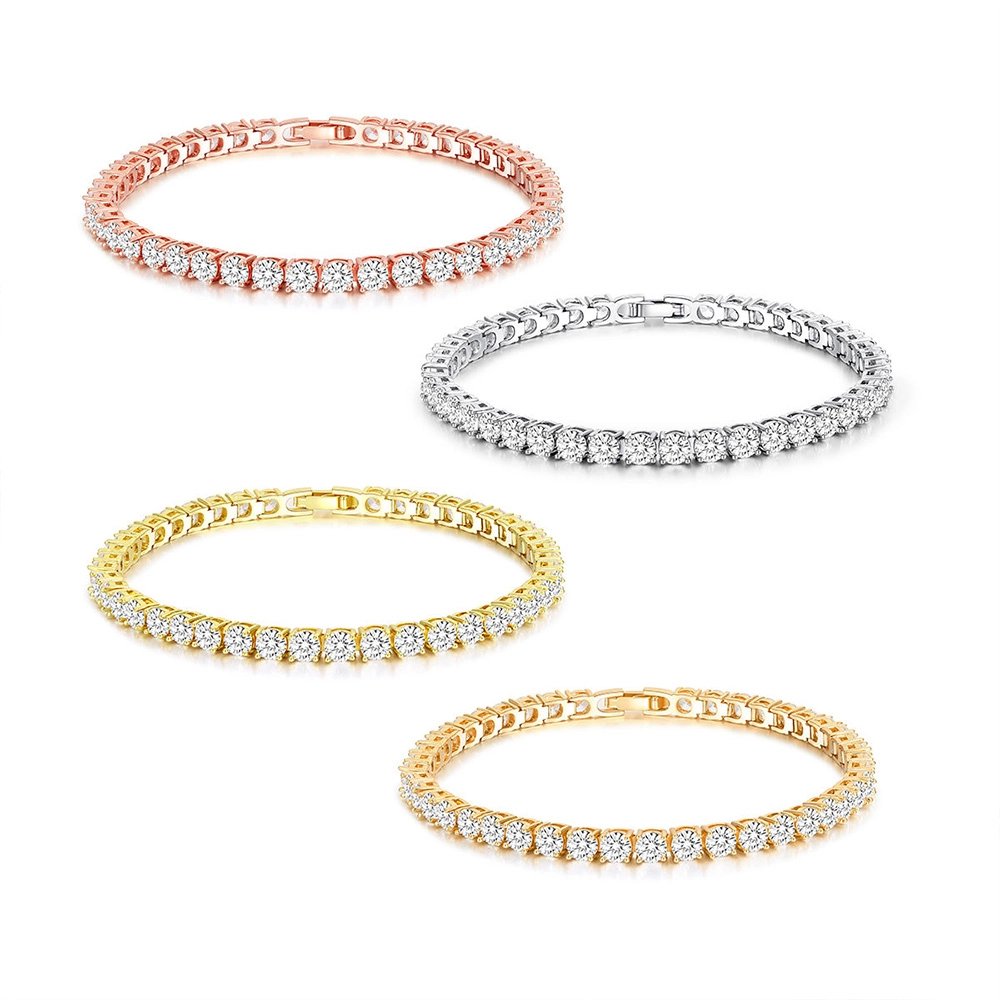
Customizable OEM ODM High-Quality Fashion Brass AAA Cubic Zirconia Classic Tennis Bracelet for Women Wholesale.
Read More
Get a Quote for Private Label Jewelry
We provide personalized jewelry customization services for clients worldwide.
Rest assured that your privacy is important to us, and all information provided will be handled with the utmost confidentiality.
By clicking 'Send Inquiry Now' I agree to ZHEFAN JEWELRY processing my personal data.
To see how to withdraw your consent, how to control your personal data and how we process it, please see our Privacy Policy and Terms of use.
From design to production, ZHEFAN JEWELRY offers a one-stop solution to help you enhance your brand value and market competitiveness.
Get A Quote
Contact
Tel: (+86) 188 1927 7817
© 2026 Zhefan Jewelry. All Rights Reserved.
Facebook
Instagram
YouTube
Whatsapp: +8618819277817