




Email: sales3@zhefanjewelry.com
Silver Jewelry Sourcing 101: Navigating MOQ Requirements and Professional Pricing Formulas (2026 Edition)
A comprehensive guide for brands on navigating the complexities of silver jewelry sourcing, from understanding factory-direct pricing formulas to negotiating MOQs and managing spot price risks.
- Introduction
- Key Takeaways: Mastering Silver Sourcing
- What Determines Silver Jewelry MOQ and Wholesale Pricing?
- Decoding MOQ: Per-SKU vs. Per-Order Requirements
- The Anatomy of a Wholesale Price: A Factory Breakdown
- Advanced Formulas: Calculating Landed Cost & Retail Markup
- Expert Tips: Negotiating Terms Without Sacrificing Quality
- Emerging Trends 2026: Sustainability and Tech
- Conclusion
- FAQ
- What is a standard MOQ for custom silver jewelry manufacturing?
- How is the wholesale price of silver jewelry calculated?
- Can I negotiate MOQ with jewelry manufacturers?
- What is the difference between per-SKU and per-order MOQ?
- How does the daily silver spot price affect wholesale costs?
- What is a typical markup from wholesale to retail for silver rings?
- Are mold fees refundable in silver jewelry manufacturing?
- How do plating costs impact the final price of silver jewelry?
Introduction
Sourcing sterling silver is fundamentally different from sourcing fashion jewelry made of brass or alloy. While base metals have stable, low costs, silver is a publicly traded commodity with a fluctuating daily value. For jewelry brands, this means your wholesale silver jewelry pricing model must be dynamic, not static. Whether you are a startup navigating a low MOQ private label jewelry strategy or an established retailer looking to optimize margins, understanding the economics of the supply chain is non-negotiable.
This guide breaks down the 2026 standards for manufacturing costs, minimum order quantities (MOQs), and the professional formulas required to calculate your true landed cost.
Key Takeaways: Mastering Silver Sourcing
Silver sourcing is the strategic balance between amortizing fixed setup costs (MOQ) and managing variable commodity risks (Spot Price). Unlike fast fashion, where labor is the primary cost driver, silver jewelry pricing is a hybrid of skilled craftsmanship and precious metal market value.
- Quick Summary: Balancing unit price against inventory risk is the core challenge of silver sourcing.
- MOQ Reality: Minimums exist to amortize setup costs like 3D CAD, molding, and casting trees.
- Pricing Fluctuations: Unlike fashion jewelry, silver pricing is tied directly to daily commodity markets (Spot Price).
What Determines Silver Jewelry MOQ and Wholesale Pricing?
The primary drivers of manufacturing constraints are the "Economies of Scale" regarding labor efficiency and the "Material Cost" derived from the weight of Ag925. Manufacturers set Minimum Order Quantities (MOQs) to ensure the labor time for casting, filing, and polishing a batch covers the overhead of setting up the production line.
Understanding this relationship is key to negotiation:
- The MOQ Threshold: A factory cannot efficiently cast a single ring. They need to fill a "wax tree" (a central sprue with many wax models attached) to make the casting process viable. This physical constraint dictates the minimums.
- Weight vs. Complexity: Heavier pieces often have lower MOQs (e.g., 20 units) because the high material value ensures the factory meets their profit targets quickly. Conversely, intricate, lightweight pieces require higher MOQs (e.g., 50-100 units) to cover the intense labor required for finishing.
- Labor Intensity: A plain band is cheap to finish, while a pavé-set ring requires significant bench time per unit, impacting the final wholesale cost.
Decoding MOQ: Per-SKU vs. Per-Order Requirements
Minimum Order Quantity (MOQ) refers to the lowest number of units a supplier is willing to produce, defined either per specific design (SKU) or per total purchase order. Startups often struggle here, but understanding the difference allows for a low MOQ private label jewelry strategy that scales.
Here is how to navigate these requirements:
- Standard MOQ Definitions: The industry standard for mass production typically hovers between 30 and 50 pieces per design. This allows the factory to process a full casting tree effectively.
- Flexible MOQ Tactics: Smart brands utilize "Family Molds." For example, if you have a ring shank design that accommodates different stone colors, you can often aggregate the MOQ (e.g., 10 rings with Blue Topaz, 10 with Citrine, 10 with Amethyst) to meet a 30-piece requirement.
- The "Sample Order" Loophole: You can often negotiate lower quantities (5-10 pieces) for an initial "Quality Assurance" (QA) run. Be prepared to pay a surcharge (20-50%) for these samples, which is a worthy investment to verify quality before bulk commitment.
- MOQ for Packaging: efficient sourcing isn't just about the metal. Branded jewelry boxes often have MOQs of 500+ units. A common strategy is to order packaging in bulk for the year while ordering jewelry in smaller quarterly batches.
The Anatomy of a Wholesale Price: A Factory Breakdown
A professional jewelry manufacturing cost breakdown consists of four distinct variables: raw silver weight, labor intensity, stone setting, and surface plating. To audit a quote effectively, you must ask your supplier to itemize these costs rather than accepting a single "all-in" price.
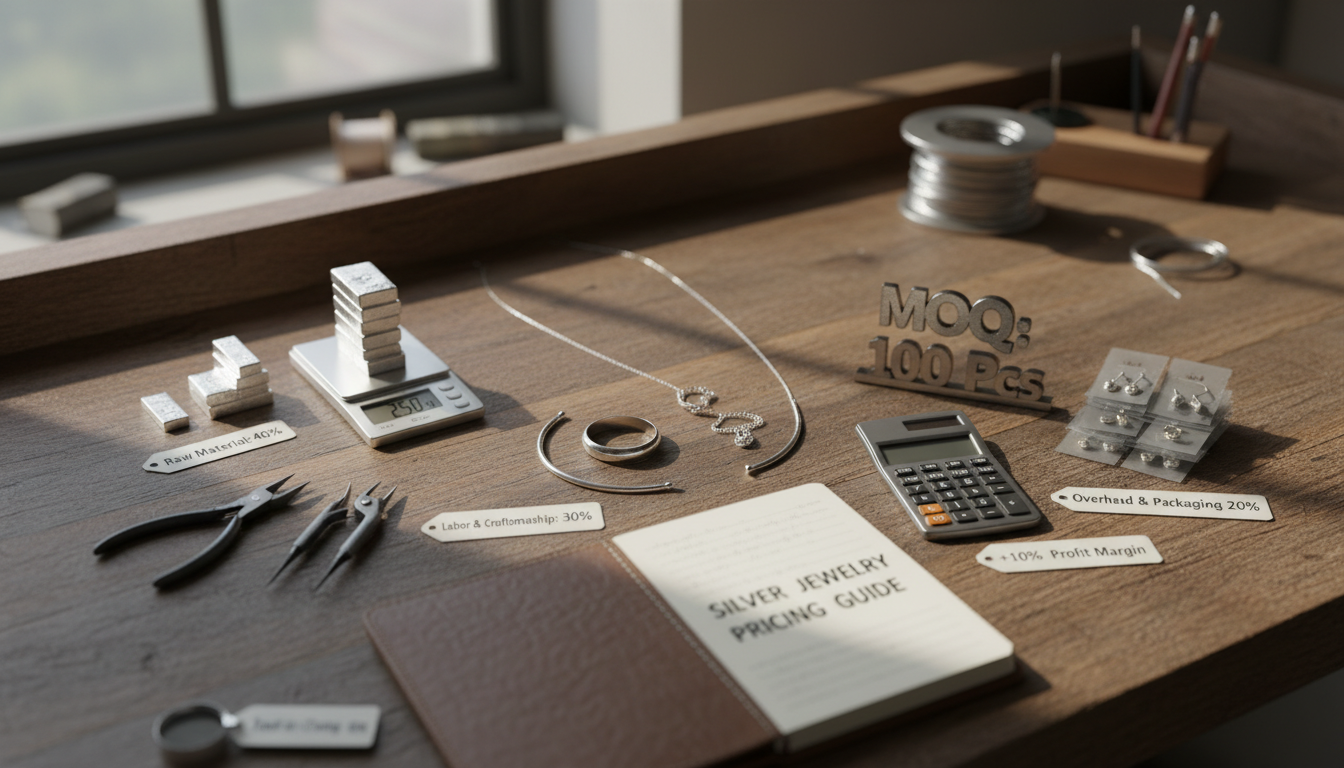
Using a transparent pricing model protects you from overpaying:
- Material Cost (Variable): This is calculated as
(Silver Weight x Daily Spot Price) + Wastage. Manufacturers typically add 10-15% for "wastage" or "loss"—silver that turns to dust during filing and polishing and cannot be immediately recovered. - Labor Cost (Fixed per Unit): This fee covers the bench time for filing, mounting, setting stones, and polishing. It remains constant regardless of the silver price.
- Plating Surcharges: The cost difference between finishes is significant. Standard Rhodium prevents tarnish, while Micron Gold Vermeil (2.5 microns of 18k gold) is an expensive, durable layering heavily regulated by US trade standards. According to Wikipedia, sterling silver is an alloy of silver containing 92.5% by weight of silver and 7.5% by weight of other metals, usually copper, which makes plating essential for tarnish resistance in modern markets.
- The Formula:
(Silver Cost + Labor + Stone Cost + Plating) x Factory Margin = Ex-Works Price.
Advanced Formulas: Calculating Landed Cost & Retail Markup
Landed Cost represents the total price of a product once it has arrived at your warehouse, inclusive of the factory price, logistics, insurance, and government tariffs. Ignoring this metric is the most common reason for margin erosion in jewelry businesses.
To ensure profitability, you must master calculating landed cost for jewelry and apply the correct markups:
- Beyond the Factory Gate: The "Ex-Works" price is merely what you pay to take the goods off the factory floor. It does not reflect your true cost.
- The Landed Cost Formula:
Ex-Works Price + Shipping + Insurance + Customs Duties (Tariffs) = True Cost of Goods Sold (COGS).- Note: Silver jewelry tariffs vary wildly by country of origin (e.g., sourcing from Thailand vs. Italy vs. China). Always check the HTS codes for your region.
- Recommended Markup Multipliers: Standard retail multipliers for sterling silver range from 3x to 5x the Landed Cost. This covers marketing, operations, and returns. Luxury brands often push this to 8x or 10x.
- Hedging Strategy: This involves silver spot price hedging for brands. When the market dips, experienced buyers "lock in" the silver rate with their factory for future orders, stabilizing their COGS even if production takes 8 weeks.
Expert Tips: Negotiating Terms Without Sacrificing Quality
Successful negotiation relies on "Annual Volume" leverage, where you commit to a projected yearly spend to secure better terms on individual small orders. Factories prefer steady, long-term partners over one-off buyers.
- The "Annual Volume" Leverage: Instead of negotiating hard on a 50-piece order, show your supplier your 12-month roadmap. They are often willing to lower MOQs if they see a trajectory for growth.
- Mold Fee Waivers: Mold creation is a setup cost (usually $30-$100). A standard professional agreement is to ask for a refund of the mold fee once you have ordered a specific quantity (e.g., 200 units) of that SKU.
- Payment Terms: Move away from 100% upfront payments. The industry standard for verified buyers is a 30% deposit to start production (to cover raw silver purchase) and the remaining 70% paid before shipping.
- Red Flag Check: Avoid suppliers who quote prices significantly below the spot market value. This is a primary indicator of under-karating (using less than 92.5% silver) or base metal substitution.
Emerging Trends 2026: Sustainability and Tech
The dominant trends for 2026 are the premiumization of certified recycled silver and the integration of blockchain tracking for supply chain transparency. Consumers are increasingly demanding proof of provenance.
- The Recycled Silver Premium: Utilizing certified recycled silver (often verified by bodies like the Responsible Jewellery Council) may incur a slight premium but allows for powerful marketing claims. As detailed by the Responsible Jewellery Council, Chain of Custody (CoC) certification is critical for validating that precious metals are responsibly sourced and fully traceable.
- 3D Printing Direct-to-Cast: New resin technologies are allowing for "Direct-to-Cast" workflows that lower the barrier for complex organic shapes, effectively reducing the need for expensive master molds for small batches.
- Transparency Ledgers: Blockchain technology is moving from a buzzword to a requirement for luxury tier sourcing, providing an immutable ledger of the silver's journey from refinery to retail.
Conclusion
Successful sourcing requires viewing MOQ and Price as a sliding scale—flexibility in one usually demands concession in the other. By understanding the manufacturing cost breakdown and utilizing spot price hedging, you can protect your margins while scaling your inventory. Always calculate your "Landed Cost" before agreeing to an Ex-Works price to ensure profitability.
Contact us today to optimize your wholesale silver jewelry pricing strategy.
FAQ
What is a standard MOQ for custom silver jewelry manufacturing?
A standard MOQ typically ranges from 30 to 50 pieces per design (SKU) for casting. However, this can go as low as 10-20 pieces for high-value or heavy silver items, while simple items requiring stamping or laser engraving often require higher volume to be cost-effective.
How is the wholesale price of silver jewelry calculated?
The wholesale price combines the current market price of raw silver (plus wastage), labor costs for casting/finishing, stone costs, and plating fees. The professional formula is: (Metal Weight x Market Rate) + Labor + Stones + Plating + Factory Margin.
Can I negotiate MOQ with jewelry manufacturers?
Yes, especially if you offer to pay higher mold fees upfront. Additionally, grouping multiple SKUs that use the same casting tree can help lower per-design minimums. Committing to a larger annual contract often allows for smaller batch shipments.
What is the difference between per-SKU and per-order MOQ?
Per-SKU MOQ is the minimum quantity for a specific design (e.g., 50 rings of Style A). Per-Order MOQ is the total monetary value or total piece count required to process a shipment (e.g., $1000 minimum total spend).
How does the daily silver spot price affect wholesale costs?
Silver is a commodity; if the market price spikes, your unit cost increases immediately unless you have a locked-in contract. Factories typically fix the silver rate on the day the deposit is paid to protect themselves from volatility.
What is a typical markup from wholesale to retail for silver rings?
The industry standard is 3x to 5x the Landed Cost (COGS). Designer or branded jewelry may command 6x to 10x markups, while lower markups (2x-2.5x) are common for drop-shipping or high-volume discount retailers.
Are mold fees refundable in silver jewelry manufacturing?
Many factories offer to refund the mold fee (approx $30-$100) once a specific quantity (e.g., 200 pieces) of that design has been ordered. It is crucial to always clarify this policy in the initial supplier agreement.
How do plating costs impact the final price of silver jewelry?
Standard Rhodium or Gold Flash is relatively inexpensive. However, Heavy Gold Vermeil (2.5 microns) can significantly increase cost, sometimes doubling the labor/finish portion of the price. E-coating is a cheaper alternative for anti-tarnish protection.
Tags
cremation urn pendant wholesale
cremation urn pendant wholesale
MOQ 925 sterling silver jewelry sets supplier
MOQ 925 sterling silver jewelry sets supplier
women's brass rings
women's brass rings
OEM urn pendant jewelry supplier
OEM urn pendant jewelry supplier
EU compliant 925 sterling silver jewelry exporter
EU compliant 925 sterling silver jewelry exporter
custom urn necklace manufacturer
custom urn necklace manufacturer
Recommended for you
How to Vet 925 Silver Ring Manufacturers and Suppliers
Comparing 925 Silver Necklace Suppliers: China vs India vs Italy
Top 10 stainless steel huggie earrings Manufacturers and Supplier Brands in China
OEM Manufacturing Options for 925 Silver Necklace Orders
Prdoucts Categories
Question you may concern
Products
What is your minimum order quantity?
We offer low MOQ from 2 to 30 depending on models. Send your favor model to get details from Trade Manager.
How can we guarantee quality?
Always a pre-production sample before mass production;
Always final Inspection before shipment;
What’s the shipment method? How long does it take for delivery?
Our product distributed to all over the world. Shipped by DHL / Fedex / TNT / UPS takes 3-7 days, Epacket takes 7-15 days, China Post takes 15-30 days.
How long will the plating color last?
Generally 6 month for Water Plated color , 1 - 2 years for vacuum plated color if in proper wearing.
FAQs
Do you attend any jewelry fairs?
Yes, we participate in Hong Kong Jewelry Fair and Canton Fair twice a year, please contact the seller for the latest invitation.
You may also like
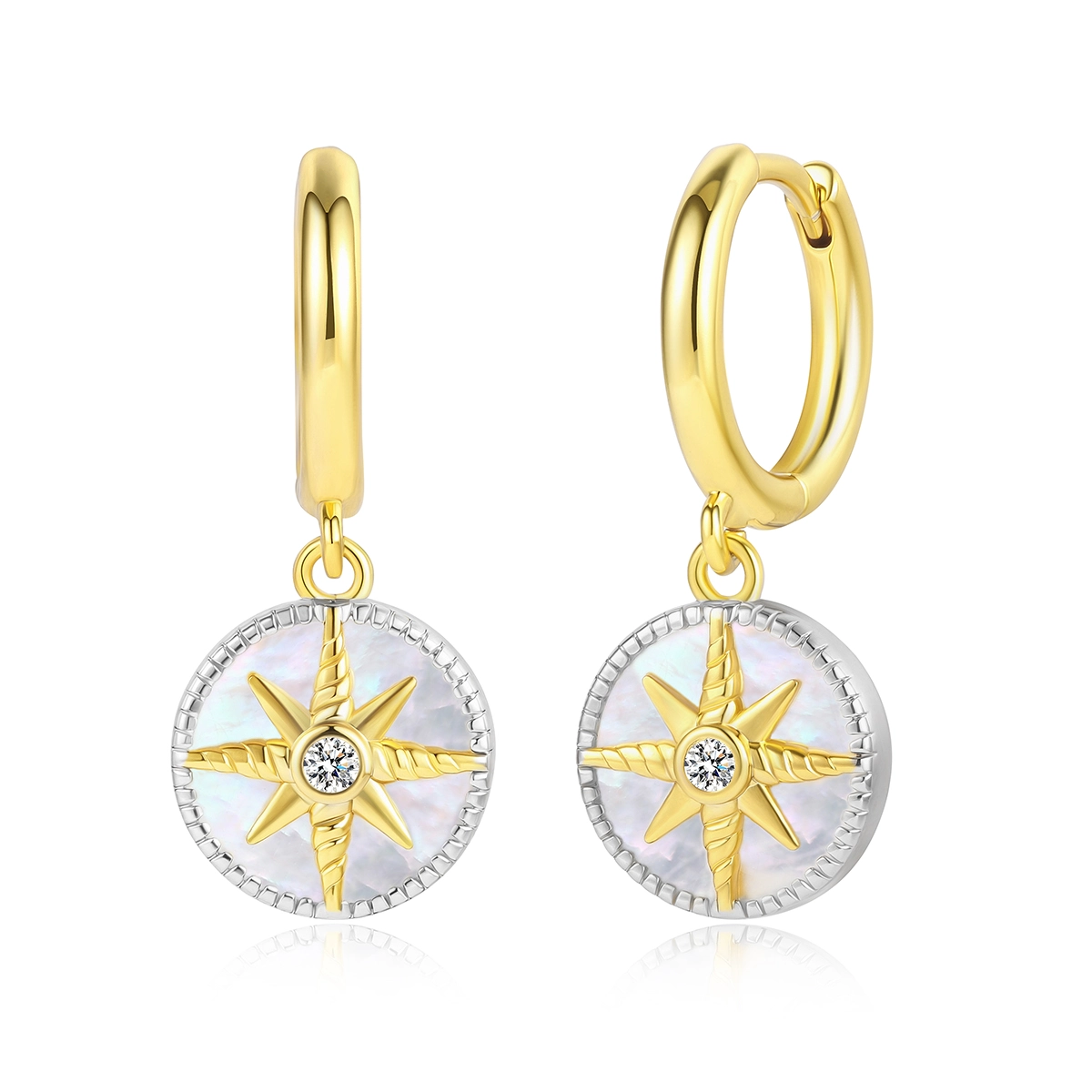
Brass Jewelry
Brass Mother of Pearl Compass Huggie Drop Earrings | 14K 18K Gold Plated Hypoallergenic Jewelry
Read More
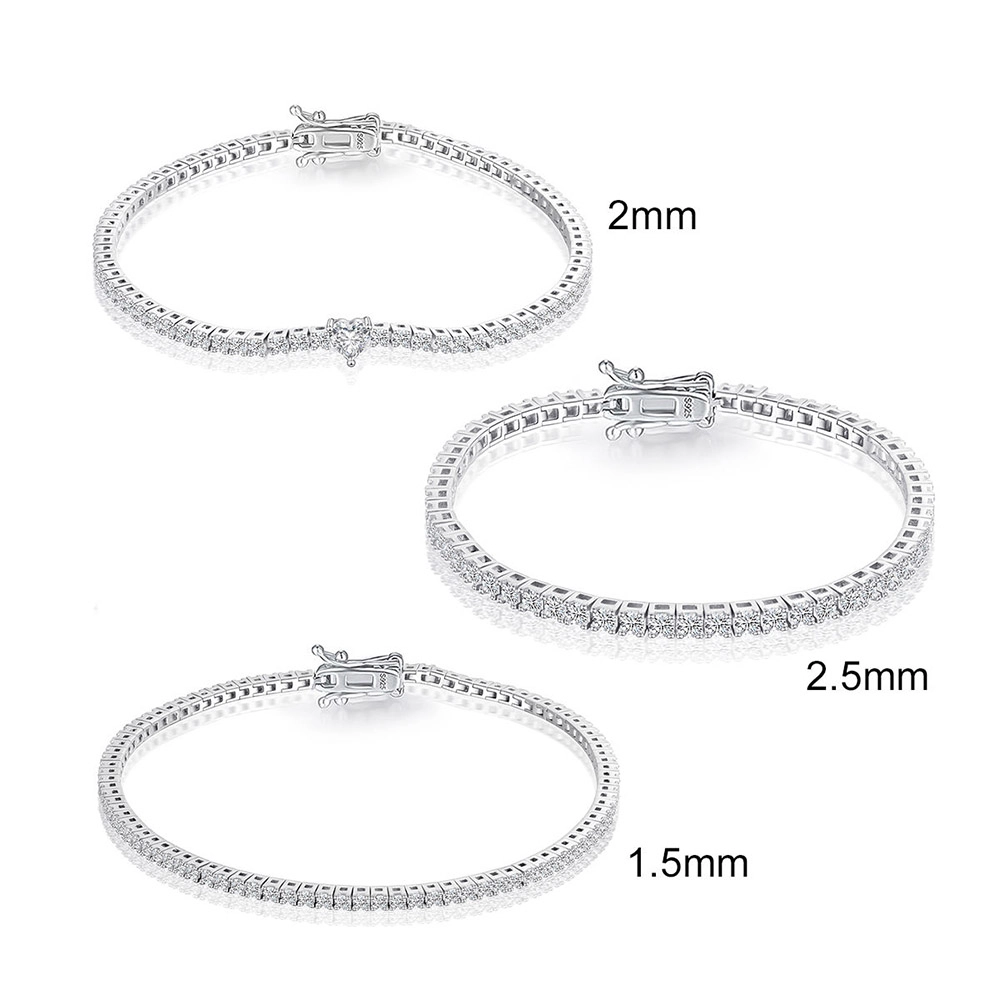
925 Silver Jewelry
Customizable High-Quality Fashion 925 Sterling Silver AAA Cubic Zirconia Heart-Shaped Open Tennis Bracelet.
Read More
Brass Jewelry
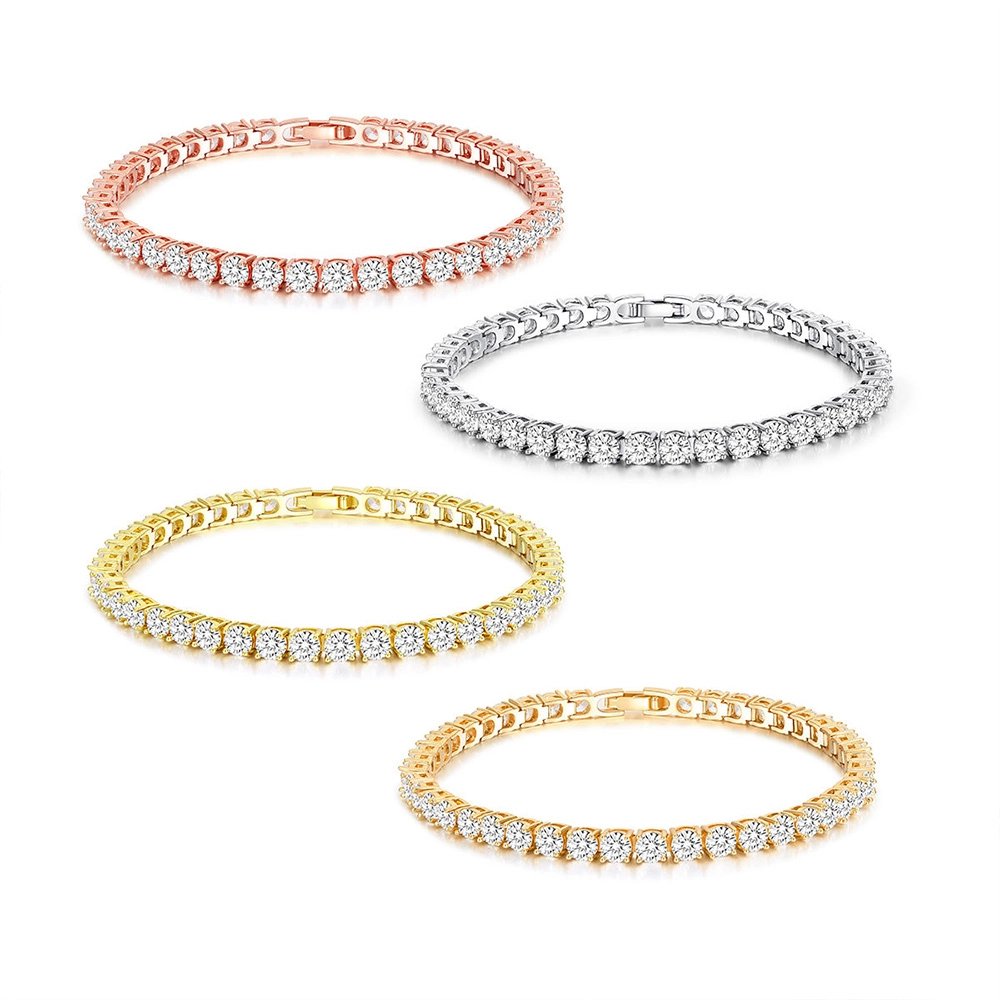
Customizable OEM ODM High-Quality Fashion Brass AAA Cubic Zirconia Classic Tennis Bracelet for Women Wholesale.
Read More
Get a Quote for Private Label Jewelry
We provide personalized jewelry customization services for clients worldwide.
Rest assured that your privacy is important to us, and all information provided will be handled with the utmost confidentiality.
By clicking 'Send Inquiry Now' I agree to ZHEFAN JEWELRY processing my personal data.
To see how to withdraw your consent, how to control your personal data and how we process it, please see our Privacy Policy and Terms of use.
From design to production, ZHEFAN JEWELRY offers a one-stop solution to help you enhance your brand value and market competitiveness.
Get A Quote
Contact
Tel: (+86) 188 1927 7817
© 2026 Zhefan Jewelry. All Rights Reserved.
Facebook
Instagram
YouTube
Whatsapp: +8618819277817