





Email: sales3@zhefanjewelry.com
Beyond the Stamp: How to Verify Rare and Antique Sterling Silver Hallmarks Without an Expert
Discover how to authenticate antique sterling silver by decoding traditional hallmarks, assay office marks, and date letters without needing a professional appraiser.
- What Are Sterling Silver Hallmarks and How Do You Verify Them?
- Key Takeaways for Quick Silver Verification
- The Anatomy of a Traditional Silver Hallmark
- Step-by-Step: How to Verify Sterling Silver Hallmarks Like a Pro
- Spotting the Fakes: Sterling Silver vs. Silverplate
- Common Mistakes When Identifying Antique Silver Marks
- Modern Tools for At-Home Verification (2026 and Beyond)
- Conclusion
- What does 925 mean on silver?
- How can you tell if silver is real without a hallmark?
- What does EPNS mean on silver?
- What is the Lion Passant mark?
- How do you read silver date letters?
- What are pseudo-hallmarks?
- Why does my silver just say 'Sterling'?
- Does silverplate have hallmarks?
What Are Sterling Silver Hallmarks and How Do You Verify Them?
Sterling silver hallmarks are official stamps applied to precious metal items to certify their purity, origin, and manufacturer. To verify them, you must identify a specific series of symbols, including a standard purity mark, city mark, date letter, and maker's mark.
When it comes to identifying antique silver marks, the presence of these miniature stamps provides a comprehensive, verifiable background of the item's creation. Silver is a naturally soft metal, so silversmiths historically alloyed it with copper to provide durability. To prevent fraud, regulatory bodies demanded that artisans submit their wares for independent testing. As reported by Wikipedia's guide on Silver hallmarks, these stamps offer a wealth of information about a piece through a strictly regulated series of applied punches. Verifying them entails breaking down the hallmark sequence into manageable pieces:
- The Standard Purity Mark: This guarantees the percentage of precious metal used in the piece.
- The Assay Office Mark: This dictates the exact geographical location where the metal was tested and certified.
- The Date Letter: This alphabetical code corresponds to a specific year of manufacture.
- The Maker’s Mark: This acts as the artist's or manufacturing firm's unique signature.
Key Takeaways for Quick Silver Verification
Quick silver verification requires checking for a standard purity mark, recognizing silverplate abbreviations, utilizing magnification tools, and cross-referencing findings with reputable databases. This structured approach helps collectors avoid counterfeits and accurately appraise their antique items on the go.
Whether you are browsing a local estate sale or examining a family heirloom, having a rapid mental checklist is crucial for assessing silverplate vs sterling silver. Follow these key takeaways to streamline your verification process:
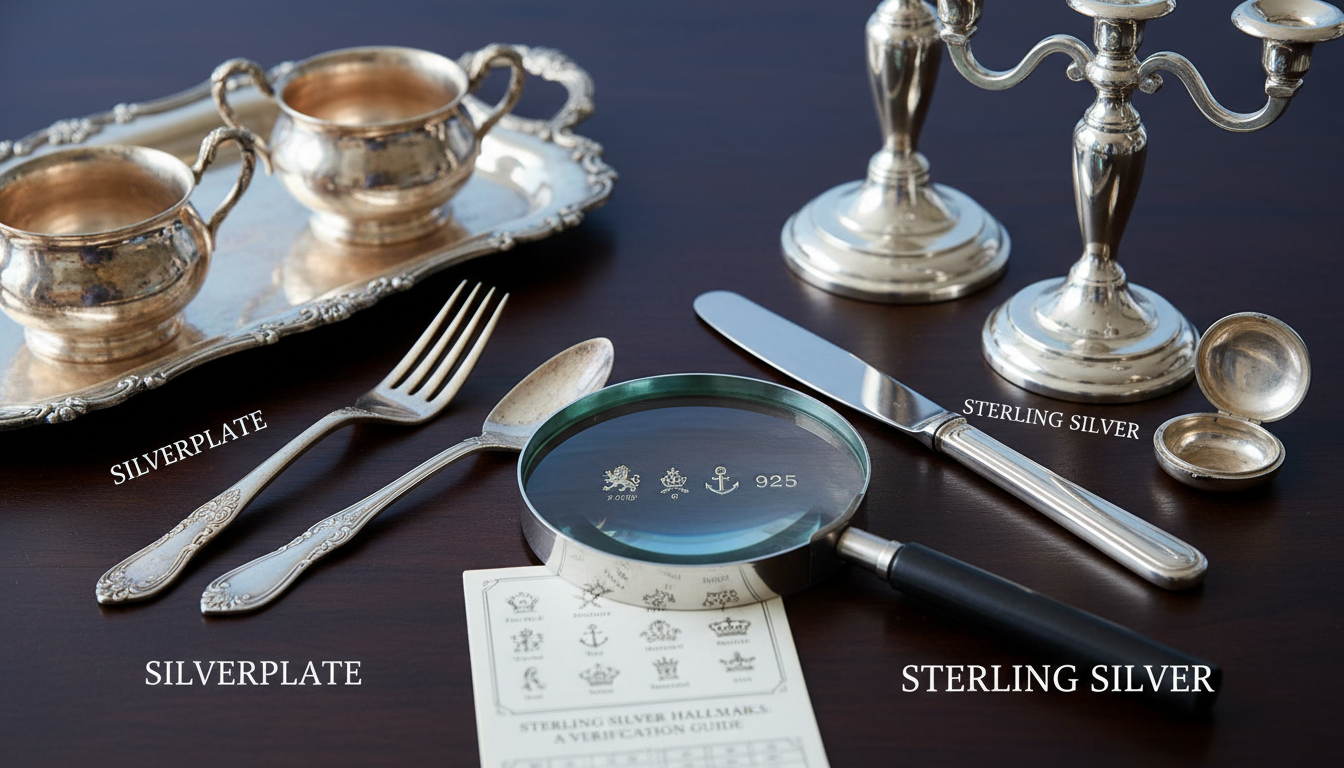
- Find the Purity Mark First: Always look for a standard purity mark before evaluating anything else. Stamps such as "925", "Sterling", or the historic British Lion Passant confirm the piece is genuinely solid silver.
- Identify Silverplate Quickly: Understand that stamps reading "EPNS" (Electroplated Nickel Silver) or "EPC" (Electroplate on Copper) indicate silver-plated items, not solid sterling.
- Deploy Magnification: Use magnification to your advantage. A 10x jeweler's loupe or a smartphone macro lens attachment will allow you to read worn, rubbed, or microscopic antique marks clearly.
- Cross-Reference Data Continuously: Always cross-reference the maker's initials and date letters with authoritative online silver mark databases to ensure the age aligns with the style of the piece.
The Anatomy of a Traditional Silver Hallmark
A traditional silver hallmark consists of five core elements: the standard mark, the city or assay office mark, the date letter, the maker’s mark, and occasionally a historical duty mark. These components collectively serve as a historical birth certificate for the item.
To thoroughly comprehend sterling silver purity symbols, one must understand the anatomy of the traditional British assay system, which laid the groundwork for global silver standardization.
- The Standard Mark: This symbol indicates the millesimal fineness. For instance, the number 925 represents sterling (92.5% silver), while 800 represents coin silver. Historically, the Lion Passant served as this guarantee in England.
- The City or Assay Office Mark: This stamp shows exactly where the piece was evaluated. Prominent British assay office marks include the Leopard's Head for London, the Anchor for Birmingham, and the Crown for Sheffield, as reported by the London Assay Office.
- The Date Letter: This is an alphabetical stamp denoting the specific year of hallmarking. The system cycles through different font styles (uppercase, lowercase, Gothic) and background shield shapes to prevent duplication over the centuries.
- The Maker's Mark: Usually featuring the initials or registered symbol of the silversmith, this mark traces the item back to the specific manufacturing company.
- The Duty Mark (Historical): Used primarily in Britain between 1784 and 1890, this sovereign's head stamp proved that the manufacturer had paid the mandatory taxes to the Crown.
Step-by-Step: How to Verify Sterling Silver Hallmarks Like a Pro
To verify hallmarks like a pro, you must gently clean the item, inspect it under magnification, isolate the purity mark, identify the country of origin, and match the date and maker marks to an online index. This ensures accurate authentication without causing damage.
Executing a flawless verification workflow means treating the antique piece with respect while extracting the maximum amount of visual data.
- Step 1: Clean the Area: Gently wipe the marked area with a soft, non-abrasive polishing cloth. This removes surface tarnish and reveals recessed hallmark details without causing structural abrasion.
- Step 2: Inspect the Stamps: Inspect the stamps closely using a jeweler's loupe or your smartphone's macro camera setting. Good lighting is essential here to catch the subtle contours of worn stamps.
- Step 3: Isolate Purity: Isolate the standard purity mark immediately. If you find "925" or a Lion Passant, you can proceed; if you see plate marks, you can rule out solid silver.
- Step 4: Identify Origin: Identify the country of origin by analyzing the assay office symbol or national emblem. A Thistle means Scotland, while a Minerva head points to France.
- Step 5: Match the Data: Match the maker's mark and date letter against an authoritative online index to pinpoint the exact year and creator.
Spotting the Fakes: Sterling Silver vs. Silverplate
Spotting the difference between sterling silver and silverplate requires looking for specific abbreviations like EPNS, recognizing deceptive pseudo-marks, and avoiding unreliable magnetic or acid tests. Solid sterling possesses recognized purity hallmarks, whereas silverplate simply features superficial maker stamps.
The battle of silverplate vs sterling silver is where many novice buyers lose money. As reported by The Silver Society, 19th-century manufacturers frequently applied marks to electroplated items that simulated genuine hallmarks to make them look more prestigious.
- Learn the Abbreviations: Memorize the plated indicators. "EPNS" (Electroplated Nickel Silver), "EPBM" (Electroplated Britannia Metal), and "A1" are absolute guarantees that the item is a base metal merely coated in silver.
- Watch Out for Pseudo-marks: Historically, American and provincial silversmiths used pseudo-marks to mimic British hallmarks. While sometimes found on real coin silver, they were often used to give cheap goods a false sense of British prestige, easily confusing beginners.
- Beware of the Magnetic Test: While solid silver is definitively non-magnetic, many base metals used beneath silverplate (like copper or brass) are also non-magnetic. Therefore, a magnet failing to stick does not prove the item is solid sterling.
- Avoid Acid Testing on Rare Antiques: Scratching an item and applying nitric acid can permanently scar and devalue a historical piece. You should always prioritize visual hallmark verification.
Common Mistakes When Identifying Antique Silver Marks
Common identification mistakes include confusing pattern numbers with purity marks, assuming unmarked items are fake, misinterpreting worn date letters, and completely overlooking foreign import marks. Avoiding these errors prevents the accidental discarding of highly valuable, authentic antique silver.
Even seasoned collectors can fall victim to rapid misinterpretations if they rush the appraisal process. When authenticating your collection, be mindful to avoid these frequent pitfalls:
- Confusing Pattern Numbers with Purity: It is incredibly common to mistake a manufacturer's model or pattern number (e.g., "1234" or "715") for a purity mark. Always look for the specific "925" or "800" fineness identifiers.
- Assuming Unmarked Means Fake: Assuming that an item without a hallmark is automatically a counterfeit is a costly error. Many early American coin silver pieces, crafted before standardized national assaying, only feature a simple maker's stamp.
- Misinterpreting Date Letters: Reading silver date letters incorrectly is notoriously easy if you fail to check the background shield shape. A lowercase "a" in a square shield represents a vastly different century than a lowercase "a" in a round shield.
- Overlooking Import Marks: Collectors often overlook foreign import marks, which look significantly different from standard domestic assay marks and can mistakenly be dismissed as pseudo-marks or silverplate stamps.
Modern Tools for At-Home Verification (2026 and Beyond)
Modern at-home verification relies on smartphone macro lenses, AI-driven reverse image search, and digital precision scales. These advanced technologies allow amateur collectors to digitally enlarge, cross-reference, and weigh silver pieces with the exact accuracy of a professional appraiser.
The antique trade has evolved, and the barrier to entry for verifying rare silver has never been lower thanks to consumer technology.
- Smartphone Macro Lenses: Inexpensive clip-on macro lenses allow you to photograph and digitally enlarge microscopic hallmarks. This makes it far easier to research obscure stamps without straining your eyes.
- Reverse Image Search: Utilizing AI-driven visual search tools enables you to instantly match worn or obscure maker's marks against global antique databases, saving hours of manual catalog browsing.
- Digital Calipers and Precision Scales: Weighing and measuring items allows you to check for specific density discrepancies. Counterfeit sterling silver often uses base metals that either weigh too much or too little compared to genuine silver of the same volume.
Conclusion
Verifying rare and antique sterling silver hallmarks requires a keen eye, a basic understanding of international assay systems, and the right modern reference tools. By mastering these visual identification techniques, collectors can confidently authenticate valuable pieces without relying on experts.
- Decode with Confidence: By learning to decode complex purity symbols, date letters, and historic British assay office marks, you can confidently distinguish valuable solid sterling from common silverplate.
- Preserve History: Relying on visual hallmark identification eliminates the need for destructive testing methods like acid scratching, thereby preserving the financial and historical value of the antique.
- Leverage Technology: Combining traditional knowledge with modern tools like macro photography ensures that you can accurately appraise finds anywhere, from auction houses to local flea markets.
Contact us today to optimize your antique silver collection and appraisal strategy.
What does 925 mean on silver?
The number 925 is a millesimal fineness mark. It indicates that the metal is made of 92.5% pure silver and 7.5% alloy (usually copper). This specific ratio is the globally recognized international standard for sterling silver, providing the perfect balance of brilliant luster and structural durability.
How can you tell if silver is real without a hallmark?
You can perform the ice test; since silver conducts heat rapidly, it will begin melting a piece of ice almost instantly upon contact. You can also use a strong neodymium magnet; real silver is not magnetic and will not react. However, professional testing (like non-destructive XRF scanning) is the absolute safest way to verify unmarked antiques without causing physical damage.
What does EPNS mean on silver?
EPNS stands for Electroplated Nickel Silver. It means the item is not solid sterling silver. Instead, it is a base metal object (usually a blend of nickel, copper, and zinc) that has been coated with a microscopically thin layer of pure silver through an electrochemical process.
What is the Lion Passant mark?
The Lion Passant is a traditional British hallmark. It features the profile of a lion walking forward with its right forepaw raised. It has been used for centuries by British assay offices to officially certify that an item meets the rigorous sterling silver standard (92.5% purity).
How do you read silver date letters?
Assay offices use a specific letter of the alphabet to represent the exact year a piece was officially hallmarked. To read it accurately, you must look at the specific font style (such as Gothic, Roman, or cursive), whether it is uppercase or lowercase, and the geometric shape of the shield surrounding the letter. You then match these three unique elements to a specific assay office's published date chart.
What are pseudo-hallmarks?
Pseudo-hallmarks are stamps specifically designed to look like official assay marks, often used heavily in the 18th and 19th centuries. They were commonly used by American, Canadian, and Chinese export silversmiths to give their silver a look of traditional British prestige. They are not necessarily fakes or base metal, but they require careful identification to differentiate them from actual regulated British hallmarks.
Why does my silver just say 'Sterling'?
The simple 'Sterling' stamp became the standard purity mark in the United States around the mid-19th century. Unlike the highly regulated British system, American silversmiths were not legally required to use a multi-part assay hallmark system involving city marks and date letters. A piece stamped simply 'Sterling' is typically of American origin and guarantees a 925 purity level.
Does silverplate have hallmarks?
Silverplate items do not have official assay hallmarks because they are not made of solid precious metal. However, they do frequently feature 'maker's marks' and trade stamps that look intentionally very similar to traditional hallmarks. Look for specific text indicators like EP, EPC, A1, or the distinct absence of a numeric purity stamp to correctly identify plate.
Tags
premium 925 sterling silver jewelry sets supplier
premium 925 sterling silver jewelry sets supplier
OEM 925 sterling silver jewelry sets supplier
OEM 925 sterling silver jewelry sets supplier
stainless steel urn pendant wholesale
stainless steel urn pendant wholesale
925 sterling silver mens bracelets
925 sterling silver mens bracelets
memorial urn pendant necklace bulk
memorial urn pendant necklace bulk
wholesale mother of pearl heart necklace
wholesale mother of pearl heart necklace
Recommended for you
Everything You Need to Know About stainless steel earrings hoops
Custom earrings 925 sterling silver Manufacturers and Suppliers

7 Silver Cleaning Mistakes You’re Probably Making in 2026 (And How to Restore That Original Shine)

Why Certification Matters: A Deep Dive into Children's Silver Jewelry Safe Supplier Standards for 2026
Prdoucts Categories
Question you may concern
Products
What services can we provide?
Accepted Delivery Terms: FOB, CIF, EXW, Express Delivery;
Accepted Payment Currency: USD, EUR, JPY, CAD, AUD, HKD, GBP, CNY, CHF;
Accepted Payment Type: T/T, L/C, MoneyGram, Credit Card, PayPal, Western Union, Cash, Escrow;
Language Spoken: English, Chinese, Spanish, Japanese, Portuguese, German, Arabic, French, Russian, Korean, Hindi, Italian.
Do you offer free sample for quality check?
Sample order is welcome, but sample fee need to be paid. It will be deducted when you place an bulk order.
Do you offer after-sales warranty service?
Yes, we will refund or resend products if fading, stone falling off and other quality problems found in 1 month receipt of goods. Furthermore, we offer 1 year after-sales warranty service, but you need pay the shipping charge.
FAQs
Can you engrave my logo on the jewelry ?Do you supply OEM/ODM service?
Yes. Custom logo and OEM/ODM are both accepted. Our factory specializes in jewelry manufacturing for 27 years.We can produce jewelry by your sample, design, pictures, even by an idea.Please feel free to contact us for more details. Custom order process:Inquiry-Confirm products details-Pay mold fee -Confirm CAD draft-Quote-Initial payment-Produce mold&sample-Confirm Sample-Mass production-Balance payment-Shipment-Track shipment-delivery.
Can I have your product catalog?
Yes, please leave us a message what style jewelry catalog you need.
You may also like
Brass Jewelry
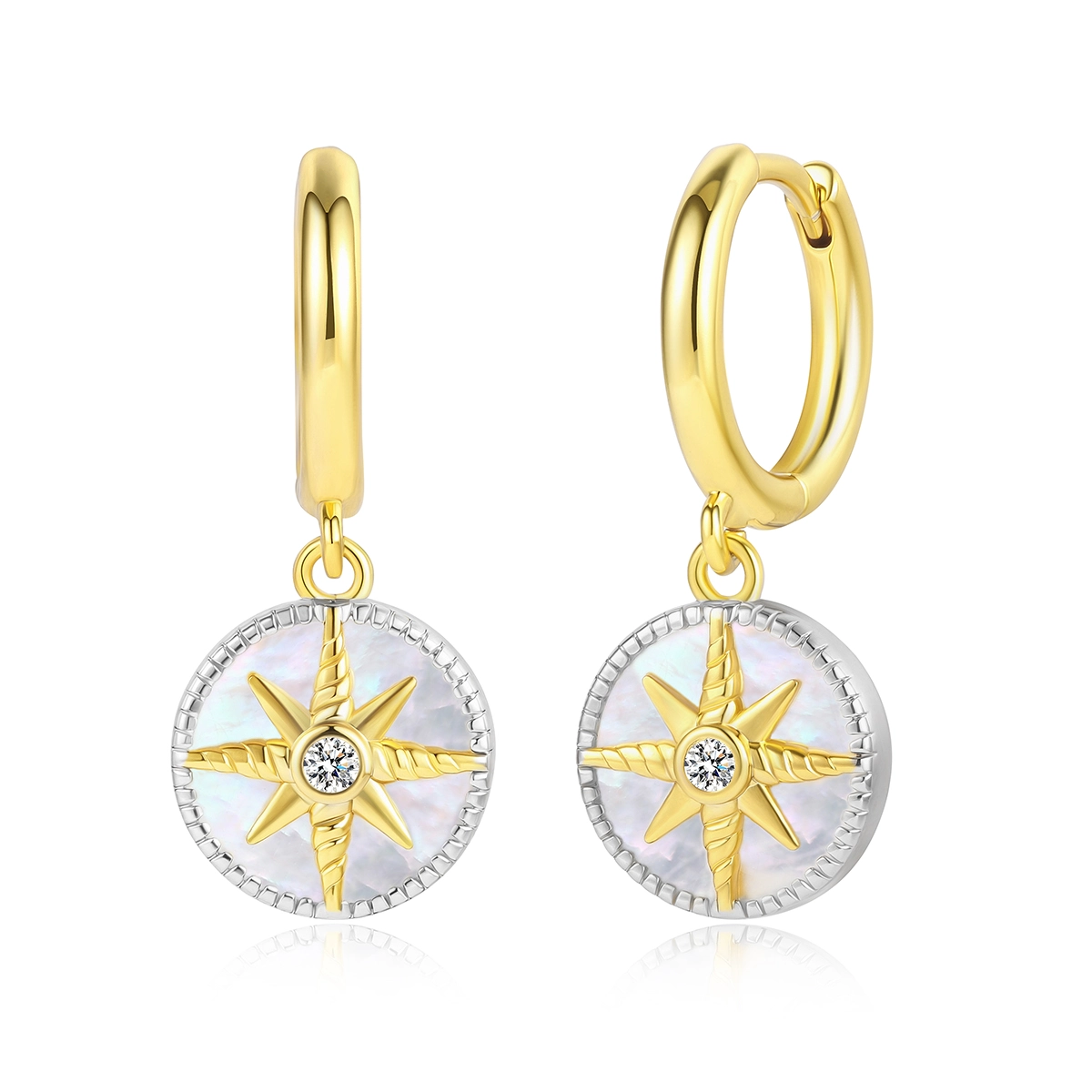
Brass Mother of Pearl Compass Huggie Drop Earrings | 14K 18K Gold Plated Hypoallergenic Jewelry
Read More
925 Silver Jewelry
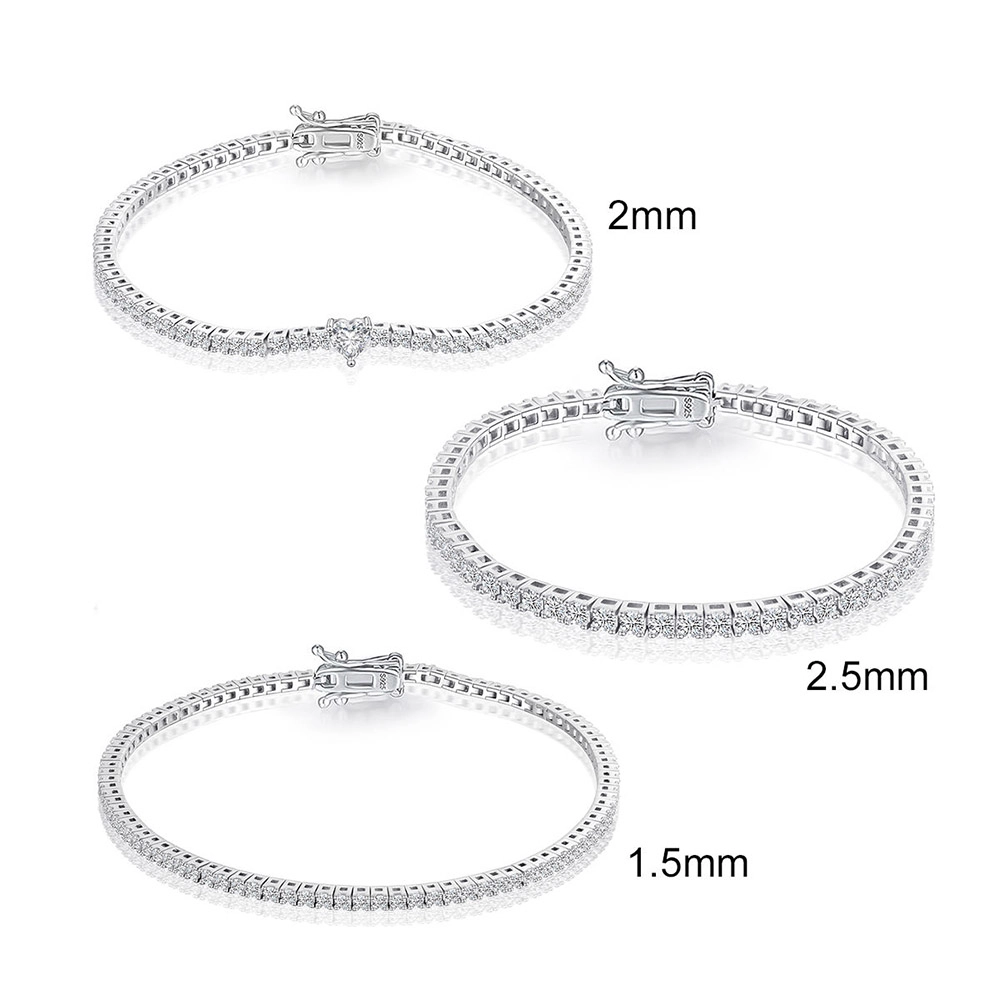
Customizable High-Quality Fashion 925 Sterling Silver AAA Cubic Zirconia Heart-Shaped Open Tennis Bracelet.
Read More
Brass Jewelry
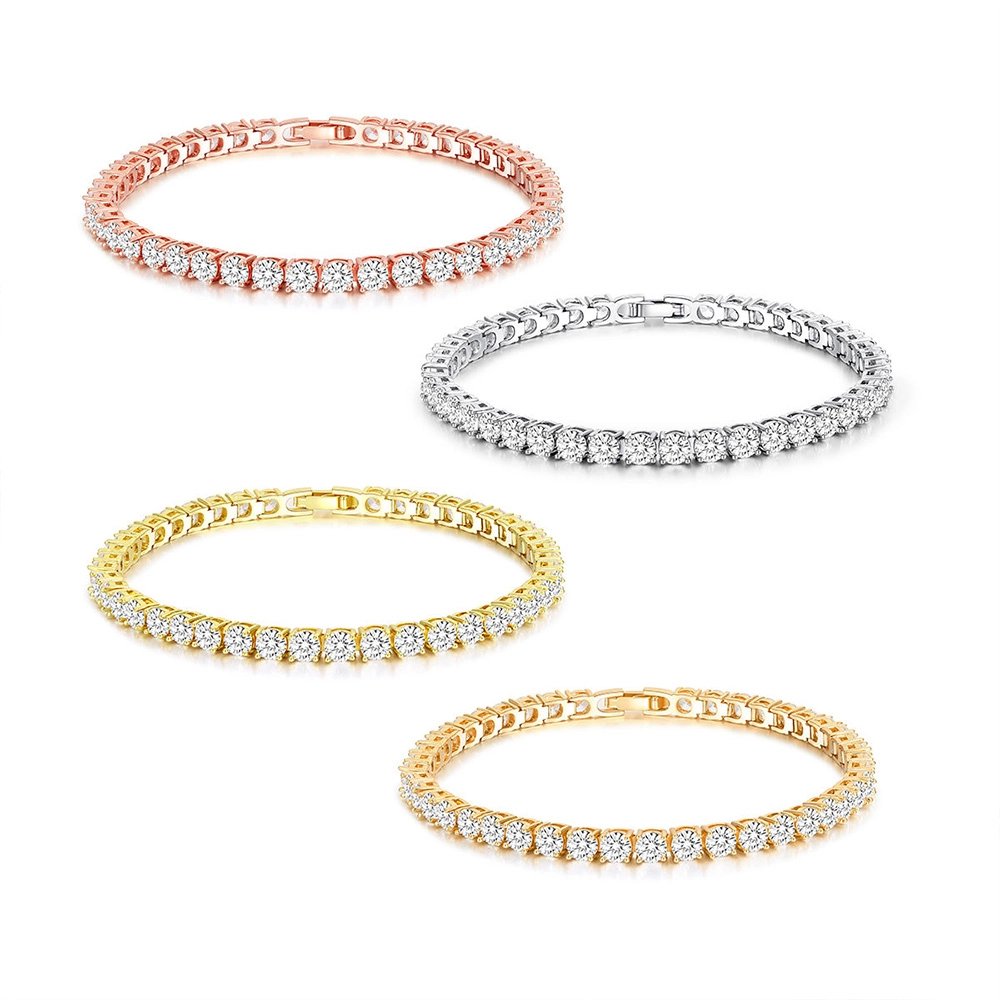
Customizable OEM ODM High-Quality Fashion Brass AAA Cubic Zirconia Classic Tennis Bracelet for Women Wholesale.
Read More
Get a Quote for Private Label Jewelry
We provide personalized jewelry customization services for clients worldwide.
Rest assured that your privacy is important to us, and all information provided will be handled with the utmost confidentiality.
By clicking 'Send Inquiry Now' I agree to ZHEFAN JEWELRY processing my personal data.
To see how to withdraw your consent, how to control your personal data and how we process it, please see our Privacy Policy and Terms of use.
From design to production, ZHEFAN JEWELRY offers a one-stop solution to help you enhance your brand value and market competitiveness.
Get A Quote
Contact
Tel: (+86) 188 1927 7817
© 2026 Zhefan Jewelry. All Rights Reserved.
Facebook
Instagram
YouTube
Whatsapp: +8618819277817