






Email: sales3@zhefanjewelry.com
Beyond Polishing: 7 Innovative Silver Plating Methods for a Premium Finish in 2026
Explore the top 7 silver plating and finishing techniques for 2026, from eco-friendly cyanide-free solutions to advanced PVD and hybrid mechanical texturing. Learn how to elevate your jewelry with durable, anti-tarnish finishes.
- What Are Silver Jewelry Plating and Finishing Techniques?
- Key Takeaways: Elevating Silver Beyond the Polish
- Method 1: Eco-Friendly Cyanide-Free Electroplating
- Method 2: Physical Vapor Deposition (PVD) Ion Plating
- Method 3: Advanced E-Coating (Electro-coating) for Anti-Tarnish
- Method 4: Multi-Layering (Silver-Palladium-Rhodium)
- Method 5: Controlled Patination and High-Contrast Oxidation
- Method 6: Precision Mechanical Texturing (Florentine & Bark)
- Method 7: Hybrid Sandblasting and Selective Flash Plating
- Addressing the Gap: 2026 Cost & Sustainability Trends
- Expert Tips & Common Plating Mistakes to Avoid
- Conclusion
- FAQ
- How long does rhodium plating last on silver jewelry?
- What is the difference between flash plating and micron plating?
- Is cyanide-free silver plating as durable as traditional methods?
- Can you combine a hammered texture with e-coating?
- Why does silver plating sometimes turn black or peel?
- What is the ideal plating thickness for everyday silver rings?
- How do you clean and maintain oxidized silver finishes?
- Is PVD coating better than traditional electroplating for silver?
What Are Silver Jewelry Plating and Finishing Techniques?
Silver jewelry plating and finishing techniques encompass both chemical processes, like electroplating and e-coating, and mechanical surface treatments, such as hammering and satin brushing. These combined methods enhance structural durability, prevent tarnishing, and elevate the final aesthetic appeal of premium silver pieces.
As the industry shifts toward eco-conscious manufacturing in 2026, jewelers are rapidly adopting cyanide-free silver plating solutions alongside advanced texturing techniques. By understanding the chemistry and mechanics behind these innovations, jewelry designers can produce sustainable, high-quality items that resist wear and tear while maintaining a flawless, mirror-like finish.
Key Takeaways: Elevating Silver Beyond the Polish
Elevating silver beyond a simple polish involves integrating advanced chemical layers and physical textures to dramatically increase the lifespan and visual depth of the jewelry. This multi-faceted approach ensures that pieces remain brilliant and structurally sound over decades of wear.
To master modern finishing, professionals must focus on the following core principles:
- A quick summary of the 7 innovative finishing methods: From vacuum vapor deposition to mechanical engraving, modern techniques are transforming modern jewelry design.
- Understanding plating thickness charts: Utilizing accurate micron measurements is critical for consumer longevity and verifying product quality.
- Embracing sustainability: The industry is definitively shifting toward eco-friendly and cyanide-free processes in 2026 to protect both artisans and the environment.
Method 1: Eco-Friendly Cyanide-Free Electroplating
Eco-friendly cyanide-free electroplating is a modernized chemical finishing process that deposits a brilliant layer of silver onto a substrate without utilizing highly toxic cyanide compounds. This revolutionary method provides equal or superior adhesion and brightness while ensuring a secure manufacturing environment.
Exploring the chemistry behind modern cyanide-free plating solutions reveals that these advanced baths use safer complexing agents, such as succinimide, to stabilize silver ions. In the past, achieving a pristine white finish required hazardous chemicals, but 2026 formulations have bridged the performance gap. Removing toxic chemicals improves workplace safety without sacrificing adhesion, which is vital for modern ethical production standards.
Key benefits of this method include:
- Comparable brilliance: Comparing the brilliance of cyanide-free silver against traditional highly-toxic baths shows zero loss in visual luminosity or reflectivity.
- Enhanced operator safety: Operations are significantly safer, as reported by Qeehua Pump, which notes that removing cyanide minimizes chemical exposure risks and drastically simplifies wastewater management.
- Environmental compliance: Facilities easily meet strict 2026 global environmental regulations without installing expensive toxic waste scrubbers.
Method 2: Physical Vapor Deposition (PVD) Ion Plating
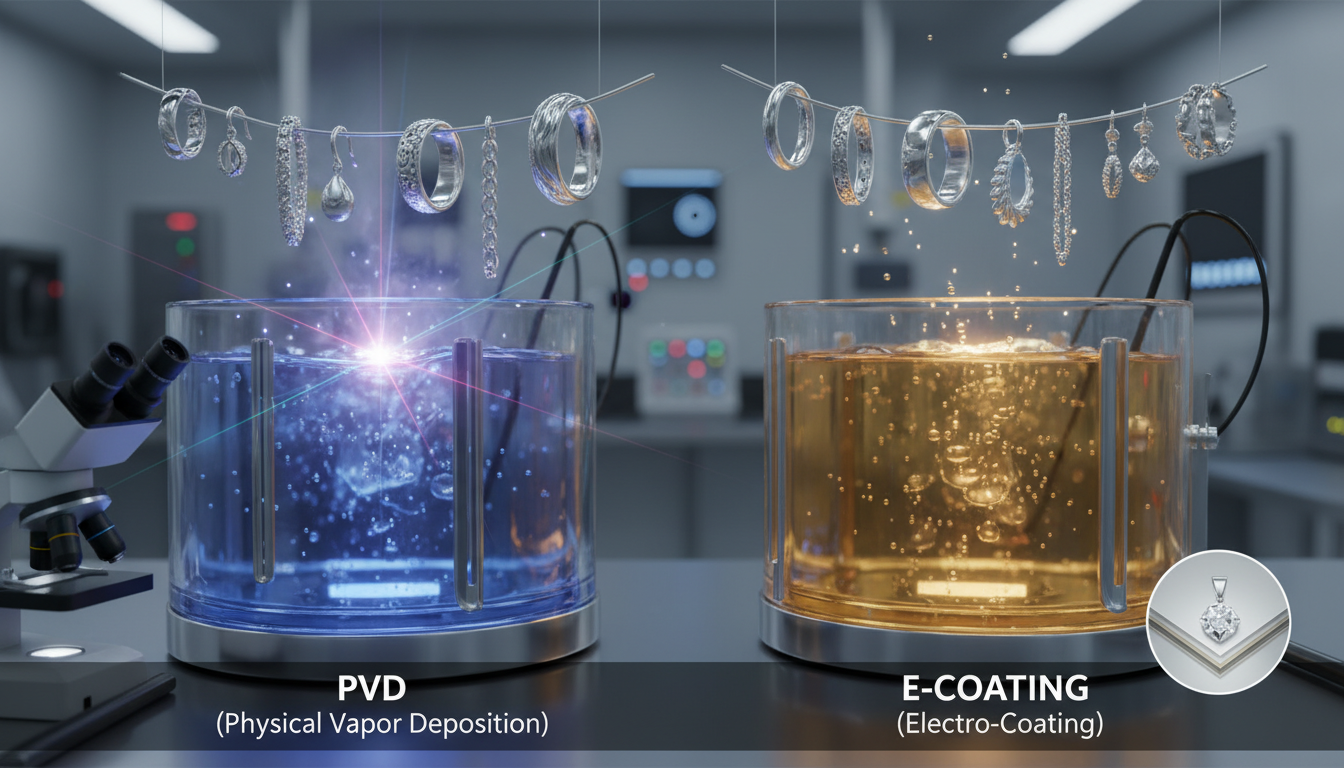
Physical Vapor Deposition (PVD) ion plating is a high-tech vacuum process where solid metal is vaporized and bonded to the silver surface at an atomic level. This technique creates an incredibly tough, scratch-resistant outer shell that dramatically outperforms traditional flash plating.
The mechanics of bonding titanium nitride or other hard metals to silver via vapor in a vacuum ensure absolute coating uniformity. During this procedure, the source material transitions from a condensed phase to a vapor phase and then back to a thin-film condensed phase, as reported by Wikipedia. This atomic-level bonding means the top layer will not easily chip or flake off.
Integrating PVD and e-coating for silver offers unmatched advantages:
- Extreme durability benefits: PVD resists scratching and daily abrasion far better than standard electroplated flash coatings.
- Hypoallergenic advantages: It creates a biocompatible barrier, which is perfect for consumers sensitive to traditional base metals like nickel or copper.
- Color versatility: PVD can produce a variety of permanent colors, including deep blacks, rich golds, and metallic blues, without compromising the underlying silver.
Method 3: Advanced E-Coating (Electro-coating) for Anti-Tarnish
Advanced e-coating, or electro-coating, is the application of an ultra-thin, transparent ceramic or polymer layer over polished silver using an electrical current. This invisible shield completely seals the metal, providing exceptional long-term tarnish resistance in humid and highly corrosive environments.
Applying these ultra-thin, transparent layers requires precise electrophoretic deposition, where the silver jewelry acts as an electrode in a liquid polymer bath. The current forces the protective particles to bond uniformly across the surface. This is incredibly beneficial because e-coating protects complex mechanical textures without altering the core silver color or filling in fine engraved details.
The process relies on specific steps to guarantee success:
- Preparation: The silver piece is ultrasonically cleaned and degreased to remove any polishing compounds.
- Electro-deposition: The piece is submerged in the e-coating emulsion, and a precise voltage is applied to attract the polymer molecules.
- The curing process: The coated jewelry is baked in an industrial oven, solidifying the clear resin into a permanent, tarnish-resistant barrier.
Method 4: Multi-Layering (Silver-Palladium-Rhodium)
Multi-layering is a premium finishing technique that sequentially plates silver with a barrier layer of palladium followed by a final coat of rhodium. This strategy prevents underlying copper migration and delivers the ultimate, mirror-like white-metal brilliance required for luxury jewelry.
Setting the premium standard for white-metal brilliance requires acknowledging that a single layer of plating isn't enough for high-end pieces. Over time, the copper alloys present in sterling silver can migrate to the surface, causing dark spots. The role of palladium as a barrier layer is to completely prevent this copper migration and blackening. After the palladium is set, applying anti-tarnish rhodium over silver gives the piece its final, breathtaking flash.
Key considerations for multi-layering include:
- Superior Reflectivity: Rhodium provides a dazzling, scratch-resistant finish with incredibly high light reflectivity, as reported by Brilliant Earth.
- Thickness optimization: Utilizing thickness charts to determine the exact micron count is crucial for separating commercial-grade fashion jewelry from heirloom-quality luxury goods.
- Hypoallergenic purity: The combination of palladium and rhodium ensures the final piece is completely free of nickel and safe for all skin types.
Method 5: Controlled Patination and High-Contrast Oxidation
Controlled patination and high-contrast oxidation involve intentionally darkening the silver surface using chemical agents like Liver of Sulphur. This process creates dramatic shadows in the recesses of a design, contrasting sharply with highly polished raised areas for a vintage or gothic aesthetic.
Understanding the chemistry of forced tarnish using Liver of Sulphur and modern antiquing gels allows artisans to achieve deep blacks, rich grays, or even iridescent blues. Unlike traditional unwanted tarnishing, this oxidation is purposely applied and strictly controlled to enhance the three-dimensional geometry of the jewelry.
To master high-contrast oxidation, jewelers focus on:
- Application: Carefully brushing or dipping the silver into heated oxidizing solutions until the desired depth of color is reached.
- Selective polishing techniques: Using fine abrasives to highlight raised textures and flat surfaces while deliberately keeping the deep recesses dark.
- Sealing oxidized layers: Applying a matte e-coating or specialized wax to prevent the darkened finish from rubbing off on the wearer's skin or clothing.
Method 6: Precision Mechanical Texturing (Florentine & Bark)
Precision mechanical texturing is a physical finishing method that uses specialized tools to carve, beat, or scratch patterns like Florentine and bark into the silver. These tactile surfaces alter how light reflects, effectively hiding everyday scratches and adding artisanal character.
Moving beyond the chemical bath requires hands-on craftsmanship using specialized jewelry surface texturing tools. Artisans employ heavy-duty micromotors, specialized gravers, wire brushes, and peening hammers to manually manipulate the metal. Because the surface is physically altered, the finish will never peel or flake off like poorly applied plating might.
The advantages of mechanical texturing are distinct:
- Light manipulation: Mechanical textures alter light reflection to hide everyday scratches, making the jewelry look newer for much longer.
- Enhanced adhesion: Creating a slightly roughened surface provides better grip for subsequent chemical coatings.
- Unique aesthetics: Combining physical texturing with a light rhodium flash creates a highly desirable, durable frosted aesthetic that stands out in the 2026 market.
Method 7: Hybrid Sandblasting and Selective Flash Plating
Hybrid sandblasting and selective flash plating combine pressurized abrasive texturing with targeted chemical plating to achieve complex matte-to-mirror gradients on a single piece. This dual-tone finishing technique emphasizes geometric contrast and modern architectural jewelry designs.
By leveraging hybrid mechanical and chemical finishing, designers can highlight specific motifs on a ring or pendant while subduing the background. This involves carefully masking off sections of the jewelry before subjecting it to different treatments, allowing for sharp, clean lines between the contrasting finishes.
This hybrid method involves several precise steps:
- Abrasive selection: Choosing between fine glass bead blasting for a soft, satin finish, and aggressive aluminum oxide for intense, sparkling matte textures.
- Masking applications: The use of specialized masking lacquers or tapes during the electroplating process to create striking dual-tone finishes (e.g., matte silver alongside high-polish gold).
- Gradient creation: Achieving complex matte-to-mirror gradients on a single piece of jewelry by feathering the abrasive blast before the final chemical polish.
Addressing the Gap: 2026 Cost & Sustainability Trends
The 2026 cost and sustainability trends in silver plating reflect a massive industry pivot toward transparent pricing and eco-conscious, durable finishing methods. Consumers and manufacturers alike are prioritizing long-lasting ethical plating over cheap, temporary flash layers that quickly degrade.
Analyzing the pricing breakdown reveals the true value disparity between artisanal mechanical finishes and high-volume industrial plating. While artisanal texturing takes more labor, the lack of hazardous chemical disposal makes it highly cost-effective. Conversely, modern industrial plating requires significant upfront investment in closed-loop water systems and non-toxic baths, but offers massive economies of scale.
Market drivers for 2026 include:
- Ethical consumerism: Consumer demand shifts in 2026 are aggressively driving the adoption of transparent pricing and ethical plating standards.
- Long-term value: The ROI of investing in sustainable, long-lasting finishes over cheap, temporary flash plating is proven by lower return rates and higher customer satisfaction.
- Regulatory compliance: Strict global laws now penalize heavy metal runoff, forcing the mandatory adoption of cleaner plating technologies.
Expert Tips & Common Plating Mistakes to Avoid
Avoiding common plating mistakes requires meticulous surface preparation, strict temperature control, and the mandatory application of a proper barrier layer before the final coat. Skipping these foundational steps inevitably leads to peeling, cloudy, or burnt finishes that ruin the jewelry.
Even with the best equipment, human error can compromise the final product. Surface preparation is the most critical phase; any lingering oils from the polisher's hands will create a barrier that stops the silver or rhodium ions from bonding to the base metal.
Top mistakes to avoid in the plating room:
- Skipping foundational layers: The danger of skipping the copper or nickel-free palladium flash layer before final plating leads directly to rapid tarnishing and base metal bleed-through.
- Poor preparation: How improper cleaning, pickling, and degreasing lead to peeling and rough, blackened surfaces cannot be overstated. Always use a heated ultrasonic cleaner followed by an electro-cleaner.
- Voltage errors: Failing to maintain consistent current density and temperature is the primary reason jewelers experience "burnt," brittle, or cloudy finishes on the edges of their pieces.
Conclusion
Mastering these 7 silver jewelry plating and finishing techniques is essential for creating premium, competitive products in today's demanding market. By blending mechanical artistry with chemical innovation—such as cyanide-free solutions and advanced PVD—jewelers can guarantee ultimate durability and aesthetic brilliance. Investing in modern, eco-friendly processes not only meets strict 2026 sustainability trends but also provides consumers with high-quality, anti-tarnish pieces that will last a lifetime. Contact us today to consult with our plating experts and optimize your hybrid mechanical and chemical finishing strategy.
FAQ
How long does rhodium plating last on silver jewelry?
Rhodium plating typically lasts between 6 months to 2 years depending on the thickness of the plating and the wearer's daily habits. Friction from everyday wear will gradually wear the plating away.
What is the difference between flash plating and micron plating?
Flash plating deposits an extremely thin layer (less than 0.25 microns) intended only for short-term aesthetic appeal. Micron plating deposits a thicker, measurable layer (usually 1 to 3 microns) designed for long-term durability and wear.
Is cyanide-free silver plating as durable as traditional methods?
Yes, modern cyanide-free silver plating solutions have advanced significantly and now offer comparable, if not superior, adhesion, brightness, and durability without the severe health and environmental risks.
Can you combine a hammered texture with e-coating?
Absolutely. E-coating is highly recommended for hammered or textured silver because the liquid polymer seeps into the recesses evenly, protecting the complex surface from tarnishing without filling in the details.
Why does silver plating sometimes turn black or peel?
Blackening or peeling is usually caused by poor surface preparation, such as inadequate degreasing or pickling, which prevents the plating from adhering to the base metal. Incorrect voltage during the electroplating process can also burn the finish.
What is the ideal plating thickness for everyday silver rings?
For everyday rings subjected to high friction, a plating thickness of at least 2.5 to 3 microns (often combined with a palladium barrier layer) is recommended to ensure the finish lasts.
How do you clean and maintain oxidized silver finishes?
Oxidized silver should be cleaned gently with mild soap and water. You must avoid harsh chemical dips, ultrasonic cleaners, and aggressive polishing cloths, as these will strip away the intentionally darkened patina.
Is PVD coating better than traditional electroplating for silver?
PVD (Physical Vapor Deposition) is generally far more durable, scratch-resistant, and environmentally friendly than traditional electroplating, making it a superior choice for heavy-wear items like watches and rings.
Tags
unplated brass tennis bracelet for plating
unplated brass tennis bracelet for plating
double chamber urn pendant OEM
double chamber urn pendant OEM
brass o rings
brass o rings
brass earrings
brass earrings
925 sterling silver bridal jewelry sets wholesale
925 sterling silver bridal jewelry sets wholesale
Mother-of-pearl earrings
Mother-of-pearl earrings
Recommended for you
Everything You Need to Know About mens stainless steel rings
Top 10 brass earrings hoops Manufacturers and Supplier Brands in China
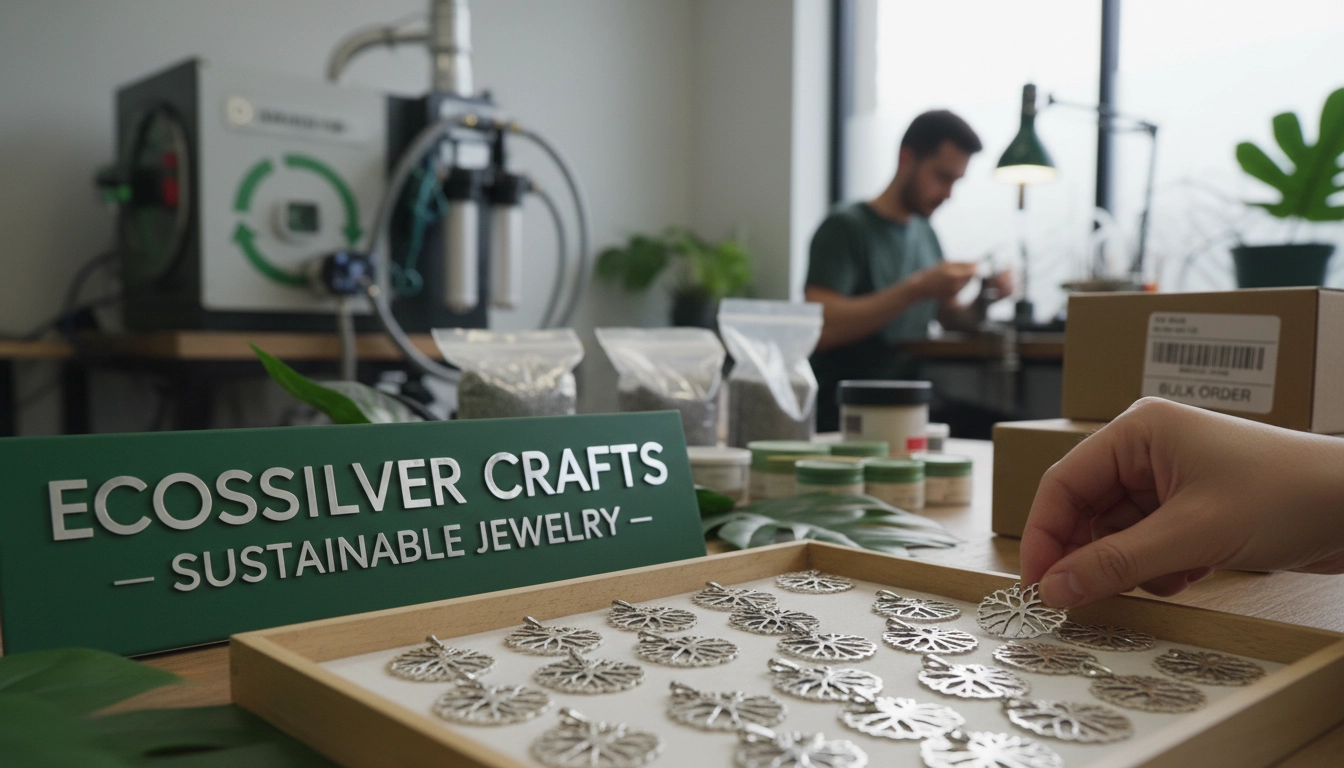
Top-Selling Sterling Silver Pendants Bulk Order Trends 2026: What Every Jewelry Brand Needs Now
Why choose Zhefan Jewelry as your stainless steel charm bracelets supplier
Prdoucts Categories
Question you may concern
Products
What’s the shipment method? How long does it take for delivery?
Our product distributed to all over the world. Shipped by DHL / Fedex / TNT / UPS takes 3-7 days, Epacket takes 7-15 days, China Post takes 15-30 days.
Do you offer after-sales warranty service?
Yes, we will refund or resend products if fading, stone falling off and other quality problems found in 1 month receipt of goods. Furthermore, we offer 1 year after-sales warranty service, but you need pay the shipping charge.
What’s the lead time?
We could arrange shipment for you within 48 hours if you order models in stock. For bulk order, it takes 10-25 days for production depending on order quantity and styles.
What's themonthly production capacity?
600,000 pcs per month.
FAQs
What’s the shipment method?How long does it take for delivery?
Our product distributed to all over the world. Shipped by DHL/Fedex/ TNT/UPS takes 3-7 days,Epacket takes 7-15 days, China Post takes 15-30 days.
You may also like
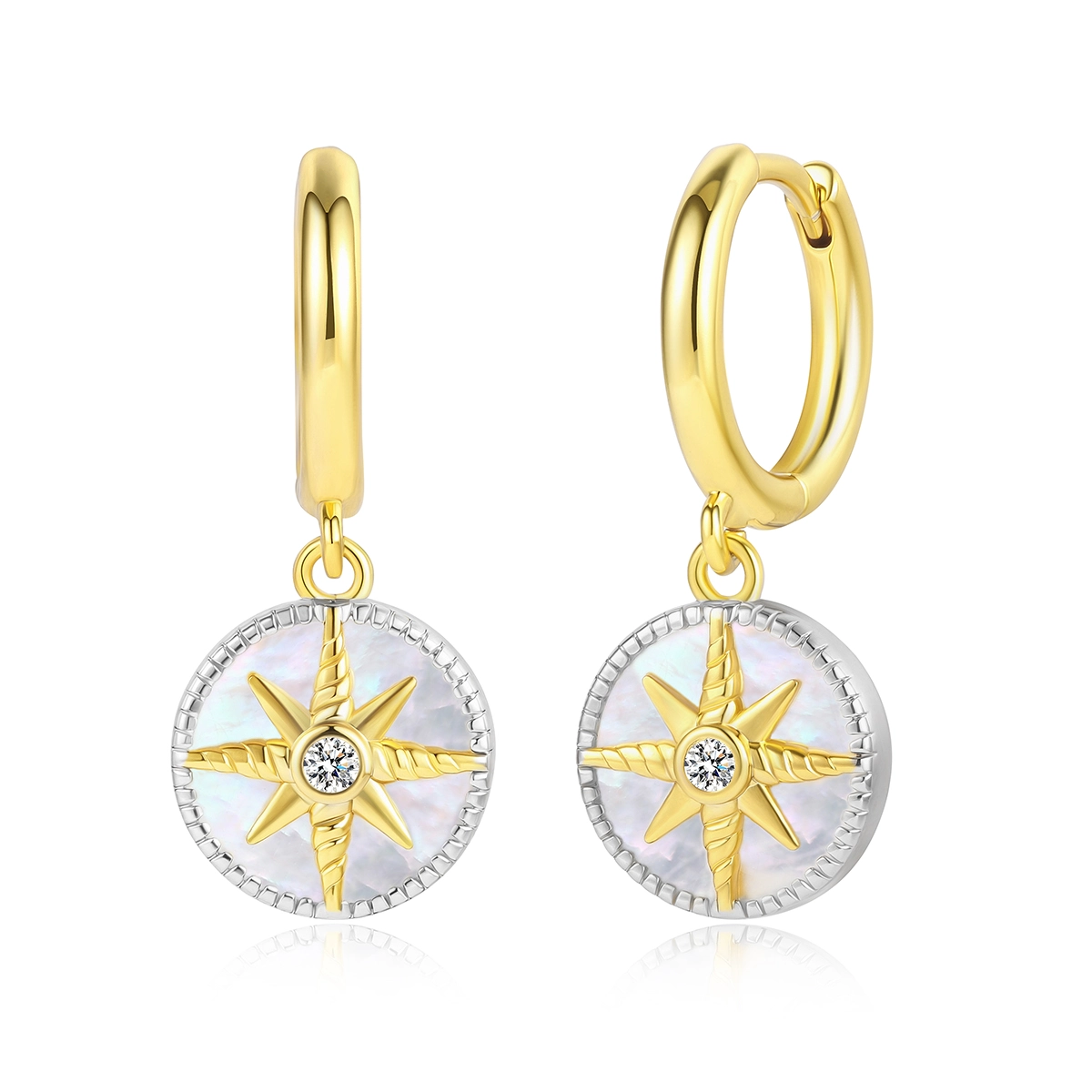
Brass Jewelry
Brass Mother of Pearl Compass Huggie Drop Earrings | 14K 18K Gold Plated Hypoallergenic Jewelry
Read More
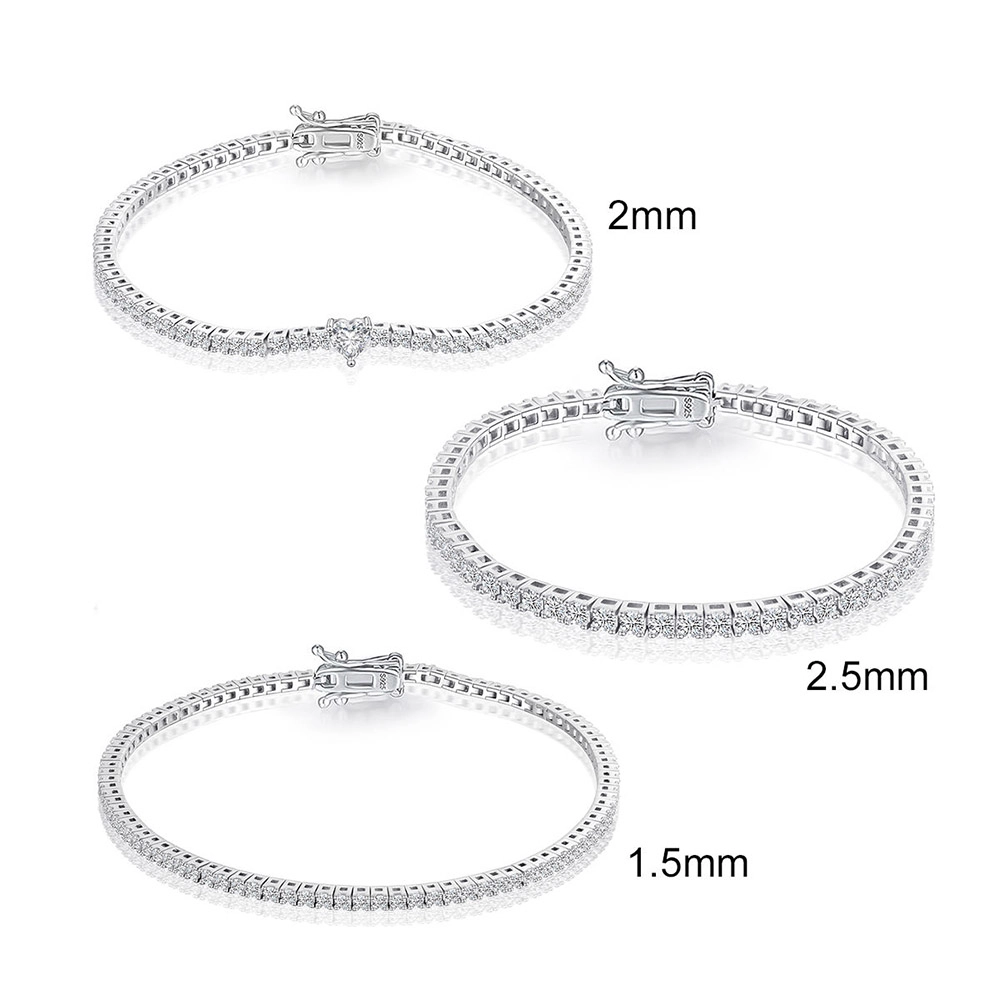
925 Silver Jewelry
Customizable High-Quality Fashion 925 Sterling Silver AAA Cubic Zirconia Heart-Shaped Open Tennis Bracelet.
Read More
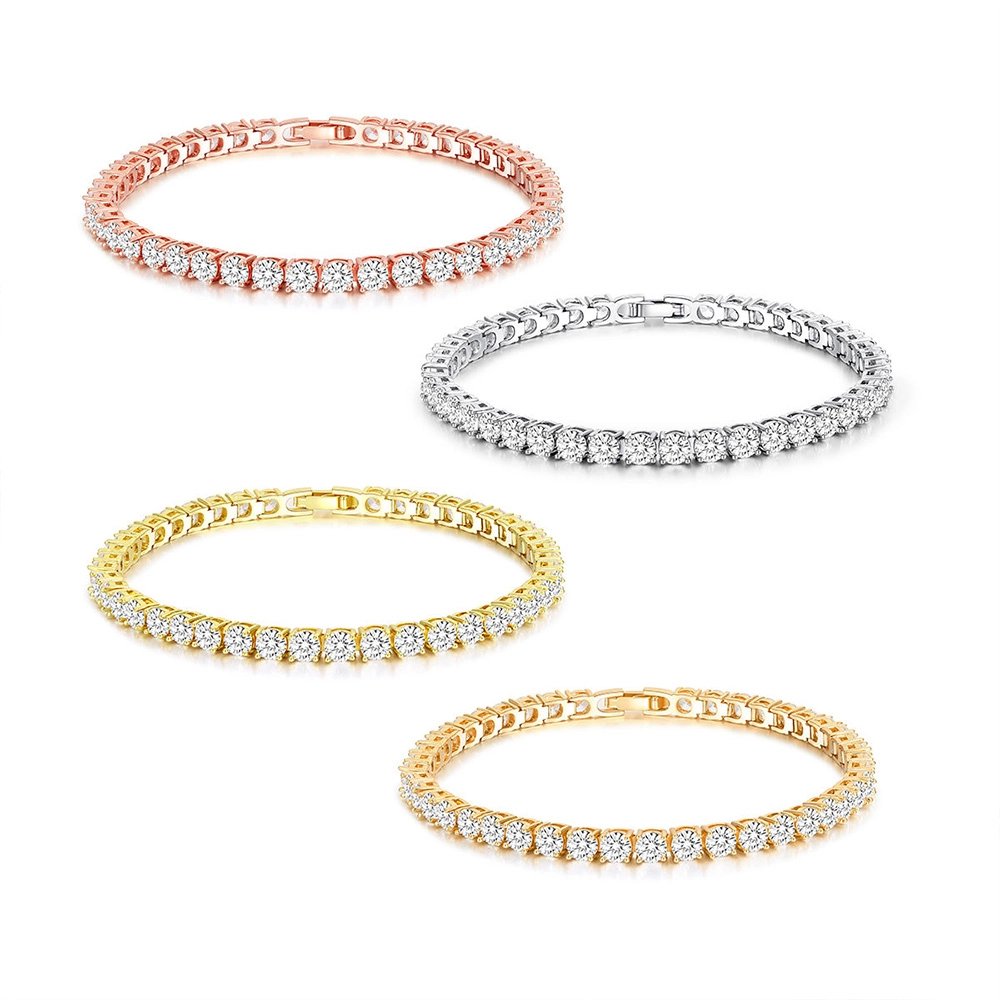
Brass Jewelry
Customizable OEM ODM High-Quality Fashion Brass AAA Cubic Zirconia Classic Tennis Bracelet for Women Wholesale.
Read More
Get a Quote for Private Label Jewelry
We provide personalized jewelry customization services for clients worldwide.
Rest assured that your privacy is important to us, and all information provided will be handled with the utmost confidentiality.
By clicking 'Send Inquiry Now' I agree to ZHEFAN JEWELRY processing my personal data.
To see how to withdraw your consent, how to control your personal data and how we process it, please see our Privacy Policy and Terms of use.
From design to production, ZHEFAN JEWELRY offers a one-stop solution to help you enhance your brand value and market competitiveness.
Get A Quote
Contact
Tel: (+86) 188 1927 7817
© 2026 Zhefan Jewelry. All Rights Reserved.
Facebook
Instagram
YouTube
Whatsapp: +8618819277817