








Email: sales3@zhefanjewelry.com
Gold-Plated Brass Jewelry for Scalable Brand Programs: Building a Finish Specification That Holds in Production
A technical sourcing guide for jewelry brands developing gold-plated brass collections. Learn how to define gold thickness, finish architecture, XRF verification, production acceptance criteria and repeat-order standards for scalable OEM manufacturing.
- Gold Plating Thickness Should Be a Product Specification, Not a Marketing Claim
- Build the Plating Standard Backward From the Brand Promise
- The Gold Layer Is Only One Part of the Finish Architecture
- Define Critical-to-Quality Requirements Before the Sample Is Approved
- Use Product Geometry to Decide Where the Specification Matters Most
- Turn the Approved Sample Into a Production Control Standard
- XRF Is Most Valuable When It Is Connected to an Acceptance Plan
- Decide Whether the Requirement Is a Target, Minimum, or Acceptance Range
- Gold Thickness Is Also a Cost-Engineering Variable
- Keep Plating Performance Separate From Product Terminology
- Plating Thickness and Chemical Compliance Are Different Quality Questions
- What a Large Jewelry Brand Should Expect From a Plating Supplier
- How Zhefan Jewelry Develops Gold-Plated Brass Programs
- What to Include in a Brass Jewelry Plating Brief
- Conclusion: The Best Plating Specification Is the One Your Supplier Can Reproduce
- FAQ
Gold Plating Thickness Should Be a Product Specification, Not a Marketing Claim
When jewelry brands ask how thick gold plating should be on brass jewelry, the answer should not begin with a single micron number.
The more important manufacturing question is
What finish specification can deliver the intended appearance, wear performance, commercial positioning, and production consistency across the entire life of the collection?
A gold-plated brass product is not defined by the gold layer alone. Its performance is created by a complete finish architecture that begins with the brass substrate and surface preparation, continues through any intermediate or barrier layers, and ends with the gold deposit and, where required, a protective finish.
This distinction becomes increasingly important as a collection scales.
A development sample may look excellent even when the production specification behind it is incomplete. The real test begins when the same finish must be reproduced across hundreds or thousands of pieces, multiple SKUs, replenishment orders, and different production dates.
For professional jewelry sourcing, plating thickness should therefore be treated as one critical-to-quality parameter within a controlled finish specification.
Build the Plating Standard Backward From the Brand Promise
The right gold thickness depends first on what the finished product is expected to represent in the market.
A seasonal fashion collection, a permanent core collection, and a premium plated-brass program do not make the same promise to the end customer. They should not automatically share the same finishing specification.
For development purposes, Zhefan Jewelry can evaluate project-specific gold plating points, including 0.05 μm, 0.25 μm, 0.5 μm, 1.0 μm, 2.5 μm, and 3.0 μm, depending on product design, expected use, positioning, commercial target, and validation requirements.
These values should be treated as engineering options rather than universal quality grades.
|
Development Direction |
Gold Thickness Direction |
Commercial Objective |
Manufacturing Priority |
|
Appearance-led fashion |
0.05–0.25 μm |
Competitive cost and seasonal visual impact |
Color, surface appearance, and production efficiency |
|
Established fashion collection |
Around 0.5 μm |
Improved balance between cost and finish performance |
Surface preparation and consistent coverage |
|
Enhanced plated-brass program |
Around 1.0 μm |
Higher customer quality expectations |
Wear zones, layer uniformity, and production verification |
|
Premium heavy-plated brass |
2.5–3.0 μm |
Elevated plated-jewelry positioning |
Process stability, cost engineering, and documented thickness control |
The purpose of this framework is not to promise that a particular micron value will last a fixed number of months or years.
Instead, it gives product-development teams a rational starting point for sample development and validation.
A successful specification is the one that achieves the required product performance without adding gold cost that creates little meaningful value for the customer.
The Gold Layer Is Only One Part of the Finish Architecture
When a buyer specifies only
“Brass + 18K gold plating + 1 micron”
Several important manufacturing variables remain undefined.
A more robust specification considers the finish as a system.
|
Finish Variable |
Why It Matters to the Brand |
What Should Be Approved |
|
Brass substrate |
Influences polishing response, surface stability, and plating behavior |
Material specification and approved construction |
|
Pre-plating surface |
Determines the visual quality beneath the coating |
High polish, satin, brushed, or other approved finish |
|
Intermediate system |
Can influence adhesion, diffusion control, color stability, and market requirements |
Project-approved layer structure |
|
Gold deposit |
Determines gold color and provides the specified precious-metal surface |
Gold color, karat reference, and thickness |
|
High-wear coverage |
Determines whether critical contact zones receive suitable protection |
Defined representative areas |
|
Protective finish |
May support stain, oxidation, or wear management when appropriate |
E-coating or project-specific system |
|
Finished appearance |
Controls what the customer actually sees |
Retained physical master sample |
The technical value of this approach is straightforward.
If a bulk-production issue occurs, both the buyer and manufacturer can identify which part of the finish specification needs to be investigated. Without this information, every quality discussion returns to the vague statement that “the plating was supposed to be good.”
For established jewelry brands, that level of ambiguity creates unnecessary sourcing risk.
Define Critical-to-Quality Requirements Before the Sample Is Approved
One of the most effective ways to improve bulk consistency is to finalize the finish specification before the development sample becomes the approved production standard.
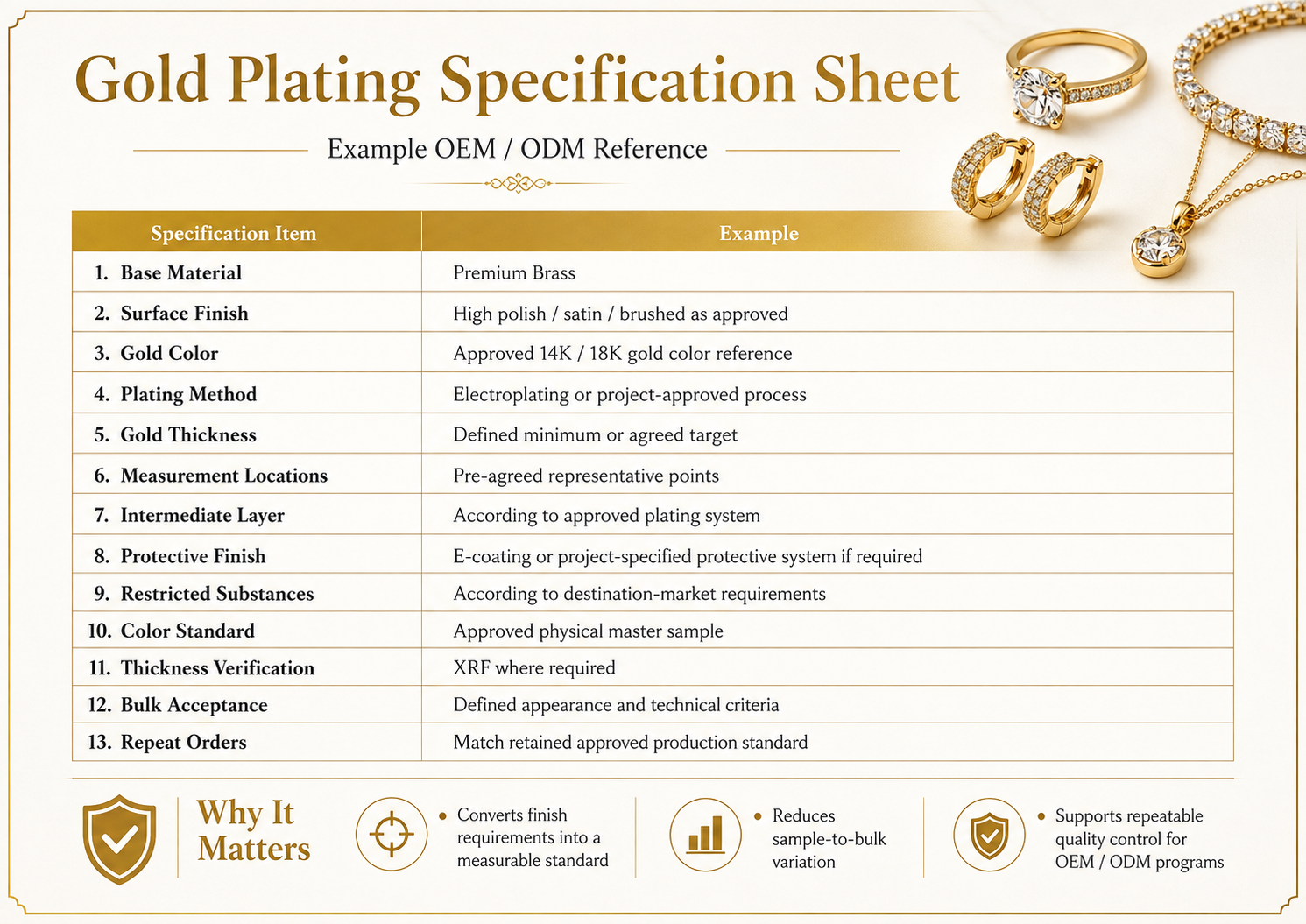
A professional jewelry tech pack or finishing specification should define the parameters that will later determine whether production is accepted.
A strong specification may include the following information in one controlled record:
|
CTQ Requirement |
Example of a Controlled Specification |
|
Base material |
Approved brass specification |
|
Surface finish |
High polish / satin / brushed |
|
Gold color |
Approved 14K, 18K, or project-specific master color |
|
Gold thickness |
Defined target or agreed minimum |
|
Intermediate structure |
According to the approved finishing system |
|
Measurement areas |
Defined representative surfaces and high-contact zones |
|
Protective system |
E-coating or other approved finish where required |
|
Appearance reference |
Signed or retained golden sample |
|
Thickness verification |
XRF according to the agreed inspection procedure |
|
Chemical requirements |
Destination-market and customer-specific requirements |
|
Lot acceptance |
Agreed visual and technical criteria |
|
Repeat production |
|
This is fundamentally different from requesting “premium plating.”
"Premium" is a positioning term.
A manufacturing specification must be measurable.
Use Product Geometry to Decide Where the Specification Matters Most
Gold plating is applied to a three-dimensional product, but jewelry does not experience wear equally across all surfaces.
A polished decorative face may remain relatively protected while another area of the same product is repeatedly exposed to skin, clothing, adjacent metal components, or hard surfaces.
This becomes particularly important with rings, bracelets, and articulated jewelry.
The purpose of evaluating geometry is not necessarily to assign a different micron specification to every jewelry category. It is to identify the critical surfaces that should influence engineering and inspection decisions.
|
Product Geometry |
Typical Engineering Concern |
Specification Focus |
|
Ring shanks |
Frequent surface contact and abrasion |
Outer and high-contact regions |
|
Bracelet components |
Skin, desk, and component-to-component friction |
Underside, clasp, and exposed links |
|
Pendant jewelry |
Front appearance plus chain and skin contact |
Decorative face, back, and connecting areas |
|
Earrings |
Lower overall abrasion but high visibility |
Color and surface consistency |
|
Tennis jewelry |
Multiple articulated joints and stone-set components |
Representative links, clasp, and connection zones |
|
Large statement pieces |
Large plated surface area |
Surface uniformity and precious-metal cost |
This is especially useful for brand collections containing many SKUs.
Instead of assuming that every product should receive the same finish simply because it belongs to the same collection, the manufacturer can evaluate where a heavier or more tightly controlled specification creates genuine commercial value.
Turn the Approved Sample Into a Production Control Standard
For larger jewelry programs, the most important transition is not from CAD to sample.
It is from an approved sample to repeatable manufacturing.
A scalable finish-control process can be organized around four production gates.
|
Production Gate |
Purpose |
Release Requirement |
|
Development Approval |
Confirm the intended visual and technical direction. |
Design, polish, gold color, and finish structure approved |
|
Golden Sample Freeze |
Establish the physical production reference. |
Approved master sample identified and retained |
|
Production Verification |
Confirm that bulk follows the frozen standard. |
Appearance and agreed technical measurements verified |
|
Repeat-Order Control |
Prevent specification drift over time. |
Previous finish standard restored before replenishment production |
This prevents one of the most common problems in private-label jewelry manufacturing:
The sample is approved, but the production interpretation gradually changes afterward.
A well-controlled supplier does not treat every reorder as a new plating decision.
The approved specification should remain attached to the SKU so that color, finish, construction, and inspection expectations can be recovered for future production.
For brands running permanent collections, wholesale replenishment programs, or multi-season assortments, this traceability can be more commercially valuable than increasing plating thickness alone.
XRF Is Most Valuable When It Is Connected to an Acceptance Plan
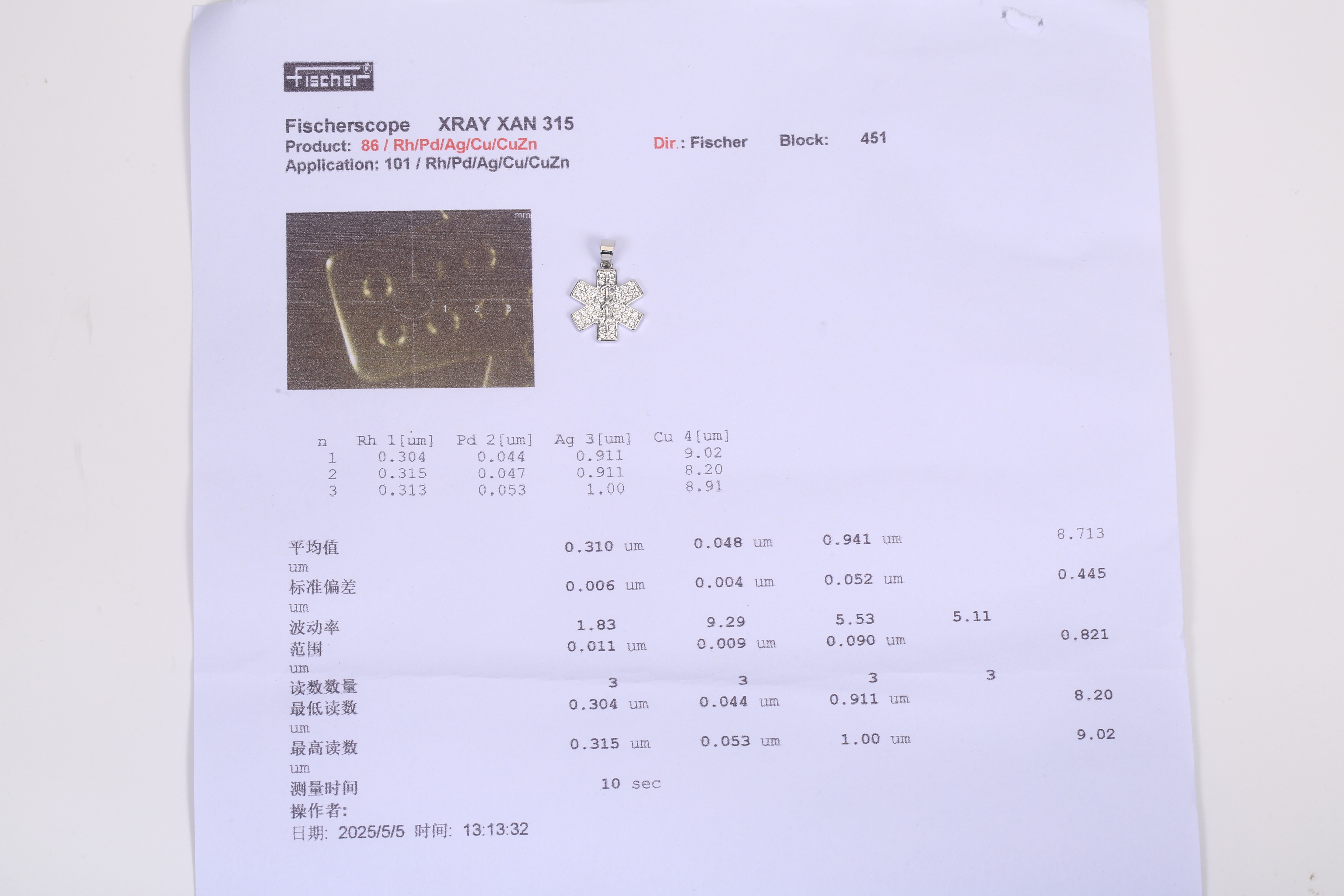
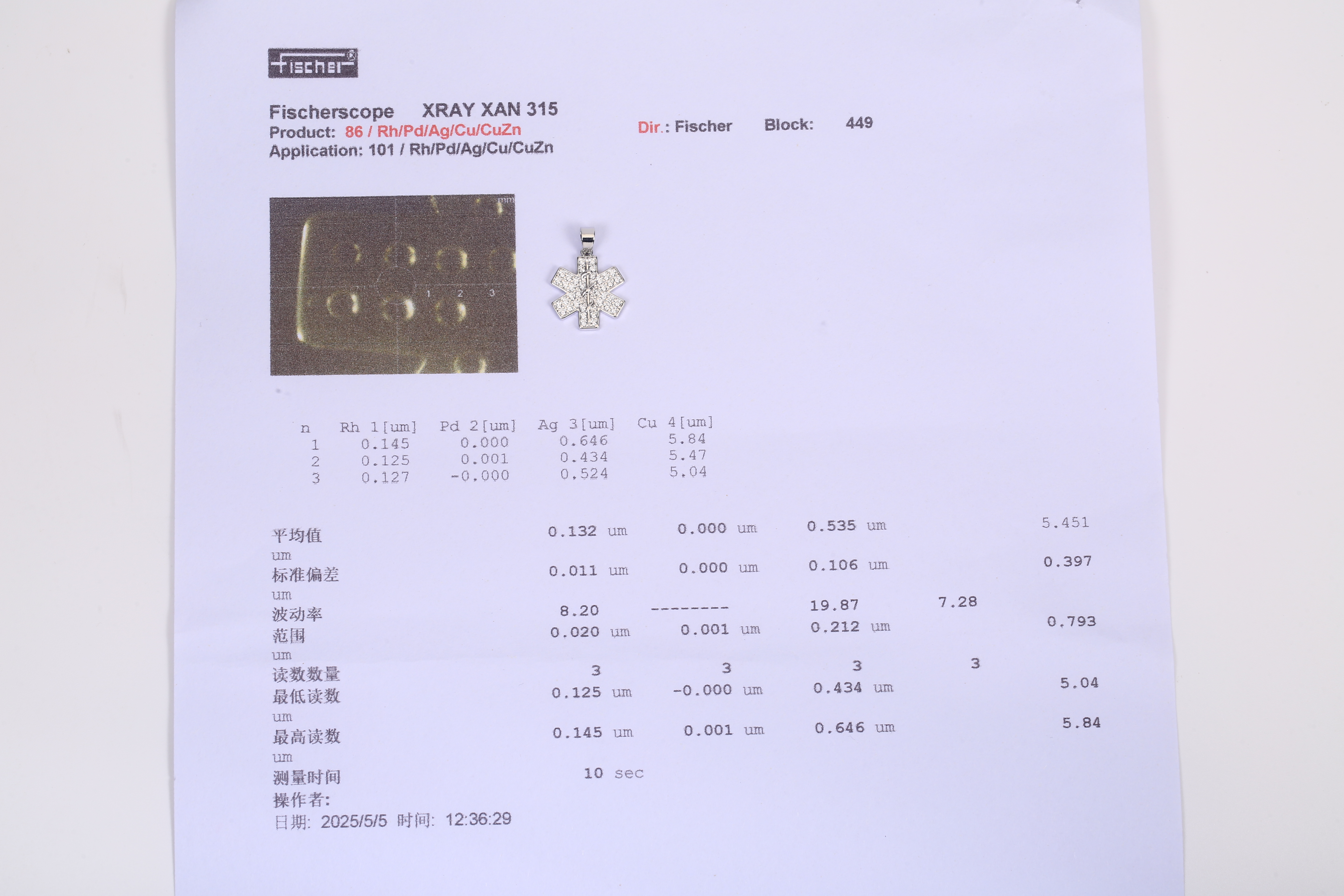
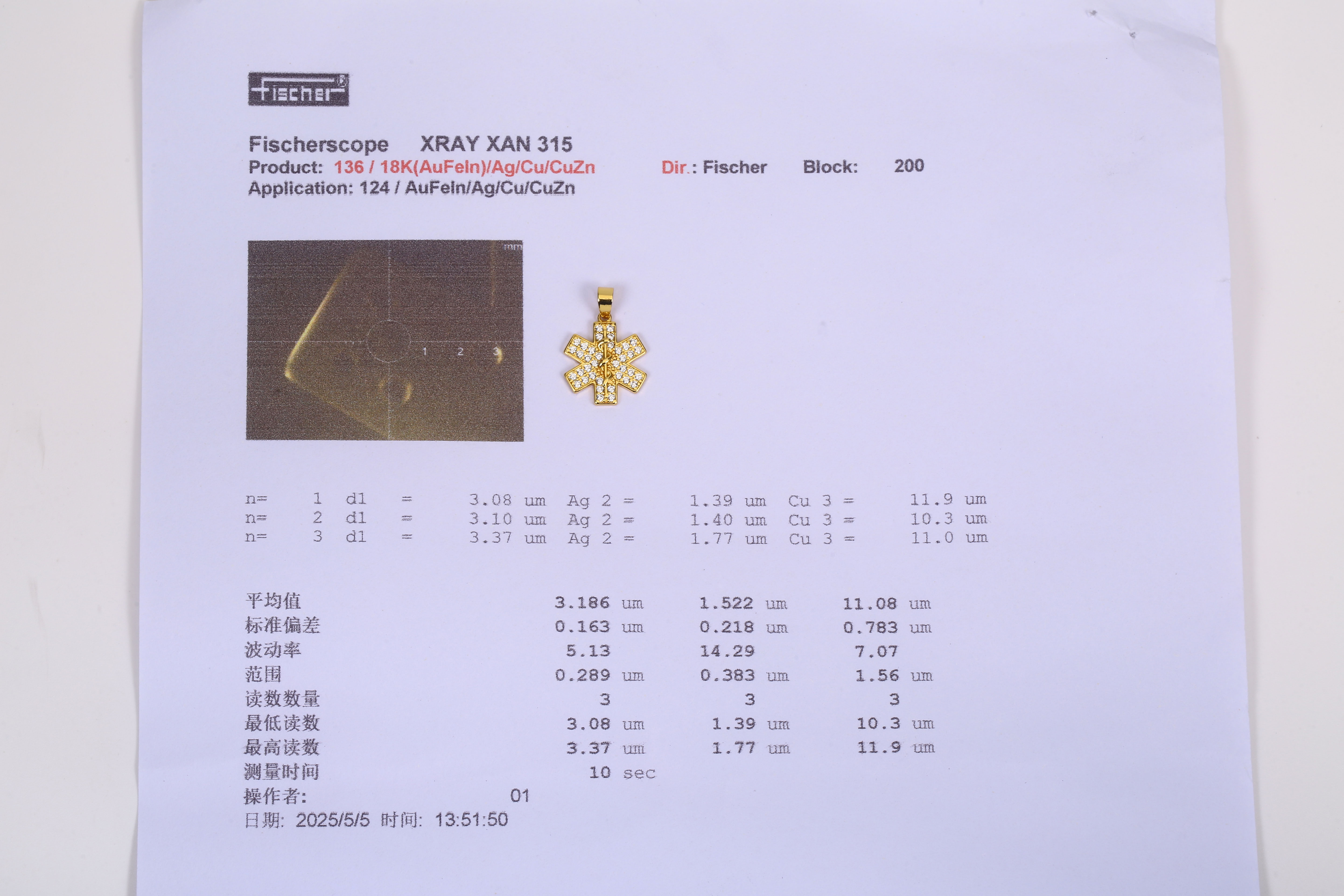
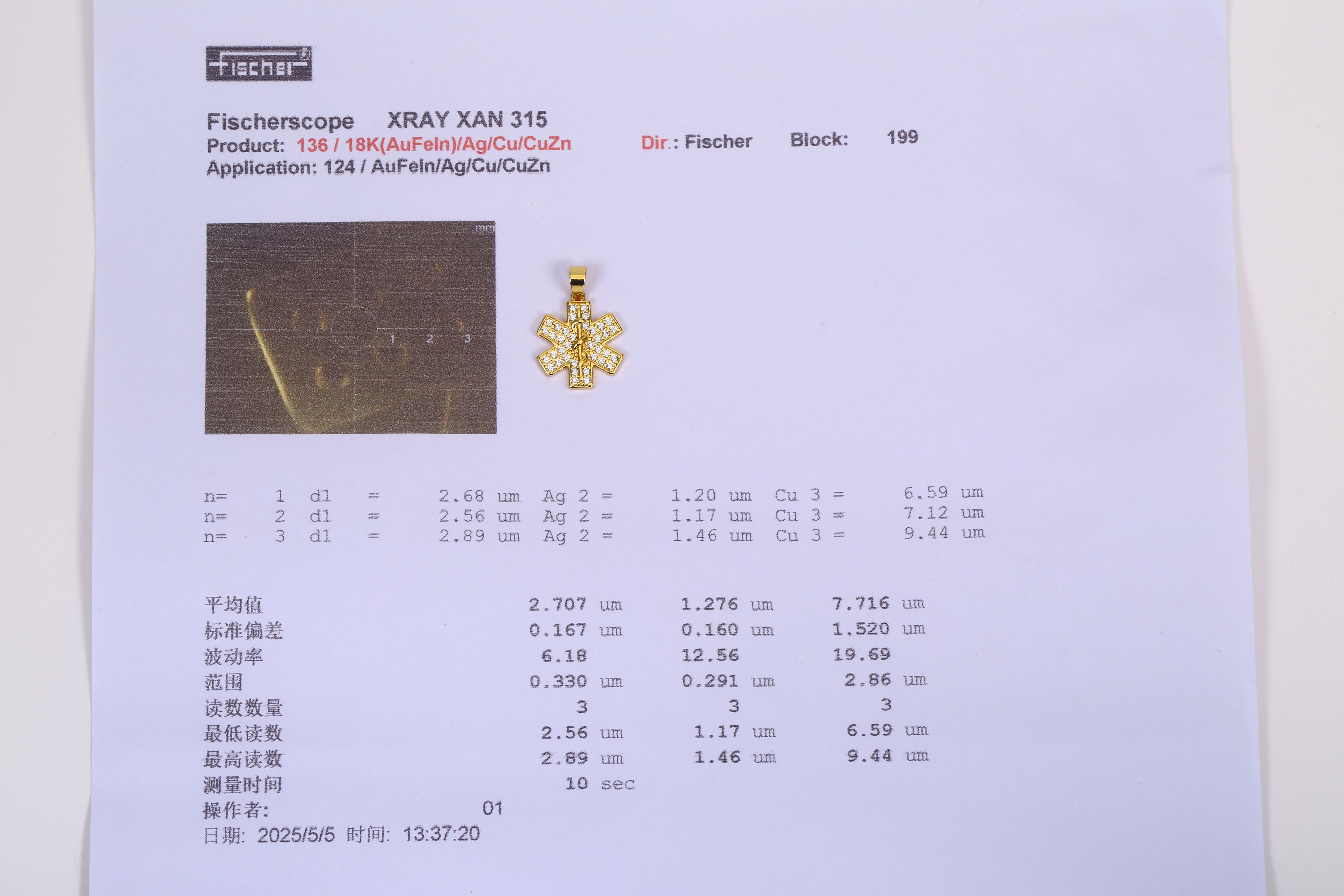
X-ray fluorescence can be used as a non-destructive method for evaluating metallic coating thickness.
ASTM B568 covers the measurement of coating thickness by X-ray spectrometry and recognizes coating thickness as an important factor in coating performance.
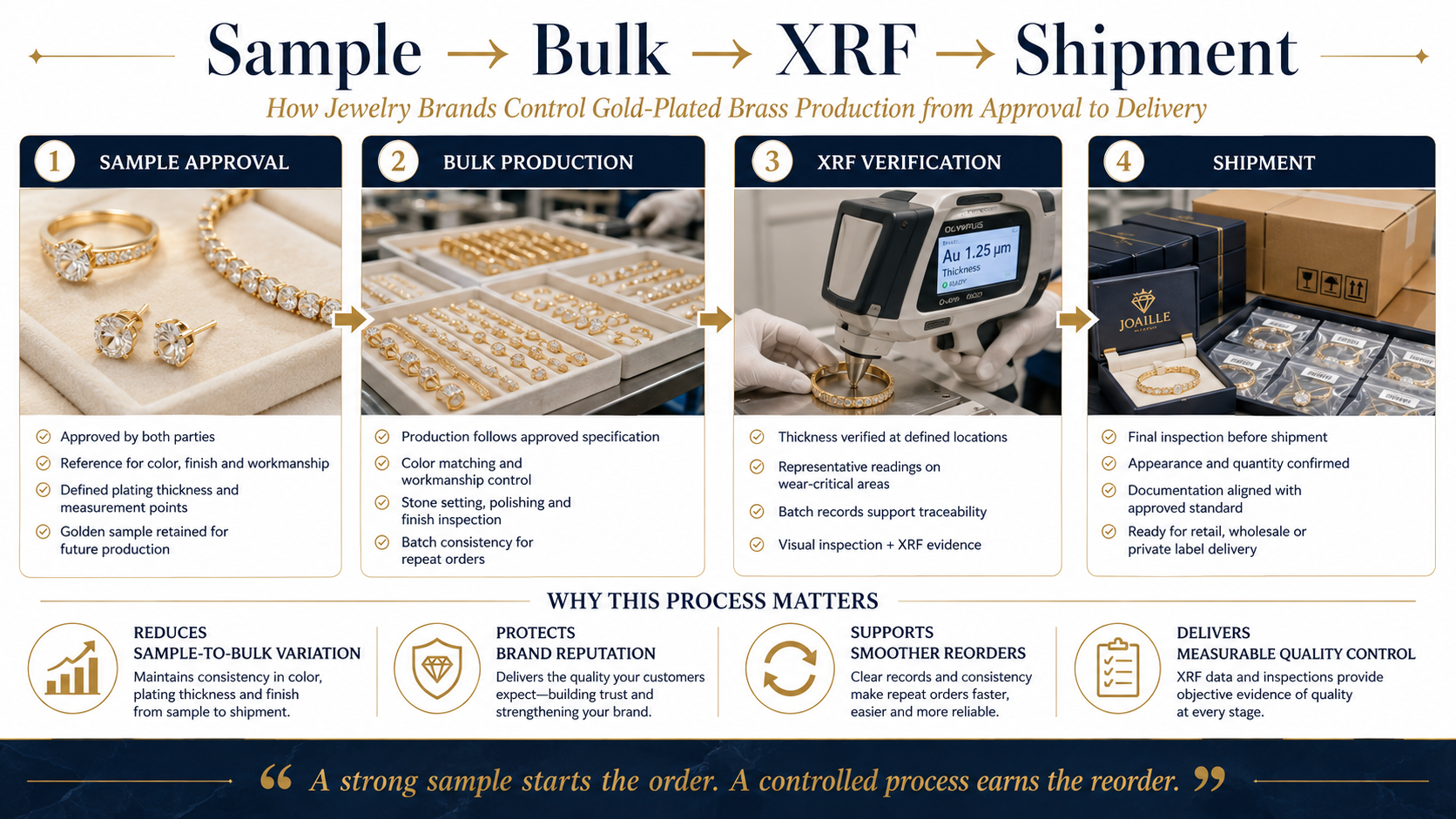
However, an XRF machine does not automatically create a quality-control system.
A report is meaningful only when it answers the same questions defined by the product specification:
What is being measured? Where is it being measured? Which production lot does the result represent? What target is being checked? What happens if the measurement falls outside the agreed requirement?
For jewelry with curved surfaces, recesses, edges, articulated sections, or multiple components, one convenient reading from a flat decorative surface may not represent the complete product.
For this reason, a professional OEM program should establish representative measurement locations during development and maintain the same logic during production inspection.
The objective is not to produce the largest possible number of XRF readings.
It is to produce traceable evidence that the finished production remains consistent with the approved standard.
Decide Whether the Requirement Is a Target, Minimum, or Acceptance Range
This is an important sourcing detail that many specification sheets overlook.
Writing:
Gold plating: 1.0 μm
Does not necessarily tell the manufacturer how production should be accepted?
Does 1.0 μm mean the process target?
Does every defined measurement point need to meet at least 1.0 μm?
Is there an agreed manufacturing tolerance?
Is the value evaluated on individual pieces or against a sampling plan?
These are different manufacturing requirements.
For significant production programs, brands should agree with the supplier on how the stated thickness is interpreted before bulk production begins.
This is particularly important when increasing thickness materially affects precious-metal consumption and unit cost.
Clear acceptance language prevents a quotation number from becoming a production dispute.
Gold Thickness Is Also a Cost-Engineering Variable
Increasing gold thickness increases precious-metal consumption, but the commercial effect is not identical across every SKU.
The plating cost of a jewelry design is influenced by much more than the micron figure.
Surface area, geometry, component count, production method, stone setting, finishing complexity, yield, and the amount of precious metal deposited all contribute to the final result.
This means that a uniform “premium plating” strategy across an entire assortment may not always produce the best return on manufacturing cost.
Consider four different products in the same collection:
|
Product Situation |
Cost-Engineering Decision |
|
Small, low-contact earring |
Additional gold may have limited commercial benefit beyond a validated level. |
|
Everyday bracelet |
High-contact surfaces may justify greater finish investment. |
|
Large statement necklace |
Surface area makes micron increases commercially significant. |
|
Complex tennis piece |
Coverage consistency and articulated areas may matter as much as nominal thickness. |
For a large assortment, the more professional strategy is often to create a limited number of approved finish classes rather than forcing every SKU into one specification.
This gives the brand greater control over margin while maintaining a consistent quality philosophy across the collection.
Keep Plating Performance Separate From Product Terminology
Heavy gold plating on brass can create a premium plated-brass product.
It does not convert brass into gold vermeil.
Under the U.S. Federal Trade Commission Jewelry Guides, the term “vermeil” applies to qualifying products with a sterling silver base coated on significant surfaces with gold or gold alloy of at least 10 karat fineness and with the required minimum thickness equivalent to 2.5 μm of fine gold.
Therefore:
2.5 μm gold over brass = heavy gold-plated brass.
2.5 μm gold over qualifying sterling silver may form part of a vermeil specification when the applicable requirements are satisfied.
For international brands, correct terminology matters because technical construction, product descriptions, and consumer-facing claims should remain aligned.
A premium specification should strengthen brand credibility rather than create ambiguity about what the product is made from.
Plating Thickness and Chemical Compliance Are Different Quality Questions
Another distinction is equally important for brands selling across multiple markets.
Plating thickness evaluates the physical coating specification.
Chemical or skin-contact compliance evaluates different risks.
A thicker coating should therefore never be used as automatic evidence of regulatory compliance.
For example, EU requirements concerning nickel release from relevant skin-contact articles are associated with REACH Annex XVII and referenced test methods, including EN 1811:2023 and, for coated articles where applicable, EN 12472:2020.
For international programs, the destination market should therefore be established before the final compliance and testing plan is approved.
This separation helps procurement teams avoid a common mistake:
using one test report to answer a question that the test was never designed to answer.
What a Large Jewelry Brand Should Expect From a Plating Supplier
A capable manufacturing partner should be able to move the conversation beyond:
“We can make 1 micron.”
For a scalable program, the more useful evidence is whether the supplier can convert a product requirement into a controlled production process.
|
Supplier Capability |
What the Buyer Should Be Able to Establish |
|
Finish development |
Can the supplier recommend a specification based on the actual product rather than one default finish? |
|
Sample control |
Is the approved finish retained as a production reference? |
|
Thickness control |
Can measurement points and acceptance logic be defined? |
|
Production consistency |
Can bulk be compared with the approved sample? |
|
Technical records |
Can relevant inspection records be associated with production lots? |
|
Repeatability |
Can the same finish specification be restored for reorder production? |
|
Compliance coordination |
Can market-specific testing requirements be incorporated when agreed? |
|
Cost engineering |
Can different finish levels be evaluated without compromising the collection strategy? |
The strongest supplier is not necessarily the factory offering the highest micron number.
For established brands, it is the manufacturer that can provide the most reliable relationship between specification, sample, production, and evidence.
How Zhefan Jewelry Develops Gold-Plated Brass Programs
Zhefan Jewelry manufactures custom brass and 925 sterling silver jewelry for OEM and ODM projects.
For gold-plated brass development, the finishing requirement can be evaluated around the actual product rather than applying one fixed plating level to every collection.
Depending on the design and project requirements, plating specifications can be developed at points including 0.05 μm, 0.25 μm, 0.5 μm, 1.0 μm, 2.5 μm, and 3.0 μm.
During development, the discussion can include the base material, surface finish, gold-colored target, intended product positioning, critical wear areas, protective finish, measurement method, and relevant testing requirements.
XRF thickness verification can also be incorporated into the quality plan where required.
For brand customers, the objective is not simply to produce one attractive sample.
It is to establish a finish specification that can support sample approval, bulk production, and future replenishment orders under the same technical logic.
This is particularly important for brands building permanent collections, private-label programs, multi-SKU assortments, or recurring wholesale production.
What to Include in a Brass Jewelry Plating Brief
A useful plating inquiry should allow the manufacturer to understand both the product and the commercial objective.
Instead of requesting only “18K gold plating,” a brand can provide the design or CAD, jewelry category, base material, target gold color, expected quantity, target market, retail positioning, preferred thickness if already established, finish expectations, and required testing.
The manufacturer can then evaluate the finish as part of the complete product.
This leads to more meaningful quotations because different technical options can be compared against the same commercial goal rather than competing only on the lowest unit price.
For larger programs, this also creates the foundation for an approved finish standard that can be reused across additional SKUs.
Conclusion: The Best Plating Specification Is the One Your Supplier Can Reproduce
The question “How thick should gold plating be on brass jewelry?” is useful during early sourcing.
But for an established jewelry brand, it should eventually lead to a more important question:
Can this finish be defined clearly enough that the manufacturer can reproduce it consistently in bulk and again on the next order?
That requires more than selecting 0.5, 1.0, or 2.5 microns.
It requires a controlled relationship between the brass substrate, surface preparation, finishing architecture, gold color, thickness requirement, critical measurement areas, master sample, inspection method, and production acceptance criteria.
When those elements are documented, gold plating stops being an ambiguous supplier claim.
It becomes a repeatable product standard.
And for a jewelry brand preparing to scale a successful collection, repeatability is where manufacturing quality begins to create long-term commercial value.
FAQ
What is a suitable gold plating thickness for brass jewelry?
There is no universal thickness that suits every brass jewelry design. A light appearance-led program may use substantially less gold than a premium plated-brass collection. Product geometry, wear conditions, commercial positioning, surface preparation, and verification requirements should be evaluated together before the final thickness is frozen.
Is 0.5 μm or 1.0 μm better for a jewelry brand?
A 1.0 μm gold layer contains more deposited gold than 0.5 μm, but “better” depends on the commercial requirement. If additional thickness produces meaningful improvement for the intended product, it may be justified. If the product has limited contact and the validated 0.5 μm system already meets the brand requirement, additional precious-metal cost may provide limited commercial return.
Should rings and bracelets automatically receive thicker plating than earrings?
Not automatically. Rings and bracelets frequently experience higher contact and abrasion, so they normally deserve greater attention during finish development. However, the final specification should be based on the actual design and wearing conditions rather than category name alone.
Can XRF prove that an entire production lot meets the plating specification?
XRF can provide valuable non-destructive thickness measurements, but the meaning of the results depends on the sampling plan, measurement locations and acceptance requirements. The buyer and manufacturer should define these elements before production whenever thickness verification forms part of bulk acceptance.
Is 2.5 μm gold plating on brass considered vermeil?
No. Brass remains a base-metal substrate regardless of gold thickness. Under the applicable U.S. FTC definition, qualifying vermeil uses a sterling silver base together with the required gold fineness and thickness conditions.
Should every SKU in a large jewelry collection use the same plating thickness?
Not necessarily. Large collections can contain very different surface areas, wear zones and cost structures. Establishing several validated finish classes may provide better control over both product performance and margin while maintaining a consistent quality strategy.
Recommended for you
What Is Gold Vermeil Jewelry? A Complete Guide for Brands and Retailers
Thick Gold Plated Jewelry Manufacturer for 925 Silver & Brass Jewelry
Top 10 Custom Jewelry Manufacturers in China (2026)
How to Choose a Gold Vermeil Jewelry Manufacturer
Gold Vermeil vs. Gold-Plated Jewelry: Which Fits Your Luxury Jewelry Brand?
Can Silver or Brass Be PVD Coated? A Professional Guide for Jewelry Brands

Wholesale Jewelry 925 Sterling Silver Four Leaf Clover Jewelry Sets.

Customizable High-Quality Fashion 925 Sterling Silver AAA Cubic Zirconia Heart-Shaped Open Tennis Bracelet.

Customizable OEM ODM High-Quality Fashion Brass AAA Cubic Zirconia Classic Tennis Bracelet for Women Wholesale.

925 Sterling Silver Two Tone Flower Huggie Earrings Wholesale
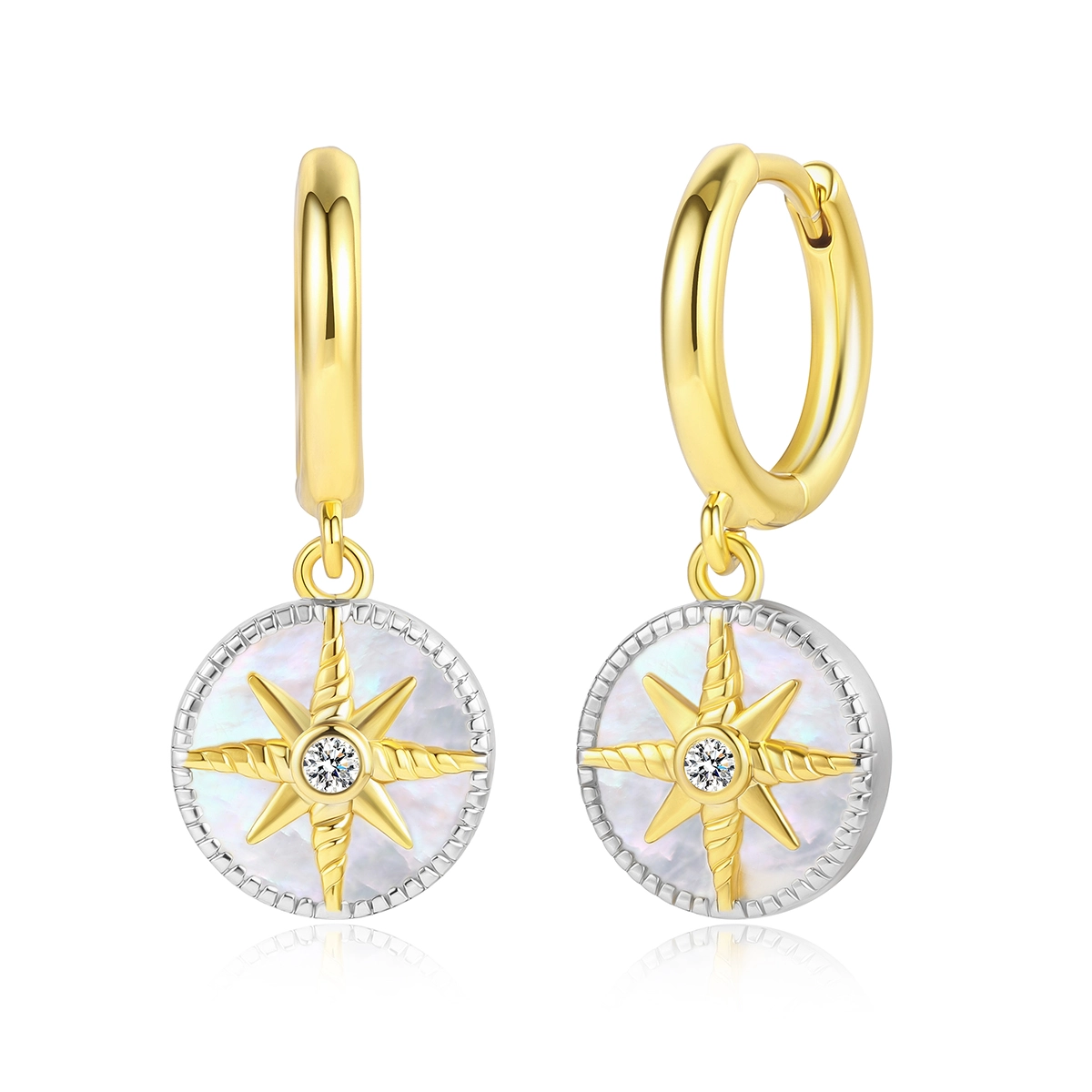
Brass Mother of Pearl Compass Huggie Drop Earrings | 14K 18K Gold Plated Hypoallergenic Jewelry
Custom Hailey Charm Hoop Earrings with Oval CZ in 925 Sterling Silver
Product Categories
Discuss Your Ideas with a Professional Custom Jewelry Manufacturer
We provide personalized jewelry customization services for clients worldwide.
Rest assured that your privacy is important to us, and all information provided will be handled with the utmost confidentiality.
By clicking 'Send Inquiry Now' I agree to ZHEFAN JEWELRY processing my personal data.
To see how to withdraw your consent, how to control your personal data and how we process it, please see our Privacy Policy and Terms of use.
From design to production, ZHEFAN JEWELRY offers a one-stop solution to help you enhance your brand value and market competitiveness.
Get A Quote
Contact
Tel: (+86) 188 1927 7817
© 2026 Zhefan Jewelry. All Rights Reserved.
Facebook
Instagram
YouTube
Whatsapp: +8618819277817