










Email: sales3@zhefanjewelry.com
Spotting Imperfections: What are Common Defects in Wholesale Brass Rings?
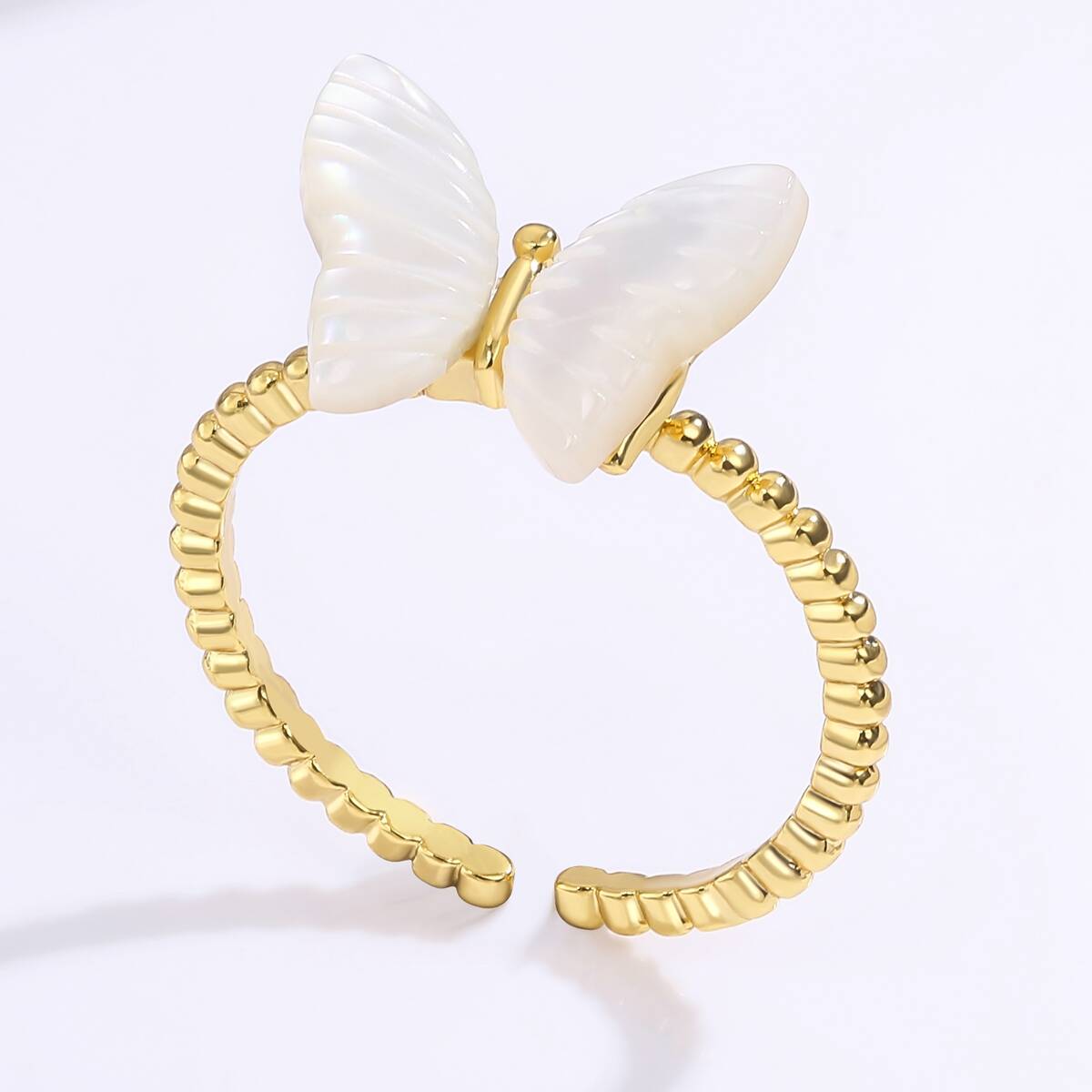
Understanding common defects in wholesale brass rings is crucial for maintaining quality and customer satisfaction. This post explores the typical issues found in brass jewelry manufacturing, from plating flaws and structural weaknesses to aesthetic inconsistencies, using a beautiful mother-of-pearl butterfly brass ring as a visual example. Learn how to identify these defects and ensure you source only the highest quality brass rings for your inventory, minimizing returns and enhancing your brand's reputation.
- Ensuring Quality: What are Common Defects in Wholesale Brass Rings?
- Plating & Finish Flaws: A Tarnished Reputation
- Structural Weaknesses: Beyond Surface Beauty
- Aesthetic Inconsistencies & Craftsmanship Issues
- Frequently Asked Questions About Wholesale Brass Rings
- What causes brass rings to tarnish quickly?
- How can I identify poor plating on a brass ring before purchasing in bulk?
- Are adjustable brass rings more prone to defects than fixed-size rings?
- What should be included in a quality control checklist for wholesale brass rings?
- Can manufacturing defects in brass rings be repaired?
- FAQ
Ensuring Quality: What are Common Defects in Wholesale Brass Rings?
When sourcing jewelry for your business, understanding the nuances of material quality and common manufacturing flaws is paramount. Brass rings, like the elegant gold-toned, adjustable ring with its shimmering mother-of-pearl butterfly shown in our example, are popular for their versatility and affordability. However, purchasing wholesale brass rings requires a keen eye for detail to ensure your inventory meets high standards. So, what are common defects in wholesale brass rings that buyers should be aware of?
Plating & Finish Flaws: A Tarnished Reputation
One of the most frequent issues observed in wholesale brass rings is related to their plating and finish. The ring in the image features a bright, uniform gold-tone plating, indicative of good craftsmanship. However, in mass production, defects can arise, including:
- Uneven Plating: Areas where the gold (or other metal) plating is noticeably thinner or entirely absent, revealing the brass beneath. This can lead to rapid tarnishing and discoloration.
- Discoloration & Tarnishing: Brass naturally tarnishes over time, but poor initial plating quality can accelerate this, leading to rings arriving with dull spots or green/blackish marks.
- Bubbling or Peeling: Microscopic air bubbles trapped during the plating process can lead to a textured, uneven surface or cause the plating to peel off prematurely.
- Scratches & Dents: During handling, manufacturing, or packaging, rings can acquire visible scratches, dings, or dents that compromise their aesthetic appeal.
Structural Weaknesses: Beyond Surface Beauty
Beyond the visual finish, the structural integrity of wholesale brass rings is vital, especially for designs like the adjustable, open-ended ring featured. Common structural defects include:
- Weak Solder Joints: If components, such as the butterfly motif's connection to the band or the decorative beads, are soldered, weak or incomplete joints can lead to breakage.
- Brittle Brass: Poor alloy composition or improper annealing during manufacturing can make the brass brittle, causing rings to snap or deform easily, particularly adjustable bands.
- Deformation: Rings may arrive bent or misshapen, indicating poor quality control during shaping or packaging. For adjustable rings, excessive stiffness or weakness in the band can also be a defect.
- Loose Components: The mother-of-pearl butterfly on our example ring is securely set. A common defect would be a loose inlay or stone that could fall out.
Aesthetic Inconsistencies & Craftsmanship Issues
The visual appeal of jewelry is paramount. Even with good plating and structural soundness, aesthetic issues can diminish a ring's value. The beaded texture on the example ring's band appears uniform and well-defined. However, defects can include:
- Rough Edges: Unfinished or poorly polished edges can feel sharp, making the ring uncomfortable to wear and indicating rushed production.
- Inconsistent Texture/Pattern: For rings with intricate designs or textured bands, like the one pictured, inconsistencies in the pattern or depth can detract from its beauty.
- Inlay/Stone Setting Imperfections: Beyond looseness, defects can include misaligned inlays, visible adhesive, or chipped/cracked mother-of-pearl or gemstones.
- Incorrect Sizing: While the image shows an adjustable ring, fixed-size rings can have inaccurate sizing, leading to customer dissatisfaction.
By understanding these common defects in wholesale brass rings, businesses can implement more robust quality control measures and communicate effectively with suppliers. This proactive approach ensures that the brass rings you offer are not only beautiful but also durable and reliable, bolstering your brand's reputation and customer loyalty.
Frequently Asked Questions About Wholesale Brass Rings
What causes brass rings to tarnish quickly?
Brass rings tarnish quickly primarily due to exposure to moisture, oxygen, and certain chemicals (like those found in perfumes, lotions, or cleaning agents). Poor quality or thin plating can accelerate this process, as it provides less protection to the underlying brass, making it more susceptible to oxidation and corrosion.
How can I identify poor plating on a brass ring before purchasing in bulk?
To identify poor plating, carefully inspect samples under good lighting. Look for uneven color, visible brass peeking through, dull spots, or areas that appear textured or bubbled. Running a soft cloth over the surface can sometimes reveal loose plating particles. A magnifying glass can help spot micro-scratches or pinholes in the plating.
Are adjustable brass rings more prone to defects than fixed-size rings?
Adjustable brass rings can be more prone to certain structural defects, particularly if the brass alloy is too brittle or too soft. Repeated bending to adjust the size can weaken the metal at the stress points, leading to cracks or breakage. Quality adjustable rings use appropriately tempered brass or reinforced designs to mitigate this risk.
What should be included in a quality control checklist for wholesale brass rings?
A comprehensive quality control checklist for wholesale brass rings should include checks for plating consistency and integrity, presence of scratches or dents, secure setting of any inlays or stones (like the mother-of-pearl butterfly), structural soundness (especially for adjustable parts), smoothness of edges, and overall finish uniformity. Packaging and labeling accuracy should also be verified.
Can manufacturing defects in brass rings be repaired?
Some manufacturing defects, such as minor scratches or dull finishes, might be polished or re-plated. However, significant structural defects like cracks, broken solder joints, or severe deformation are often difficult or uneconomical to repair, especially for wholesale-priced items. It's usually more cost-effective to reject defective pieces than to attempt repairs.
FAQ
What causes brass rings to tarnish quickly?
Brass rings tarnish quickly primarily due to exposure to moisture, oxygen, and certain chemicals (like those found in perfumes, lotions, or cleaning agents). Poor quality or thin plating can accelerate this process, as it provides less protection to the underlying brass, making it more susceptible to oxidation and corrosion.
How can I identify poor plating on a brass ring before purchasing in bulk?
To identify poor plating, carefully inspect samples under good lighting. Look for uneven color, visible brass peeking through, dull spots, or areas that appear textured or bubbled. Running a soft cloth over the surface can sometimes reveal loose plating particles. A magnifying glass can help spot micro-scratches or pinholes in the plating.
Are adjustable brass rings more prone to defects than fixed-size rings?
Adjustable brass rings can be more prone to certain structural defects, particularly if the brass alloy is too brittle or too soft. Repeated bending to adjust the size can weaken the metal at the stress points, leading to cracks or breakage. Quality adjustable rings use appropriately tempered brass or reinforced designs to mitigate this risk.
What should be included in a quality control checklist for wholesale brass rings?
A comprehensive quality control checklist for wholesale brass rings should include checks for plating consistency and integrity, presence of scratches or dents, secure setting of any inlays or stones (like the mother-of-pearl butterfly), structural soundness (especially for adjustable parts), smoothness of edges, and overall finish uniformity. Packaging and labeling accuracy should also be verified.
Can manufacturing defects in brass rings be repaired?
Some manufacturing defects, suchs as minor scratches or dull finishes, might be polished or re-plated. However, significant structural defects like cracks, broken solder joints, or severe deformation are often difficult or uneconomical to repair, especially for wholesale-priced items. It's usually more cost-effective to reject defective pieces than to attempt repairs.
Tags
925 silver bracelet b2b supplier
925 silver bracelet b2b supplier
hypoallergenic brass earring manufacturer
hypoallergenic brass earring manufacturer
adjustable tennis bracelet price per unit
adjustable tennis bracelet price per unit
brass wedding rings
brass wedding rings
dropshipping 925 sterling silver jewelry sets
dropshipping 925 sterling silver jewelry sets
eco-friendly 925 silver bracelet manufacturer
eco-friendly 925 silver bracelet manufacturer
Recommended for you
Seasonal Buying Strategies: When to Purchase 925 Sterling Silver Tennis Bracelet for Best Margins
Custom silver 925 chain necklace Manufacturers and Suppliers
Sourcing Sustainable Mother of Pearl Stud Earrings
After-Sales Care Services for Buyers of Custom 925 Silver Rings
Product Categories
You may also like

925 Silver Jewelry
Customizable High-Quality Fashion 925 Sterling Silver AAA Cubic Zirconia Heart-Shaped Open Tennis Bracelet.
Read More

Brass Jewelry
Customizable OEM ODM High-Quality Fashion Brass AAA Cubic Zirconia Classic Tennis Bracelet for Women Wholesale.
Read More
Get a Quote for Private Label Jewelry
We provide personalized jewelry customization services for clients worldwide.
Rest assured that your privacy is important to us, and all information provided will be handled with the utmost confidentiality.
By clicking 'Send Inquiry Now' I agree to ZHEFAN JEWELRY processing my personal data.
To see how to withdraw your consent, how to control your personal data and how we process it, please see our Privacy Policy and Terms of use.
From design to production, ZHEFAN JEWELRY offers a one-stop solution to help you enhance your brand value and market competitiveness.
Get A Quote
Contact
Tel: (+86) 188 1927 7817
© 2026 Zhefan Jewelry. All Rights Reserved.
Facebook
Instagram
YouTube
Whatsapp: +8618819277817