







Email: sales3@zhefanjewelry.com
How to Calculate Wholesale Pearl Jewelry Costs and Target Margins
A practical guide to calculating the landed cost of pearl jewelry, setting wholesale prices from gross-margin targets, and protecting profitability through accurate material, labor, quality, freight, and channel-cost assumptions. Includes a transparent example, pricing formulas, procurement checks, and guidance for evaluating a production partner.
- Build a Complete Cost Model for Pearl Jewelry
- Separate material, conversion, and landed costs
- Account for yield, labor, and non-saleable units
- Use a landed-cost worksheet
- Convert Landed Cost Into a Wholesale Price
- Set a gross-margin target, not just a markup
- Illustrative cost and pricing comparison
- Work backward from the channel and test scenarios
- Protect Margin Through Specification and Supplier Management
- Write quality requirements that can be inspected
- Use quote comparisons to expose hidden cost differences
- Apply the Cost Framework Across a Jewelry Portfolio
- Coordinate materials, design, and target price
- Make margin review part of the reorder process
- Frequently Asked Questions
Wholesale pearl jewelry pricing starts with a complete, documented cost per saleable unit—not the pearl purchase price alone. Buyers should add pearl and metal components, direct labor, finishing, packaging, quality control, production yield loss, freight, duties, and other landed costs, then calculate a selling price using gross margin rather than markup. For example, a hypothetical landed unit cost of $35 requires a wholesale price of $87.50 to achieve a 60% gross margin before sales commissions and other selling expenses. The right target depends on channel economics, pearl quality, order volume, return exposure, and the brand’s positioning.
Build a Complete Cost Model for Pearl Jewelry
Separate material, conversion, and landed costs
A useful costing sheet distinguishes three cost layers. Material cost covers pearls, metal components, clasps, posts, chains, adhesives, and any other bill-of-material items. Conversion cost captures the work required to turn those components into a finished piece, such as drilling, matching, stringing, soldering, setting, polishing, plating, assembly, and inspection. Landed cost adds the expenses required to receive saleable inventory at the agreed destination, including freight, insurance, customs duties, brokerage, and applicable import-related charges.
That separation helps procurement teams compare quotations fairly. One supplier may quote a finished piece with packaging and inspection included, while another may quote an unfinished item at a lower unit price. Comparing only the quoted unit price can therefore conceal real differences in scope. Request a bill of materials, a clear description of included work, packaging specifications, and delivery terms. Confirm whether the price is based on a sample, a production order, or a specific quantity tier.
Pearl cost is especially sensitive to type, size, shape, surface condition, luster, color, matching, and origin claims. A strand or pair that appears similar in a photograph may vary substantially in consistency and usable yield. The Gemological Institute of America’s pearl quality factors explain attributes used to assess pearls, including size, shape, color, luster, surface quality, and matching. Buyers should translate the qualities that matter to their assortment into written acceptance criteria, rather than relying on a broad description such as high grade.
Account for yield, labor, and non-saleable units
Cost should be divided by the number of units that can actually be sold, not simply the number of units started. If a production run uses 100 pearl pairs but matching and inspection produce only 94 saleable pairs, the usable-pair cost must absorb the inputs consumed by the six rejected or downgraded pairs. The same principle applies to drilling breakage, plating defects, assembly errors, and rework. Ask the production partner how yield assumptions are set, how nonconforming goods are handled, and whether replacement or rework terms are documented.
Labor estimates should reflect operation time and the real production workflow. A simple design with a single pearl drop may require less assembly than a multi-pearl necklace with matched components, hand-knotting, specialized clasps, and detailed inspection. Include setup or tooling charges where they apply, and allocate them consistently across the planned order quantity. If a one-time setup fee is $300, allocating it across 100 units adds $3 per unit; across 500 units, it adds $0.60. Those figures are arithmetic examples, not supplier quotations.
Use a landed-cost worksheet
A practical worksheet should record the cost basis, currency, source, and assumptions for each line. Distinguish a confirmed supplier quote from an estimate, and record the validity date for volatile inputs. When a quotation is denominated in a foreign currency, use a documented exchange-rate source and include a reasonable allowance for the period between purchase commitment and payment. The European Central Bank’s reference exchange rates provide published reference data; buyers should also check whether their bank or payment provider applies a different transaction rate or fee.
Metal costs can move with market prices, alloy composition, weight, and fabrication losses. Use the quoted alloy and finished component weight rather than assuming the value of a finished item equals the spot value of pure metal. For reference, the London Bullion Market Association precious-metal prices publishes benchmark price information. A benchmark is not a finished-component quotation: labor, alloying, waste, finishing, and supplier terms still affect the amount charged. When comparing sterling silver, gold vermeil, or brass components, confirm metal specifications and any applicable claims in the product documentation.
Convert Landed Cost Into a Wholesale Price
Set a gross-margin target, not just a markup
Gross margin and markup are related but different. Gross margin is the gross profit divided by the selling price. Markup is the amount added to cost divided by cost. To calculate a wholesale price from a target gross margin, use: wholesale price = landed unit cost ÷ (1 − target gross-margin rate). If landed cost is $35 and the target gross margin is 60%, the calculation is $35 ÷ 0.40 = $87.50. The gross profit is $52.50, and $52.50 ÷ $87.50 equals 60%.
A 60% markup on the same $35 cost would produce a price of $56, but the resulting gross margin would be only 37.5%. This distinction matters when a business is evaluating retailer terms, promotions, or price lists against a required margin. Select targets based on the company’s cost structure and channel strategy rather than copying a generic industry multiple. A wholesale margin target must also leave room for business expenses that gross margin does not include, such as selling commissions, payment costs, marketing, warehousing overhead, and administrative expense.
Illustrative cost and pricing comparison
The following example shows how a hypothetical cost sheet translates into a target wholesale price. These figures are solely for demonstrating the calculation; they are not current market averages or a supplier quotation. Actual amounts depend on design, pearl specification, metal, order size, location, and shipping terms.
| Cost or pricing item | Illustrative amount per unit | Calculation or interpretation |
|---|---|---|
| Pearls and matching allocation | $8.00 | Assumed component cost for the example |
| Metal components and findings | $10.00 | Assumed chain, clasp, and setting components |
| Assembly and finishing labor | $9.00 | Assumed direct production labor |
| Packaging and quality control | $3.00 | Assumed per-unit allocation |
| Freight, duty, and yield allowance | $5.00 | Assumed landed-cost allocation |
| Total landed unit cost | $35.00 | Sum of the listed illustrative costs |
| Wholesale price at 50% gross margin | $70.00 | $35 ÷ (1 − 0.50) |
| Wholesale price at 60% gross margin | $87.50 | $35 ÷ (1 − 0.60) |
| Wholesale price at 65% gross margin | $100.00 | $35 ÷ (1 − 0.65), rounded to cents |
Work backward from the channel and test scenarios
Wholesale pricing must fit the economics of the next buyer. A retailer needs enough room for its own operating costs, markdowns, and profit, while a distributor may require an additional margin layer. If a retailer targets a 50% gross margin and buys an item for $87.50, the arithmetic retail price before tax is $175: $87.50 ÷ (1 − 0.50). That is a planning calculation, not a guarantee that the market will accept the resulting price. Validate it against comparable products, perceived quality, customer demand, and the brand’s positioning.
Build a sensitivity model for changes in pearl cost, labor time, exchange rates, shipping, duty, and production yield. Calculate base, downside, and upside scenarios, then identify which variables can be controlled through specification changes or order planning. For example, a design revision that reduces assembly time may protect margin without lowering pearl quality. Conversely, accepting a less consistent pearl match may reduce initial cost but increase inspection failures, returns, or customer dissatisfaction. A strong model captures both the direct saving and its possible downstream cost.
Protect Margin Through Specification and Supplier Management
Write quality requirements that can be inspected
Clear specifications reduce disputes and prevent unpriced expectations from entering production. State the pearl type and dimensions, acceptable shape range, color and luster expectations, matching tolerance, surface-quality limits, metal composition, finish, clasp or post requirements, and packaging standard. Add approved reference samples or photographs when appropriate, while recognizing that photographs can vary by lighting and display settings. Specify how measurements are taken, what constitutes a defect, and how inspection or replacement is managed.
Product descriptions and material claims need careful control, particularly when goods cross borders or are sold through multiple channels. The U.S. Federal Trade Commission Jewelry Guides address descriptions and claims for jewelry products in the U.S. market. Buyers should review applicable requirements in every intended sales jurisdiction and ensure that supplier invoices, product specifications, and marketing language align. A lower-cost component is not a worthwhile saving if its description creates a compliance risk or a costly customer-service issue.
Use quote comparisons to expose hidden cost differences
Ask each candidate supplier to quote the same specification, quantity, packaging, delivery location, and trade term. Compare minimum order quantity, sampling fees, production lead time, payment schedule, quality remedies, and price breaks alongside the unit price. A low unit quotation can become less attractive if it excludes packaging, has a high minimum, requires expensive air freight, or offers limited recourse for rejected goods. Conversely, a higher quote may deliver more predictable quality or include services that reduce internal inspection and handling costs.
For teams searching for a pearl jewelry manufacturer, the most useful evaluation combines product capability with cost transparency. Request a sample and confirm it against the written specification before approving bulk production. Keep the approved sample, inspection record, purchase order, and final invoice linked to the same product version. This record makes it easier to identify whether a margin change came from a material substitution, a revised design, a freight adjustment, or an inaccurate original estimate.
Apply the Cost Framework Across a Jewelry Portfolio
Coordinate materials, design, and target price
In the latter stages of assortment planning, a consistent cost framework can support multiple material categories without treating them as interchangeable. Our product range includes brass jewelry, 925 silver jewelry, sterling silver jewelry, gold vermeil jewelry, and pearl jewelry. Each category requires its own specification and cost assumptions: alloy and finish for brass, silver content and component weight for sterling silver, plating and base-metal details for vermeil, and pearl characteristics and matching for pearl designs. Buyers should compare products using the same landed-cost and margin definitions while preserving the differences in workmanship and material requirements.
Our commercial approach is to make the product specification and cost scope clear enough for buyers to evaluate assortment fit, order economics, and expected retail positioning. That means identifying which product details drive cost, confirming what is included in a quotation, and aligning the requested finish and packaging with the intended price tier. No production capability or certification should be assumed from a product category alone; buyers should verify the relevant materials, documentation, sample quality, and order terms for each specific project.
Make margin review part of the reorder process
Margin management continues after a product launches. At each reorder, compare the latest quotation with the original cost sheet and record changes in component pricing, labor, yield, freight, currency, or order size. Recalculate the wholesale price and contribution after discounts, commissions, and payment fees. If a planned promotional price falls below the approved margin floor, identify whether the campaign is intentionally funded by marketing or whether the product needs a cost or price revision.
A disciplined process gives brand owners and distributors a more dependable basis for assortment decisions. It also makes supplier conversations more productive: a buyer can identify the exact cost driver and discuss practical alternatives instead of requesting an unexplained reduction. The goal is not simply to find the lowest quote. It is to secure a repeatable product specification, a defensible landed cost, and a wholesale price that supports the business and remains credible to the market.
Contact our team to discuss product specifications and wholesale options across pearl, brass, sterling silver, 925 silver, and gold vermeil jewelry.
Frequently Asked Questions
How do you calculate the wholesale price of pearl jewelry?
Add pearl and metal components, labor, finishing, packaging, quality control, yield loss, freight, duties, and other landed costs to find the unit cost. Divide that landed cost by one minus the target gross-margin rate. For example, a $35 landed cost at a 60% target gross margin gives a wholesale price of $87.50.
What is the difference between gross margin and markup?
Gross margin is gross profit divided by selling price, while markup is the amount added to cost divided by cost. A 60% markup on a $35 cost creates a $56 price and a 37.5% gross margin; a 60% gross margin requires an $87.50 price.
Which costs should be included in pearl jewelry landed cost?
Include pearls, metal components and findings, direct labor, finishing, packaging, quality control, production yield loss, freight, insurance where applicable, customs duties, brokerage, and other costs required to receive saleable inventory. Keep selling expenses such as commissions and payment fees visible as separate costs when evaluating contribution.
How does pearl quality affect wholesale pricing?
Pearl type, size, shape, color, luster, surface quality, matching, and usable yield can all affect component cost and inspection outcomes. Written acceptance criteria and approved samples help buyers align quality expectations with the price quoted.
How should buyers compare quotes from different jewelry suppliers?
Request quotes against the same product specification, quantity, packaging, delivery location, and trade terms. Compare included services, minimum order quantity, lead time, sampling fees, payment terms, quality remedies, and landed cost—not only the quoted unit price.
How can a buyer protect margins when material and freight costs change?
Maintain a dated cost sheet, document currency and freight assumptions, and run base, downside, and upside scenarios. Review the cost model at each reorder, recalculate wholesale pricing after changes, and assess specification or process adjustments before compromising important quality attributes.
Tags
tarnish resistant nickel free brass
tarnish resistant nickel free brass
bulk brass tennis bracelet supplier
bulk brass tennis bracelet supplier
brass jewelry price list wholesale
brass jewelry price list wholesale
red heart necklace
red heart necklace
bulk cz brass pendants
bulk cz brass pendants
classic 925 sterling silver tennis bracelet
classic 925 sterling silver tennis bracelet
Recommended for you
Eco-Certifications and Ethical Sourcing for Silver Jewelry Buyers
Private Label Jewelry Manufacturer Pricing Factors That Influence Jewelry Costs
After-Sales Policies and Warranties for Tennis Jewellery
Safety Standards and Nickel-Free Options for Custom Brass Necklaces
Product Categories
You may also like
925 Silver Jewelry
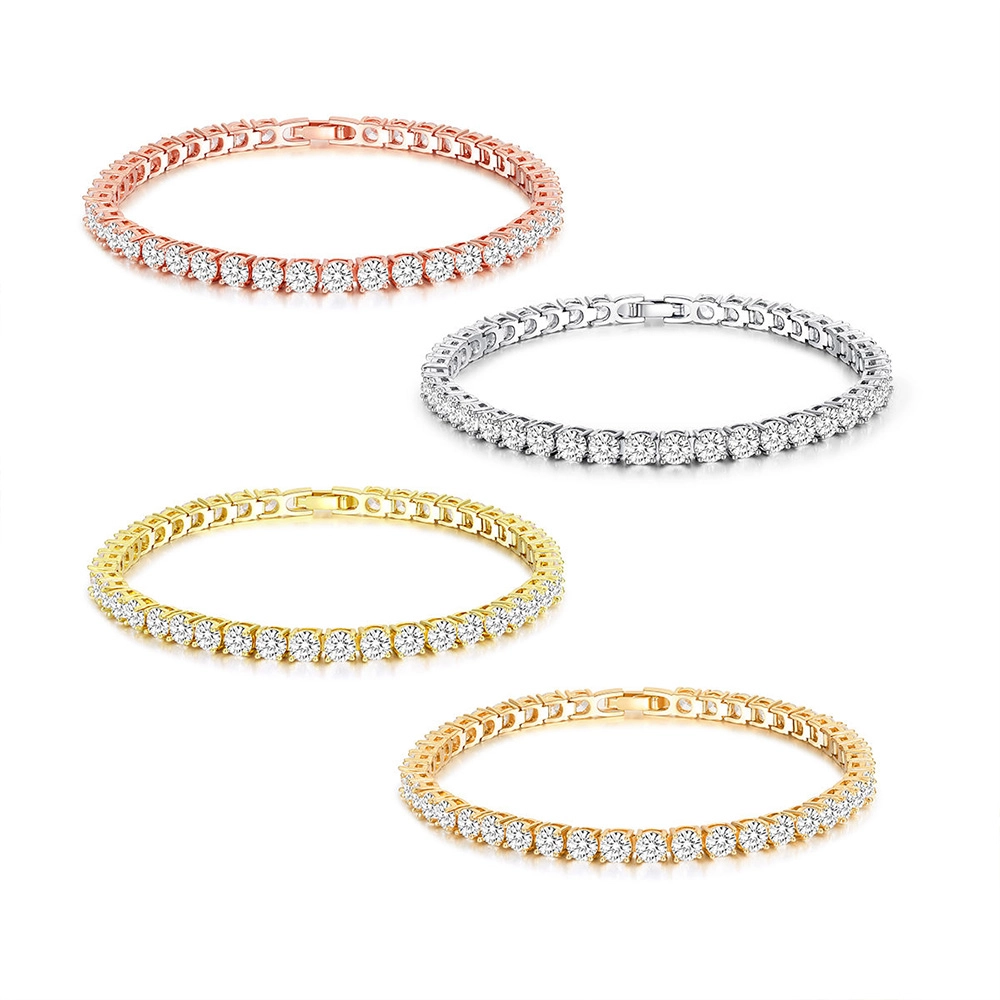
Customizable High-Quality Fashion 925 Sterling Silver AAA Cubic Zirconia Heart-Shaped Open Tennis Bracelet.
Read More
Brass Jewelry
Customizable OEM ODM High-Quality Fashion Brass AAA Cubic Zirconia Classic Tennis Bracelet for Women Wholesale.
Read More
Get a Quote for Private Label Jewelry
We provide personalized jewelry customization services for clients worldwide.
Rest assured that your privacy is important to us, and all information provided will be handled with the utmost confidentiality.
By clicking 'Send Inquiry Now' I agree to ZHEFAN JEWELRY processing my personal data.
To see how to withdraw your consent, how to control your personal data and how we process it, please see our Privacy Policy and Terms of use.
From design to production, ZHEFAN JEWELRY offers a one-stop solution to help you enhance your brand value and market competitiveness.
Get A Quote
Contact
Tel: (+86) 188 1927 7817
© 2026 Zhefan Jewelry. All Rights Reserved.
Facebook
Instagram
YouTube
Whatsapp: +8618819277817